

AI-Generated Open Source Suite ArtCraft Clones Adobe & Targets Microsoft Office
A developer used Anthropic's Opus 5.5 and Rust to build ArtCraft, an open-source clone of Adobe Creative Cloud's seven apps, then released GridCraft, WordCraft, and DeckCraft as free, agent-ready Microsoft Office alternatives, signaling a paradigm shift where AI eliminates software complexity moats.
Reading font
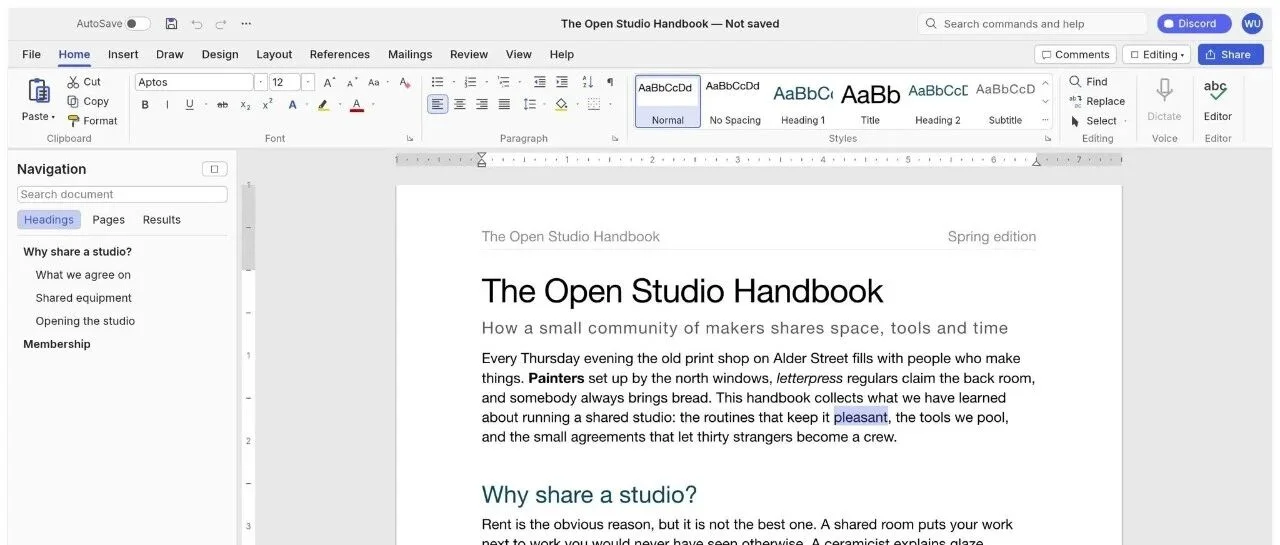
A developer frustrated by Adobe's cancellation fees used Anthropic's Opus 5.5 model and pure Rust to rewrite the entire Creative Cloud suite as open-source alternatives. The seven applications — PhotoCraft (Photoshop), VectorCraft (Illustrator), FilmCraft (Premiere Pro), EffectCraft (After Effects), LightCraft (Lightroom), DesignCraft (InDesign), and PdfCraft (Acrobat) — were built from scratch using clean-room reverse engineering without touching Adobe's original code. Within the first week, the GitHub repository garnered 24K stars.
The apps run natively on macOS, Windows, and Linux, with some capable of running in browsers via WebAssembly. Shortly after, the same team (ArtCraft) released three Microsoft Office clones: GridCraft (Excel), WordCraft (Word), and DeckCraft (PowerPoint). All three replicate the familiar UI structures — cell layouts, document editing, slide masters, animations — and are completely free, open-source, subscription-free, and written in Rust.
Not a Coincidence, a Paradigm Shift
The article argues this is not merely another open-source alternative; LibreOffice has existed for over two decades. The difference lies in speed and method. Previously, rewriting a Photoshop-class application required a mid-sized team three to five years with constant litigation risk. Now, a single angered developer plus Opus 5.5 accomplished it in months. AI has reduced the friction of reverse engineering and code generation to near zero, meaning any software empire relying on a "complexity moat" can theoretically be replicated overnight. Adobe was targeted first because its subscription model provoked the most user resentment; Microsoft follows for similar reasons.
Current Limitations
The Office suite is labeled Release Candidate, not yet a stable release. The primary issue is Asian language compatibility — Chinese, Japanese, and Korean may display "tofu" (boxed garbled characters). GitHub contributors have already submitted fix PRs, and the next version will likely resolve this. Chinese users may want to wait, but the direction is clear.
The Larger Narrative: Agent-Ready Software
All ArtCraft applications are designed as "agent-ready" — controllable via CLI, JSON channels, or MCP servers — built specifically for automation and AI agents. The goal is not just free Office clones but an AI-era Office suite. Free Photoshop and free Word represent the first wave of "personal software era" disruption against "subscription empires." The deeper question: when software can be instantly generated and customized by AI, what moats remain for monthly-fee giants? The article concludes that, currently, the answer appears to be "not much."
ArtCraft's full suite is available at getartcraft.com/apps (https://getartcraft.com/apps). The Office trio (GridCraft, WordCraft, DeckCraft) is not yet on the official site but can be downloaded from GitHub at github.com/storytold (https://github.com/storytold).
For questions about attribution, corrections or content rights, please contactand we will review it promptly.