Addy Osmani warns that the greatest risk of AI-assisted coding isn't job replacement but 'cognitive surrender'—developers accepting AI outputs without understanding, leading to cognitive debt. He advocates for decision records, guardrails, human ownership of critical systems, and preserving engineering judgment over mere implementation speed.
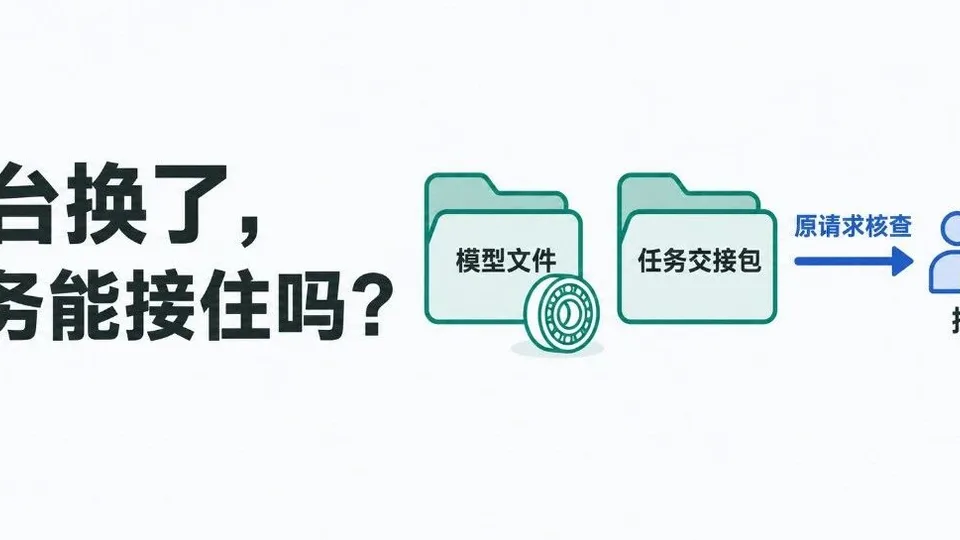
When migrating ontology platforms, enterprises must preserve seven asset categories—definitions, ID mappings, rule implementations, authorization conventions, task traces, test records, and maintenance ownership—and verify both semantic meaning and executable behavior separately through fixed-task rehearsals that validate normal, error, and recovery cases while preventing duplicate execution during cutover.
This article translates Kai Niklas's guide on becoming a software architect, covering three architecture levels and ten essential skills—design patterns, decision-making, simplicity, coding, documentation, communication, estimation, balance, consulting, and marketing—with practical techniques like WSJF prioritization, ThoughtWorks Tech Radar, and maturity models for continuous delivery.
Research from the book Accelerate, based on 23,000 surveys across 2,000 organizations, shows that limiting work in progress (WIP) alone has no significant impact on delivery performance; it only works when combined with visualization of quality and productivity metrics and daily decisions driven by real production monitoring data.
This article uses behavioral economics and cognitive science to explain why people without learning habits impulsively pursue entrepreneurship, detailing psychological traps like reference-group neglect and loss-domain gambling, contrasts them with professional accumulation's three barriers, and provides a four-step loop for self-mastery and risk-controlled skill-building.
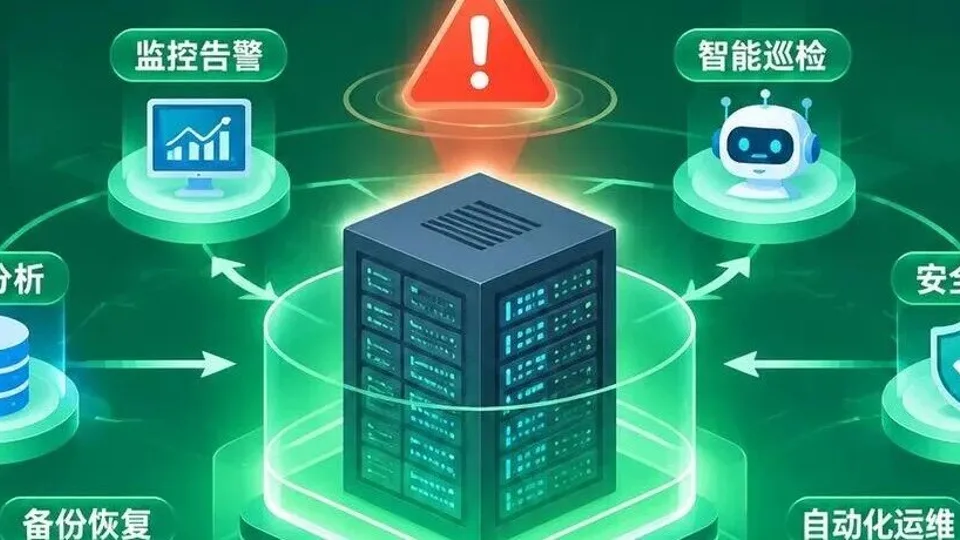
As AI agents handle more coding tasks, teams must retain the ability to understand, troubleshoot, and take over critical systems by verifying agent suggestions against actual system state, maintaining knowledge of critical paths, ensuring proper permissions and recovery drills, and passing skills through guided practice rather than blind reliance on AI.
The article reveals that DORA's four key metrics originated as a '3+1' construct in Accelerate, where only lead time, deployment frequency, and restore time formed a statistically valid delivery performance construct, while change failure rate was highly correlated but excluded; understanding this distinction prevents misusing metrics for causal analysis versus classification.
The article outlines a practical framework for human–agent collaboration in software engineering: humans confirm business rules and trade-offs, platforms enforce permissions and checks, agents execute continuously within agreed boundaries, each iteration verifies results against expectations, and teams must define stopping conditions, leave handoff-ready versions, and measure success by total investment and runtime quality.
This article explains how MOOS integrates with existing ERP and CRM systems by focusing on judgment connectivity rather than data transfer, using a product replacement case to illustrate Business Scenario Reconstruction, Task Contracts, and Task-driven Accountability Networks for reliable cross-system workflows.
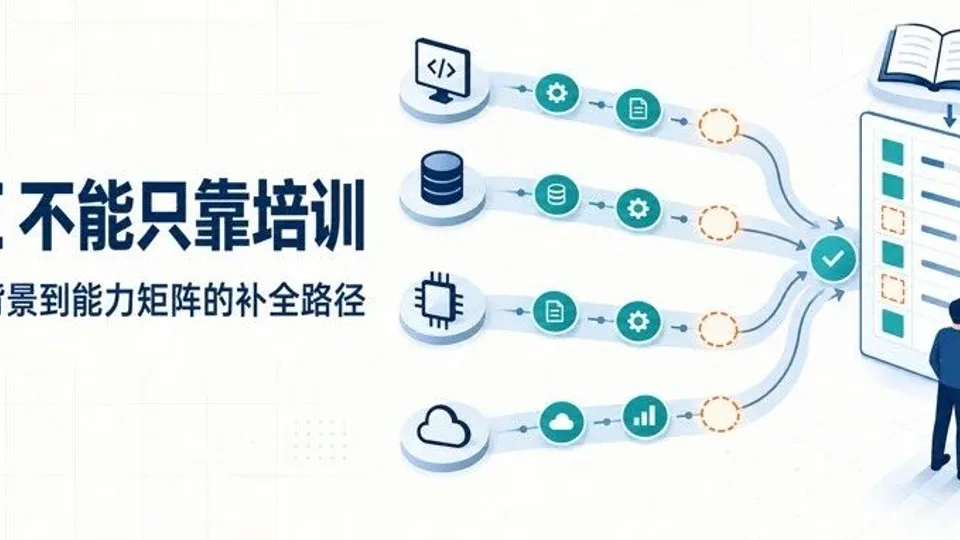
This article outlines a framework for Field Development Engineers to close capability gaps through controlled project slices rather than training, detailing three readiness states, four background-specific verification paths, a project-slice evidence matrix, a completion record template, and pairing-review practices that separate individual contribution from team outcomes.
This article analyzes three career paths for test engineers in 2025—technical expert, management, and career pivot—using a three-dimensional comparison framework with industry data, certification trends, and a decision model to help practitioners choose based on personal fit and market dynamics.
This article analyzes how coding agents amplify engineering skill gaps by examining five behavioral dimensions where experts differ from average users, four core capabilities—harness engineering, architectural vision, hidden-defect detection, and precise requirement translation—and practical boundaries for guardrail investment, ending with four daily habits to improve AI-assisted development outcomes.
The article analyzes why many programmers struggle to transition into Frontline Deployment Engineer (FDE) roles, emphasizing the need to investigate on-site business conditions before proposing technical solutions, the importance of hands-on validation, and how hiring should test candidates with controlled real-world tasks rather than relying on resumes or interviews alone.
Drawing on two decades of experience, the author outlines seven progressive organizational symptoms — from untouchable legacy code and performative busyness to reporting-driven management, adverse selection in talent retention, AI misuse as a headcount audit tool, decision-making detached from users, and a culture of silence — that signal a software company's irreversible decline.
This article proposes a framework for matching authority and responsibility as organizations shift from hierarchical positions to network nodes, using a manufacturing order-fulfillment case to illustrate how capability, authorization, and support must align at each node, with boundaries, evidence, and accountability established when delegating power.
This article outlines a practical framework for private test management platforms, covering three deployment boundaries, five bug handover stages with evidence requirements, three-layer quality metrics with defined scopes, and a 30-day rollout plan to establish reliable defect closure loops and measurable quality signals.
This article analyzes how traditional Kanban tools fail to prevent sensitive data leakage in R&D workflows, examines the architecture of full-chain graph sensitive data isolation tools that enable topology-aware dynamic compliance, compares mainstream tools like GitHub Projects and Trello, and provides implementation guidelines for secure agile collaboration.
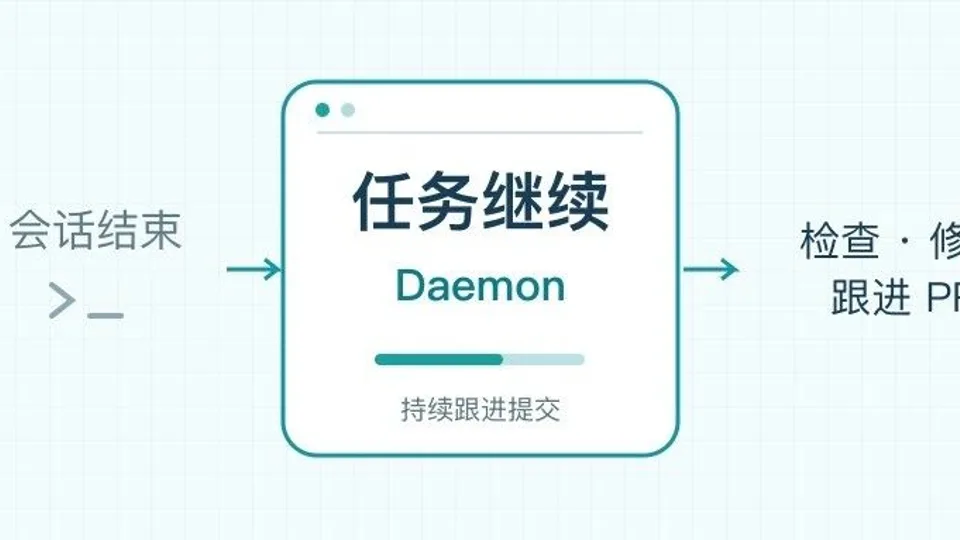
This article details how to build a software factory using coding agents by persisting tasks after commit, automating check-and-repair loops, handling human intervention, and scaling concurrency, drawing on real-world practices from archdev and Runway to outline a minimal architecture of a worker, persistent task store, and executor.
This article provides a decision framework for ontology projects, distinguishing goal-constrained and open-exploration evaluation modes, using structured comparison tables to separate errors from unknowns, correctly attributing improvements, accounting for maintenance costs, and guiding staged decisions (continue, reduce, pause, archive) based on evidence rather than model size.
This article provides a comprehensive breakdown of the US Army's 2026 Systems Engineering Guidebook, detailing its structure, 16 core processes, modernization pillars like digital engineering and MBSE, technical review frameworks, and the shift toward agile, model-driven practices for faster weapon system delivery.