The article presents a three-pillar architecture — Semantic layer, DSL2SQL, and Agent-SuperData — for building reliable data analysis agents, detailing a three-phase evolution (usable, user-friendly, continuously improving) with governance loops, memory systems, and quality assurance to transform data development from passive report delivery to proactive semantic asset management embedded in business decisions.
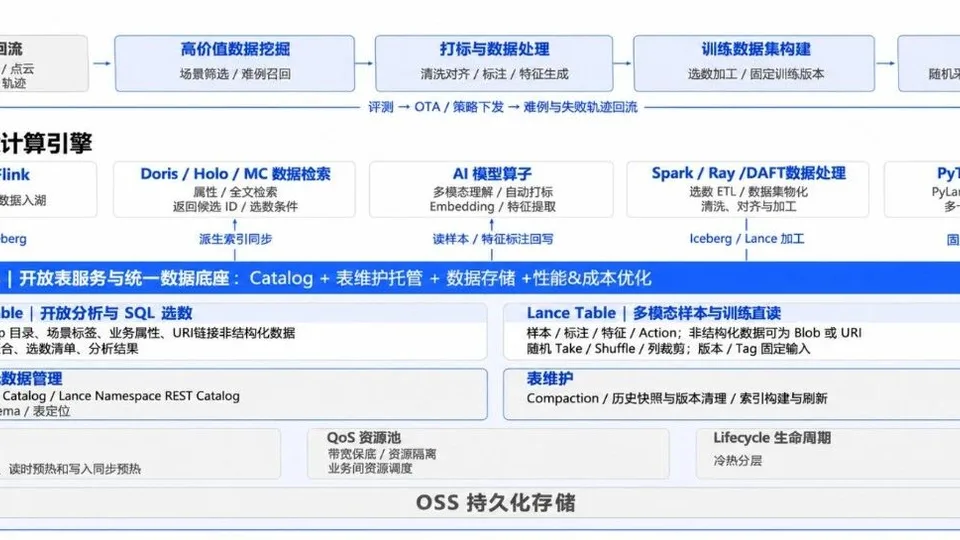
Alibaba Cloud's OSS Tables launches managed Lance table service in public beta, offering zero-ops maintenance, high-bandwidth training reads via OSS accelerator, and open Iceberg/Lance catalog integration to accelerate multimodal data pipelines for autonomous driving and embodied AI.
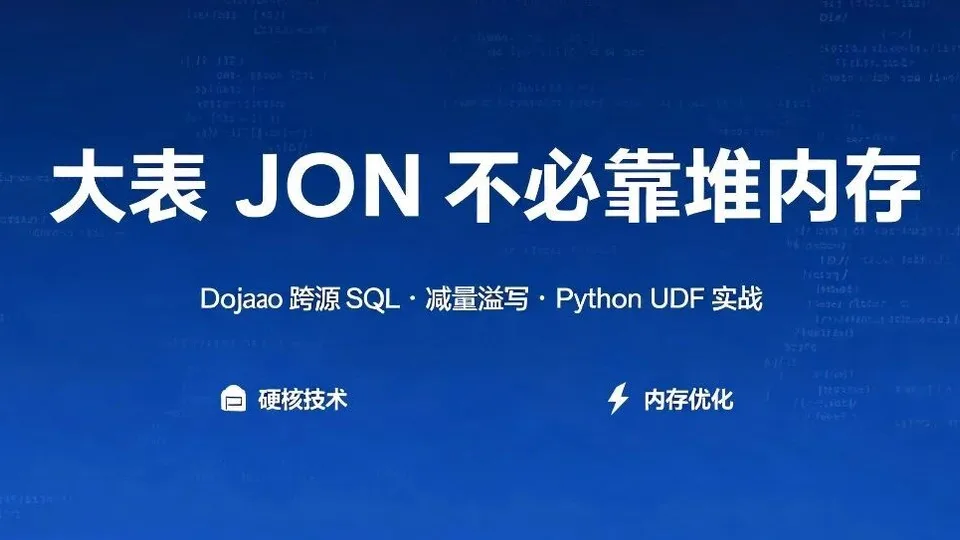
Dojao is a distributed MPP engine that runs cross-source SQL across Hive, MySQL, Excel and more without ETL, using a reduced spill-to-disk pipeline that shrinks intermediate data, a unified memory model with high/low watermarks, and Python UDFs via Arrow Flight sidecars — all startable on a single machine.
This article presents a seven-step standardized operating procedure for data analysis, combining AI-assisted requirement breakdown, data preparation, indicator design, and analysis with BI-powered integration, visualization, and tracking to transform fragmented analytical work into a reusable, end-to-end workflow.
This article explains the differences between virtual and materialized propagation in ontology modeling, detailing their storage mechanisms, real-time vs cached query performance, read-only nature, and providing a comparison table plus guidance for large enterprises versus SMEs on selecting appropriate data governance approaches.
This article uses an e-commerce order scenario to distinguish databases, data warehouses, data lakes, data platforms, and lakehouse architectures, detailing their roles, storage, schemas, and query patterns, then dives into Iceberg, Hudi, Paimon, and Delta Lake selection, CDC pipelines, schema evolution, small-file compaction, and real-time/offline consistency engineering practices.
Palantir's Foundry now offers GA Ontology SQL and SQL Functions, letting developers query ontology objects and relationships directly and publish parameterized queries as reusable functions so supply chain dashboards, customer service tools, and automation systems all apply the same business logic for predicting delivery delays while supporting versioned rule updates.
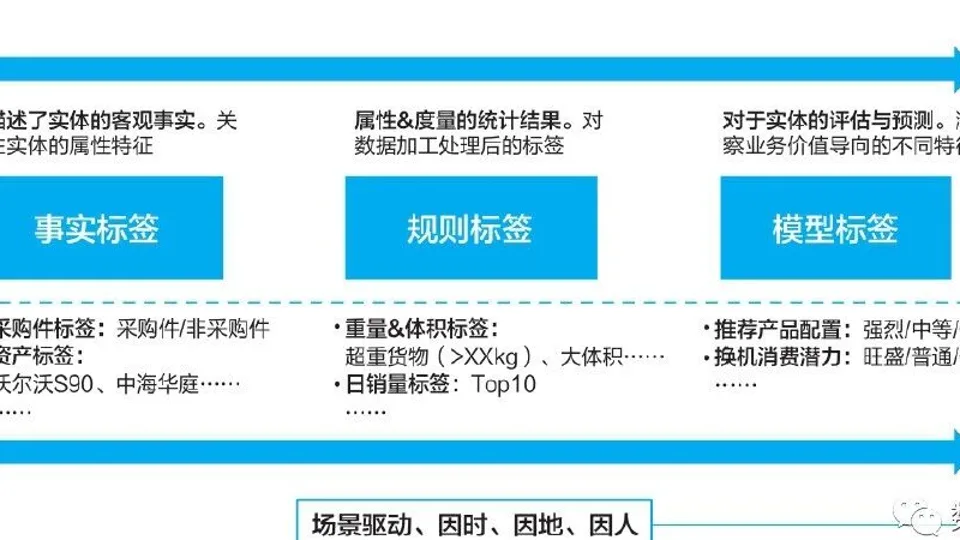
This article defines tags and data metrics, details their three-type classifications (factual/rule/model tags; atomic/derived/derivative metrics), contrasts their use cases (tags for entity grouping, metrics for business monitoring), and illustrates how they interconvert with banking examples like AUM-based private banking tags and high-net-worth customer migration rates.
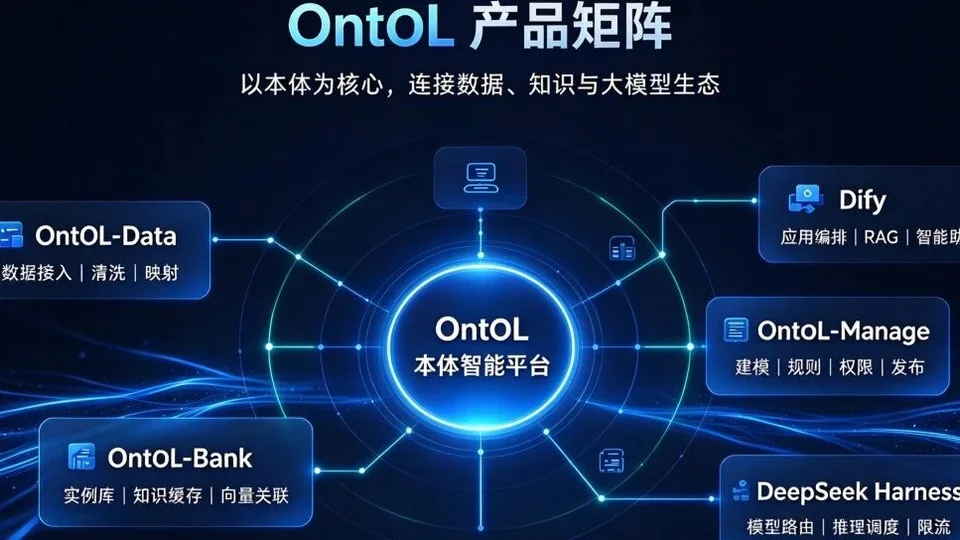
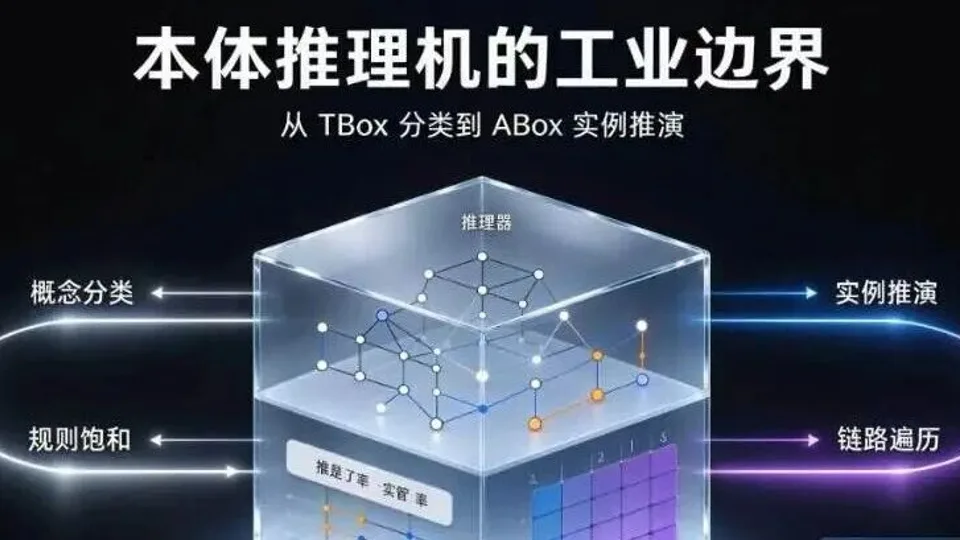
The article details an ontology-based architecture (OntoL) that unifies fragmented metrics from ERP, MES, WMS, finance, and IoT into a federated operational knowledge graph, covering TBox modeling, multi-source ABox ingestion, indicator assetization, a declarative DSL reasoning engine, and governance pitfalls.
The article examines how semantic layers centralize metric definitions to ensure consistency across dashboards, using Claude Data's certified queries as a case study to show why query-level certification isn't enough when upstream metric logic changes, and outlines a four-step validation process for AI-generated dashboards.
This tutorial walks through using Alibaba Cloud's AI-native big data service ADA to perform conversational data analysis: activate the service, upload order data, query with natural language, verify execution plans and intermediate results, drill down to root causes, and schedule automated daily reports with team notifications.
This article explains data label concepts, three-tier classification (attribute, statistical, algorithmic), Huawei's fact/rule/model framework, design steps (object selection, relationship mapping, category design), and implementation via vertical vs horizontal fusion tables for scalable data platforms.
Qunce Intelligence processes 300K hours of embodied intelligence data (10TB/day) using MaxCompute Serverless and MaxFrame, enabling video decoding, alignment, model inference, and quality checks in a unified pipeline without self-managed peak clusters, handling PB-scale multimodal sensor data with fault tolerance.
IQuest Research replaced file-based data management with a Lance-based lakehouse on Volcano Engine EMR, introducing a four-layer architecture with stable record IDs, columnar accumulation, versioned delivery, and bidirectional traceability to handle 50B+ records and enable reproducible training at hundred-billion token scale.
The article analyzes how semantic layers centralize metric definitions to ensure consistency across dashboards, using Claude Data's query certification as a case study to illustrate risks of upstream definition changes, granularity errors, and the need for versioned metric governance in AI-assisted analytics.
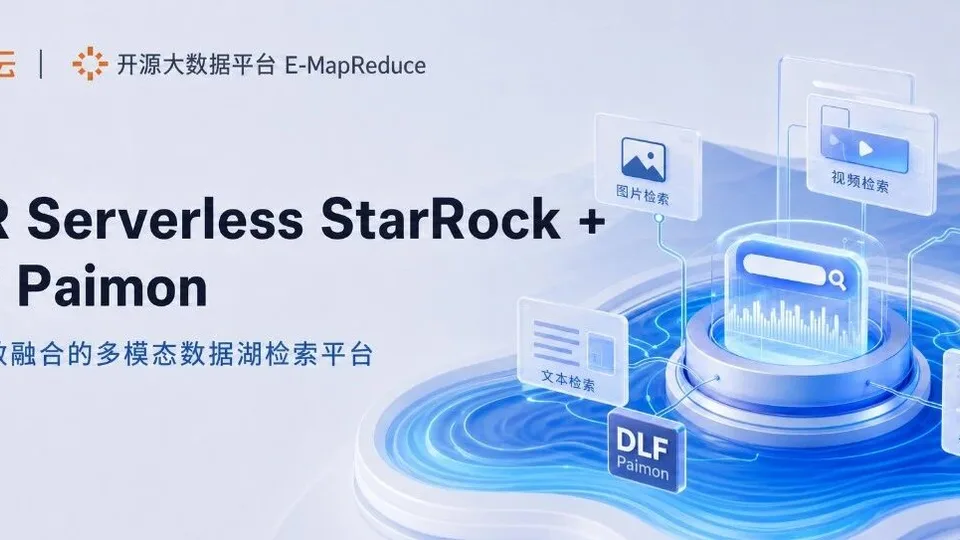
The article details how Alibaba Cloud's EMR Serverless StarRocks (Stella kernel) and Paimon lake tables enable hybrid vector-scalar SQL queries over multimodal data stored in OSS, providing architecture layers, three SQL examples for autonomous driving scenarios, and a bad-case-to-retraining loop.
DataWorks AI Data Generation turns synthetic data creation into a pipeline: a JSON config lets LLMs orchestrate business scenarios while a rule engine enforces cross-field consistency, delivering simulation-grade wide tables in minutes for testing, demos, and model training across industries like IoV, finance, and healthcare.
The article evaluates OWL2, SWRL, and SHACL specifications from cell engineering for enterprise semantic layer adoption, concluding that while the conceptual vocabulary is high-quality, direct deployment fails due to reasoning performance, open-world assumptions, and missing validation; it prescribes a full engineering overhaul including profile reduction, SWRL dismantling, SHACL construction, and governance processes.
Alibaba Cloud introduces ADA, an AI-native big data service that uses multi-agent collaboration, an enterprise knowledge engine, and native engine perception to let users perform complex data tasks through natural language conversations, delivering end-to-end results without manual SQL or console switching.
This article details Alibaba Cloud's architecture for multimodal data lake retrieval using EMR Serverless StarRocks and DLF Paimon, covering design principles like early filtering and on-demand reading, Global Index mechanics, format selection between Paimon and Lance, real-world deployments in Alibaba's A Lake and AI Data platforms, and a complete autonomous driving loop from bad case detection to model validation.