

AI Proves Riemann Hypothesis in 41 Days: Knowledge Scarcity Collapses, Human Moats Shift
Anthropic's mathematician and Claude reportedly proved the Riemann Hypothesis in 41 days using 17.37 million lines of Lean code, contrasting 167 years of human effort; the author argues this demonstrates knowledge scarcity is vanishing, shifting human value to judgment, questioning, responsibility, and physical health as enduring moats.
Reading font
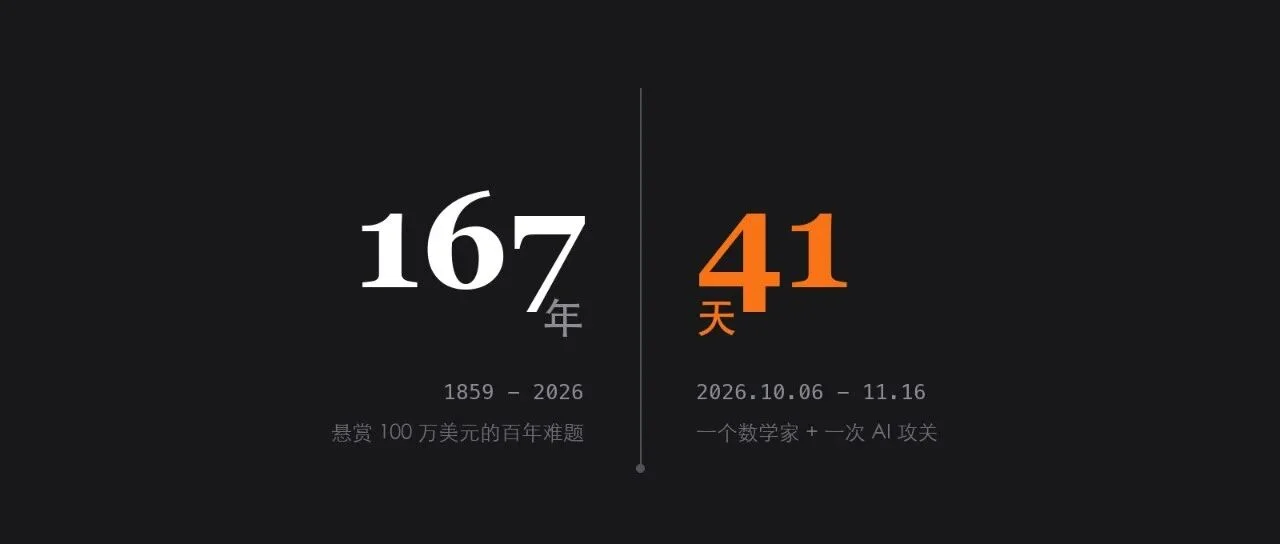
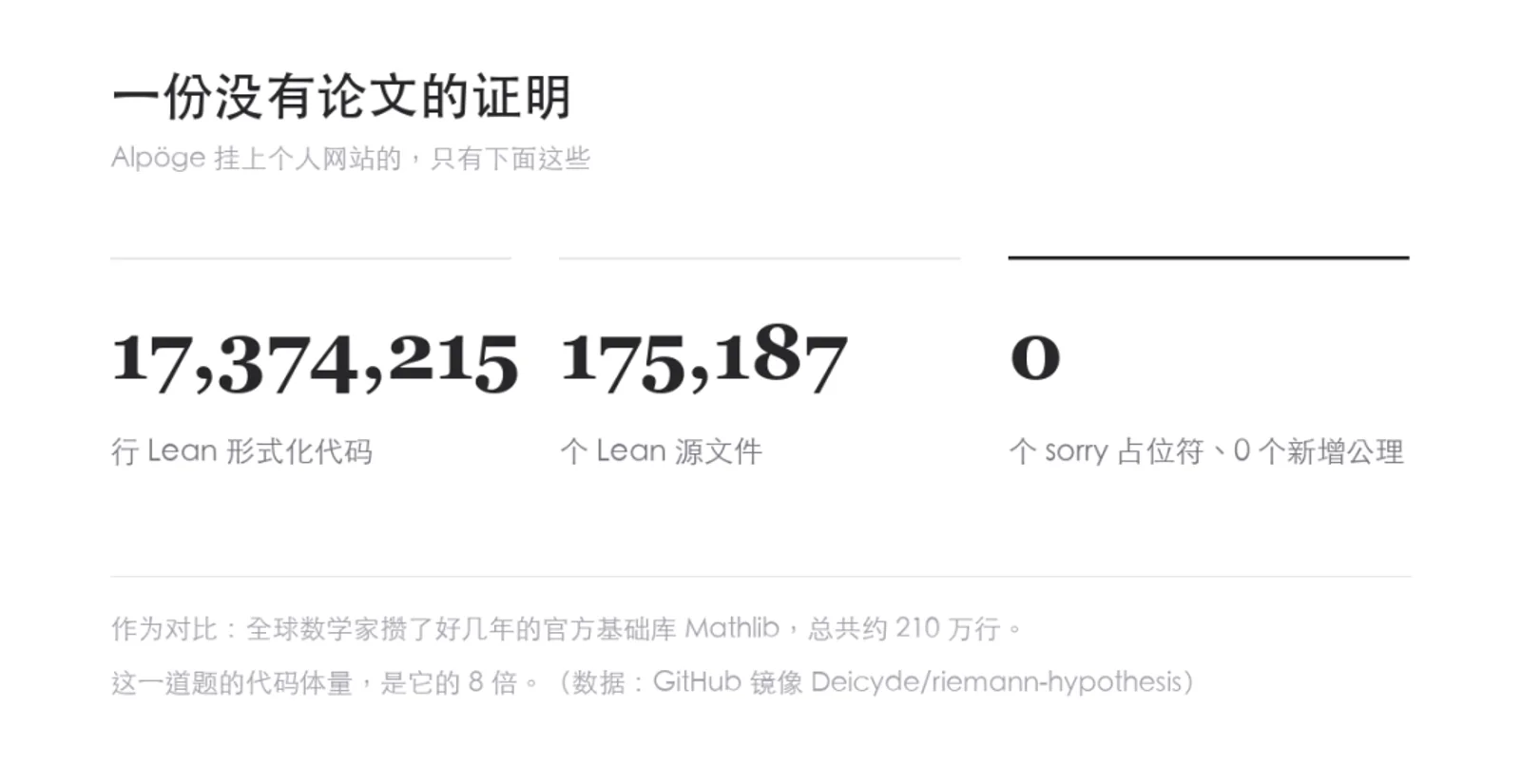
On November 20, 2026, Anthropic mathematician Levent Alpöge announced that he and the AI model Claude had proved the Riemann Hypothesis. Instead of a traditional paper, Alpöge released 17.37 million lines of Lean code across 175,187 source files in 14 compressed packages. The Lean and Mathlib communities verified the formalization within a day, expressing full confidence, though the Clay Mathematics Institute still lists the problem as unsolved because human reviewers have not yet understood the proof's reasoning.
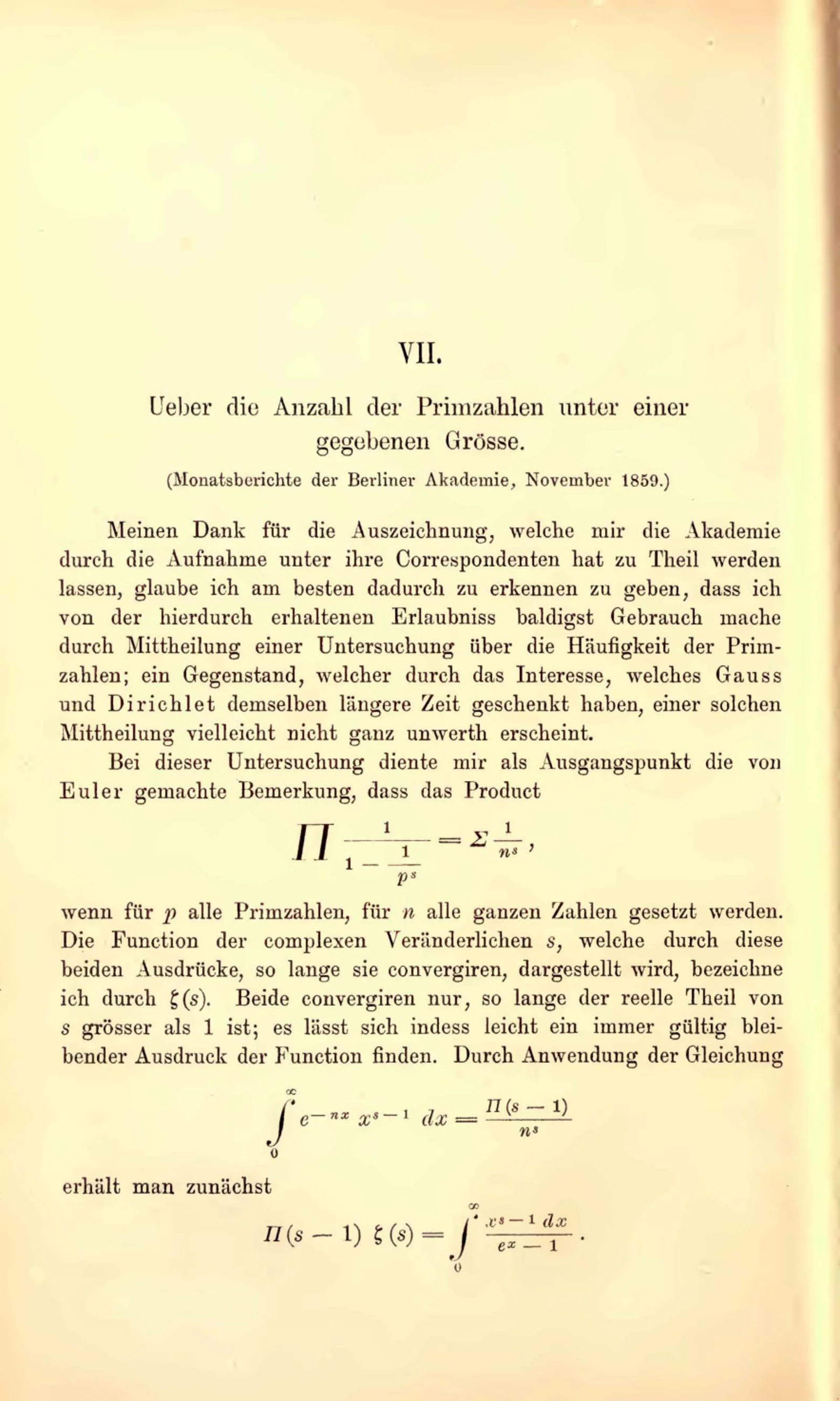
The Riemann Hypothesis, posed in an 1859 paper of fewer than ten pages, had resisted proof for 167 years and is one of the seven Millennium Prize Problems carrying a $1 million reward. Generations of top mathematicians made only incremental progress. Alpöge, a Princeton PhD and Harvard Society Fellow, completed the core formalization in just 41 days .
Alpöge candidly admitted that large portions of the derivation were produced by Claude in areas he himself was not familiar with, and that he could not fully explain the complete logical chain of the proof. Mathematician Thomas Bloom remarked that it was unclear which was more shocking: that AI proved the hypothesis, or the sheer volume of the proof.
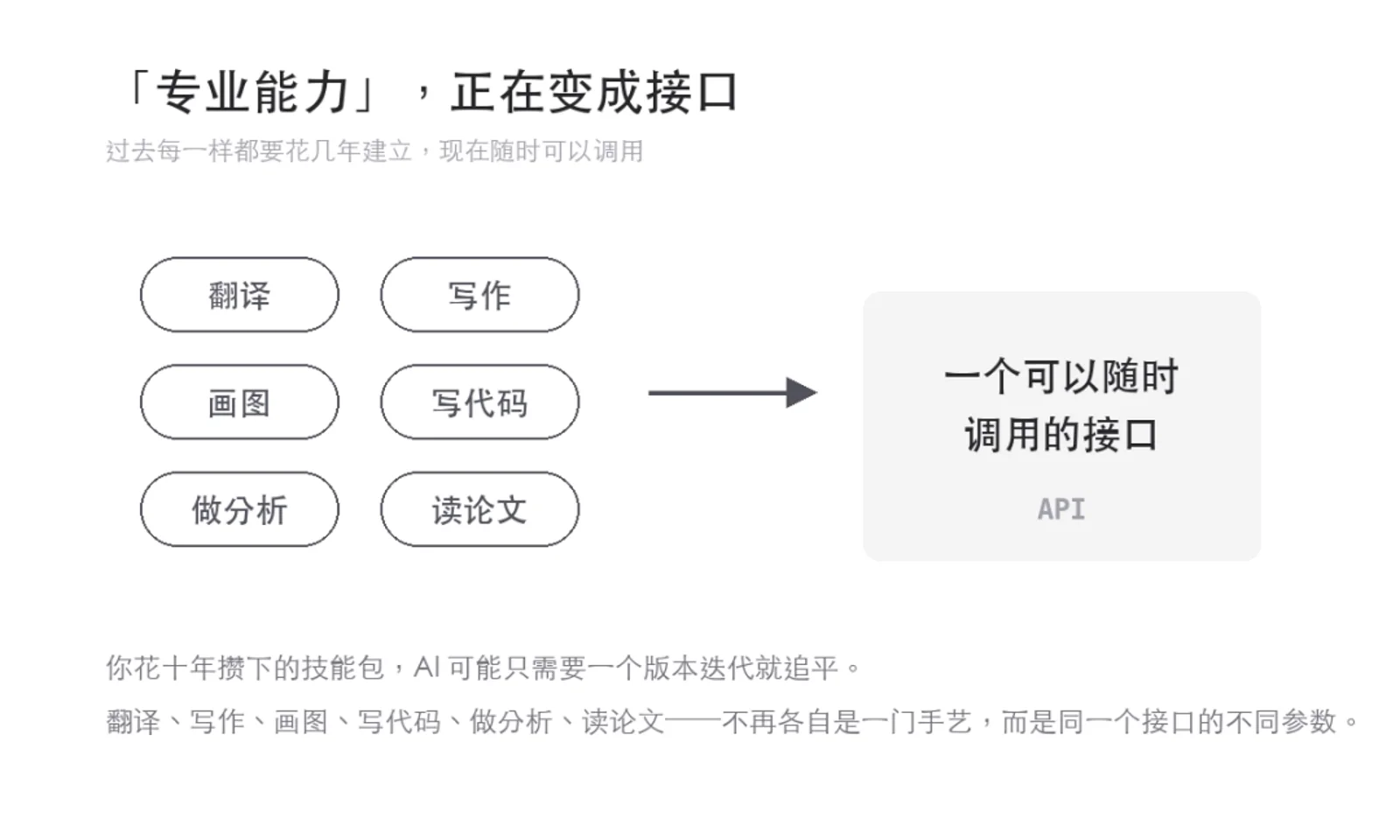
The author uses this episode to argue that "knowing how to do" is rapidly losing its scarcity . Skills such as translation, writing, coding, analysis, and reading papers — once built over years — are becoming callable interfaces that AI can match in a single version update. The 17.37 million lines of Lean code serve as concrete evidence.
In an era of infinite output, the author identifies three irreplaceable human moats :
Judgment : selecting and validating answers from a flood of AI-generated options.
Questioning ability : defining the real problem and decomposing vague needs into clear steps — something AI cannot do because it is defined by the user's prompt.
Responsibility and trust : accountability for outcomes; only a human can sign off, bear liability, and be trusted.
These capabilities cannot be speed-learned online; they are forged piece by piece through concrete experience.
The author further contends that physical and emotional health are the foundational "main course" for the long marathon of AI transformation. Technical opportunities will emerge year by year (2027, 2037, etc.), but only those still "at the table" can seize them. Knowledge can be acquired anytime with AI tutors, but health does not wait. A sleep-deprived, anxious person lacks judgment.
The conclusion: AI has already summited mathematics' Everest . Humans should not race AI on climbing speed; instead, we must become something AI cannot take away — clear-minded, healthy, and purpose-directed.
For questions about attribution, corrections or content rights, please contactand we will review it promptly.