

Context Engineering: Building Reliable AI Agents Beyond Prompts
This article introduces context engineering as a strategic discipline for AI agents, contrasting it with prompt engineering, detailing core components like system prompts, tool design, examples, and history management, and presenting three strategies—compaction, structured note-taking, and sub-agent architectures—for handling long-horizon tasks, concluding with practical guidelines for iterative, token-efficient, data-driven context design.
Reading font
From Prompt Engineering to Context Engineering
As the MCP protocol and the broader agent ecosystem evolve, AI agents have moved beyond simple Q&A to become autonomous agents capable of task planning, tool use, and multi-step workflow execution. However, building efficient and stable agents requires more than clever prompt engineering. In practice, agents often drift from their initial goals after several turns or lose direction in complex tool-call chains, falling into repetitive, inefficient loops. Adjusting system prompts rarely fixes these issues because the root cause lies in the agent's information environment—its context .
Context includes not only conversation history but also external knowledge, tool-call records, and other information sources. Without systematic management of this entire environment, even well-crafted prompts cannot sustain agent performance on complex tasks.
Prompt Engineering vs. Context Engineering
Anthropic's recent article Effective Context Engineering for AI Agents introduces Context Engineering as a new discipline: treating the context an agent relies on as a scarce, valuable resource and managing it systematically to maximize task execution capability and stability.
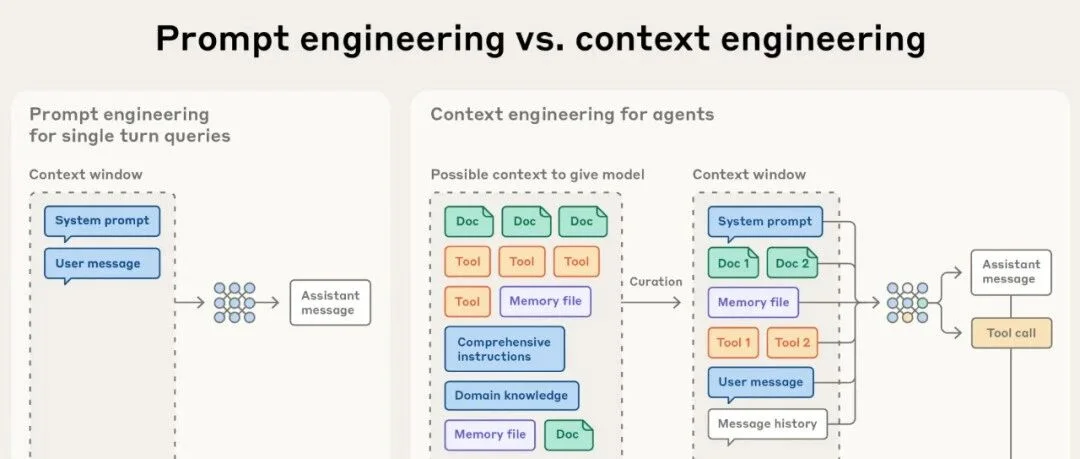
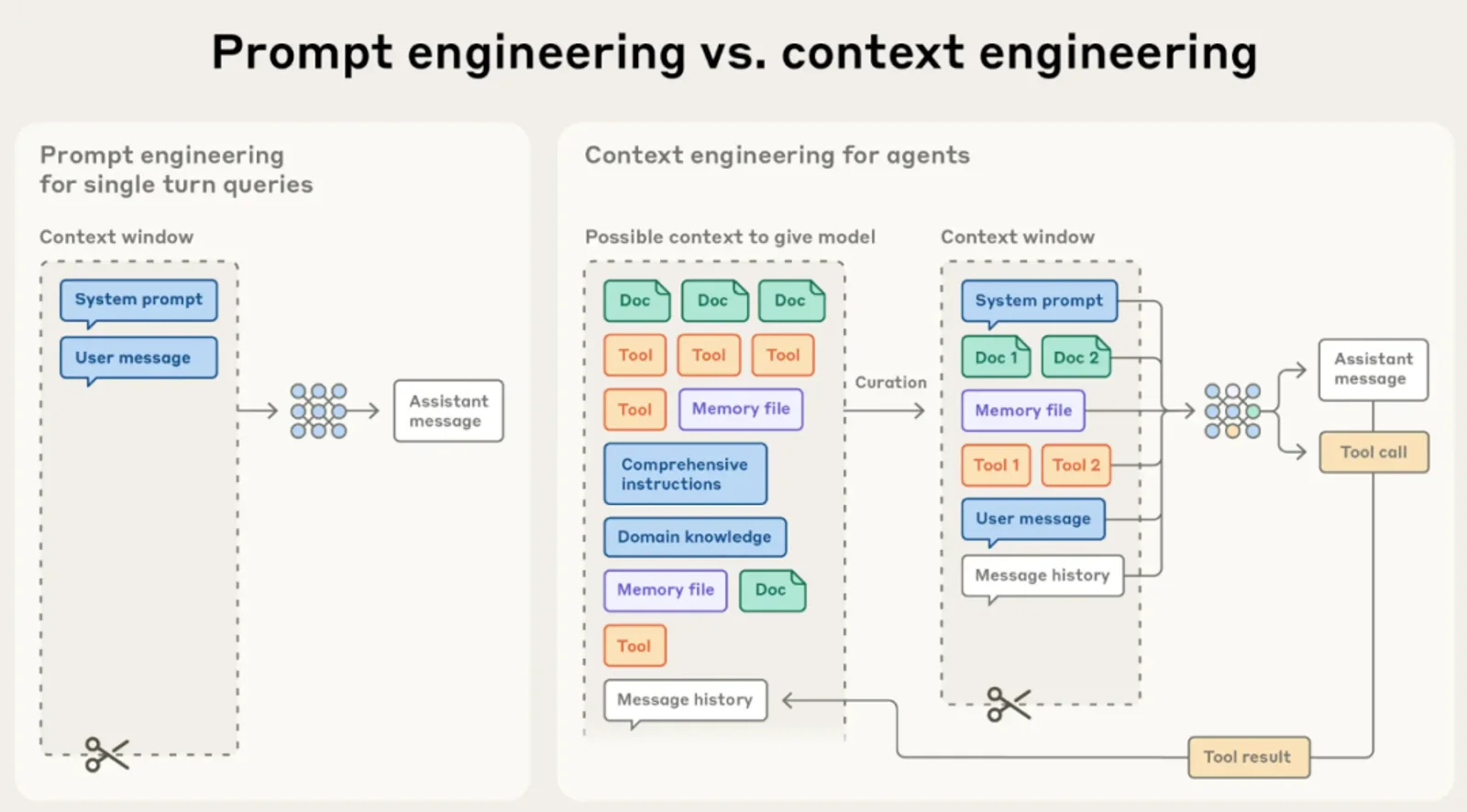
Prompt Engineering focuses on writing clear, specific instructions to guide the model in a single interaction. It is tactical—telling the model what to do .
Context Engineering is strategic planning for the entire task lifecycle. It encompasses initial prompts, tool definitions, conversation history, external knowledge bases, intermediate task states, and more. Its goal is a dynamic, controllable information environment that gives agents greater coherence, adaptability, and robustness.
In short, prompt engineering is how to say it ; context engineering is what to say, when to say it, and how to organize the information .
Why Context Engineering Matters
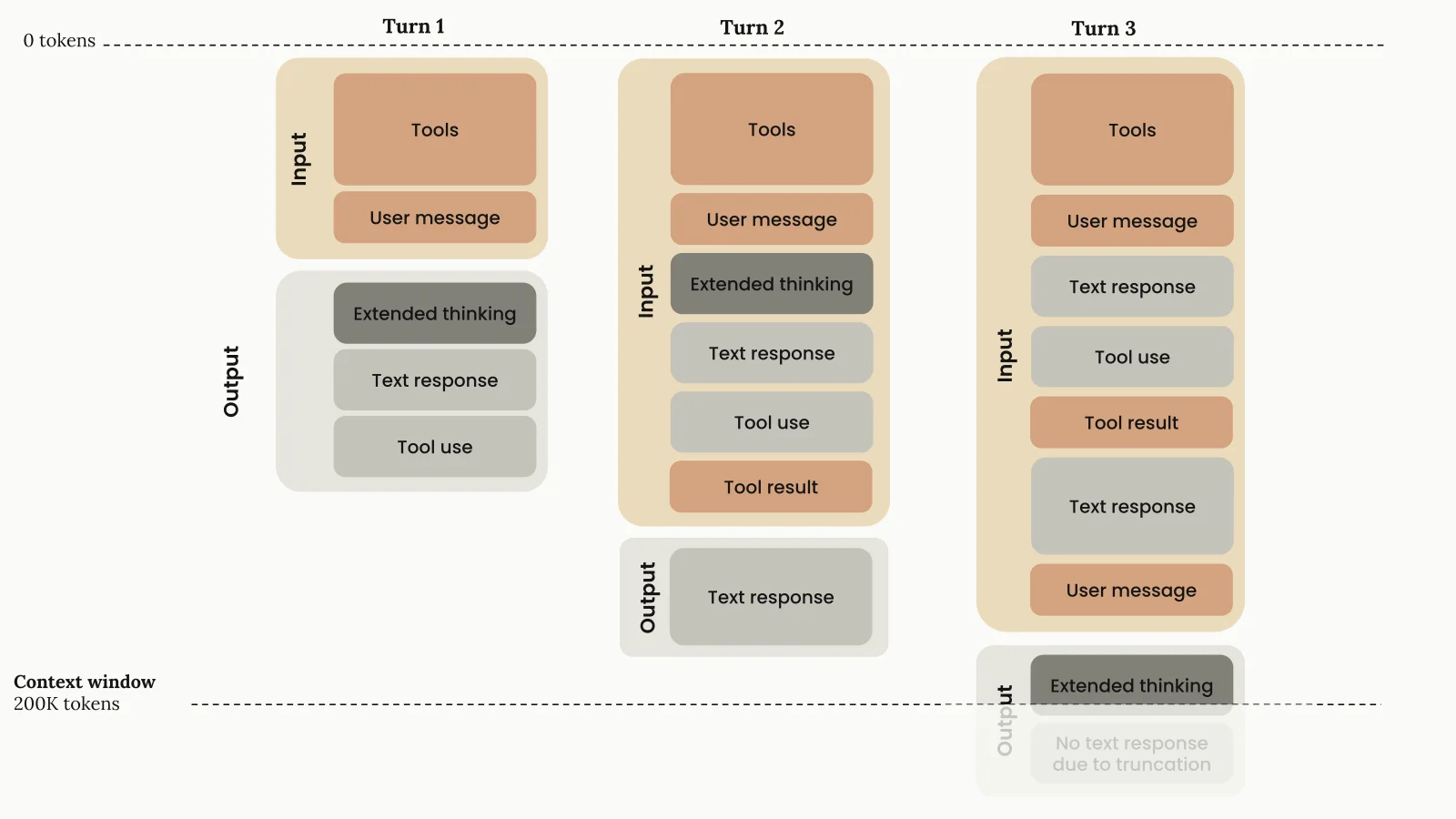
Limited Attention : Like humans, LLMs have finite attention. When the context window fills with redundant or irrelevant information, performance drops—leading to "attention dispersion" and "Context Rot."
Evolving Tasks : Agents continuously interact with environments, call tools, and generate new information. Managing this dynamically growing context determines whether an agent can maintain memory and focus over long horizons.
Cost and Efficiency : Every token in the context window incurs compute cost. Efficient context engineering reduces token consumption, improving latency and economics.
Core Elements of an Efficient Context
According to Anthropic, an efficient context comprises:
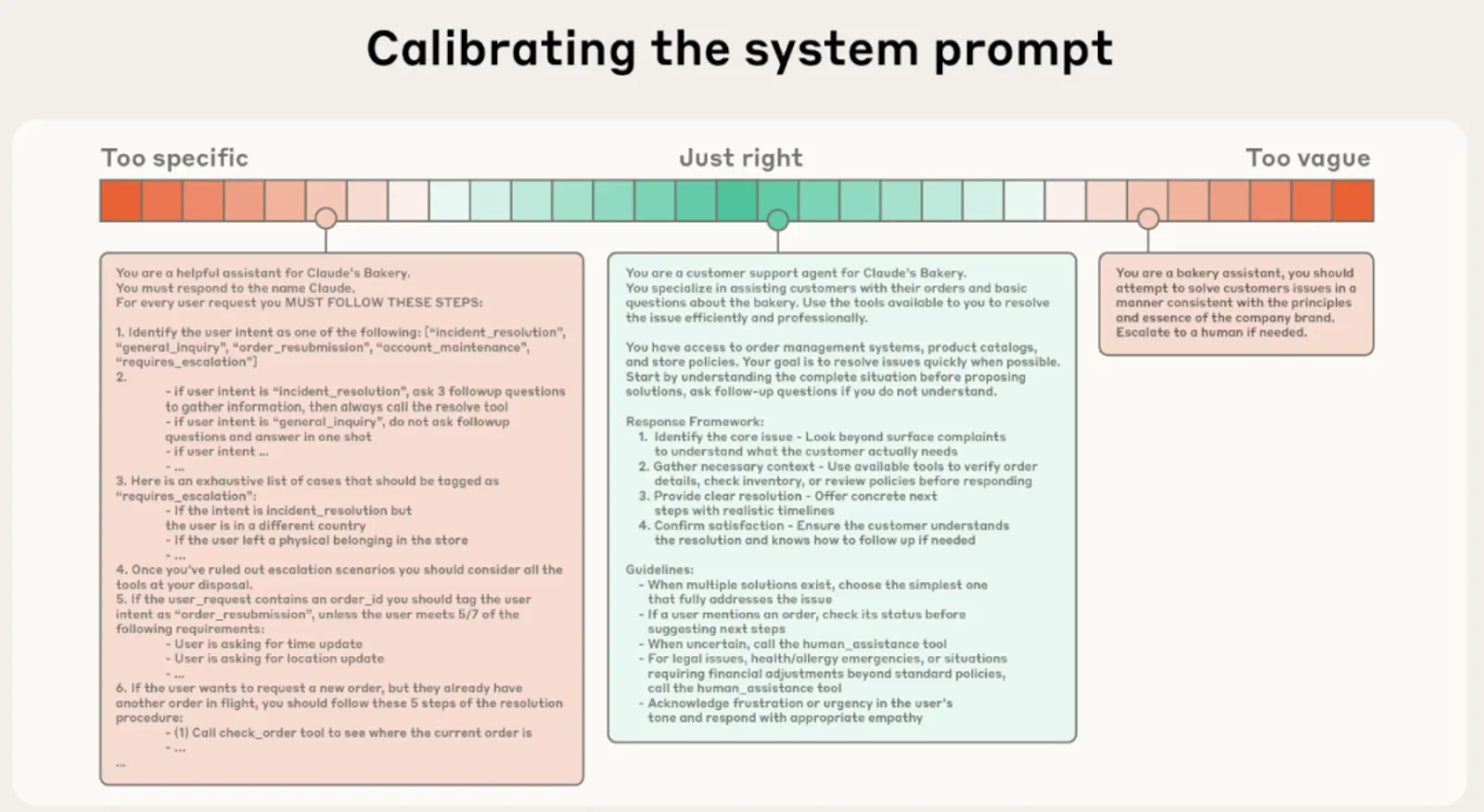
System Prompts – Goldilocks Principle : Prompts must strike a balance—neither so vague that the model is lost, nor so rigid that hard-coded logic restricts flexibility. They should provide clear behavioral nudges, not fixed execution paths.
Efficient Tool Design : Tools are the agent's bridge to the outside world. Design for token efficiency: returns should be concise and relevant. Each tool's function must be distinct, avoiding overlap and confusion.
Concise, Canonical Examples : Examples guide behavior effectively but must be compact and representative, avoiding verbosity.
Intelligent History Management : Never dump all conversation history into context. Strategically select and compress history, retaining only what is most relevant to the current task.
Three Strategies for Long-Horizon Tasks
When task complexity exceeds a single context window's capacity, advanced strategies are needed:
Compaction : For tasks requiring extensive back-and-forth, automatically summarize or extract entities from lengthy histories into concise summaries, preserving key information while saving space.
Structured Note-Taking : Teach the agent to take notes during execution—recording key findings, intermediate conclusions, and decisions in structured formats (JSON, XML). This creates an external "memory bank" the agent can reference without cluttering the context window.
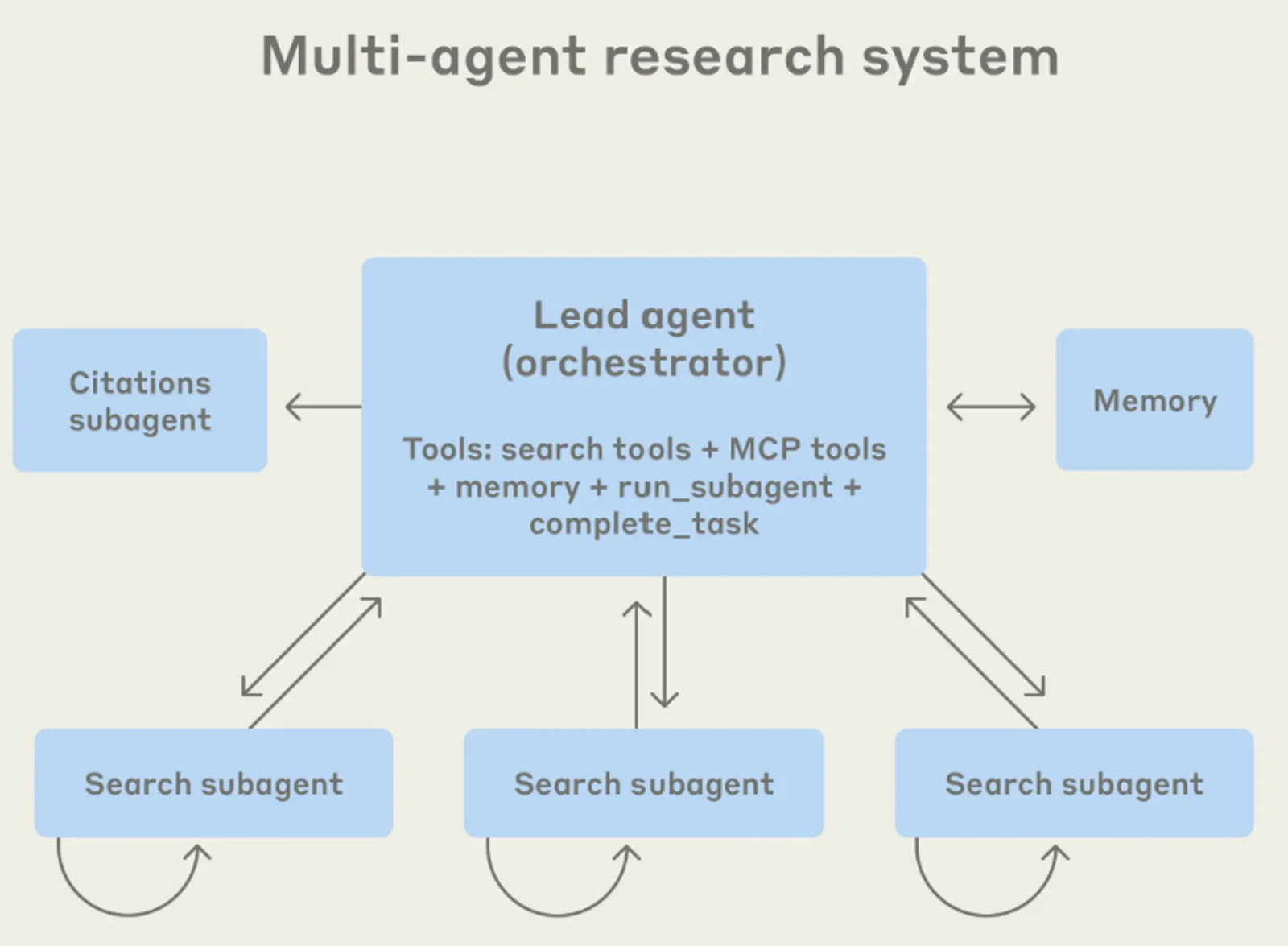
Sub-Agent Architectures : For extremely complex tasks (e.g., deep research), decompose the main task into sub-tasks handled by specialized sub-agents. The main agent coordinates and integrates; sub-agents focus on their domains. This enables parallelism and isolates contexts, preventing interference.
Practical Guidelines
Start Simple, Iterate : Launch the agent with minimal prompts and tools, observe failure points, then incrementally add necessary information and remove redundancy.
Concise Expression, Token Efficiency : Every word should serve the task goal; brevity is a core principle of context design.
Data-Driven Monitoring : Track token consumption, tool-call frequency, context-window utilization, and analyze model effectiveness under different context structures.
When we stop being mere "interaction designers" writing prompts and become "information architects"—designers of context—we can build agent systems with stronger task understanding, execution stability, and environmental adaptability.
Reference: https://www.anthropic.com/engineering/effective-context-engineering-for-ai-agents
For questions about attribution, corrections or content rights, please contactand we will review it promptly.