

General Looped Model: Scaling AI Intelligence via Compute Depth, Not Parameters
FaceMind's General Looped Model framework applies weight-sharing recurrence across language, world, and diffusion models, showing that increasing compute depth can match larger-parameter models while cutting memory usage, though latency and error accumulation remain challenges.
Reading font

From Parameter Scaling to Compute Depth
For years, the primary route to stronger AI models was increasing parameter count. As models enter the trillion-parameter era, memory capacity, bandwidth, and deployment cost become bottlenecks. Looped architectures offer an alternative: reuse the same layers across multiple iterations, increasing effective compute depth without proportional parameter growth.
Three Directions of the General Looped Model
Looped Transformer: Deeper Reasoning in Language Models
Zhipu's GLM-5.4 (released Nov 23) is the first flagship LLM to adopt a Looped Transformer. It uses a 28-layer network run for two recurrent passes. Zhipu claims its intelligence rivals 2–3 trillion parameter models. In experiments, a 30B looped model gained performance with only ~10% extra training compute. OpenAI's rumored Astra model reportedly uses similar recurrent depth techniques.
Looped World Model: Iterative State Estimation
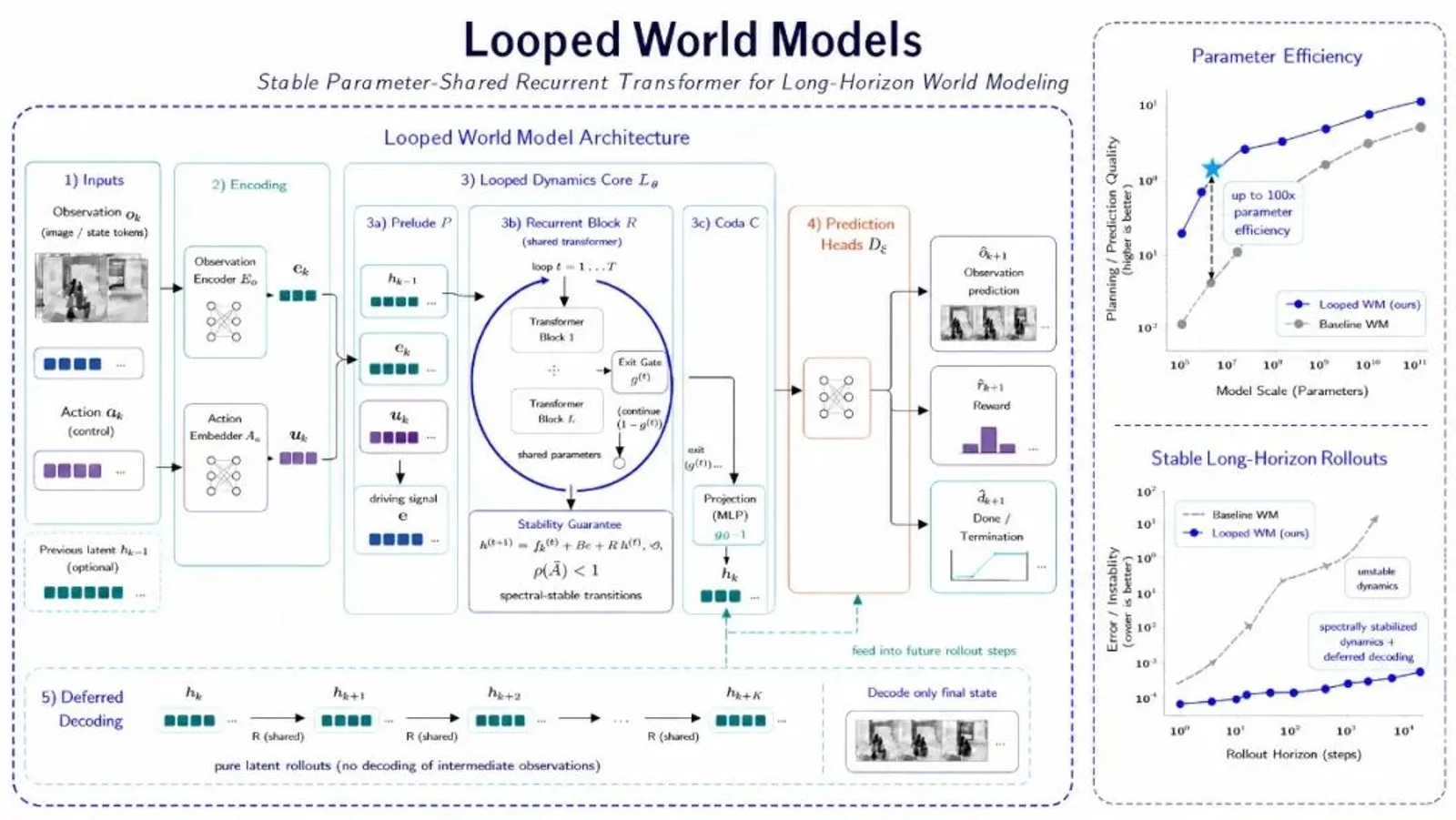
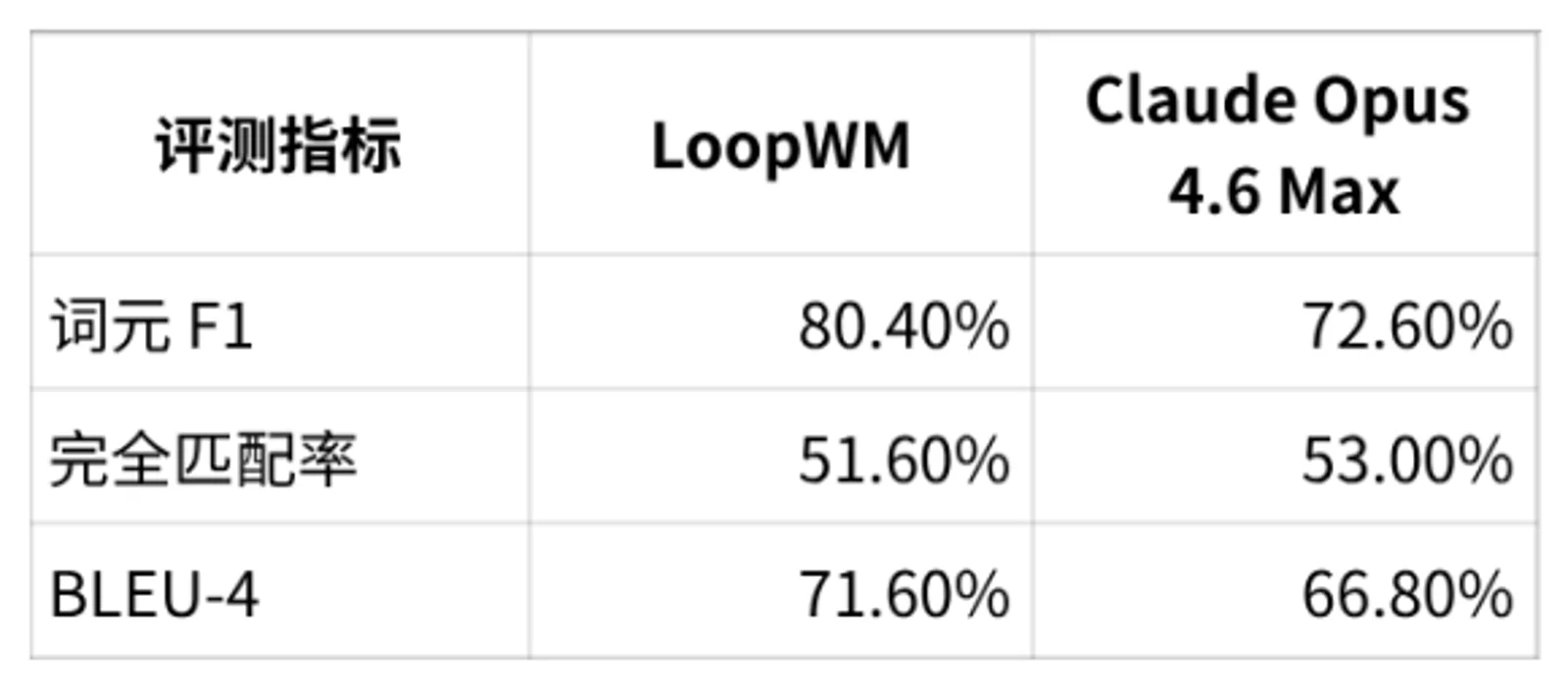
World models must predict future states given actions; errors accumulate over long horizons. FaceMind's June 2024 paper "Looped World Models" introduces LoopWM, described as the first recurrent architecture for world modeling. A shared-weight Transformer repeatedly refines its state estimate, adjusting compute depth to task complexity. On ALFWorld multi-step prediction, a ~1B parameter LoopWM competed with Claude Opus 4.6 Max, winning on several metrics despite a slightly lower exact-match rate.
Looped Diffusion: Parameter Efficiency for Deployment
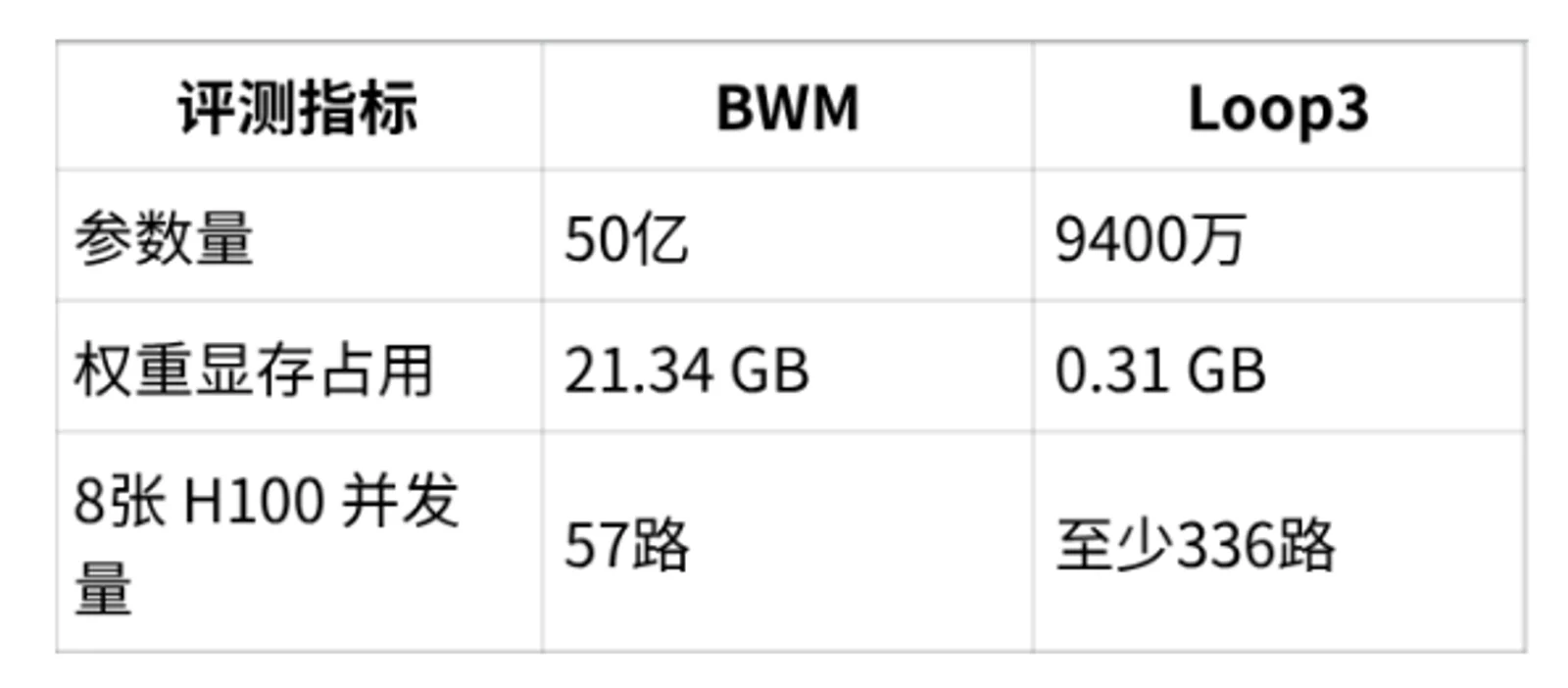
FaceMind's internal report (Oct 8) compares Loop3 (94M parameters, 3 recurrent steps) against BWM (5B parameters, ~53× larger). Across 16 metrics, Loop3 outperformed on 7, was slightly worse on 3, and lagged on 5. Deployment gains were dramatic: weight memory dropped ~98.5%, and concurrent throughput increased nearly 6× (tested at 128×128 resolution, 57 frames, FP16). These results suggest small looped models can enable high-concurrency serving while maintaining competitive quality. The test environment was a unified local pipeline and not directly comparable to WorldArena leaderboard scores.

Trade-offs and Open Challenges
Reducing parameters does not automatically cut compute cost. Each recurrent step adds latency. GLM-5.4 already shows this: Zhipu's blog notes the model sometimes enters overly long reasoning loops, increasing response time. Moreover, early errors can propagate and amplify through subsequent iterations. Key engineering questions remain: how many loops, when to stop, and how to dynamically allocate compute per task difficulty. Parameter efficiency gains must be balanced against compute efficiency for large-scale commercial deployment.
Compute Depth as a New Scaling Dimension
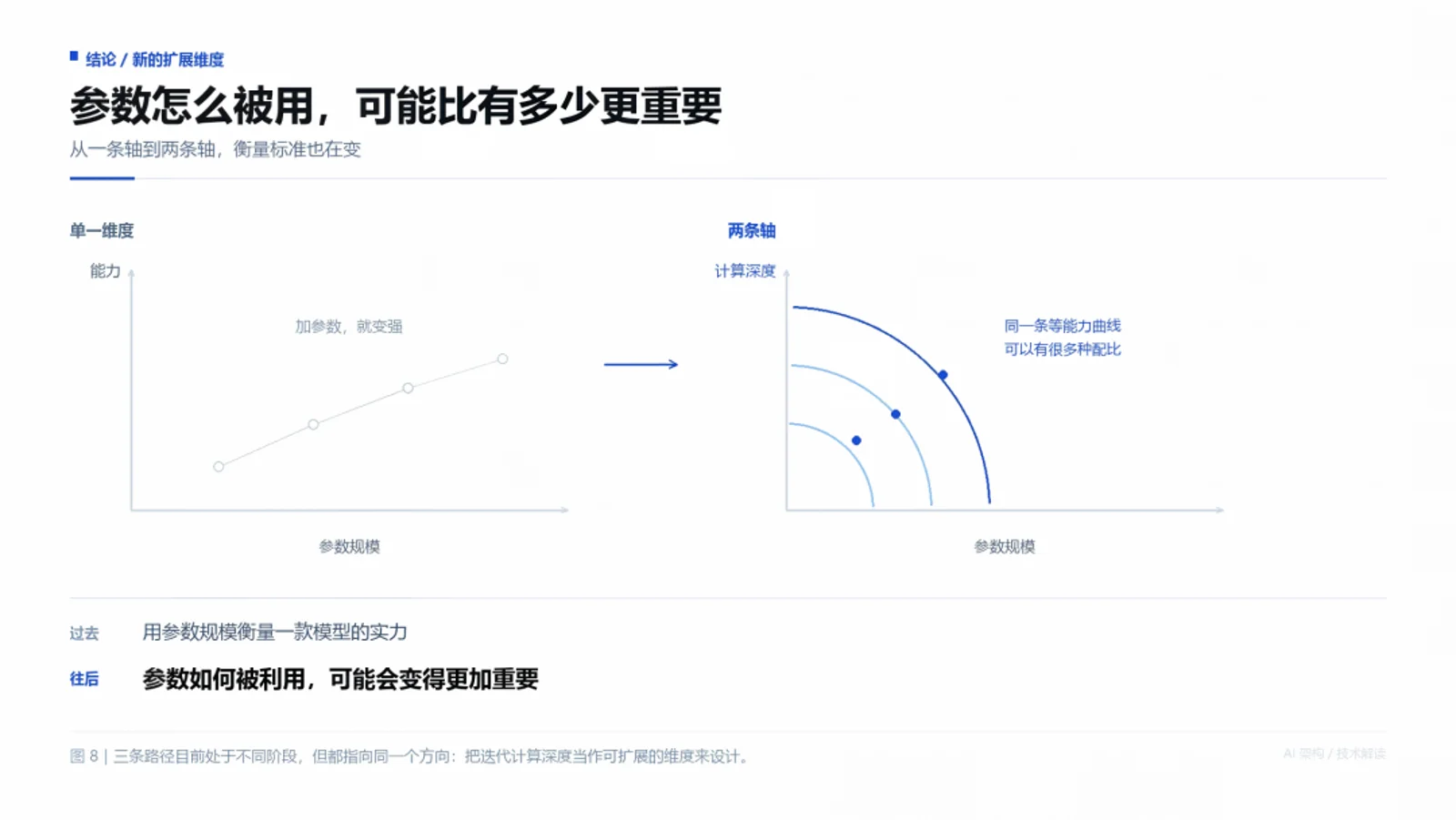
From Zhipu's GLM-5.4 to FaceMind's LoopWM and Looped Diffusion, recurrent architectures are being validated across domains. The General Looped Model framework unifies these explorations, letting researchers ask a single question: how much capability and deployment benefit does each additional iteration bring for a given task? The industry has long used parameter count as a proxy for model power; the future may prioritize how effectively parameters are reused through compute depth.
For questions about attribution, corrections or content rights, please contactand we will review it promptly.