

Google's SIM & GUARD: Memory and Safety for Continual Self-Improving Agents
Google releases two papers on recursive self-improvement: SIM adds memory to optimizers for cross-task experience transfer, while GUARD prevents performance regression via self-inspection and regret-guided gating, together enabling continual, stable self-evolving agents.
Reading font
SIM: Memory for Continual Recursive Self-Improvement
Google's SIM paper (
Self-Improvement Memory Enables Continual Recursive Self-Improvement, arXiv:2611.18856v1, 2026-11-13) addresses a gap in recursive self-improvement (RSI): previous methods only delivered a final harness (the outer runtime system) without preserving the reasoning behind each edit. When transferring a harness to a new dataset or model, practitioners could see the code but not why changes were made, what was intended, or whether they actually worked.
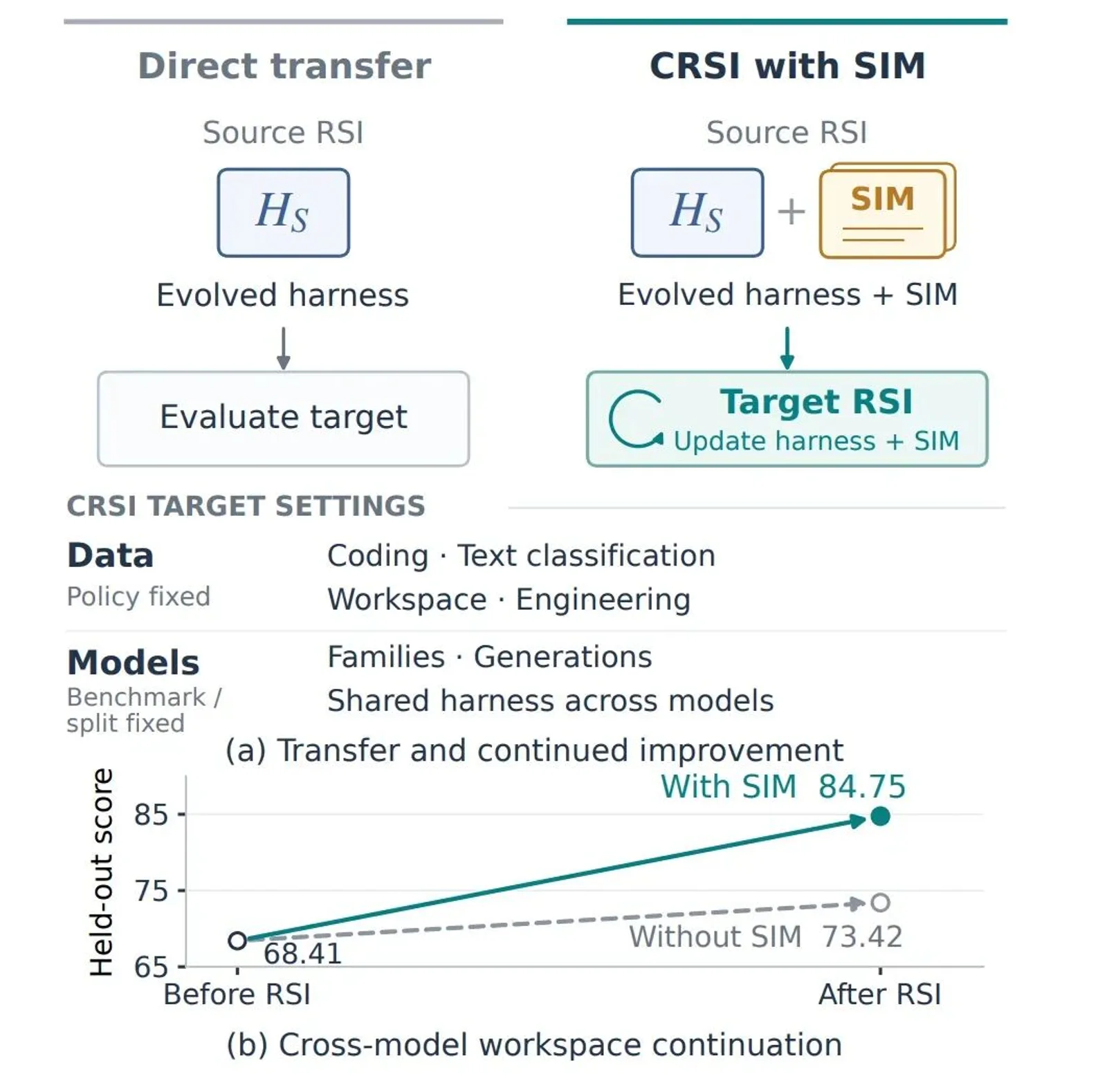
SIM defines a new setting called CRSI (Continual Recursive Self-Improvement) : keep an executable harness and continue optimizing after a domain or model shift. The core insight is to give the optimizer (not the task executor) a memory of past self-improvement attempts.
Each memory entry centers on a recurring root cause and records four fields:
Problem & modification rationale : why this edit was made.
Predicted vs. actual outcomes : what was expected to improve and what actually happened.
Evaluation context : which model, benchmark, and iteration the edit belongs to.
Subsequent attempts : new evidence appended over time, including failures and rollbacks.
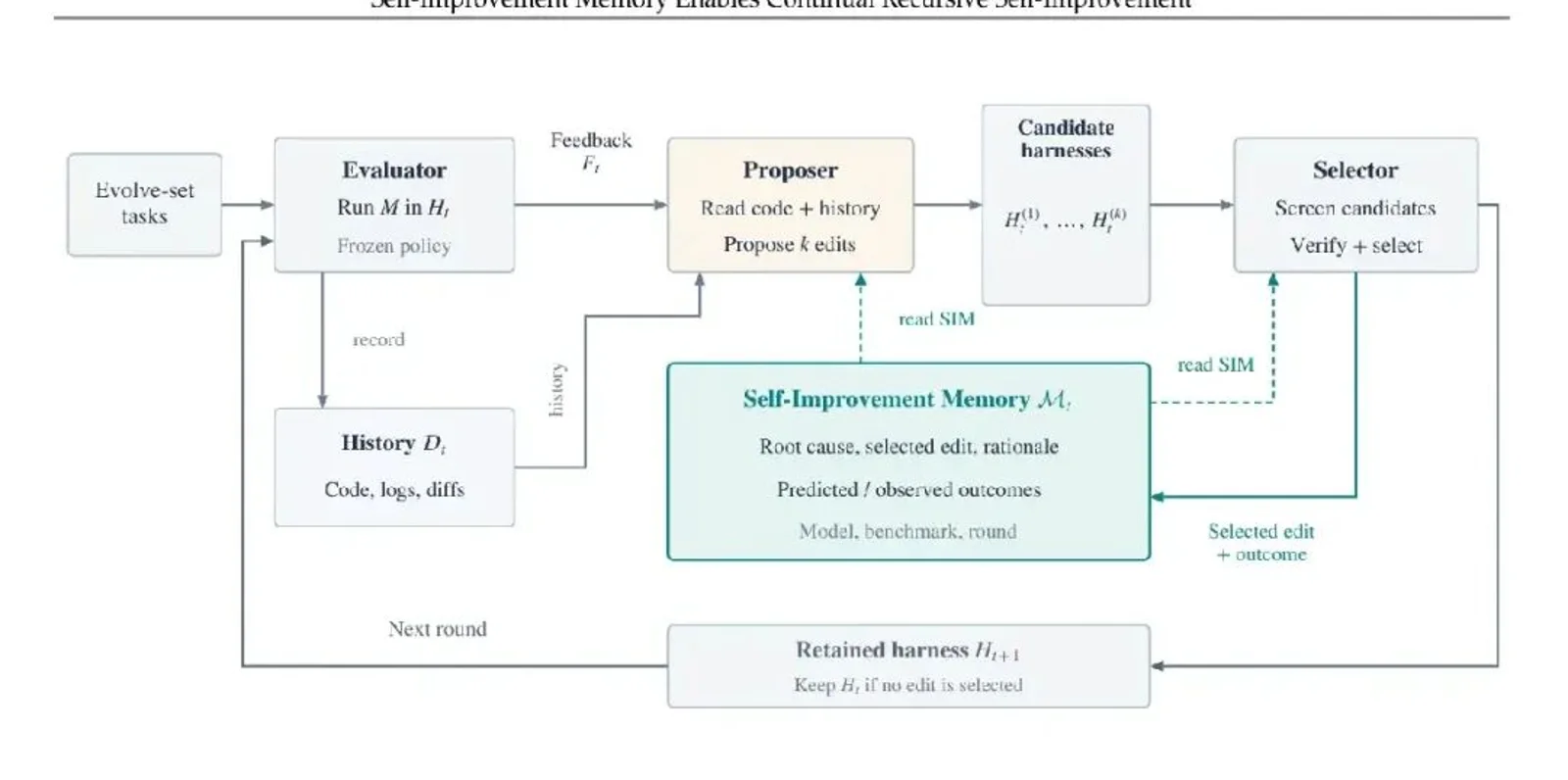
Both the proposer and the selector read this archive to decide whether to retain, revise, replace, or remove an old edit. Thus, what transfers is not just a static answer but the causal chain behind the answer .
Experimental Results
Experiments show that naive harness transfer is unreliable. A harness evolved on Opus, when moved to Gemini on a workspace task, started at 68.41; continuing optimization with only the harness reached 73.42, while full SIM achieved 84.75 .
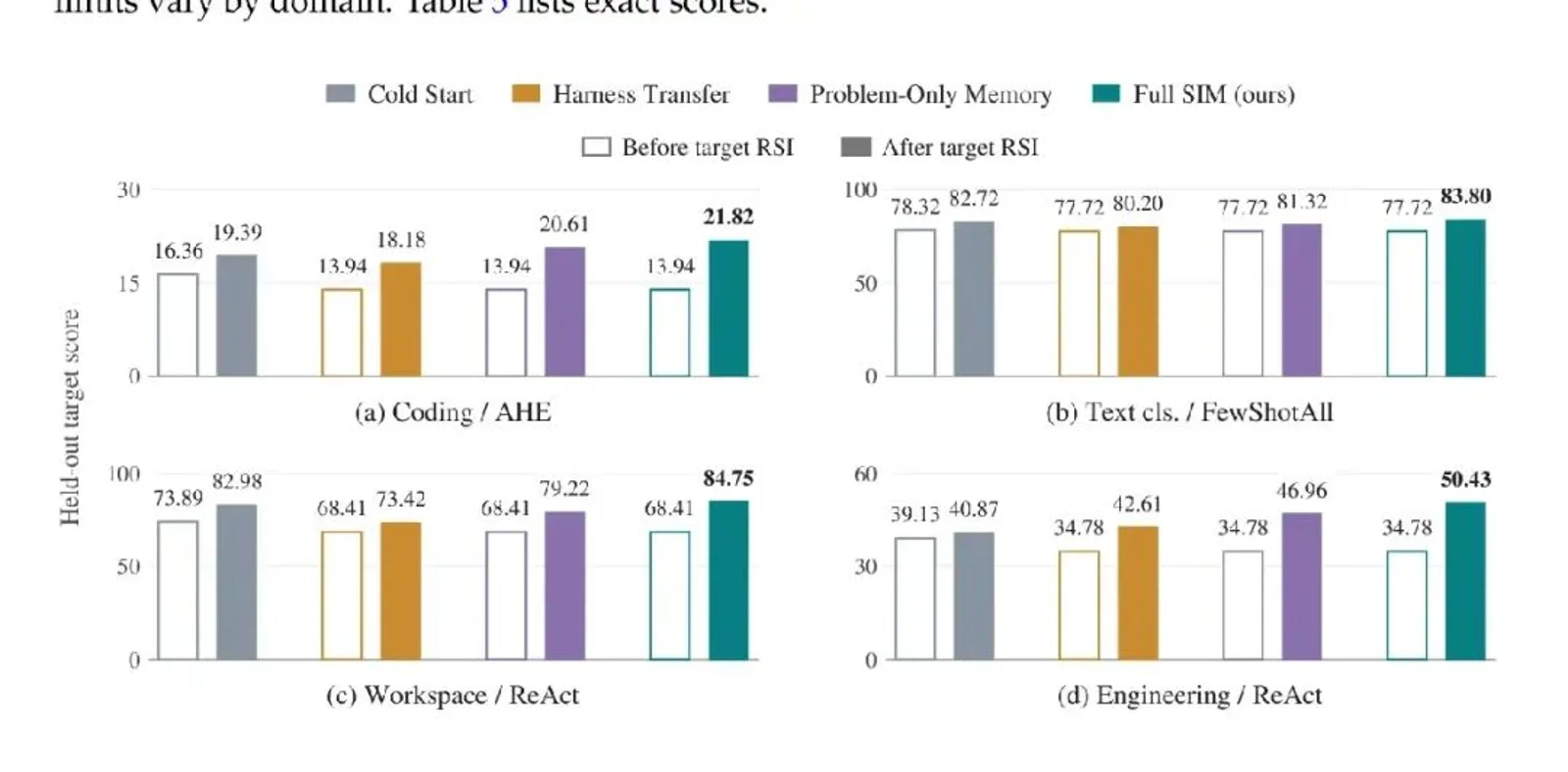
Across six cross-dataset settings, Full SIM scored highest in all, beating no-memory inheritance by 2.43–4.35 points . In four Opus-to-Gemini cross-model settings, Full SIM again led by 3.60–11.33 points . In ten independent coding experiments, SIM won nine, averaging 2.36 points higher (paired test p=0.003).
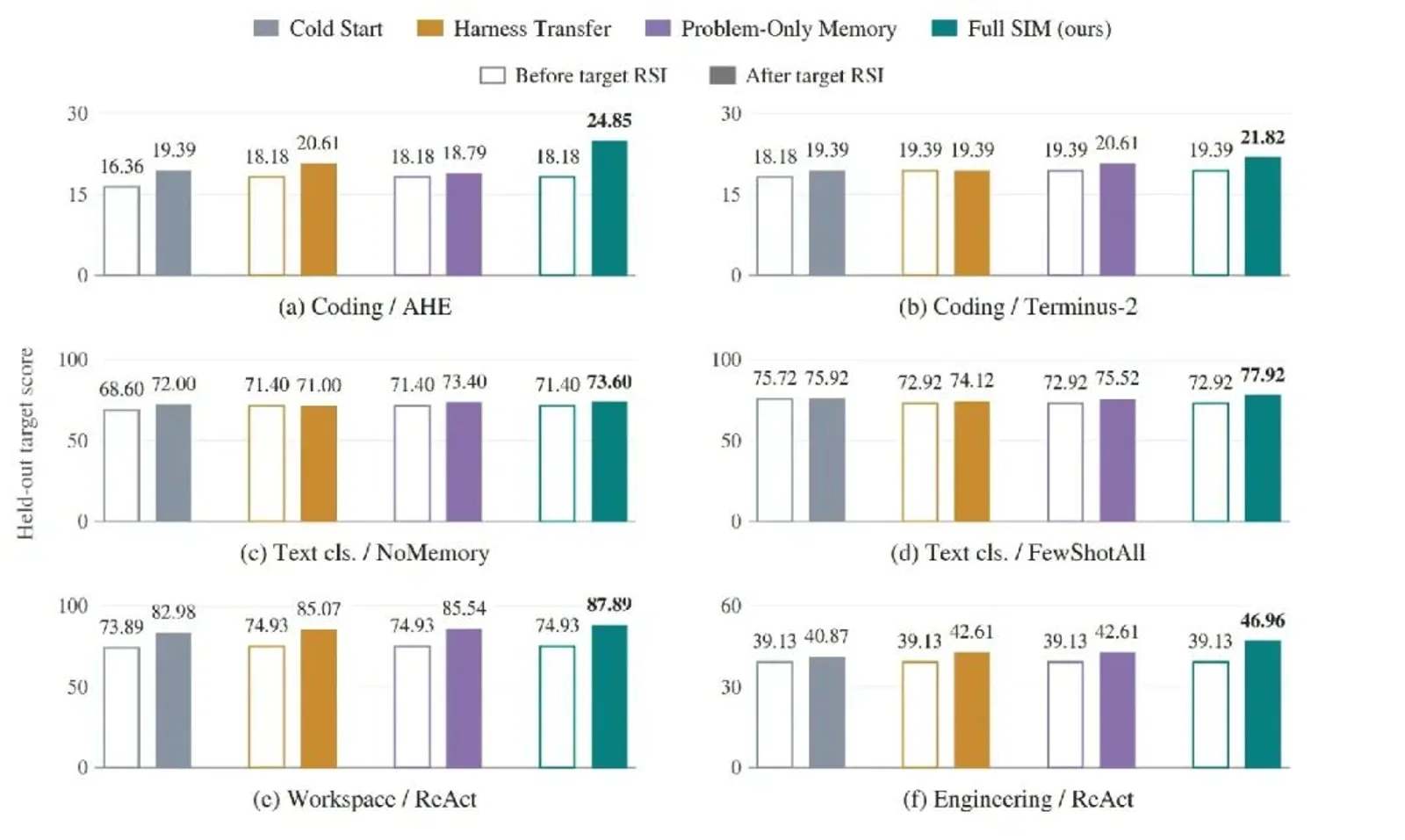
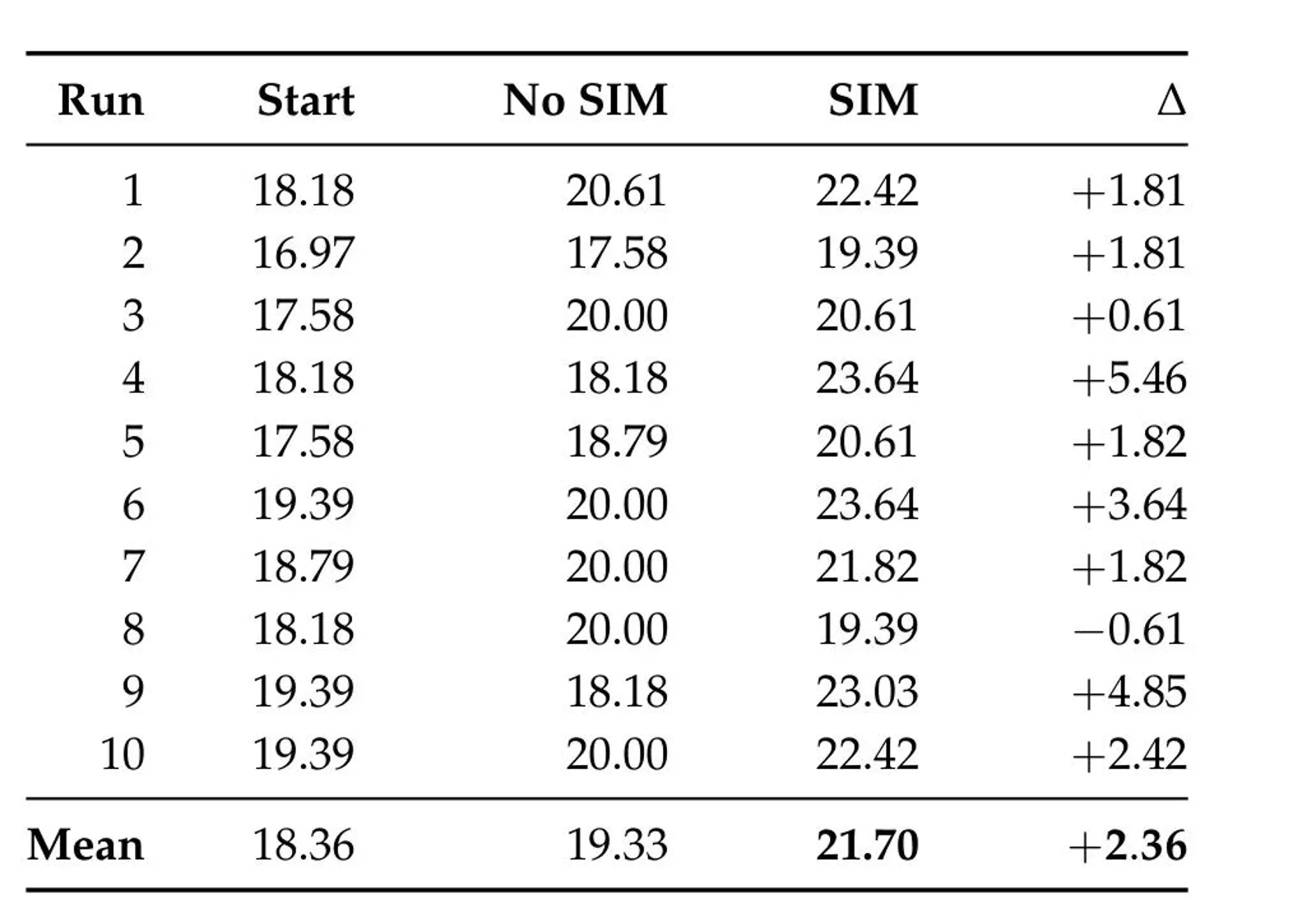
The results demonstrate that merely remembering root causes is insufficient; knowing why an old solution worked and where it fails determines whether it can be adapted into new value.
GUARD: Stabilizing RSI with Regret Guidance
While SIM handles experience transfer, GUARD (
GUARD: Stabilizing Recursive Self-Improvement with Regret Guidance, arXiv:2611.23476v1, 2026-11-17) tackles a different problem: when the external harness is updated based on experience, how to avoid new edits breaking existing capabilities without an external evaluator.
A single aggregate score cannot distinguish between persistent capability gaps and newly introduced regressions. GUARD decomposes each update into four steps:
Self-Inspection : decompose the task into atomic checks before execution; after execution, verify the trajectory item by item.
Targeted Regret : separately compute new harm (regressions) and remaining gaps (persistent weaknesses); prioritize fixing new regressions while locking already-mastered rules.
Candidate Competition : multiple candidate harnesses compete on the same batch of tasks; no value network training or gradient updates are used.
Soft-HURT Gate : accept an update only if its net gain exceeds the harm it causes; for localized collateral damage, shrink the rule scope with conditional preconditions and reject logging to prevent repeating the same mistake.
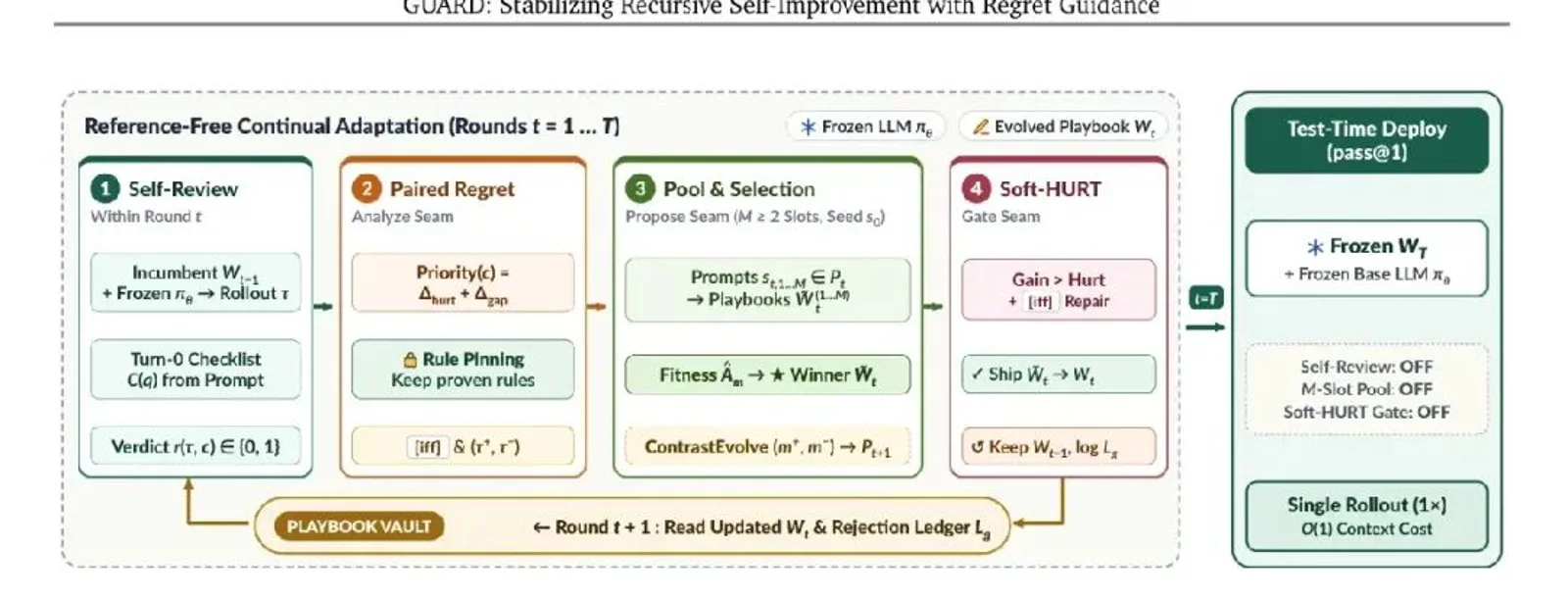
At deployment, the candidate pool, self-inspection, and gate are all disabled; only a frozen harness running once remains.
Results on EvoHarnessBench
Under a unified Gemini 4 hosted comparison, the final GUARD configuration reached 80.80% accuracy versus the base agent's 71.91%. Per-task token consumption dropped from 131,032 to 59,651, a 54.5% reduction .

Continuous Drift Test
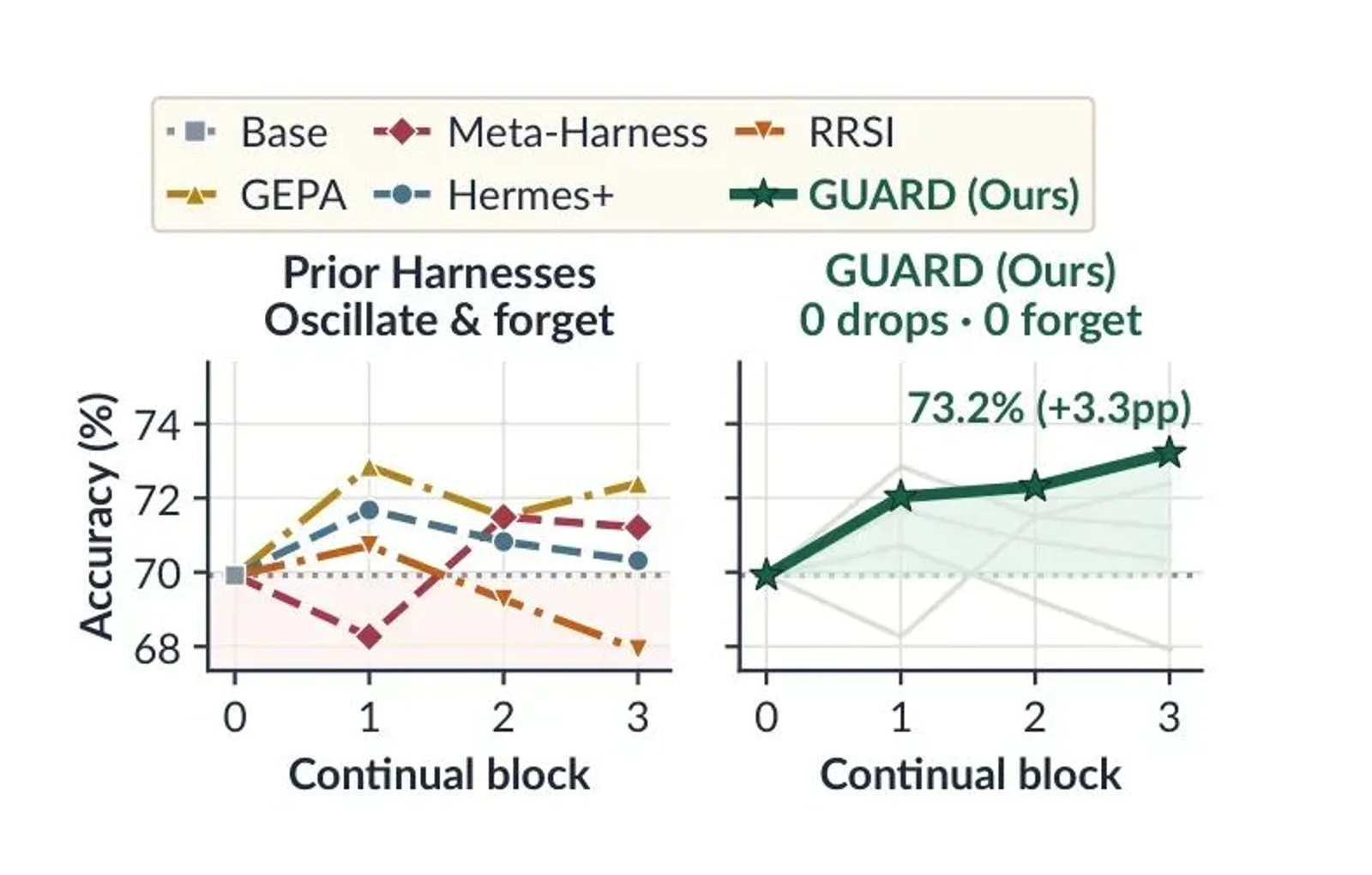
Across four task streams with twelve phase switches, GUARD's final mean accuracy was 73.22% , a +3.30 percentage-point improvement over the starting point. The number of phase-mean drops was 0/12 , and retrospective forgetting was 0.00 percentage points .
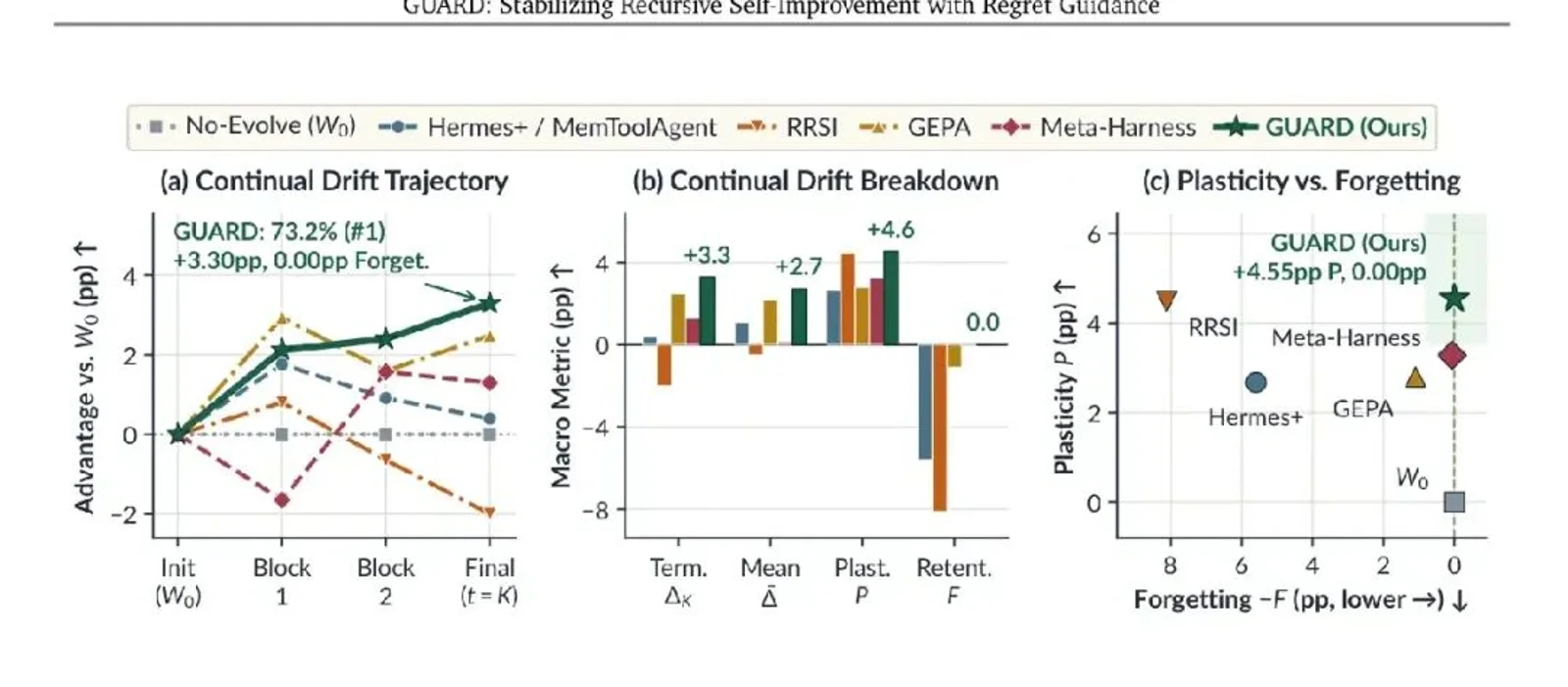
GUARD does not merely find a better prompt once; it preserves old capabilities as tasks change.
Toward an Engineering Loop for Self-Evolution
The two papers form a clear complementary pair: SIM enables experience accumulation across environments; GUARD ensures each update passes regression review. A complete self-evolving agent therefore needs three layers:
Learn : propose new edits from trajectories.
Remember : know why old edits exist and whether they remain effective.
Refuse : allow no update when gains are insufficient or harm is excessive.
Self-Improvement Memory Enables Continual Recursive Self-Improvement
arXiv:2611.18856v1, 2026-11-13
GUARD: Stabilizing Recursive Self-Improvement with Regret Guidance
arXiv:2611.23476v1, 2026-11-17For questions about attribution, corrections or content rights, please contactand we will review it promptly.