

NVIDIA's 11-Day CEO Crisis: $950B Market Swing Reveals AI's Single Point of Failure
NVIDIA's board unanimously accepted then reversed Jensen Huang's resignation within 11 days, triggering a $950 billion market cap rebound despite record earnings, exposing the AI industry's paradoxical reliance on one leader while building distributed, fault-tolerant systems.
Reading font
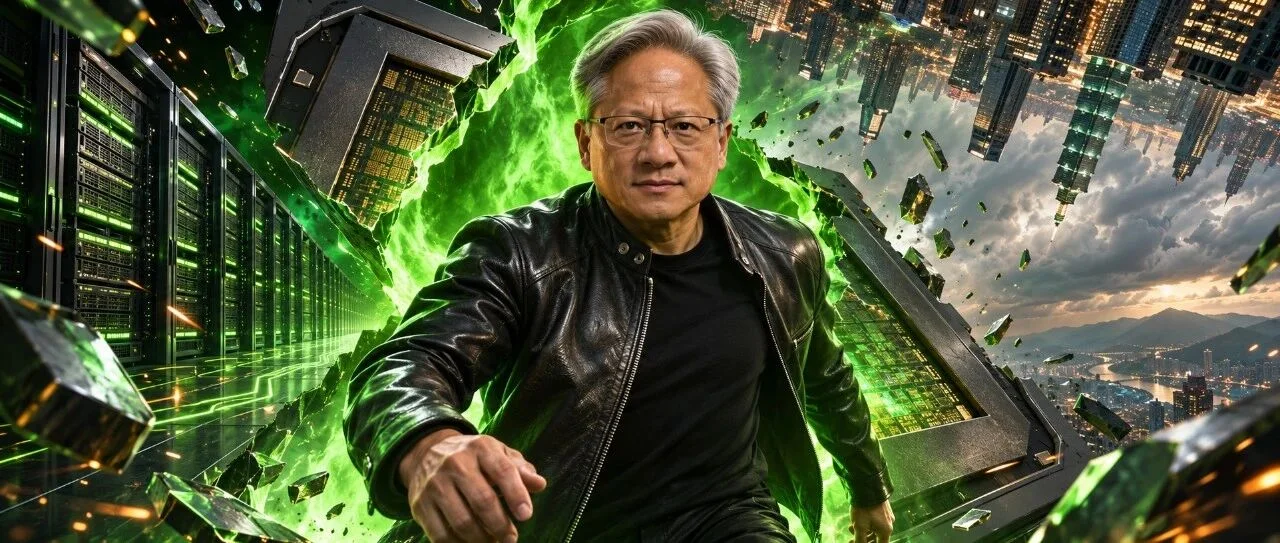
NVIDIA's Board Presses the Most Expensive Ctrl+Z in History
On November 12, Jensen Huang resigned as NVIDIA's president, CEO, and board member, effective immediately. CFO Colette Kress became interim CEO, and the board began searching for a new leader. Reports about Huang's personal conduct and potential national security risks plunged the global compute giant into an unprecedented governance crisis. The founder who had led NVIDIA for 33 years suddenly departed the company he built.
Five days later, Huang expressed willingness to return. Board chairman Harvey Jones shut the door on the earnings call: the board unanimously accepted Huang's resignation and had no intention of restoring him as CEO. At the time, NVIDIA had just posted a stellar quarterly report and appeared ready to enter a post-Huang era.
That stance lasted only six days. On November 23, NVIDIA announced the board unanimously voted to reinstate Huang as president, CEO, and board member — all three roles restored. SEC filings show the board actually decided on reinstatement on November 22.
The same board, two unanimous votes, two diametrically opposite outcomes. Software developers will recognize the pattern: a new version ships, days later an emergency rollback executes, even the original permission configs restored.
However, the rollback wasn't total. NVIDIA's reinstatement filing acknowledged the board consulted senior U.S. government officials and judged national security risks accordingly. The previously formed independent investigation committee continues its work; the company also established a National Security and Export Control Committee and began searching for a chief compliance officer. Huang is still Huang, but NVIDIA has quietly applied several new security patches .
Boss Gone 11 Days, Employees Get a Raise
Silicon Valley workers probably never dreamed a CEO resignation drama could yield such a windfall.
On November 18, interim CEO Colette Kress held the first all-hands since Huang's departure. Per WIRED, minutes in she addressed the top employee concern: NVIDIA would accelerate its planned compensation adjustment from months later to December and increase equity grants. Meanwhile, an unofficial petition demanding Huang's return circulated, garnering over 10,000 self-identified NVIDIA employee signatures (identities not fully verified).
The interim leadership's urgency to retain talent is understandable. NVIDIA is in the critical Blackwell-to-Rubin transition . Delivering a new compute platform involves chip design, compilers, communication libraries, network interconnect, and full-system bring-up across multiple engineering teams. These teams hold vast tacit knowledge — why a communication pattern collapses on a specific topology, how to tune an operator to saturate a new GPU's compute units — that isn't captured in documentation.
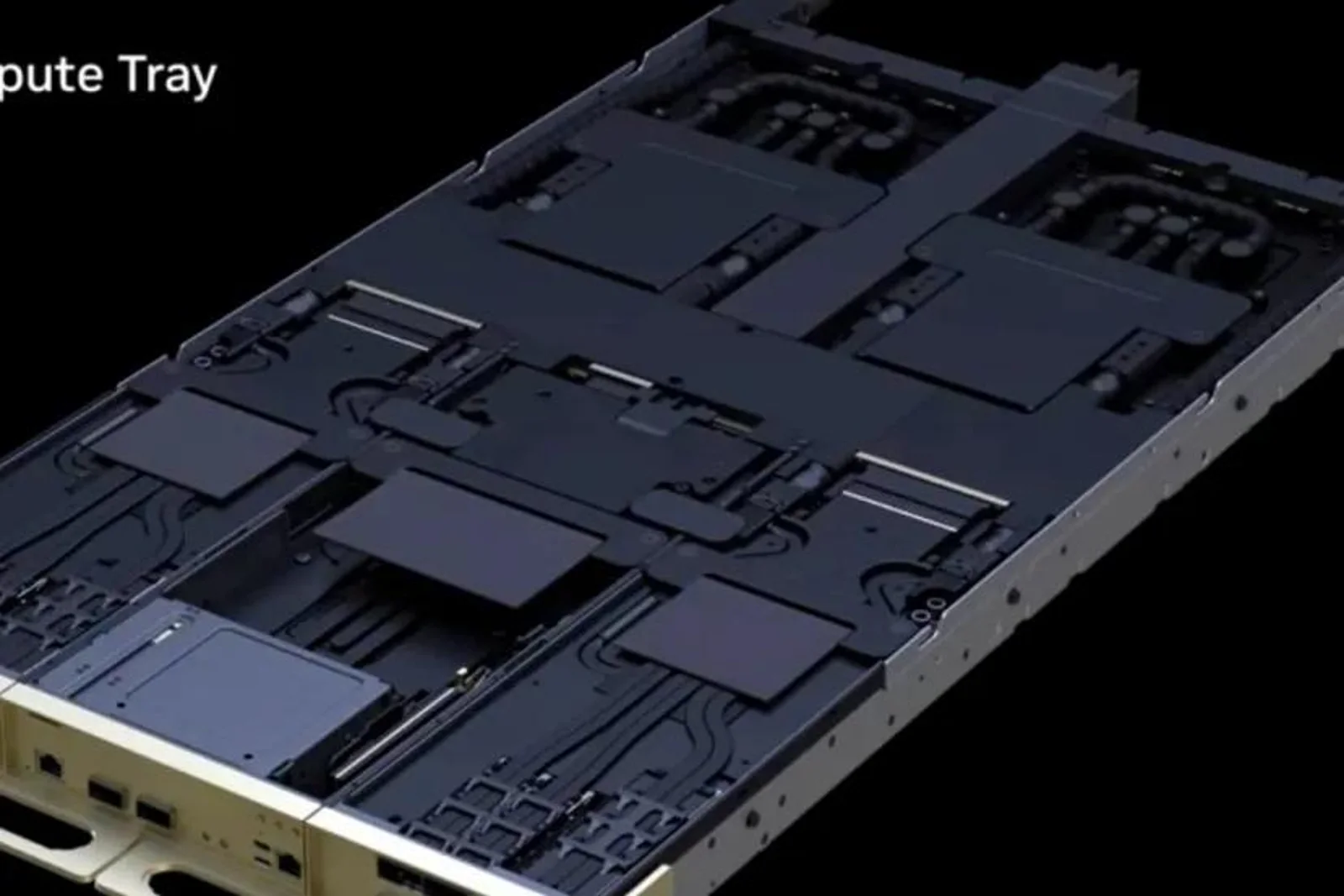
Figure 1 | Vera Rubin NVL72's single compute tray; a full rack comprises multiple trays and switch planes
These problems have no textbook answers; engineers must iterate on real workloads. Even competitors with similar hardware specs struggle to replicate NVIDIA's years of software-hardware co-optimization in short order. During accelerated new-product delivery, losing core engineers could prove far more damaging than short-term stock volatility.
Thus, in 11 days, NVIDIA employees lived through: boss resigns, company promises early raises, boss returns. Whether the promised raises materialize as pledged awaits December.
The Internet Suspects Huang Just Took Leave to Play GTA 6
While the board managed governance and Wall Street recalculated valuations, overseas netizens offered a delightfully simple explanation: GTA 6 .
The long-awaited game launched November 19. Huang resigned November 12, returned November 23 — the release fell squarely in between. Such a coincidence couldn't escape the internet's imagination. On X and Reddit, users dubbed the 11 days Huang's "gaming vacation"; some photoshopped him onto the GTA 6 cover. Business Insider even compiled a roundup of the meme frenzy sparked by the CEO's return.
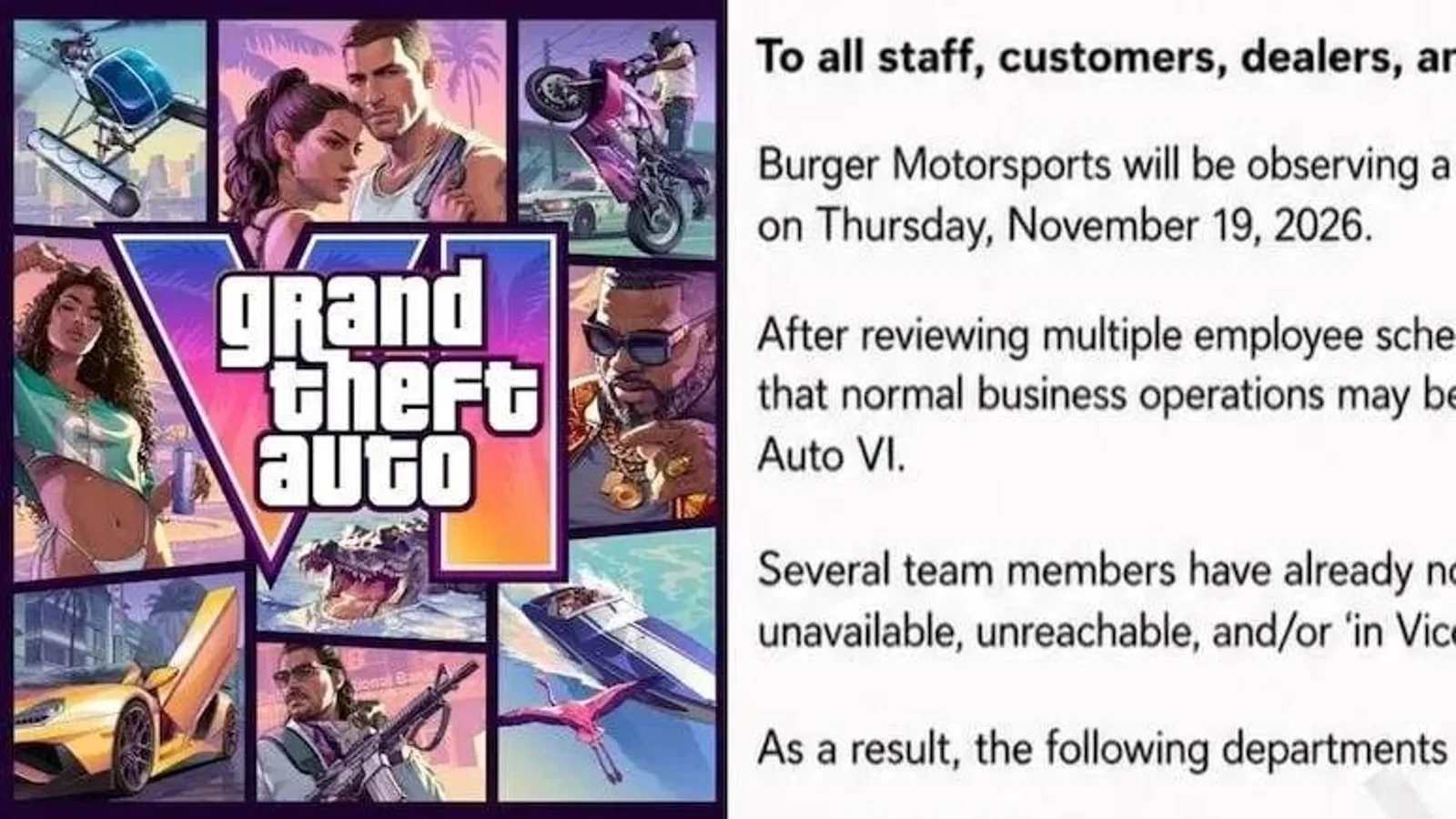
Figure 2 | GTA 6 cover alongside the viral 'gaming vacation' notice
Gaming is pure parody. Yet a semiconductor executive's turnover becoming entangled with a game launch, pop culture, and internet memes would have been unimaginable 15 years ago. Back then, chip execs appeared at industry conferences and earnings calls; consumers might know a chip model but not the CEO.
NVIDIA happens to span several once-distant tech tribes. Gamers know it via GeForce; algorithm engineers via CUDA; AI startups train on its GPUs; cloud providers build data centers with it. On Wall Street, NVIDIA's orders, delivery pace, and guidance became a key barometer for the entire AI sector.
Huang, in his signature leather jacket, walked from game shows to the center of global tech. Now, netizens use NVIDIA GPUs — powered by generative AI — to create Huang memes and videos. The guy selling graphics cards ended up becoming the hottest content those very cards can generate. Probably not a business line Huang envisioned when making gaming GPUs.
$115.8B Quarterly Revenue Can't Steal Huang's Spotlight
While the internet churned out Huang memes, NVIDIA's actual blockbuster news felt oddly quiet.
On November 17, NVIDIA reported Q3 FY2027: quarterly revenue $115.8 billion, up 103% year-over-year , up 20% sequentially; data center contributed $107.6 billion, up 110% YoY. Crucially, the next-gen Vera Rubin NVL72 has begun shipping; CoreWeave, Google Cloud, Microsoft Azure, Oracle Cloud Infrastructure, and Nebius all have racks in production. The quarter ended October 25, but the November 17 product updates show the business continues on its planned trajectory.
Yet strong results didn't fully erase management-transition jitters. Only on Huang's reinstatement day did NVIDIA stock surge over 30%, adding ~$950 billion in market cap. Financial analytics firm ORTEX estimated short sellers faced ~$12.2 billion in mark-to-market losses that day. Peers — Micron, Marvell, CoreWeave, Nebius — also rallied sharply.
This reaction ties to NVIDIA's current business model. Take Vera Rubin NVL72: one rack integrates 72 Rubin GPUs, 36 Vera CPUs, NVLink 6 interconnect, ConnectX-9 SuperNICs, and BlueField-4 DPUs. For distributed LLM training and inference, GPU-to-GPU bandwidth, communication latency, and CPU-GPU task scheduling all determine how much effective compute the system delivers. Enterprises no longer buy just compute chips; they buy an entire infrastructure that continuously produces tokens .
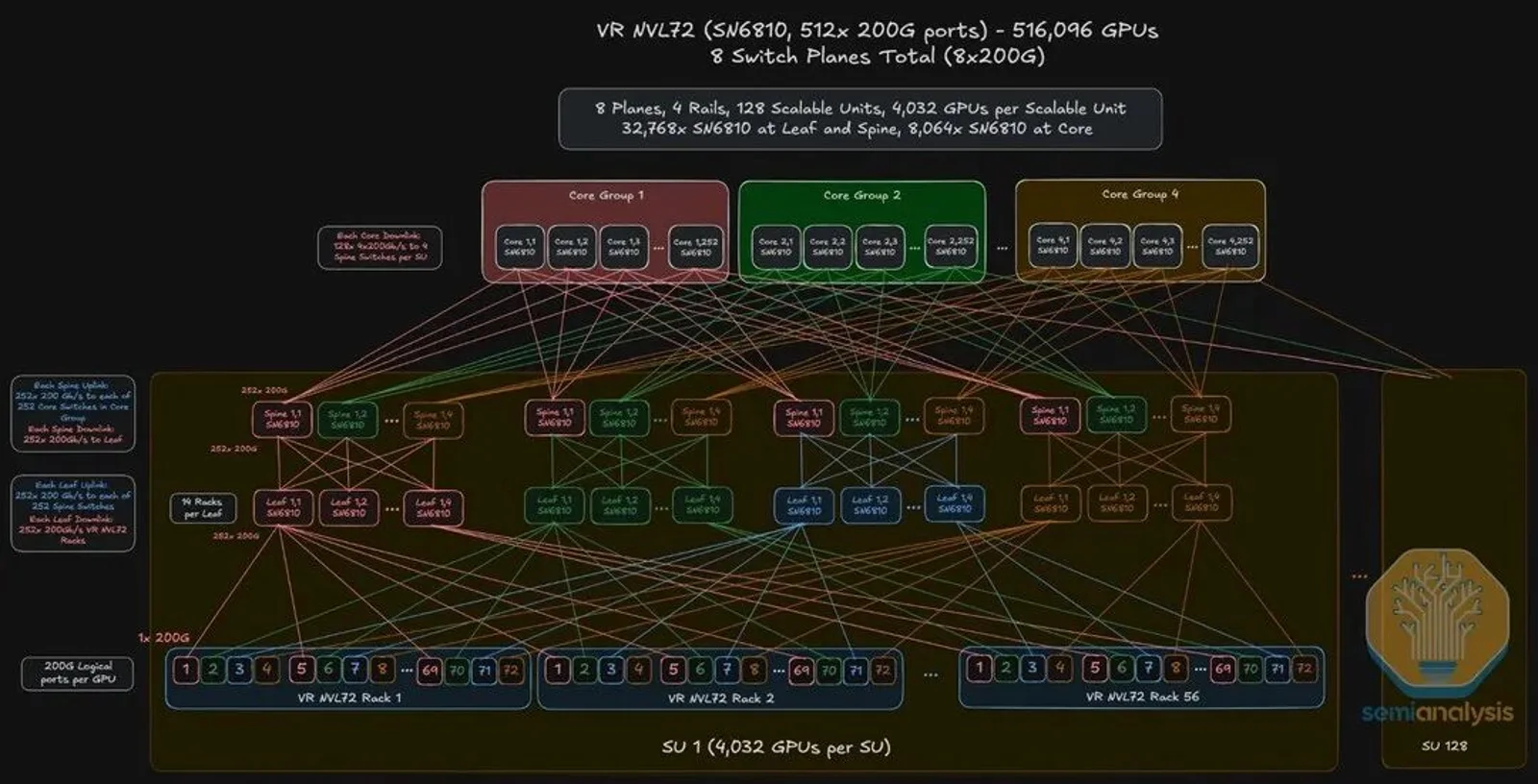
Figure 3 | VR NVL72 switch-plane topology: 8 switch planes, up to 4,032 GPUs per scalable unit
Agent adoption further reshapes this infrastructure. Model inference needs GPUs, but agents executing code, calling tools, handling files, and accessing external systems also demand massive general-purpose compute. NVIDIA's recently introduced OpenShell reference architecture assigns Rubin to model inference, Vera CPU to agent execution, and BlueField-4 DPU's NVIDIA Sentry to independently monitor agent behavior and enforce security policies. From model compute to task execution to security isolation, NVIDIA is pulling more layers into its hardware-software stack.
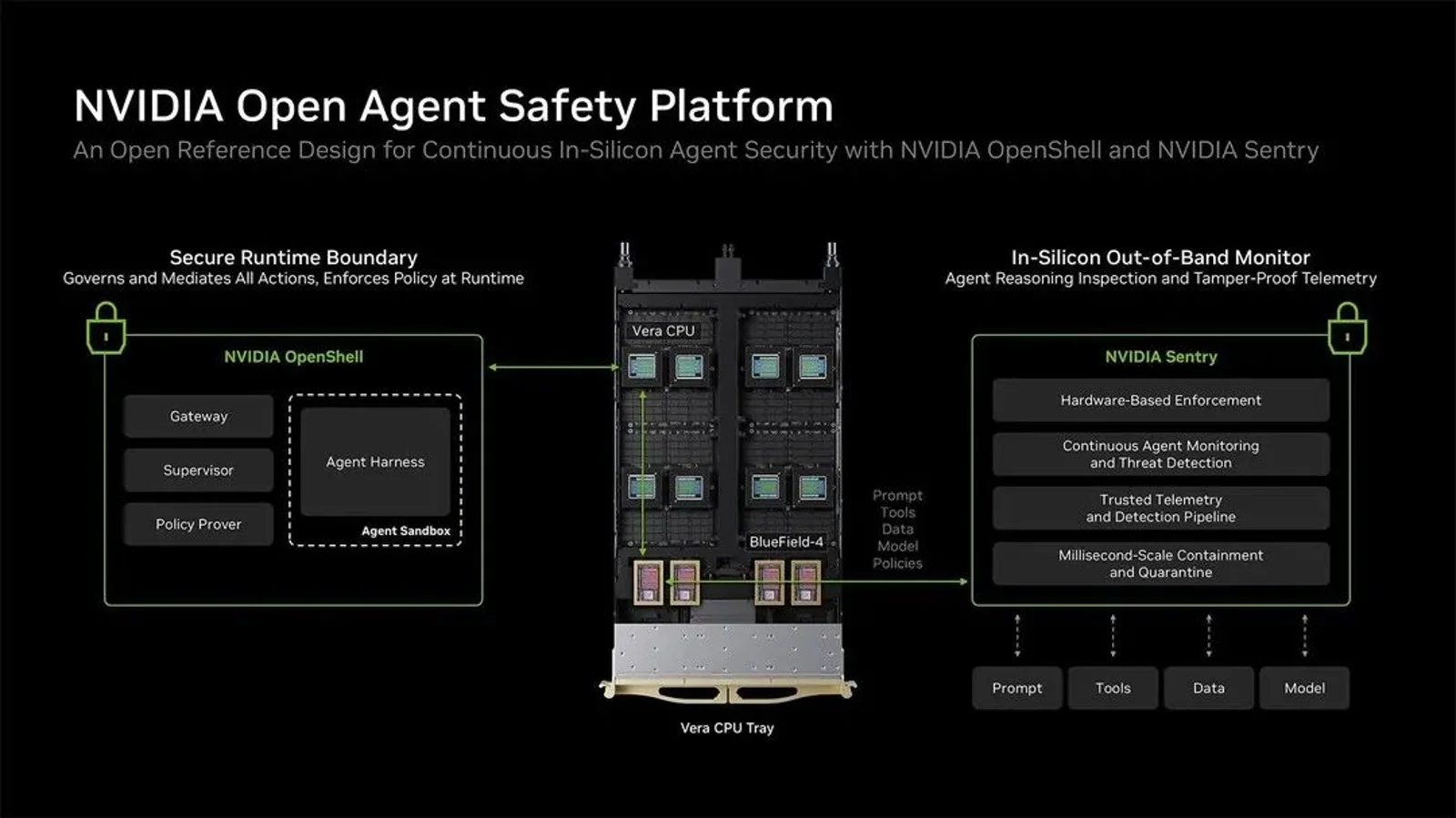
Figure 4 | NVIDIA Open Agent Safety Platform: OpenShell runtime boundary and Sentry chip-level monitoring
These businesses require NVIDIA to coordinate product roadmaps years ahead with cloud providers, model companies, server OEMs, and software developers. Today's data centers must accommodate future model generations; today's massive capex must be recouped over years of sustained token production. Huang has long orchestrated this industrial collaboration, driven technology roadmaps, and articulated compute ROI. The market's hypersensitivity to his departure reflects anxiety over whether this vast industrial coordination machine can continue smoothly.
The World Builds Distributed Systems, Yet AI Fears One Man Going Offline
Computer engineering has a bedrock principle: eliminate single points of failure (SPOF) .
Databases need replicas; services need load balancing; large-model training needs checkpoints and fault recovery. In the agent era, engineers must also preserve task state so agents can resume after interruption. The larger and longer-running a system, the less tolerable the probability of any component failing. Betting entire system availability on one irreplaceable node is rarely sound architecture.
NVIDIA itself addresses this at the hardware level. In the Rubin platform, the second-gen RAS engine further enhances rack-level reliability, availability, and serviceability . For LLM jobs that run for weeks, reducing failure impact and recovery time saves enormous compute from being wasted. Yet zoom out from GPU clusters to the whole AI industry, and a different dependency keeps deepening.
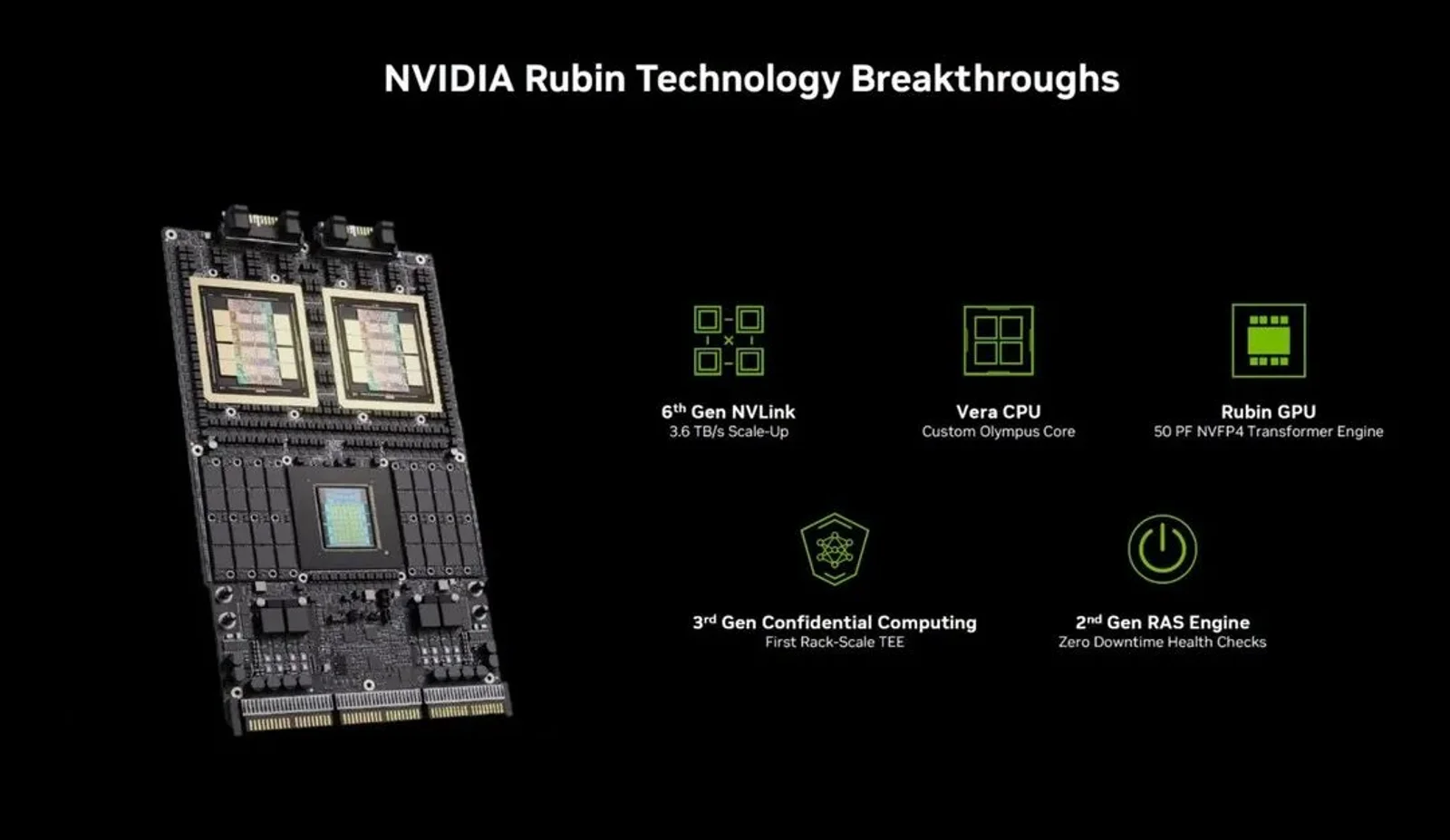
Figure 5 | Rubin platform's five key technologies: 6th-gen NVLink, Vera CPU, Rubin GPU, 3rd-gen confidential computing, 2nd-gen RAS engine
Google has TPU; AWS develops Trainium; AMD expands Instinct. But for an enterprise with a full AI engineering stack built on CUDA, switching hardware isn't just swapping servers. Optimized kernels may need rewriting; quantization schemes may need retuning; distributed communication efficiency must be rebenchmarked; inference throughput and latency must be reevaluated. Getting an alternative chip to run a model is one thing; making it economically and stably carry production workloads is another, separated by massive engineering effort.
Technical ecosystem concentration extends to the commercial layer. Model companies' training plans, cloud providers' data center builds, AI apps' inference costs — all can hinge on a few key suppliers' roadmaps and delivery. During Huang's absence, no GPU stopped computing because the boss was gone; CUDA didn't suddenly break. But the market's violent swing reveals that the commercial confidence built atop these technologies shares the same dependency on a core figure.
The AI industry spends billions building compute clusters, researching autonomous reasoning, automatic execution, fault recovery, even letting agents write and maintain code. Engineers strive to make machines depend less and less on any specific person. Yet this 11-day Silicon Valley saga leaves the industry with a darkly humorous footnote.
We built redundancy for GPUs, backups for data, fault recovery for agents — yet the entire AI industry seemingly still hasn't prepared a backup for Huang.
For questions about attribution, corrections or content rights, please contactand we will review it promptly.