

StackStorm‑Based Monitoring Alert Auto‑Remediation Solution
This article introduces a StackStorm‑driven monitoring and alert auto‑remediation architecture that converges alarms, performs root‑cause analysis, and executes self‑healing actions, detailing its components, workflow, configuration examples, and real‑world deployment outcomes.
Reading font
Background
Fault self‑healing is a hot topic in operations, and many companies invest heavily in developing various components. Properly orchestrating these components and avoiding duplicate development is a pressing challenge.
The 360 operations team built a monitoring‑alert auto‑remediation solution based on StackStorm.
Goal
Converge alarm events and perform self‑healing processing:
Convergence: merge alarms to reduce their number.
Self‑healing: use a predefined rule library for root‑cause analysis and automatically handle alarms when a rule matches.
Vision
Create an enterprise‑grade cloud service with a dedicated medical‑center and self‑healing center.
StackStorm Overview
StackStorm is an open‑source, event‑driven automation platform that can integrate existing workflows, platforms, APIs, and any executable environment. It treats each action as an atomic unit that can be shared across projects.
Supported scenarios include:
Fault diagnosis: capture alerts from monitoring systems like Nagios or Zabbix and combine diagnostic actions.
Automatic execution: e.g., automatically resolve OpenStack compute node hardware failures, orchestrate email notifications, etc.
CI/CD: integrate with Jenkins, AWS, and other tools for continuous deployment and integration.
StackStorm Components
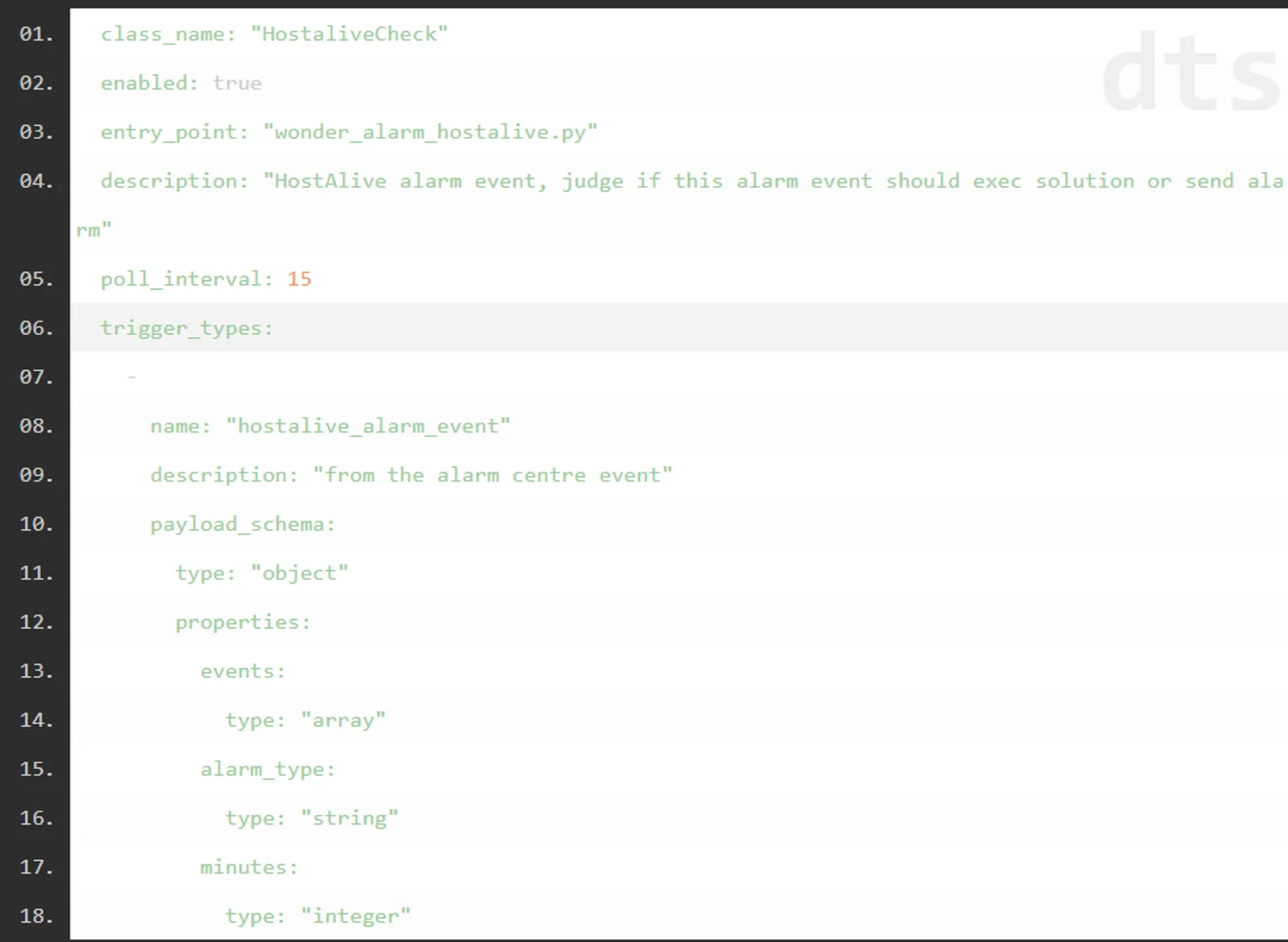
Sensors: listen for external events and trigger execution.
Trigger: the concrete representation of an external event, linking sensors and rules.
Rule: maps triggers to actions or workflows, defining matching criteria.
Action: executable steps such as scripts, API calls, SSH commands, Docker, Salt, Jenkins, etc.
Workflow: an ordered collection of actions.
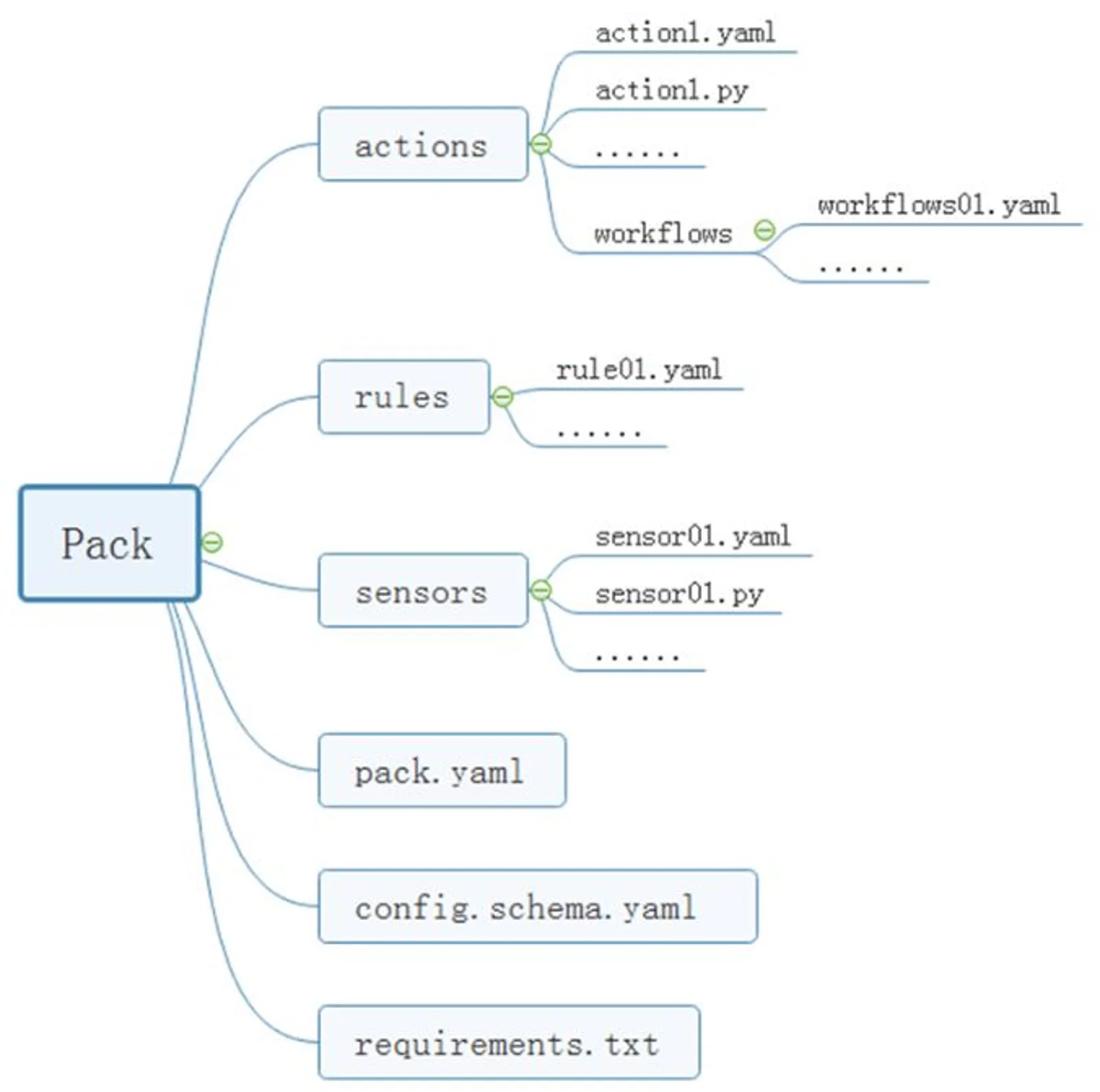
Pack: a collection of related content, essentially a project.
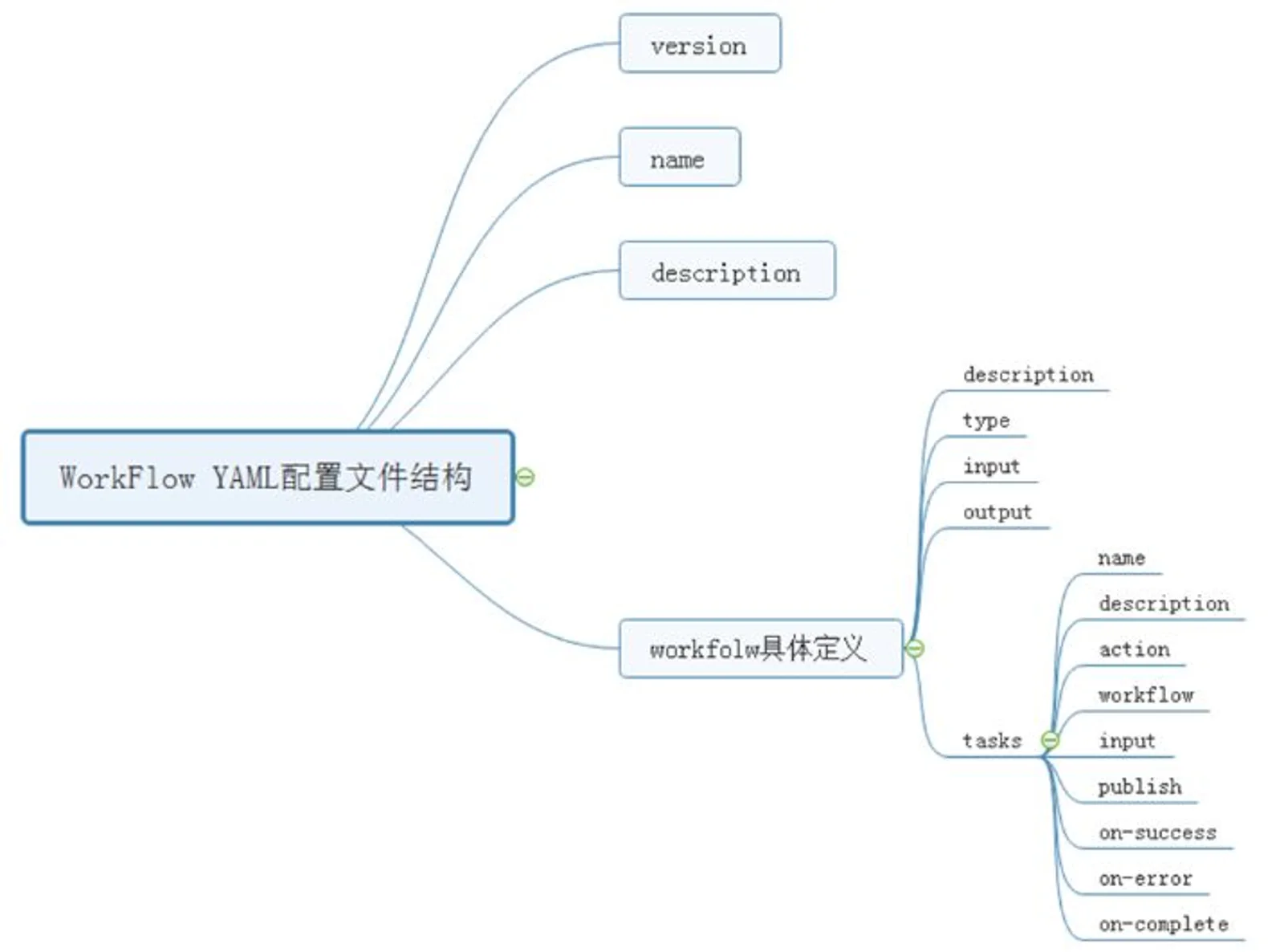
StackStorm Workflow Explanation
Sensors receive event streams via pull/push, triggers inject data into StackStorm, rules match the data against criteria, and matching rules launch the associated workflow composed of actions.
Pack Structure
Workflow Structure
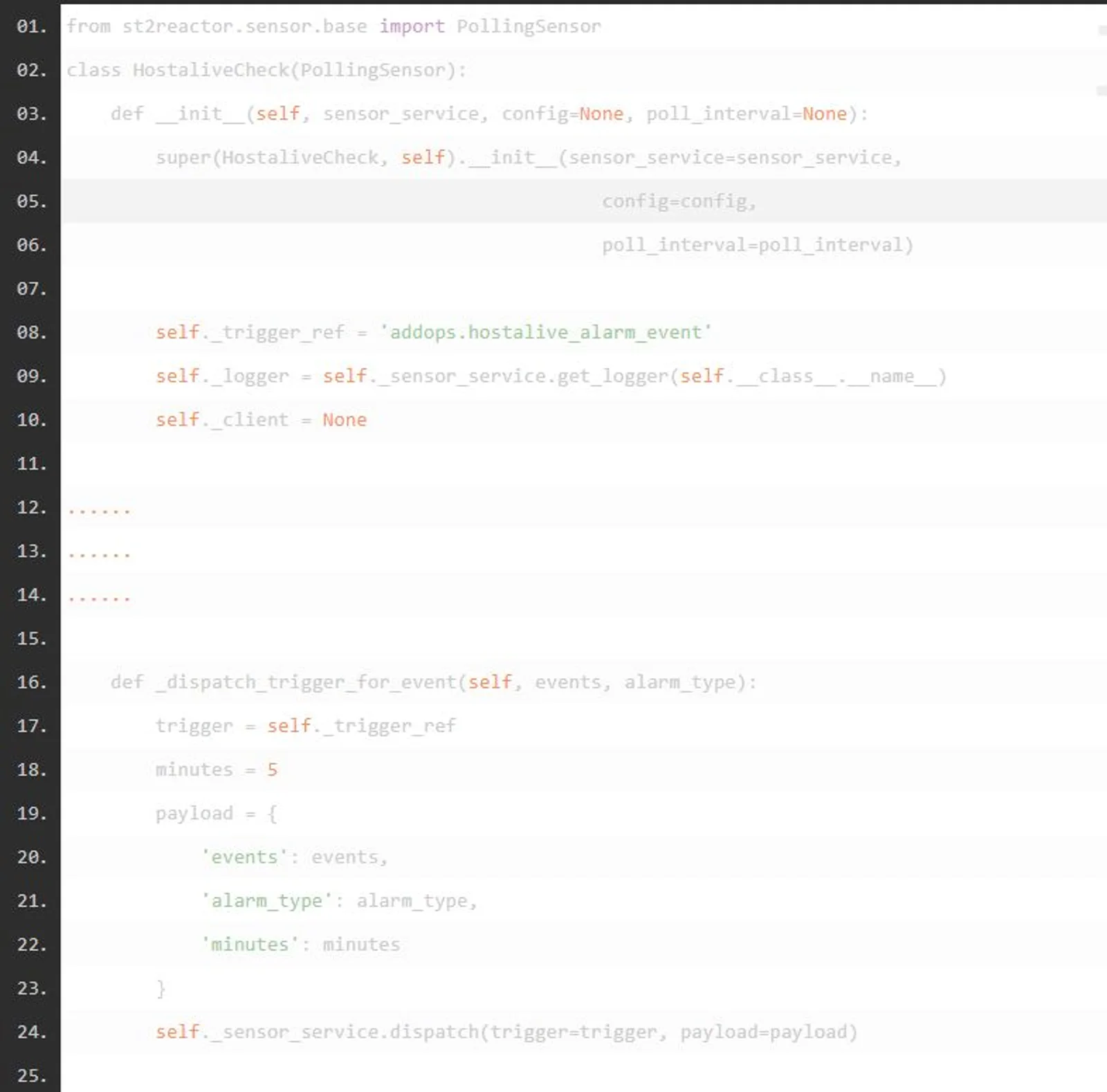
Sensor Configuration (YAML) and Python Script
Example YAML configuration and corresponding Python script are shown in the original images.
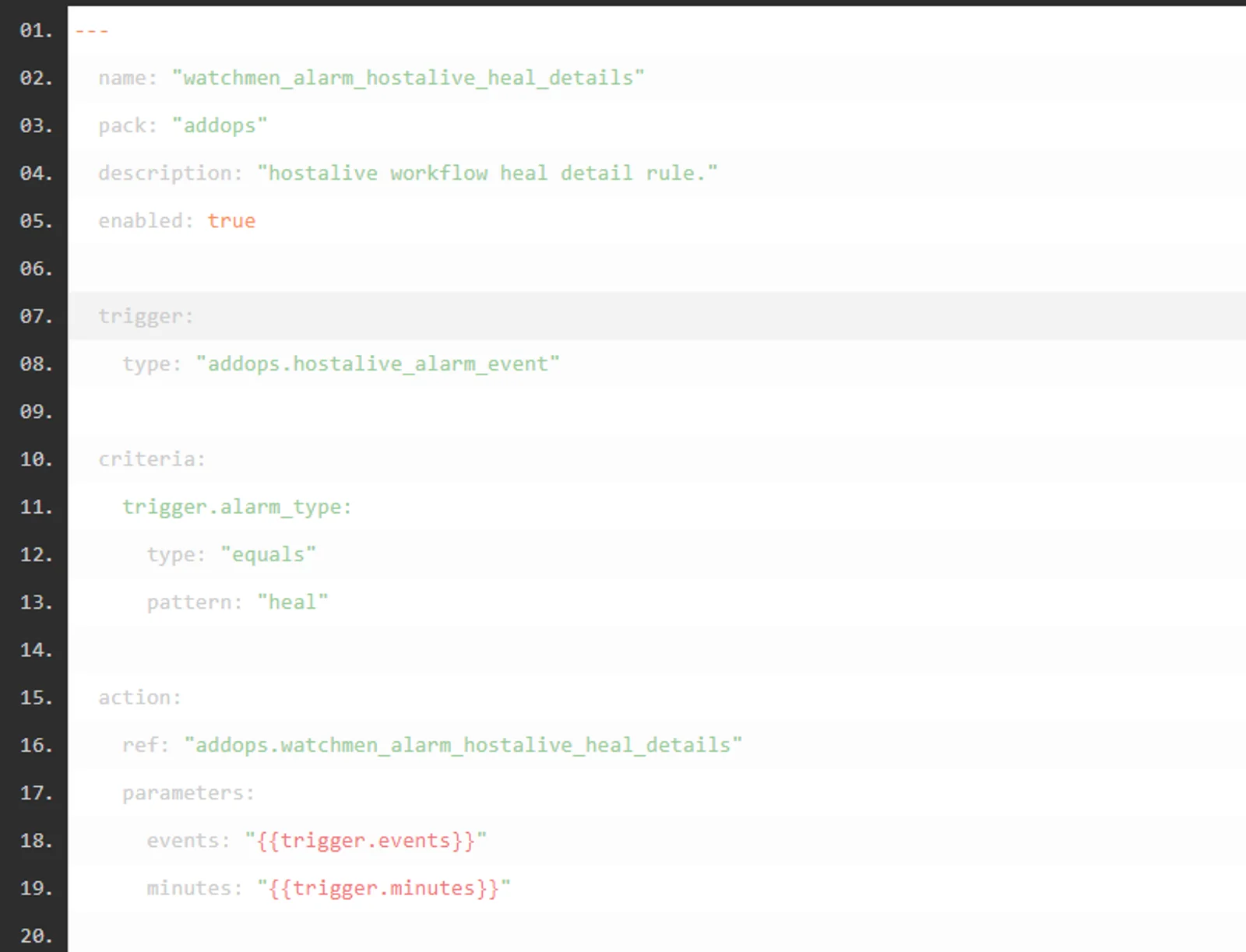
Rule Example
Application Instance
The solution has been deployed to cover 70‑80% of common operational scenarios within the team, automating most daily alerts, saving personnel effort, improving efficiency, and minimizing service downtime.
Future work includes integrating business topology and call‑graph data, leveraging monitoring and log data with AI algorithms for proactive fault prediction and early warning.
Conclusion
By combining existing troubleshooting processes with StackStorm, a fully automated, self‑healing cloud service has been realized without manual intervention.
For questions about attribution, corrections or content rights, please contactand we will review it promptly.