

Why PostgreSQL Is Replacing MySQL for AI-Driven Applications
PostgreSQL has overtaken MySQL in developer popularity, driven by its extensibility for AI workloads like vector search (pgvector), full-text search, and hybrid retrieval, allowing teams to consolidate search and business data in one database while reducing sync complexity, though real-world testing is essential to validate performance and resource trade-offs.
Reading font
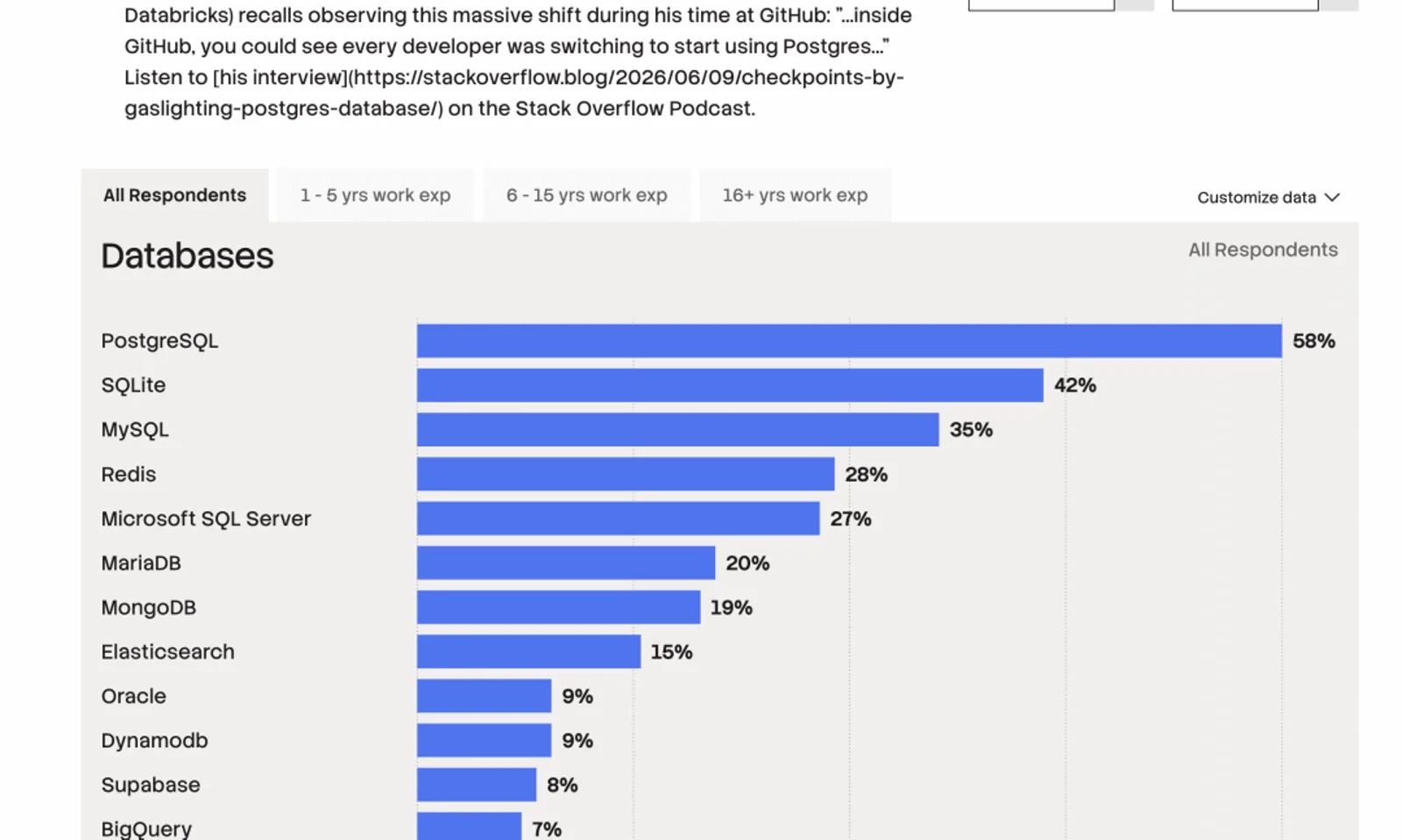
According to the Stack Overflow 2026 developer survey, PostgreSQL usage reached 57.9% versus MySQL's 35.1% among 12,061 respondents, continuing a trend that began in 2023. The author observes growing adoption in practice, especially for AI applications that require storing documents and performing search alongside traditional business data.
Extensions Enable Vector and Geospatial Search Within SQL
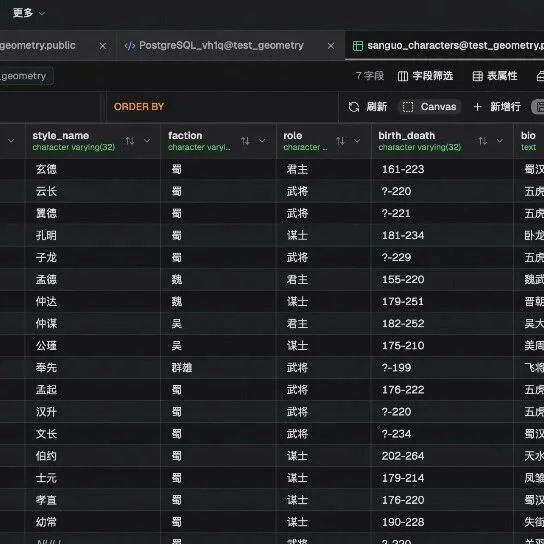
Instead of deploying separate vector databases or search services, PostgreSQL extensions add new data types, functions, operators, and index capabilities. The pgvector extension lets you add a vector column to an existing document table, compute distances with SQL, and create vector indexes (HNSW, IVFFlat) for approximate nearest-neighbor search. Business fields like tenant_id, author, and department remain in the same table, so queries can combine vector similarity with relational filters.
Similarly, PostGIS provides geospatial types and operations. However, the exact extensions and versions available depend on the managed database platform, so teams must verify support during selection.
Full-Text Search and BM25 Ranking
PostgreSQL's built-in full-text search tokenizes text into lexemes, supports indexing, and can rank results. Tokenization choices critically affect recall — especially for Chinese, where word segmentation must be tuned rather than borrowing English examples. The author recommends testing with real queries first.
For BM25 relevance scoring, the pg_search extension (from ParadeDB) integrates search capabilities into PostgreSQL, allowing results to be joined with business tables for further filtering and sorting. BM25 accounts for term frequency, document frequency, and document length, preventing raw repetition from dominating rankings.
The article cautions that built-in search suffices for simple needs; pg_search adds an extra extension. Moreover, replacing Elasticsearch entirely requires evaluating existing query syntax, analyzer configurations, aggregation requirements, and workload isolation.
Semantic Search with Vector Retrieval and RAG
Keyword search misses semantically similar phrasing (e.g., "how to return a product" vs. "product return process"). Vector retrieval addresses this by embedding text into numerical vectors via an embedding model. The pgvector extension stores vectors and finds nearest neighbors by distance (cosine, L2, inner product).
The author outlines a typical RAG (Retrieval-Augmented Generation) pipeline:
Chunk documents, generate embeddings for each chunk, and store them with source metadata.
Embed the user's question with the same model.
Retrieve relevant chunks and pass their text (not the raw vectors) to the LLM along with the question.
The LLM composes an answer; the application displays citations.
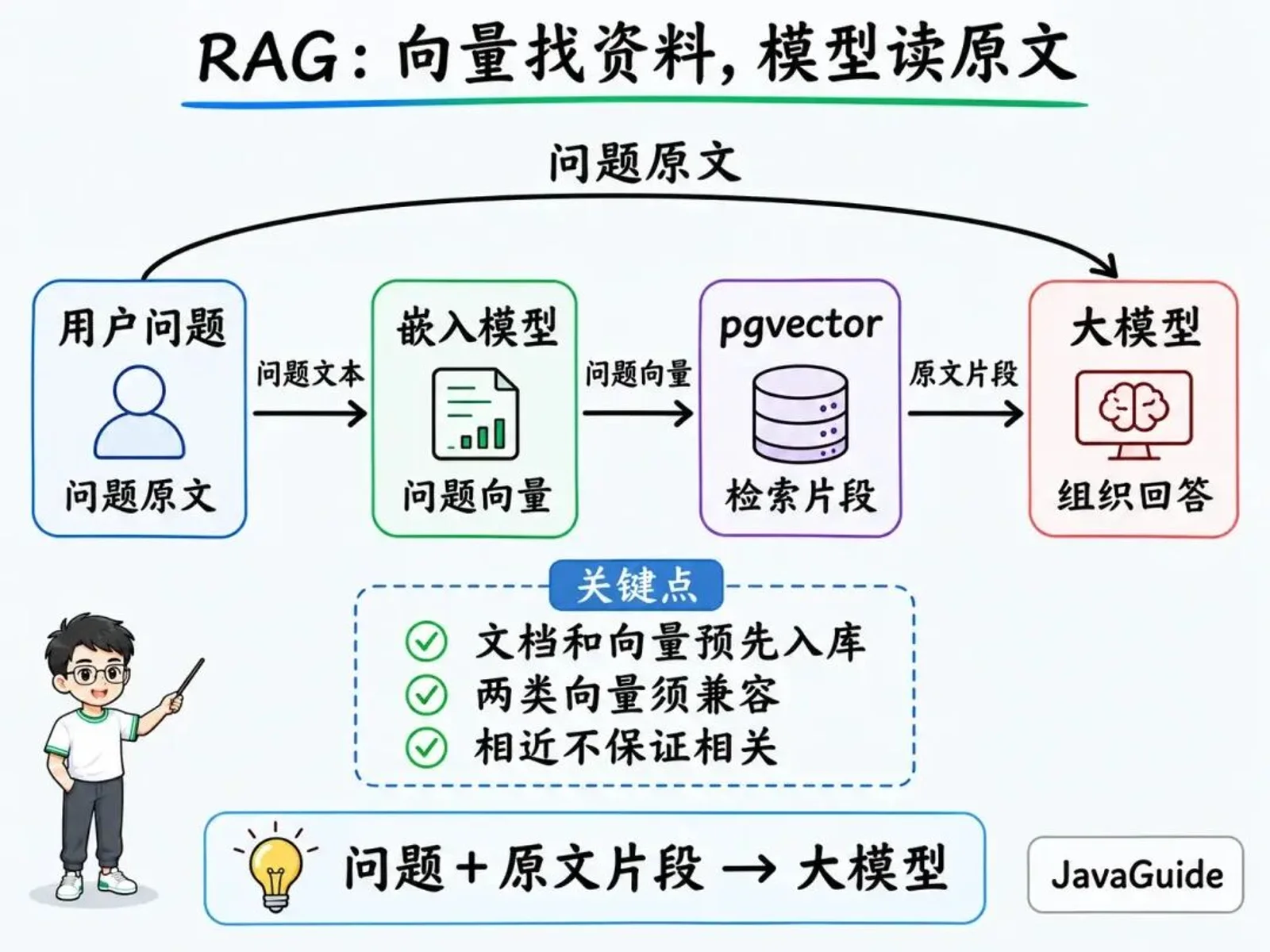
Vectors must share the same embedding space; mixing models or dimensions breaks retrieval. Changing models requires re-embedding existing data and versioning. Vector proximity alone doesn't guarantee relevance — version, status, and other explicit filters must still be applied.
Hybrid Search: Combining Keyword and Vector Results
Exact identifiers (product codes, function names, error codes) benefit from literal matching; paraphrased queries benefit from vectors. Hybrid search runs both retrievers, deduplicates, and fuses scores. A common method is Reciprocal Rank Fusion (RRF), which combines ranks without adding incomparable scores. Supabase's documentation provides a PostgreSQL example of this combination.
Hybrid search adds latency and complexity. The author advises adopting it only when it recovers missed relevant results without introducing excessive noise; simple lookups (e.g., by order ID) don't need it.
Co-locating Search and Business Data Reduces Sync Work
Keeping vectors, full-text indexes, and business data in one database eliminates cross-system synchronization. A knowledge-base document typically has attributes like team ownership, publication status, and product version. These can be stored as regular columns (for frequent filtering/joins) or in JSONB (for flexible attributes).
The author demonstrates a query that filters by tenant_id and status before ordering by vector distance:
SELECT id, document_id, content
FROM document_chunks
WHERE tenant_id = $1
  AND status = 'published'
ORDER BY embedding <=> $2::vector
LIMIT 5;
Parameters $1 (team ID) and $2 (question vector) are bound by the driver. The <=> operator computes cosine distance (smaller first). Authorization must be enforced server-side; the execution plan determines whether filtering happens before or after the vector scan.
Transactional Consistency for Document and Vector Updates
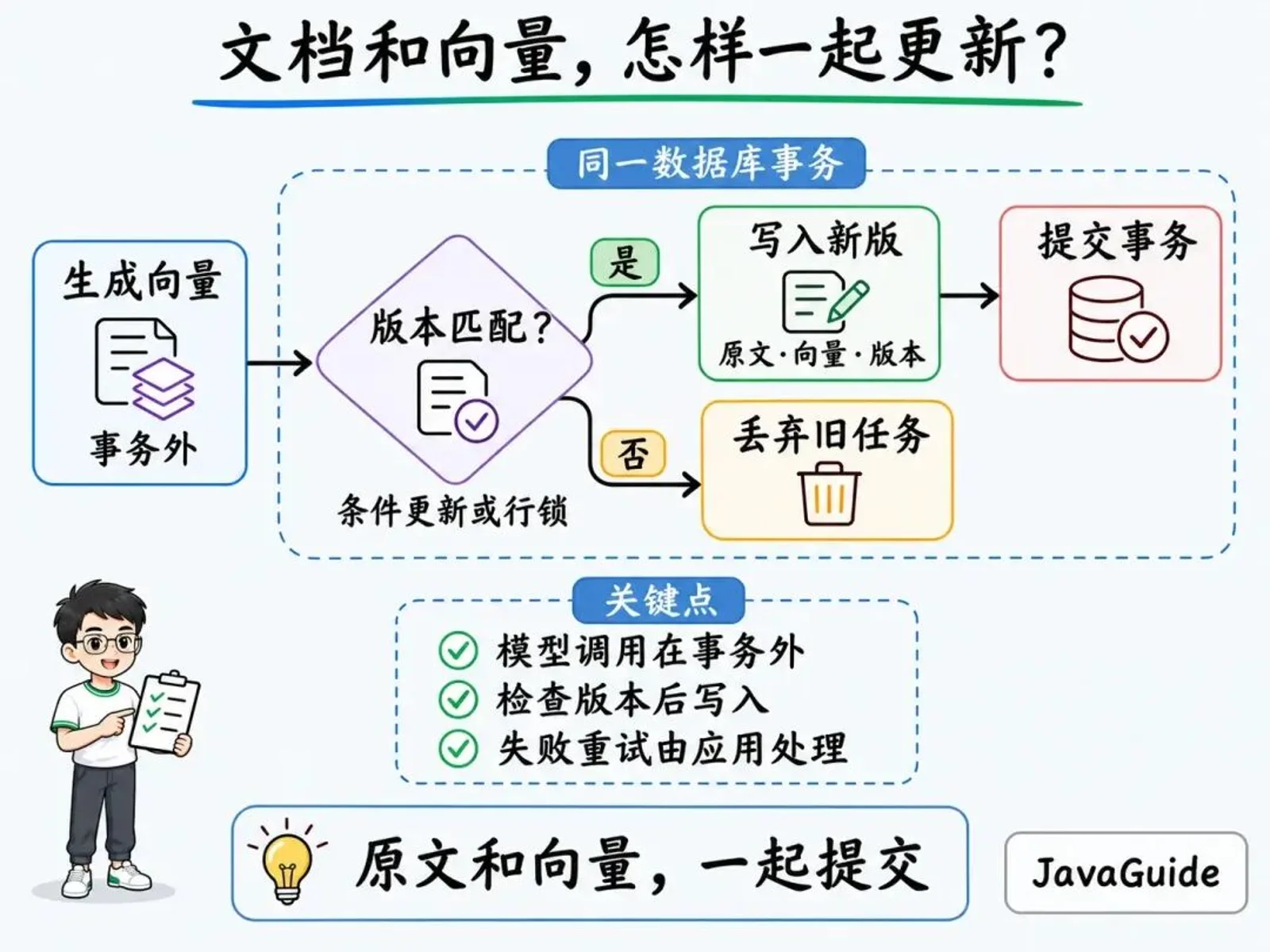
When a document is updated (e.g., version 7 → 8), storing both text and vectors in PostgreSQL allows atomic commits: generate vectors for the new version, then insert new text, new vectors, and version metadata in a single transaction. This avoids intermediate states where text is updated but vectors lag behind.
Concurrent updates (e.g., version 9 submitted before version 8's vectors finish) require version-aware tasks. The application can use conditional updates or row locks within the transaction to ensure only the latest version becomes searchable. External model calls (timeouts, retries) remain the application's responsibility; the pattern is to complete model inference first, then use a short transaction to write results.
Supabase and Neon Simplify Application Development
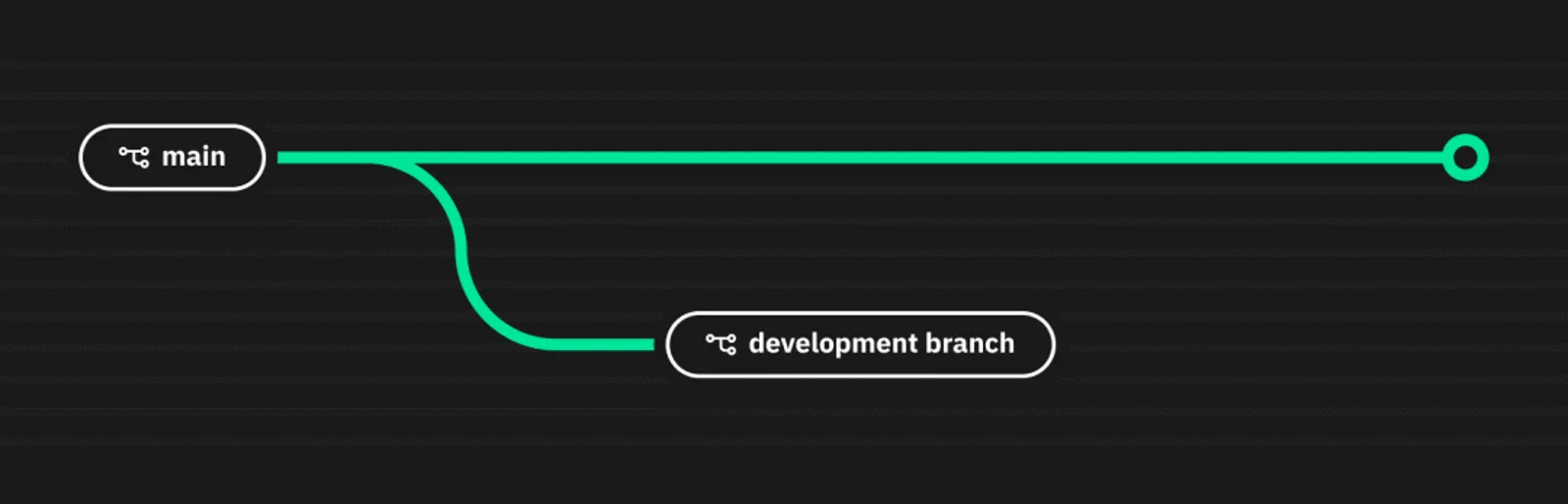
Supabase bundles PostgreSQL with authentication, object storage, realtime subscriptions, and auto-generated APIs. For example, uploaded PDFs go to object storage while metadata, chunks, vectors, and processing status stay in PostgreSQL. Neon adds database branching: schema changes (new columns, index adjustments) can be tested on a branch with production data before merging, and AI-assisted migrations can be validated there. Branches don't auto-sanitize data, so access control remains the team's duty.
Validate with Real Data: Performance, Filtering, and Resource Contention
Consolidating workloads shares CPU, memory, and I/O. Building vector indexes or bulk-updating documents can starve business queries. The author stresses testing beyond raw search speed:
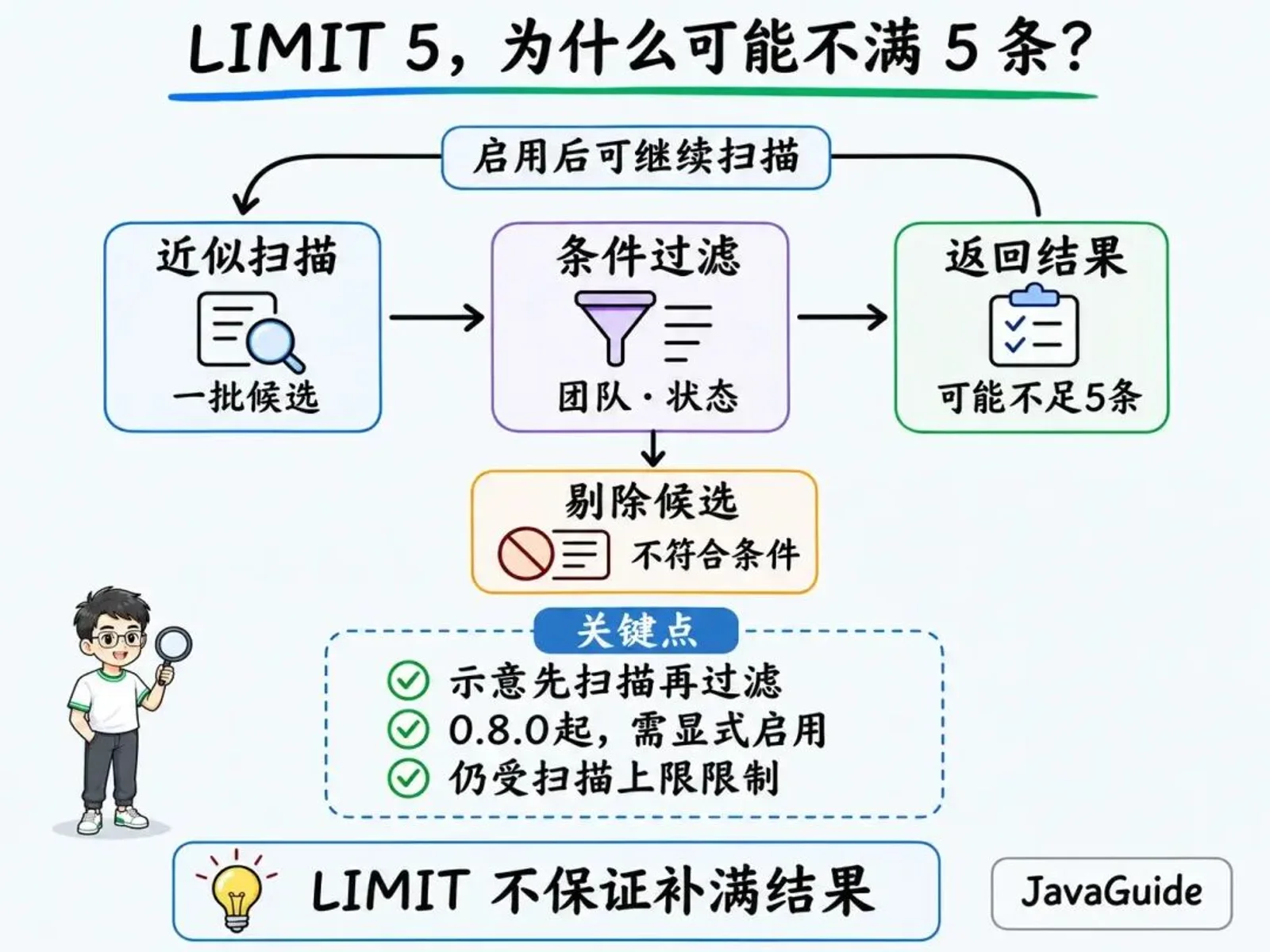
Use real questions and expected documents; verify recall, not just that LIMIT 5 returns five rows.
Apply actual tenant, permission, and version filters; approximate indexes (HNSW, IVFFlat) may return candidates that get filtered out, yielding fewer than LIMIT results. Since pgvector 0.8.0, iterative index scans can continue searching, but are still bounded by configuration.
Observe latency and business-query impact under concurrent search, document updates, and index maintenance.
If search load demands independent scaling or a dedicated search engine is clearly better, extract that component. The consolidation benefit must be weighed against resource contention, tuning effort, and blast radius of failures.
For new AI applications needing search, start with PostgreSQL: manage business data with SQL, add search/vector extensions as needed, and validate with real data. Existing MySQL projects running well need not migrate solely for an AI feature.
For questions about attribution, corrections or content rights, please contactand we will review it promptly.