

AI Coding Era: Can Engineers Still Guard the System's Last Line of Defense?
As AI agents handle more coding tasks, teams must retain the ability to understand, troubleshoot, and take over critical systems by verifying agent suggestions against actual system state, maintaining knowledge of critical paths, ensuring proper permissions and recovery drills, and passing skills through guided practice rather than blind reliance on AI.
Reading font
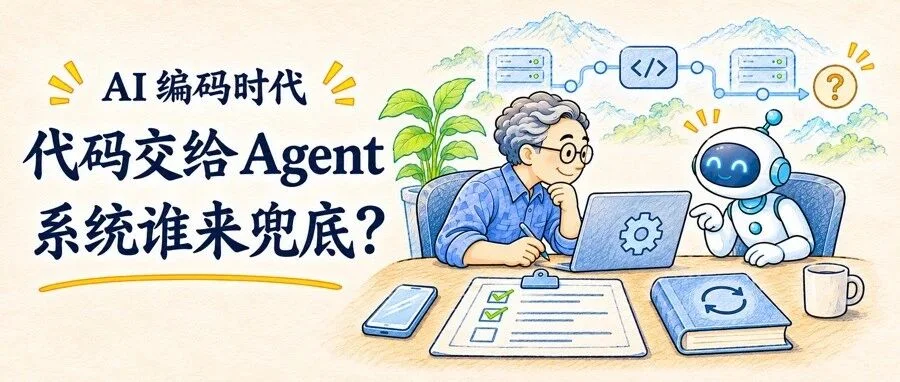
Reading an InfoQ piece about Pi founder Armin Ronacher recounting a war-room where engineers only asked Claude how to fix a broken system, the author reflects on a growing unease: as more development is delegated to agents, who still truly understands the system?
The author acknowledges the productivity gains from using agents for coding, debugging, and log analysis, but warns that convenience must not erode the team's capacity to explain, troubleshoot, and take over critical systems.
Asking Agents Is Normal — What Happens After the Answer?
Previously, engineers searched error logs, read docs, and asked colleagues. Now agents can correlate logs and locate code, which is valuable. The crucial step is judging whether to act on the agent's suggestion.
A concrete example: a refund request reaches the payment channel and succeeds, but the response is lost, leaving the local UI showing a timeout. The agent sees the timeout log and suggests "retry the refund task." Executing that suggestion requires knowing the original request ID, how the channel handles duplicate requests, and the current state on both sides. If a retry generates a new ID, the channel may treat it as a separate transaction, causing a duplicate refund.
Someone who understands this flow may not recall every line of the payment adapter, but they know: absence of a local success response does not mean the channel didn't execute.
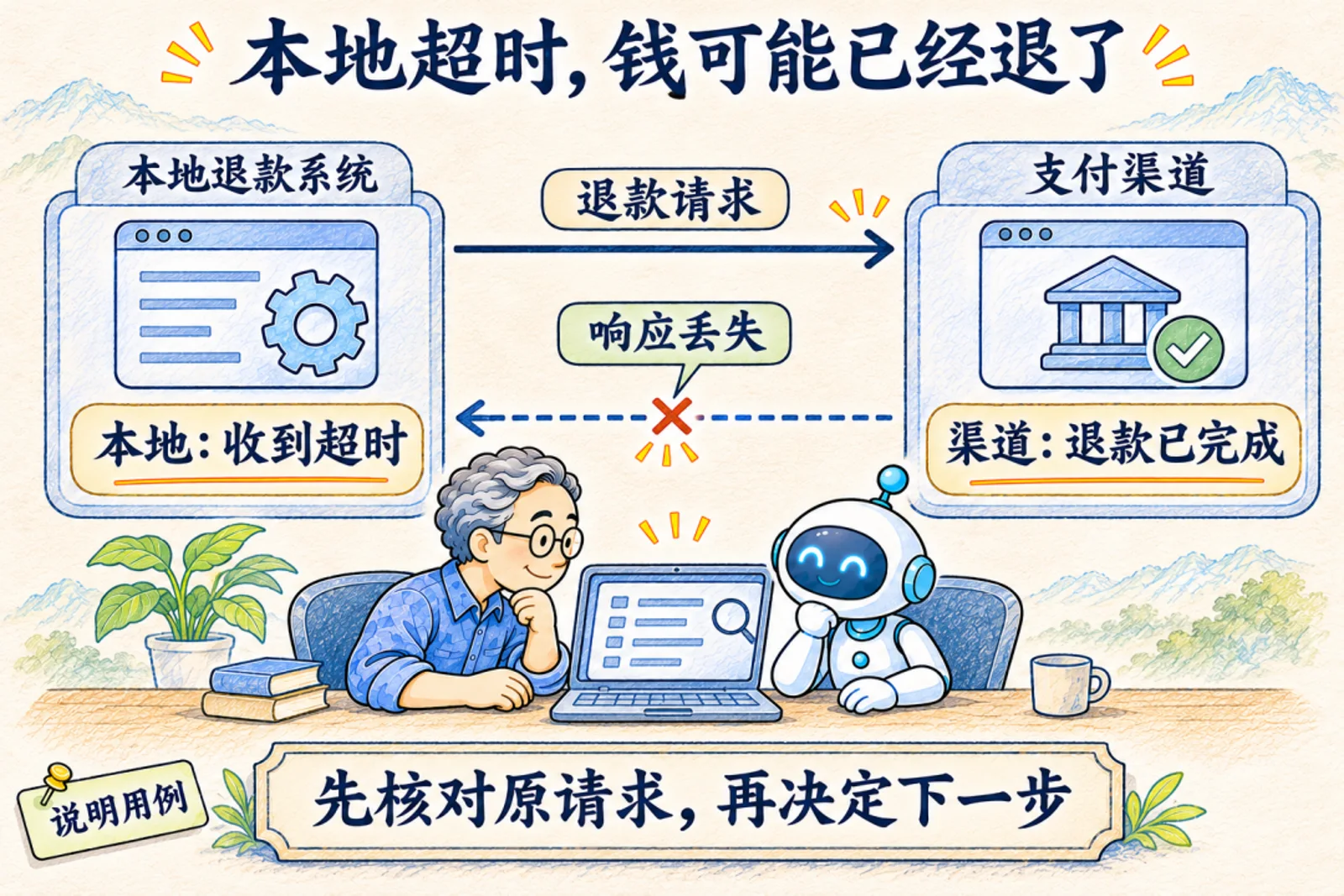
The correct approach: use an authorized interface with the original request ID to reconcile the channel refund record and local ledger. If the result is still unknown, preserve "result unknown" and control subsequent submissions per agreed protocol — never blindly replay. Agents can assist this investigation, but the team must verify whether the agent is querying the current running version, whether records are complete, and which orders the suggestion affects. A plausible explanation must match actual state; switching models won't conjure missing facts.
Not Every Line, But Critical Paths Must Be Tangible
A system may have hundreds of thousands of lines; nobody reads them all. Yet "not reading all code" differs from "not knowing how the system works." For the refund flow, the author maps the request path, state transitions, retry rules, and identifies the running version, execution records, and the person who can take over.
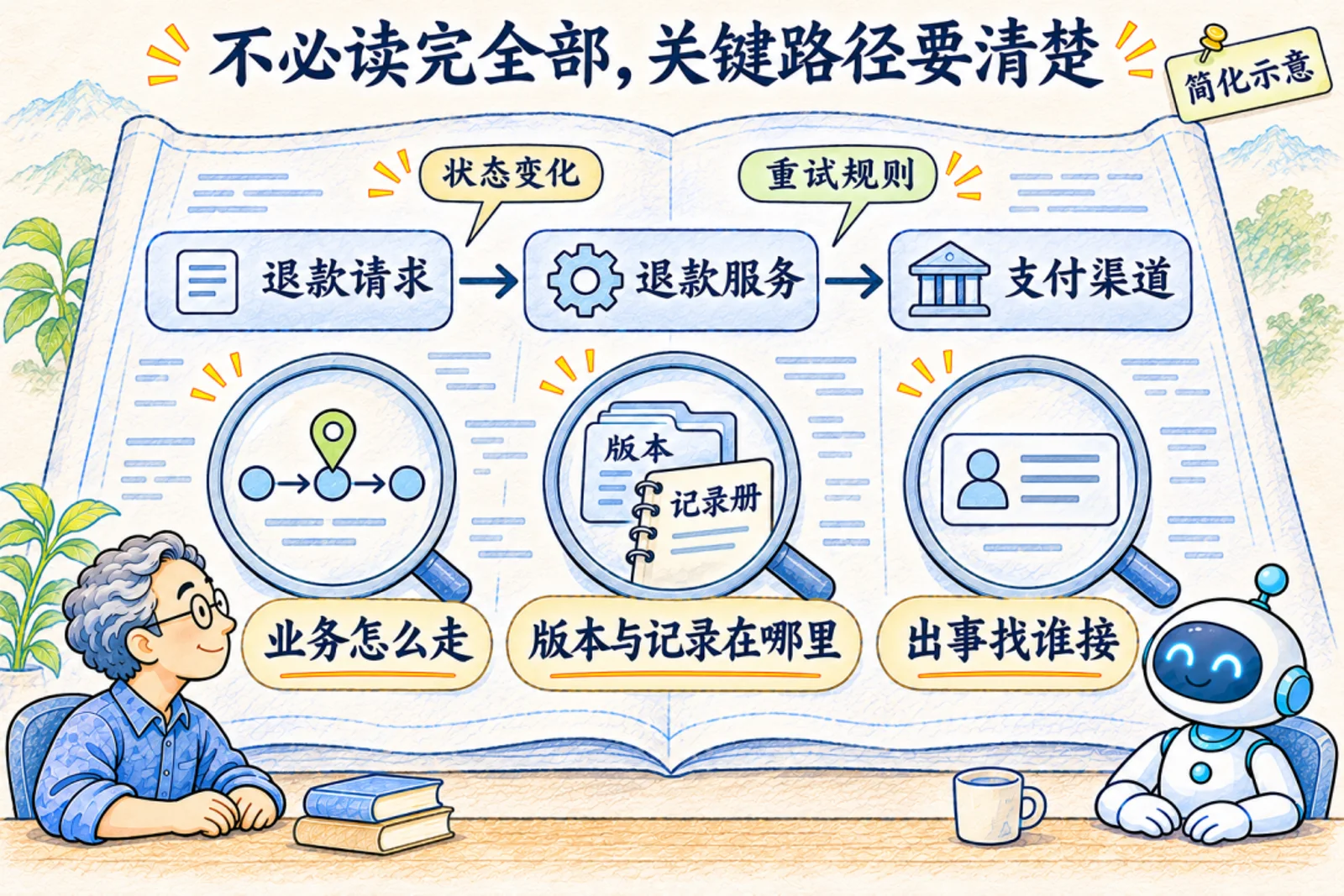
This understanding can be distributed across dev, QA, ops, and business roles, but in a crisis the pieces must fit together — no one can say "that part was written by an agent, I don't know." Reading code has priorities: routine UI copy can be skimmed; refund retries, transactions, and permission changes deserve tracing through relevant code, tests, and config. Agent summaries must be traceable to concrete files and runtime records.
The Last Line of Defense Cannot Be Just an Approve Button
Human-in-the-loop doesn't mean a rubber-stamp approval. If the approver cannot grasp the impact or lacks inspection and remediation tools, the checkpoint is theater. Humans also misjudge. Real safety nets come from a team that knows the system, plus permission controls, automated checks, runtime records, and validated recovery procedures. If a fix isn't ready, at least contain damage, preserve the scene, and escalate — don't let a speculative repair make things worse.
Consider: what if the development agent, its network, or its tools become unavailable? The team must still operate.

These entry points cannot depend on the model's current answer; they must be exercised beforehand. Emergency permissions should be pre-approved and audited, not bypassed ad-hoc. The goal isn't manual repair of everything, but ensuring that asking a tool isn't the only recovery path.
Back to the refund example: rolling back code may stop new erroneous requests, but cannot claw back money already refunded. Service restoration and financial reconciliation must be handled separately. This is work engineers should embed during development: encode business contracts into retry, logging, and recovery mechanisms, then validate with agents so similar issues become rarer and teammates can handle them. The author doesn't claim AI will never do this, but engineers must not be reduced to forwarding requirements and answers.
The Hardest Part: Passing These Capabilities Forward
Veterans who wrote code and chased bugs can leverage past experience to judge agent output. What about newcomers? Previously, fixing a bug meant tracing call chains, reading source, and researching — understanding stuck. Now agents deliver fixes quickly, but the understanding may not remain.
No ready-made training method exists. Rewriting code or memorizing design docs doesn't guarantee transferable judgment. The author prefers guided practice: let the newcomer use AI to complete a small change, then explain what changed, why, and how it was verified. Then simulate a lost response in a test environment and have them gather evidence and explain why a direct retry is unsafe.

An experienced engineer reviews: can the newcomer distinguish suggestion from fact, and do they know to stop when things are unclear? Handing off a task is not mentorship.
The bottleneck is time. Seniors with AI deliver faster; management wants cost reduction, leaving little budget for learning. But if every cycle strips out understanding and handover time, who will take over later? This cannot rely solely on junior self-discipline or a lead's after-hours goodwill.
At Delivery, Ask: Who Can Take Over?
Beyond features and test results, delivery should include a question: can the inheriting colleague locate the current version and runtime records, know where to look first when something breaks, and recognize which actions must not be taken lightly?
For critical systems, run a drill in a test or staging environment: without the development agent, follow the runbook to handle a known fault. Observe what's missing — documentation, tooling, permissions, or understanding. One successful drill doesn't prove full recovery capability, but it exposes gaps that go unnoticed daily.
Small scripts don't need the full process, but payments, permissions, and core data warrant this investment.
Whether programmers can hold the last line depends on whether the team still has people who understand the system, the practical conditions to take over, and the willingness to pass those capabilities on. The author welcomes writing less code, but dreads a future where software grows ever more complex, yet when incidents hit, everyone just waits for a model's answer. Tools grow stronger, yet we understand less of what we build — that is the real regret.
For questions about attribution, corrections or content rights, please contactand we will review it promptly.