

AI-Driven Memory Price Surge Threatens China's Xinchuang Server Replacement
Soaring server memory prices driven by AI demand are severely impacting China's Xinchuang indigenous server replacement program, causing budget overruns, specification downgrades, and squeezed vendor margins, with DDR5 prices projected to peak in 2026 before easing as domestic capacity expands.
Reading font
Server Components and Domestic Alternatives
Servers consist of key modules each with domestic substitution efforts:
CPU: Domestic options include Kunpeng, Hygon, Phytium, Loongson, Sunway, and Zhaoxin, forming a multi-architecture competitive landscape.
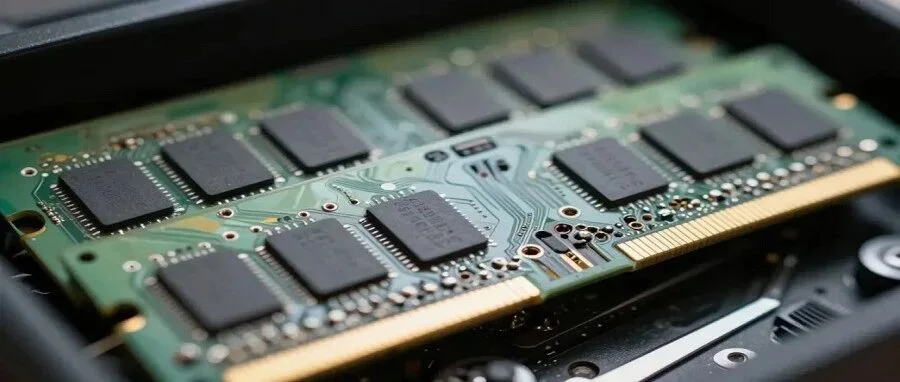
Memory: Core DRAM chips remain heavily import-dependent. Domestic memory module brands optimized for Xinchuang ecosystems have not yet achieved scale; most Xinchuang servers use international DRAM chips packaged by module vendors.
Storage: NAND flash and DRAM chips are dominated by Samsung, SK Hynix, and Micron. YMTC has broken through in NAND, and CXMT is catching up in DRAM, but high-end, high-capacity supply still lags.
Motherboard: Designed by whole-machine vendors such as Inspur, ZTE, and Huawei.
Price Trends: DRAM and NAND Flash
2.1 DRAM
AI servers require 8-10x the memory of traditional servers, consuming over 40% of global monthly DRAM output. This has triggered a sharp price surge:
Representative 64GB RDIMM module price rose from ~$255 in Q3 2025 to $450 in Q4 2025, with forecasts reaching $700 by March 2026.
Market predicts 40-50% further increase in Q1 2026 and ~20% in Q2 2026; the upcycle may last through end of 2026, potentially doubling 2025 highs.
Root causes:
AI demand explosion: AI server memory needs are 8-10x traditional; OpenAI alone consumes >40% of global DRAM monthly capacity.
Capacity shift: Samsung, SK Hynix, Micron allocate >80% of new capacity to HBM and high-end DDR5, squeezing DDR4 supply.
Technology iteration: HBM production consumes 3x the wafers of standard DRAM, worsening capacity shortage.
Supply chain reprioritization: Vendors prioritize AI server memory, drastically cutting consumer and traditional server memory output.
2.2 NAND Flash
AI training and data center demand for high-capacity, high-speed SSDs drives NAND prices upward similarly.
CPU, memory, and storage together account for 60-70% of server cost. With memory doubling or more, and CPU/storage also rising, Xinchuang server total cost escalates sharply.
Impact on Xinchuang Server Replacement
1) Budget Overruns Slow Replacement Pace
Primary buyers (government, finance, telecom, energy SOEs) have pre-approved budgets. Higher unit prices mean:
Procurement delays: Some units wait for price drops, postponing replacement schedules.
Volume cuts: Hard budget constraints force reduced purchase quantities, slowing national Xinchuang server penetration.
"2+8+N" rollout hindered: Expansion from party/government (2) to key industries (8) and broader sectors (N) may stall due to cost pressure.
2) Downgrading Specs to Meet Volume Targets
To hit quantity targets within fixed budgets, buyers may reduce configurations — e.g., cutting planned 512GB memory to 256GB or 128GB — creating future performance bottlenecks and premature upgrade needs.
3) Squeezed Margins for Domestic Server Vendors
Domestic vendors face high component procurement costs abroad while serving price-sensitive domestic government/enterprise clients who demand cost-sharing. This double squeeze compresses profits, threatening R&D investment and long-term development.
Outlook and Implications
DDR5 prices expected to rise 55-60% QoQ in 2026 Q1, remain high through Q2-Q3, then gradually decline toward rational levels by end of 2027 as DDR5 capacity catches up and domestic memory chips mature. Near-term procurement will become more calculated, adopting phased construction and priority-for-critical-business strategies. Long-term, the cost storm exposes China's vulnerability in core semiconductor components, especially memory chips, indicating Xinchuang replacement cannot proceed at originally optimistic speed and cost expectations.
References: 2025-2027 DRAM, NAND Market and Price Trend Analysis Memory Chip Price Increases to Continue Through 2026 Domestic Mainstream CPU Development Status
For questions about attribution, corrections or content rights, please contactand we will review it promptly.