

Alibaba, ByteDance, Tencent Jointly Define XPU Out-of-Band Management Standards
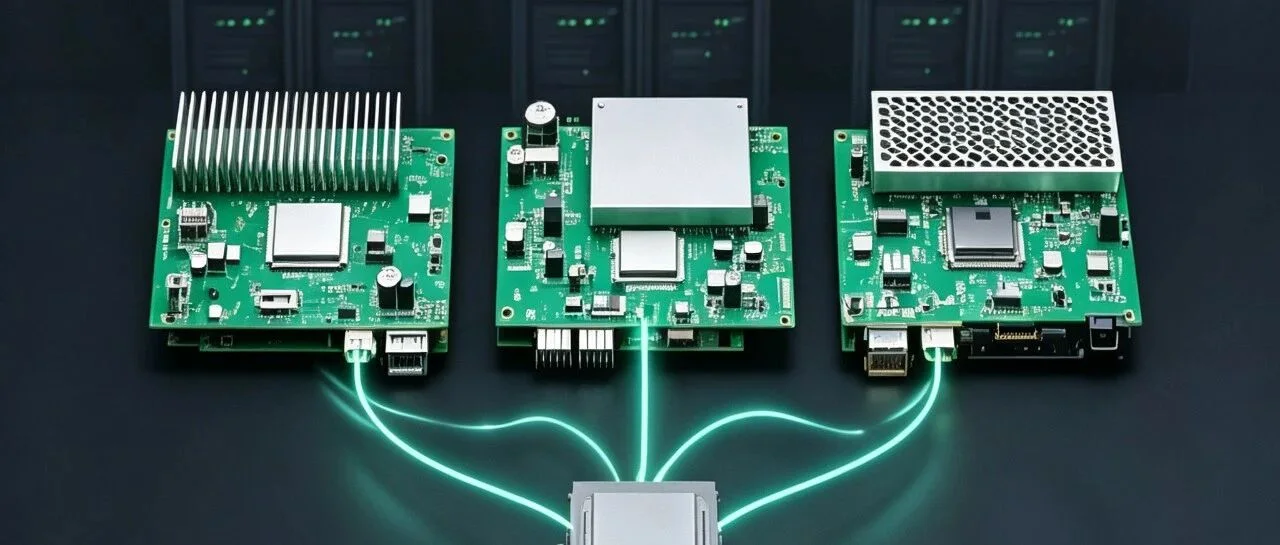
Alibaba, ByteDance, and Tencent have jointly released three specifications for XPU out-of-band management to standardize heterogeneous compute infrastructure across vendors, covering Redfish interfaces for modules, PLDM/PDRs for cards, and capability requirements for devices without independent controllers, aiming to reduce cross-vendor adaptation costs through common protocols and data semantics.
Reading font
1. Growing Compute Diversity Increases Management Complexity
Modern accelerator cards and compute modules carry management objects far beyond the compute chip itself. Operators must monitor compute core and memory health, high-speed interconnect link status, PCIe link errors, power, temperature, protection states, and post-failure diagnostic evidence. XPU — a collective term for GPUs, NPUs, and other dedicated accelerators — comes in varied product forms, supply sources, and hardware generations. Some modules expose management via an independent module management controller (xMC), while some cards are managed directly by the server BMC. The same metric may have different names and statistical calibers; the same fault may have different diagnostic capabilities; the same upgrade may have different completion criteria.
These differences translate into vendor-specific branches, dedicated scripts, and repeated validation in server integration, BMC firmware, and operations platforms. New product onboarding requires re-adaptation, legacy product upgrades demand regression, and fault analysis requires re-assembling evidence from disparate sources. The article argues that the value of hardware diversity needs a management foundation capable of absorbing it.
2. Three Specifications Establish a Common Baseline for Capabilities, Expression, and Management Flows
The three jointly released specifications address the same question from different layers: what out-of-band capabilities an XPU should possess, how those capabilities are described, and how management systems use them consistently.
2.1 XPU Module Standardized Redfish Interface Design Specification
Targeting modules with a module management controller, this specification builds on the DMTF Redfish technology stack. It defines the resource model and operational behaviors between the host BMC and the module BMC, covering asset and health, interconnect status, event notification, log collection, and firmware upgrade workflows. By agreeing on common resource relationships, data semantics, and task results, the host side reduces per-vendor adaptation, making module state understandable and maintenance processes traceable.
2.2 XPU Card PLDM and PDRs Definition Specification
Targeting PCIe standard cards, OAM, and similar form factors, this specification defines the out-of-band communication channel and PLDM protocol requirements. It covers component asset information, firmware upgrade, accelerator management, and diagnostic file transfer. PLDM (Platform Level Data Model) is the protocol; PDRs (Platform Descriptor Records) describe management objects, sensors, controls, and their associations. The specification further standardizes entity, sensor, and control identification and description so that the BMC can identify, read, and use device capabilities under common rules, reducing the problem of data arriving but meaning still requiring per-vendor interpretation.
2.3 XPU (Without xMC) Out-of-Band Capability Standard Specification
Targeting PCIe standard cards and XPU scenarios without an independent management controller — managed directly by the server BMC — this specification defines five capability categories: data collection, firmware upgrade, log collection, power and thermal control, and stability. It distinguishes mandatory from recommended items. It focuses on what capabilities the device must provide, not on the BMC northbound interface. Beyond temperature, power, memory errors, and link state collection, it specifies upgrade package verification, upgrade result query, fault code and chip diagnostic data retrieval, and constrains high-frequency access, message timeout recovery, and out-of-band access impact on in-band business, ensuring management capabilities are both usable and sustainable under continuous operation.
The three specifications respectively clarify capability requirements, protocol and data description, and module management interfaces, forming a complementary standardization foundation. Different hardware forms can adopt corresponding management paths, while common management needs gain clearer agreements for implementation and verification.
3. Standardizing Common Capabilities Leaves Room for Differentiated Innovation
Out-of-band management operates via a path outside the business OS. For modules, the module management controller provides Redfish services; for card-level devices, interaction occurs via PLDM and similar protocols. Different forms have their own suitable implementations, but common capabilities and semantics must remain clear. The collaboration value lies in separately defining device capability requirements, communication and data expression, and management interface agreements, enabling firmware, XPU, and operations sides to work around common boundaries. Hardware access, driver adaptation, and internal implementation remain each party's responsibility based on product characteristics.
This approach preserves innovation space. Vendors continue investing in chip architecture, interconnect technology, diagnostic depth, and reliability design, while common management capabilities surface consistently. Necessary extensions should evolve under the respective specification's extension and compatibility conventions, keeping existing data and operation meanings stable. The breakthrough significance is turning cross-vendor management from project experience into industry common capability; clearer common agreements reduce repetitive work for new products entering infrastructure.
4. Making Management Costs Controllable, Enabling More Compute in Open Ecosystem
For XPU vendors, common capability and protocol agreements promise lower repeated integration costs, directing R&D toward product capability and reliability. For server and BMC vendors, a more stable management baseline helps reduce per-model branches and accumulate reusable collection and maintenance workflows. For cloud and AI service providers and end operators, more consistent data semantics and operation results aid unified asset management, alert analysis, diagnostic collection, and upgrade orchestration. Supplier selection can focus more on compute, reliability, and service capability, lessening integration burden from proprietary management methods.
Management standardization also provides a more trustworthy data foundation for automated operations. When state, topology, errors, and operation results share common meaning, rule systems and intelligent ops tools can more reliably correlate evidence, propose remediation, and verify remediation effectiveness. Common standards will not automatically eliminate all hardware differences, nor replace each vendor's driver and software ecosystem. They enable differences to be clearly expressed, common capabilities to be reused, and industry collaboration to be sustained.
5. Three Cloud and AI Providers Jointly Drive Requirements into Collective Force
Alibaba, ByteDance, and Tencent face large-scale deployment, continuous maintenance, and multi-supplier onboarding. Their management needs bear distinct engineering traits: devices must be discoverable, states comparable, faults evidenced, upgrades traceable, and remediation verifiable. The three vendors jointly advancing this specification set aggregates common needs from different deployment scenarios, giving XPU vendors, server and BMC vendors a more consistent implementation direction. Industry partners can build capabilities around the common baseline, reducing duplicate integration and validation efforts. This joint release is a starting point for long-term co-construction; future broader product practice and industry participation will drive continuous evolution.
6. Inviting More Vendors to Turn Specifications into Runnable Common Capabilities
A specification's vitality comes from real product implementation, real scenario validation, and continuous builder participation. The three specifications start as drafts, to be refined through review, implementation, and verification. The article calls for XPU and module vendors to participate in capability definition, protocol implementation, and resource mapping, bringing device characteristics, diagnostic capabilities, and boundary conditions into the specs; server and firmware vendors to contribute adaptation experience, reference implementations, and interoperability test cases; cloud and AI providers, standards bodies, industry partners, and developers to join reviews and suggestions, pushing specs toward wider industry adoption. The three vendors' co-construction is the starting point; more participants' practice will determine how far the standards go. The goal: let different compute products speak the same management language, letting more innovations reach scale at lower integration cost.
For questions about attribution, corrections or content rights, please contactand we will review it promptly.