

Alibaba Cloud E-HPC & AMD Redefine Scientific Computing with Agent-Driven Platform & EPYC 9005
At CCF HPC 2026, Alibaba Cloud unveiled E-HPC's evolution into an Agent-driven research execution platform and launched the hpc9a instance powered by AMD EPYC 9005 processors, highlighting CPU's renewed role in AI-era orchestration and data throughput for HPC workloads like EDA, life sciences, and embodied intelligence.
Reading font
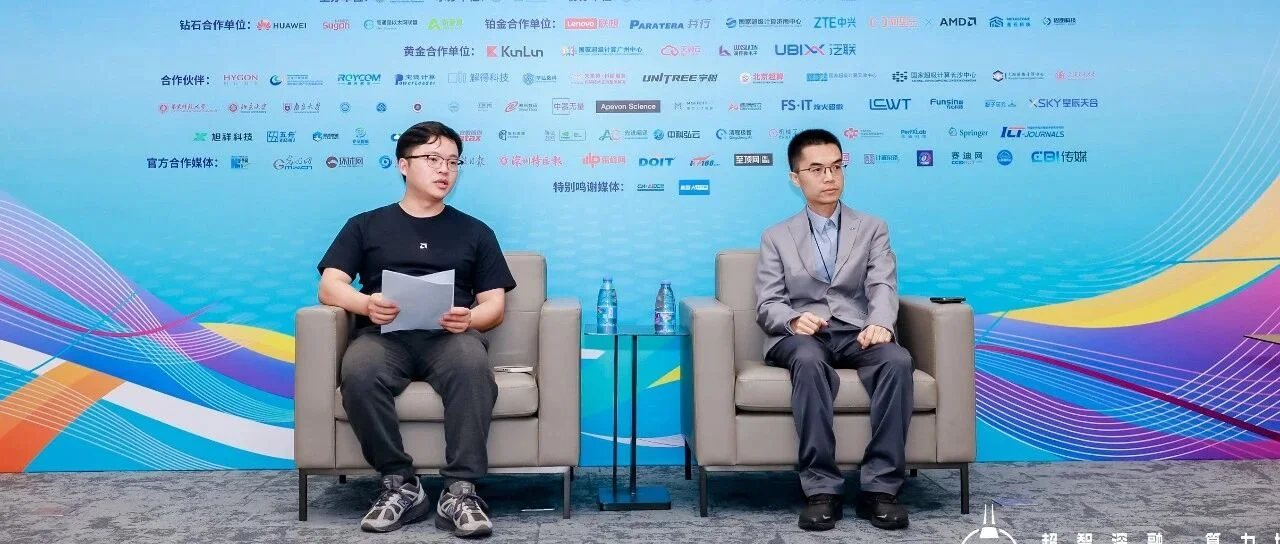
The 22nd CCF HPC Academic Conference (CCF HPC 2026) took place in Shenzhen on October 17–20 under the theme “Super-Intelligence Deep Integration, Dense Computing Power in Shenzhen.” The event gathered over 20 academicians and 500 HPC experts to discuss domestic computing-power innovation, super-intelligence fusion, computing-power interconnection, and green computing systems.
E-HPC Upgrade: From Compute Provider to Agent-Driven Execution Platform
Alibaba Cloud’s E-HPC is shifting from a cloud research compute platform to an Agent-driven research execution platform. You Liang, head of HPC & Performance Acceleration at Alibaba Cloud, described the new paradigm: researchers no longer prepare data, configure environments, call tools, and analyze results manually. Instead, they define research goals and acceptance criteria for an Agent, which autonomously understands the goal, plans tasks, executes jobs, and iterates based on feedback. The first customer-perceived benefit is a dramatic boost in research efficiency, not a peak metric.
This change is more than adding an Agent entry point. Industry Agents and the E-HPC execution layer collaborate: Agents handle goal understanding, task planning, tool invocation, and re-planning via Skills, MCP, OpenAPI, and other interfaces; E-HPC’s execution layer manages job orchestration and heterogeneous resource scheduling. The platform already supports industry Agents in embodied intelligence, life sciences, CAE simulation, and quantitative research. One embodied-intelligence leader used it to close the “collect–label–train–simulate” data loop; a life-sciences Agent platform leverages 140+ Skills orchestrated on E-HPC’s elastic compute base.
E-HPC thus combines an industry-Agent layer and an execution layer. Customers with existing Agents can call E-HPC compute via Skills, MCP, CLI, OpenAPI, or SDK; those without can use turnkey industry Agents and Skills co-developed with partners. Over the next three to five years, priorities include deepening Agent and expert-Skill capabilities in embodied intelligence, life sciences, CAE, EDA, and quantitative finance; building a Skills marketplace; and unifying intelligent scheduling across HPC, AI training/inference, general, container, and sandbox instances.
Industry Solutions: EDA, Life Sciences & Embodied Intelligence
Three dedicated solution lines share one elastic compute network and a unified scheduling, storage, and security stack, enabling both out-of-the-box use and smooth integration with existing environments.
EDA chip design: Hybrid-cloud E-HPC integrates losslessly with mainstream schedulers (LSF, Slurm, PBS), auto-scales by queue load, and auto-shrinks when jobs finish, eliminating long pre-tape-out simulation queues. Large-memory HPC-optimized instances handle memory-intensive STA and PR jobs.
AI for Science & life sciences: E-HPC Instant App Market pre-integrates AlphaFold3, OpenFold3, RFDiffusion, GROMACS, GATK, and other tools. Customer-owned research Agents invoke compute via CLI, API, or Skill to chain drug-discovery and gene-analysis workflows.
Embodied intelligence: HPDA Robotics builds a closed data loop covering collection, management, labeling, training, simulation, and inference. The built-in APAK acceleration engine improves multimodal data processing cost-performance by 2.1× to 5×.
Alibaba Cloud hpc9a: CPU-Optimized Compute for HPC Workloads
The new hpc9a instance uses 5th-generation AMD EPYC (霄龙) 9005 series processors, targeting general industrial simulation, electronic design automation, and other HPC needs across embodied intelligence, life sciences, CAE, EDA, and quantitative finance. Compared with the previous hpc8ae generation, hpc9a delivers significant gains in compute, memory bandwidth, and memory capacity.
Yu Weifei, AMD Greater China Senior Solution Architect, detailed the EPYC 9005 advances: Zen 5 cores adopt a full 512-bit data path for AVX-512 vector compute; SKUs vary in frequency and core count; the platform supports up to 12-channel DDR5, 128 PCIe 5.0 lanes per socket, and CXL 2.0. Exact model, platform, and cloud-instance capabilities should be verified against official specifications.
For selection and tuning, E-HPC provides one-click optimization templates. The E-HPC Agent further offers one-click optimization Skills for mainstream HPC software, autonomously picking the best price-performance instance type and optimal runtime parameters. As these capabilities scale in production, instance selection and tuning are expected to shift from expert-experience dependence to platform-driven automation.
CPU “Re-Seen”: Compute Ratio & Open Ecosystem as Keywords
For the past two years, compute has been nearly synonymous with GPU. Yu argues the CPU’s value is not a “return” but being “re-seen.” As AI moves from training to large-scale inference and Agents, model inference is only one link in a production system surrounded by orchestration services, databases, caches, API gateways, middleware, and tool calls—many of which run on CPUs. Resource demand depends on concurrent users, Agent task volume, and implementation specifics. CPUs serve as AI server host nodes, run inference workloads suited to CPUs, and handle the data processing, database, and business-system demands driven by AI.
In the face of Agent-ized and AI-ized scientific computing, the CPU role is shifting from “pure compute” to “compute + orchestration + data throughput.” AMD outlines three design directions:
Compute: Zen 5 vector capability and high-frequency SKUs target fluid, structural, and molecular-dynamics simulation solvers; parallel-solver performance is evaluated per instance configuration.
Orchestration: Agent task scheduling, sandbox execution, tool invocation, and workflow state management need general compute; high-core-density processors support concurrent tasks, though actual capacity depends on memory, I/O, and task characteristics.
Data throughput: EPYC platform memory bandwidth and I/O help alleviate data-movement bottlenecks. On the software side, AMD provides compilers, math libraries, and CPU-optimized AI inference stacks.
Alibaba Cloud matches instances to workloads: HPC-optimized instances (high frequency, high memory bandwidth, large memory) for CAE/EDA compute-intensive and large-memory loads; general, container, and sandbox instances for Agent orchestration to achieve faster response and lower cost. All instances run on Alibaba’s self-developed CIPU 2.0 architecture, supporting VPC, eRDMA networking, and CPFS parallel storage, which together form an elastic compute network for E-HPC and Agent scheduling. CIPU 2.0 offloads network and storage virtualization overhead; eRDMA provides low-latency inter-node communication, leaving more CPU cycles for computation.
The two sides complement each other at the data-throughput layer: EPYC supplies CPU memory bandwidth and I/O; Alibaba Cloud adds CIPU 2.0, eRDMA, and CPFS to boost throughput and cut communication overhead.
On product mix: high-frequency SKUs suit AI server host nodes and single-core-sensitive workloads; high-core-density SKUs fit massive concurrent Agent services and cloud-native applications. A cooperation focus is early layout—Alibaba Cloud analyzes actual cloud workload demands for frequency, cache, memory capacity, and bandwidth, then engages AMD on platform adaptation and application optimization. Yu notes the collaboration covers application adaptation, migration support, and platform selection; real-world results still require validation against software dependencies and deployment conditions. Amid concerns over ecosystem lock-in and migration cost, AMD emphasizes x86 compatibility, CXL open standard, OCP open compute community optimization, and multi-OEM/cloud partner choice—summarized as “giving the choice back to customers.”
Over a longer horizon, the next phase of HPC-AI convergence is less about GPU versus CPU replacement and more about “ratio” and “closed-loop” competition. E-HPC uses Agents to intelligently translate research goals into execution flows; hpc9a handles layered loads with systemic upgrades; AMD’s open ecosystem supports application adaptation and platform choice. Whoever keeps complexity on the platform side, letting researchers focus on the science itself, will lead this round of HPC experience upgrade.
For questions about attribution, corrections or content rights, please contactand we will review it promptly.