

Anthropic's Rust Migration & AI-First Engineering: No Coding Interviews, PMs Ship Features
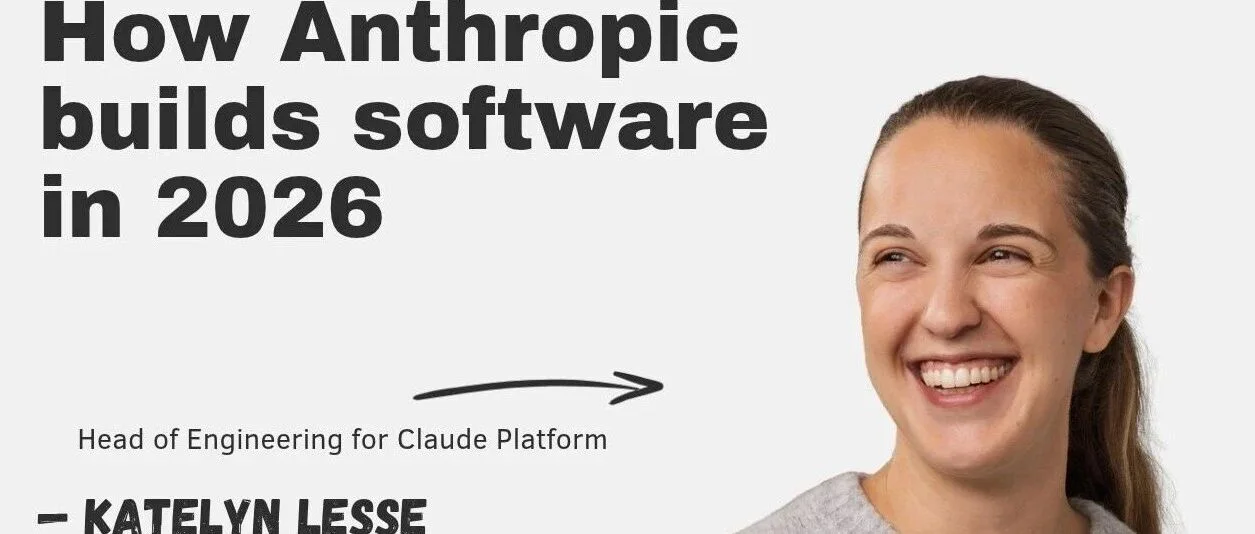
Anthropic platform lead Katelyn Lesse reveals how a small team migrated the Messages API from Python to Rust in five months using shadow testing, replaced traditional code reviews and oncall with Claude agents, let product managers ship features directly, and shifted hiring and promotion to focus on impact over tenure — all while keeping team size and ownership unchanged.
Reading font
Why the Migration: CPU Shortage After Super Bowl Ad
The Messages API handles all external Claude traffic including Claude Code and Desktop. Originally a Python monolith running in a single GCP region, it performed auth, tokenization, billing, and safety checks before forwarding to GPU clusters. After Anthropic's Super Bowl ad, request volume spiked and CPU clusters hit limits. Katelyn noted this was the first time in her career that requesting more compute from cloud providers became a hard negotiation — CPU scarcity was no longer just a budget issue.
The team first tried standard mitigations: shifting regions, traffic splitting, optimizing Python. Despite significant effort, Python's performance overhead remained too high for the growth trajectory.
Why Python Initially, Then Rust
In 2023 Anthropic was research-focused; the API team was small and overlapped with researchers who used Python. OpenAI's API followed a similar path: Python first, later Rust. An intermediate step moved new services to Go for a balance of efficiency and developer experience. When model capabilities advanced further, the team considered Rust for its near C/C++ performance with memory safety. Katelyn highlighted a key factor: compile-time checks. In a world where agents generate code with uncertain correctness, more compile-time verification makes it easier to validate outputs. The borrow-checker friction that slows human Rust developers disappears when agents write the code, because iteration speed is no longer human-bound.
Verification: Shadow Running with Two Checkpoints
The migration strategy centered on verification, not language. A senior engineer proposed forking the codebase, rewriting entirely in Rust, and running the new system in shadow mode alongside production Python, receiving identical live traffic. The existing Python API served as a perfect test baseline — no new test design needed.
Privacy constraints prevented inspecting raw user requests to debug mismatches. The team reduced comparison to two checkpoints: (1) everything sent to inference must match exactly, (2) returned token counts must match. They diffed daily, driving the discrepancy rate toward zero before cutting over.
An incident occurred when a Python beta feature was accidentally exposed; the Rust shadow system suddenly showed many diffs. The fix: added linting and static analysis to force other teams to implement new features in both Python and Rust simultaneously.
A thin Python entry layer was retained as a fallback: if Rust errored, requests fell back to Python (slower but functional). This safety net was removed only after confidence was high.
Katelyn's principle: "If you can reduce something to a verifiable level, you don't need to read every line of code." She noted engineers only deeply review about 20% of agent-opened pull requests; the remaining 80% are not read in detail.
Code Review, Oncall, and Onboarding Are Changing
Code review: All PRs first pass a Claude review classifier running 24/7. It decides: whether human review is needed, how many reviewers, and which team receives it. Mechanical changes (SDK version bumps, model swaps) and flaky test fixes are auto-merged after Claude approval. Only high-risk changes route to humans.
Oncall: A Claude shadow oncall has been listening to real rotations for months, learning to distinguish real alerts from noise. Now alerts hit Claude first; it suppresses noise and wakes engineers only for genuine issues. By the time an engineer opens their laptop, Claude has often diagnosed the problem, suggested a fix, and sometimes already applied it. The goal is eventually handling incidents without human paging.
Onboarding: New engineers ask Claude instead of relying on an onboarding buddy. Connected to the codebase and internal systems, Claude generates interactive system visualizations, explains architecture in text, video, or podcast format — whatever the engineer prefers. This mirrors OpenAI's use of Codex for onboarding.
Building from Scratch: Cloud Managed Agents as a Counterpoint
Concurrently, the team built Cloud Managed Agents in Go. The initial design: each request spawned a sandbox to run Claude Code. Four problems emerged: (1) sandbox crash = agent crash, requiring full restart (reliability); (2) sandbox startup and Claude Code load added latency before first token (latency); (3) external tool credentials had to enter the sandbox (security); (4) each session consumed at least one CPU (cost).
They redesigned: a persistent harness runs on long-lived servers; sandboxes are created only when work is needed; session state is stored separately. Results: sandbox crashes no longer kill the agent; latency drops as requests hit the resident server; credentials are attached only at the final egress step; CPU usage fell to roughly one-third of the original.
Katelyn observed that previously, restarting a half-finished project would be considered crazy. Now planning and implementation costs have dropped enough that such rewrites can happen repeatedly.
The "Software Factory" in Practice
Industry talks about "software factories"; Anthropic doesn't use the term but operates one: agents modify code, other agents review, a first-pass code review agent runs, and post-deployment QA agents continuously test against human-written system specifications, opening PRs when they find breakage. The entire pipeline from change to deploy to quality assurance is increasingly agent-driven to free human time.
What Hasn't Changed
Planning and alignment remain the biggest time sink. Katelyn's team sits between Inference, Research, Safety, and App; launching a project still requires extensive consensus-building. Planning duration is similar to pre-AI times; ordinary engineers spend more time coordinating than implementing.
Team size stays at two-pizza teams (5–8 people). This size supports complex system understanding, oncall coverage, and resilience to absences. The team still owns the system end-to-end and gets paged collectively. What changed is composition: previously a tech lead designed and mid-level engineers implemented; now every member must think deeply about design and cross-team coordination, then direct Claude to execute.
Engineer energy allocation has shifted. Even in product teams, engineers spend noticeably more time building internal tools. One team member independently ran a multi-agent Slack channel driving toward a single goal — entirely outside assigned tasks.
Language fluency matters less. Katelyn, who invested heavily in learning languages pre-AI, says some engineers never cared deeply about languages; those who do can focus on language and framework research, where ample work remains.
Hiring, Promotion, and PMs Shipping Features
Hiring: Traditional algorithmic coding interviews are gone. Many candidates excelled elsewhere but failed the hand-written coding round because they no longer write code manually. The replacement is under experimentation: candidates collaborate with a coding agent to complete a task — reviewing agent-written code, analyzing agent-produced system designs. System design and deep-dive project interviews remain unchanged.
PMs shipping: A cache-hit diagnostic panel in the developer console was built by a PM collaborating with Claude in Slack; engineers only reviewed and provided safety nets. This is rare in large companies. Katelyn emphasized the owning team remains accountable for incidents.
Promotion: Anthropic has no titles — everyone is "technical staff" with numeric levels. But the yardstick has shifted: a two-year API migration now takes five months, so tenure-based seniority is meaningless. Evaluation now measures impact: CPU saved, latency reduced, incidents avoided. The promotion framework exists but no longer uses "time spent" as a proxy for experience.
Engineer Identity Crisis
Katelyn addressed engineers questioning their relevance. She wrote a longer blog version arguing that solving agentic infrastructure challenges and making multi-agent systems tackle the world's hardest problems may depend on you and your skills. Gaps remain in multi-agent coordination, security, auth, and infrastructure — e.g., orchestrating hundreds of agents to shepherd a new drug through FDA approval involves concrete engineering problems at every step.
Her pragmatic view: agents already help, but without humans building the systems, adding guardrails, and aligning stakeholders, simply releasing a swarm of agents invites trouble — security issues appear first. The recurring theme: agents take on more engineering tasks, but the work of building systems, adding guardrails, and achieving alignment hasn't disappeared — it's more in demand than ever.
For questions about attribution, corrections or content rights, please contactand we will review it promptly.