

Claude Code Skills: Production-Grade Agent Configurations for Full-Stack Development
This article documents 17 battle-tested Claude Code skills covering coding standards, backend/frontend patterns, security review, TDD workflow, database optimization, Go patterns, and continuous learning systems — all evolved from 10+ months of building real products.
Reading font
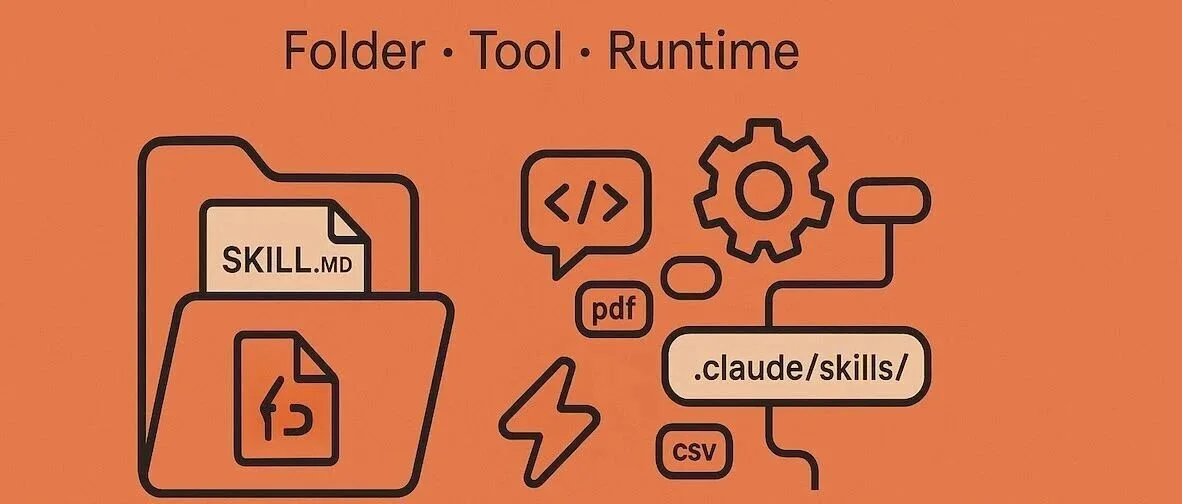
Overview
This collection originates from the everything-claude-code repository (https://github.com/affaan-m/everything-claude-code), created by an Anthropic hackathon winner. It contains production-grade agents, skills, hooks, commands, rules, and MCP configurations evolved through 10+ months of daily intensive use building real products. The article focuses on the Skills module.
Skills Catalog
coding-standards — Universal coding standards for TypeScript, JavaScript, React, and Node.js
backend-patterns — Backend architecture patterns, API design, database optimization, server-side best practices
frontend-patterns — React, Next.js, state management, performance optimization, UI best practices
project-guidelines-example — Project-specific skill template based on Zenith (AI-powered customer discovery platform)
security-review — Comprehensive security checklist and patterns
verification-loop — Complete validation system for Claude Code sessions
eval-harness — Formal evaluation framework implementing eval-driven development (EDD)
iterative-retrieval — Pattern for progressively refining context retrieval in multi-agent workflows
continuous-learning — Automatic pattern extraction from sessions saved as learned skills
continuous-learning-v2 — Instinct-based learning system with confidence scoring
strategic-compact — Manual context compaction suggestions at logical intervals
postgres-patterns — PostgreSQL query optimization, schema design, indexing, security
cloud-infrastructure-security — Cloud security checklist aligned with best practices
tdd-workflow — Test-driven development with 80%+ coverage (unit, integration, E2E)
clickhouse-io — ClickHouse patterns for high-performance analytical workloads
golang-patterns — Idiomatic Go patterns for robust, efficient, maintainable applications
golang-testing — Go testing patterns including table-driven tests, benchmarks, fuzzing
Detailed Skill Contents
coding-standards
Covers code quality principles (Readability First, KISS, DRY, YAGNI), TypeScript/JavaScript standards (variable/function naming, immutability patterns, error handling, async/await best practices, type safety), React best practices (component structure, custom hooks, state management, conditional rendering), API design standards (REST conventions, response formats, Zod validation), file organization (project structure, naming conventions), comments/documentation (when to comment, JSDoc for public APIs), performance best practices (memoization, lazy loading, database queries), testing standards (AAA pattern, descriptive test names), and code smell detection (long functions, deep nesting, magic numbers).
backend-patterns
Includes API design patterns (RESTful structure, Repository pattern, Service layer, Middleware), database patterns (query optimization, N+1 prevention, transactions), caching strategies (Redis cache layer, Cache-Aside pattern), error handling (centralized handler, exponential backoff retry), authentication/authorization (JWT verification, RBAC), rate limiting (in-memory rate limiter), background jobs/queues (simple queue pattern), and logging/monitoring (structured logging).
frontend-patterns
Covers component patterns (composition over inheritance, compound components, render props), custom hooks (state management, async data fetching, debounce), state management (Context + Reducer), performance optimization (memoization, code splitting/lazy loading, virtualization), form handling (controlled forms with validation), Error Boundary pattern, animation patterns (Framer Motion), and accessibility patterns (keyboard navigation, focus management).
project-guidelines-example
Real-world example from Zenith (https://zenith.chat) — AI-powered customer discovery platform. Documents tech stack (Next.js 15, FastAPI, Supabase, Claude API, Cloud Run), architecture diagram, file structure, code patterns (API response format, frontend API calls, Claude AI integration with structured output, custom hooks), testing requirements (pytest for backend, React Testing Library + Playwright for frontend), deployment workflow (pre-deployment checklist, gcloud commands, environment variables), and key rules (no emojis, immutability, TDD, 80% coverage, small files, no console.log, proper error handling, input validation).
security-review
Comprehensive security checklist with 10 categories: secrets management (no hardcoded keys, env vars, validation), input validation (Zod schemas, file upload restrictions), SQL injection prevention (parameterized queries), authentication/authorization (httpOnly cookies, RBAC, Supabase RLS), XSS prevention (DOMPurify, CSP headers), CSRF protection (tokens, SameSite cookies), rate limiting (API and expensive operations), sensitive data exposure (masked logging, generic error messages), blockchain security (wallet verification, transaction validation), and dependency security (npm audit, lock files, Dependabot). Includes automated security tests and pre-deployment checklist.
verification-loop
Six-phase validation system: Phase 1 Build Verification ( npm run build), Phase 2 Type Checking ( npx tsc --noEmit), Phase 3 Lint Check ( npm run lint), Phase 4 Test Suite ( npm run test -- --coverage with 80% threshold), Phase 5 Security Scan (grep for secrets, console.log), Phase 6 Diff Review ( git diff). Outputs structured verification report with overall READY/NOT READY status. Recommends running every 15 minutes during long sessions.
eval-harness
Formal evaluation framework for eval-driven development (EDD). Defines capability evals (new behaviors) and regression evals (existing functionality). Three grader types: code-based (deterministic checks), model-based (Claude evaluates open-ended output), human grader (manual review). Metrics: pass@k (success in k attempts) and pass^k (all k trials succeed). Workflow: define evals before coding, implement, evaluate, report. Stores evals in .claude/evals/ with definitions, logs, and baselines.
iterative-retrieval
Solves the subagent context problem via 4-phase loop (max 3 cycles): DISPATCH (broad initial query), EVALUATE (relevance scoring 0-1 with gap identification), REFINE (update search criteria with new patterns/keywords, exclude irrelevant paths), LOOP (repeat until sufficient high-relevance files found). Examples: bug fix context (auth.ts, tokens.ts, session-manager.ts, jwt-utils.ts) and feature implementation (throttle.ts, middleware, router-setup).
continuous-learning
Stop hook that runs at session end: evaluates session length (default 10+ turns), detects patterns (error resolution, user corrections, workarounds, debugging techniques, project-specific), extracts skills to ~/.claude/skills/learned/. Configurable via config.json. Compares with Homunculus v2 which uses PreToolUse/PostToolUse hooks (100% reliable) and atomic "instincts" with confidence scoring.
continuous-learning-v2
Instinct-based architecture: PreToolUse/PostToolUse hooks capture 100% of tool calls → background observer agent (Haiku) analyzes observations.jsonl → creates atomic instincts with confidence (0.3-0.9) and domain tags → /evolve clusters instincts into skills/commands/agents. Features confidence decay, export/import, backward compatibility with v1. Stores in ~/.claude/homunculus/.
strategic-compact
Suggests manual /compact at logical boundaries instead of arbitrary auto-compaction. Hook tracks tool calls, suggests at configurable threshold (default 50), reminds every 25 calls after. Best practices: compact after planning, after debugging, not mid-implementation.
postgres-patterns
Quick reference for indexing (B-tree, composite, GIN, BRIN), data types (bigint, text, timestamptz, numeric, boolean), common patterns (composite index order, covering indexes, partial indexes, RLS policies with SELECT wrapper, UPSERT, cursor pagination, queue processing with FOR UPDATE SKIP LOCKED), anti-pattern detection queries (unindexed foreign keys, slow queries, table bloat), and configuration templates (connection limits, work_mem, timeouts, pg_stat_statements, security defaults).
cloud-infrastructure-security
Cloud security checklist across 7 areas: IAM (least privilege, MFA, service accounts), secrets management (cloud secret managers, rotation), network security (VPC, security groups, no public databases), logging/monitoring (CloudWatch, audit logs, retention, alerts), CI/CD pipeline security (OIDC, secret scanning, dependency audit, container scanning, branch protection), Cloudflare/CDN security (WAF, rate limiting, bot protection, security headers, strict SSL), backup/disaster recovery (automated backups, retention, point-in-time recovery, quarterly restore tests, documented DR plan). Includes common misconfigurations (S3 exposure, RDS public access) and resource links.
tdd-workflow
Enforces TDD with 80%+ coverage. Core principles: test before code, coverage requirements (unit + integration + E2E), test types. 7-step workflow: write user story, generate test cases, run tests (fail), implement minimal code, run tests (pass), refactor, verify coverage. Patterns for unit tests (Jest/Vitest), API integration tests, E2E tests (Playwright), test file organization, mocking external services (Supabase, Redis, OpenAI), coverage thresholds, common mistakes (testing implementation details, brittle selectors, non-isolated tests). Continuous testing via watch mode, pre-commit hooks, CI/CD integration.
clickhouse-io
ClickHouse patterns for OLAP workloads. Table design: MergeTree (standard), ReplacingMergeTree (deduplication), AggregatingMergeTree (pre-aggregation). Query optimization: efficient filtering (index columns first), aggregations (ClickHouse-specific functions, quantiles), window functions. Data insertion: batch inserts (recommended), streaming inserts. Materialized views for real-time aggregation. Performance monitoring queries (slow queries, table stats). Common analytical queries: time-series (DAU, retention), funnel analysis, cohort analysis. Data pipeline patterns: ETL, CDC from PostgreSQL. Best practices: partitioning, sort keys, data types, avoid SELECT*/FINAL/excessive JOINs/small frequent inserts.
golang-patterns
Idiomatic Go patterns. Core principles: simplicity/clarity, make zero values useful, accept interfaces/return structs. Error handling: wrap with context, custom error types, errors.Is/errors.As, never ignore errors. Concurrency: worker pools, context for cancellation/timeouts, graceful shutdown, errgroup, avoid goroutine leaks. Interface design: small focused interfaces, define at use site, optional behavior via type assertions. Package organization: standard layout, naming conventions, avoid package-level state. Struct design: functional options, embedding for composition. Memory/performance: preallocate slices, sync.Pool, avoid string concatenation in loops. Tooling: go vet, staticcheck, golangci-lint config. Quick reference of Go proverbs and anti-patterns (bare returns, panic for control flow, context in structs, mixed receiver types).
golang-testing
Complete Go testing patterns following TDD. Red-Green-Refactor cycle with step-by-step example. Table-driven tests (standard pattern, with error cases). Subtests for organization and parallel execution. Test helpers (t.Helper, t.Cleanup, t.TempDir). Golden files for output comparison. Interface-based mocks. Benchmarks (basic, varying sizes, memory allocation). Fuzzing (basic, multi-input, property-based). Coverage targets (100% critical logic, 90%+ public API, 80%+ general). HTTP handler testing with httptest. Test commands (verbose, pattern matching, race detector, coverage, short mode, timeout, benchmarks, fuzzing, flaky detection). CI/CD integration with coverage gate. Best practices and anti-patterns.
For questions about attribution, corrections or content rights, please contactand we will review it promptly.