

Google's New AI Agent Rules: 30-Day Memory Limit, Server-Side Approvals, Harness Governance
Google's new Workspace AI Tools Addendum requires AI Agents to use official MCP Server or CLI, enforces server-side approval for sensitive operations, limits Google Technical Information retention to 30 days, governs the Harness orchestration layer, and introduces usage tiers with billing starting 2027.
Reading font
Google's Workspace ecosystem handles over 2.8 trillion API calls monthly across 4 billion users and 13 million organizations, with Drive alone seeing 18 billion daily read operations. As AI Agents increasingly plug into this infrastructure, Google introduced the Workspace AI Tools Addendum effective February 1, 2027, mandating that Agents access Workspace data only through the official Workspace MCP Server or the Workspace CLI (gwscli) . Direct REST API calls by Agents will be confined to the Standard Tier quota, regardless of previously granted higher limits.
MCP Server and CLI: Two Supported Paths
The Workspace MCP Server covers Gmail, Drive, Docs, Sheets, Slides, Calendar, Chat, and Tasks. It provides standardized tool discovery, parameter schemas, built-in permission checks, data loss prevention (DLP), sensitive-operation confirmation, and integration with Google Cloud's Model Armor for prompt-injection detection. The CLI tool gwscli targets local Agents, terminal environments, and automation workflows, offering runtime command discovery, schema validation, structured JSON output, and sensitive-operation confirmation. Google recommends developers check interfaces at runtime via --help and --schema rather than hardcoding command signatures. Both MCP and CLI require enabling corresponding product APIs and MCP services, and neither bypasses governance requirements.
Server-Side Approval Replaces Client-Only Human-in-the-Loop
Traditional OAuth and client-side Human-in-the-Loop (HITL) cannot guarantee that a specific operation matches the user's original intent. Google moves approval policy enforcement into the MCP Server using MCP Form Elicitation . When an Agent calls a tool that requires approval, the server returns an input_required status with an interaction form and an opaque requestState. The client presents the form, collects the user's decision, and resubmits the original tool name, parameters, inputResponses, and requestState. The server verifies the request and approval before executing.
A key design is cryptographic binding of requestState to the exact parameters of the initial call. If the Agent modifies parameters (e.g., changes meeting attendees), the prior approval cannot be reused. Approval policies also differ based on resource ownership (personal vs. shared files) and external recipients. Clients must handle approval prompts for any tool dynamically, not rely on a fixed sensitive-tool list.
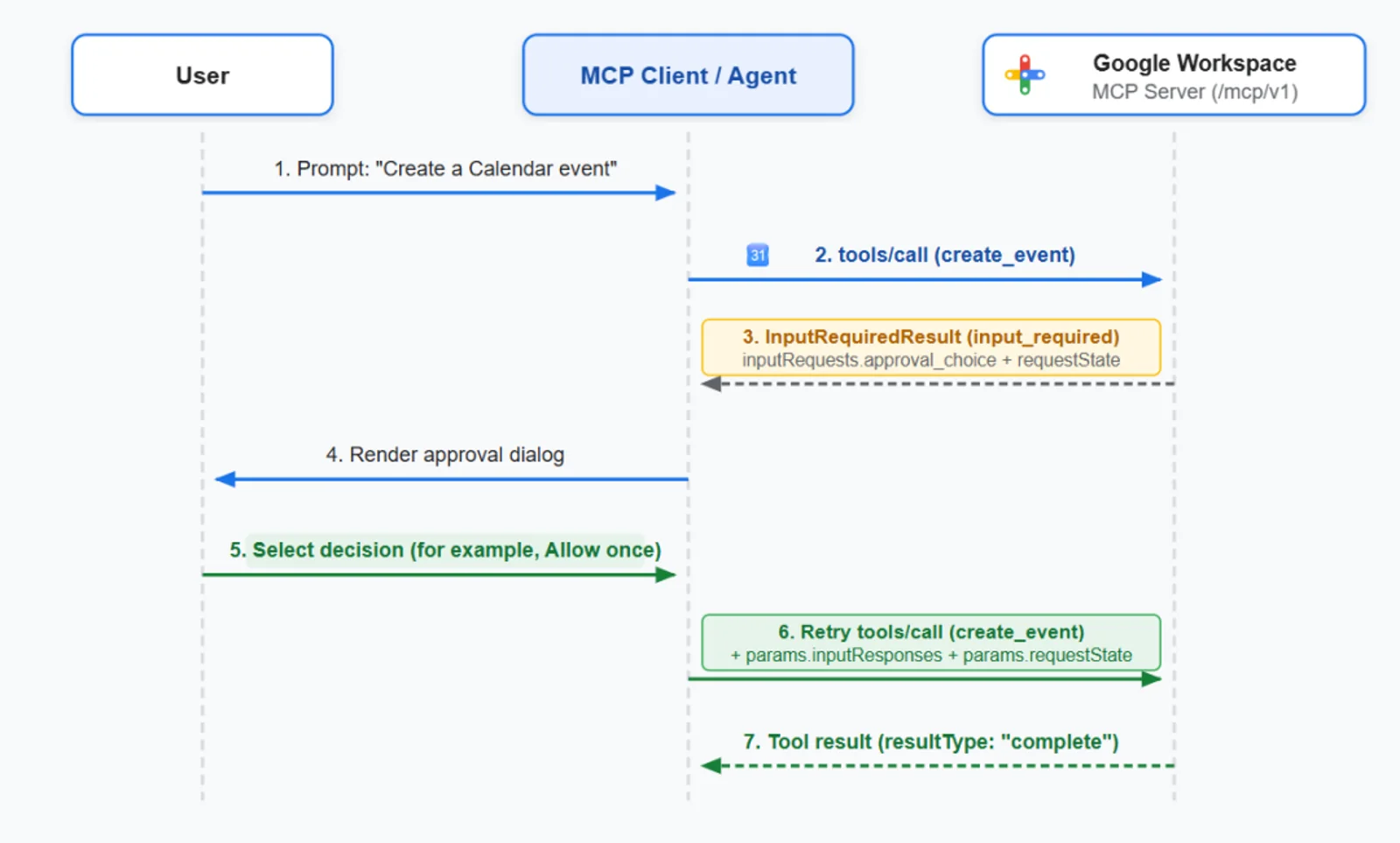
Figure 1: Server-side approval round trip
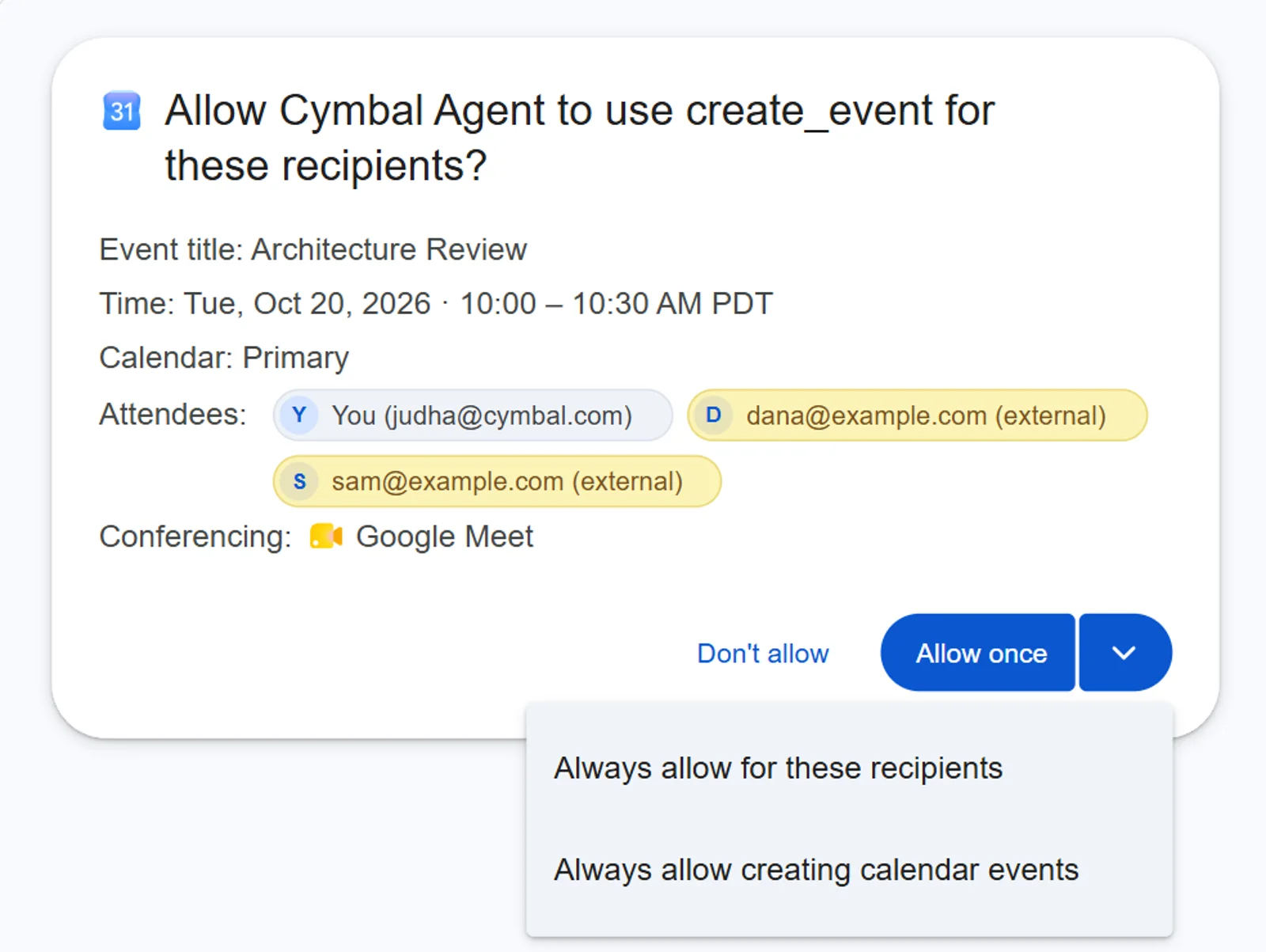
Figure 2: Approval form for calendar event with external participants
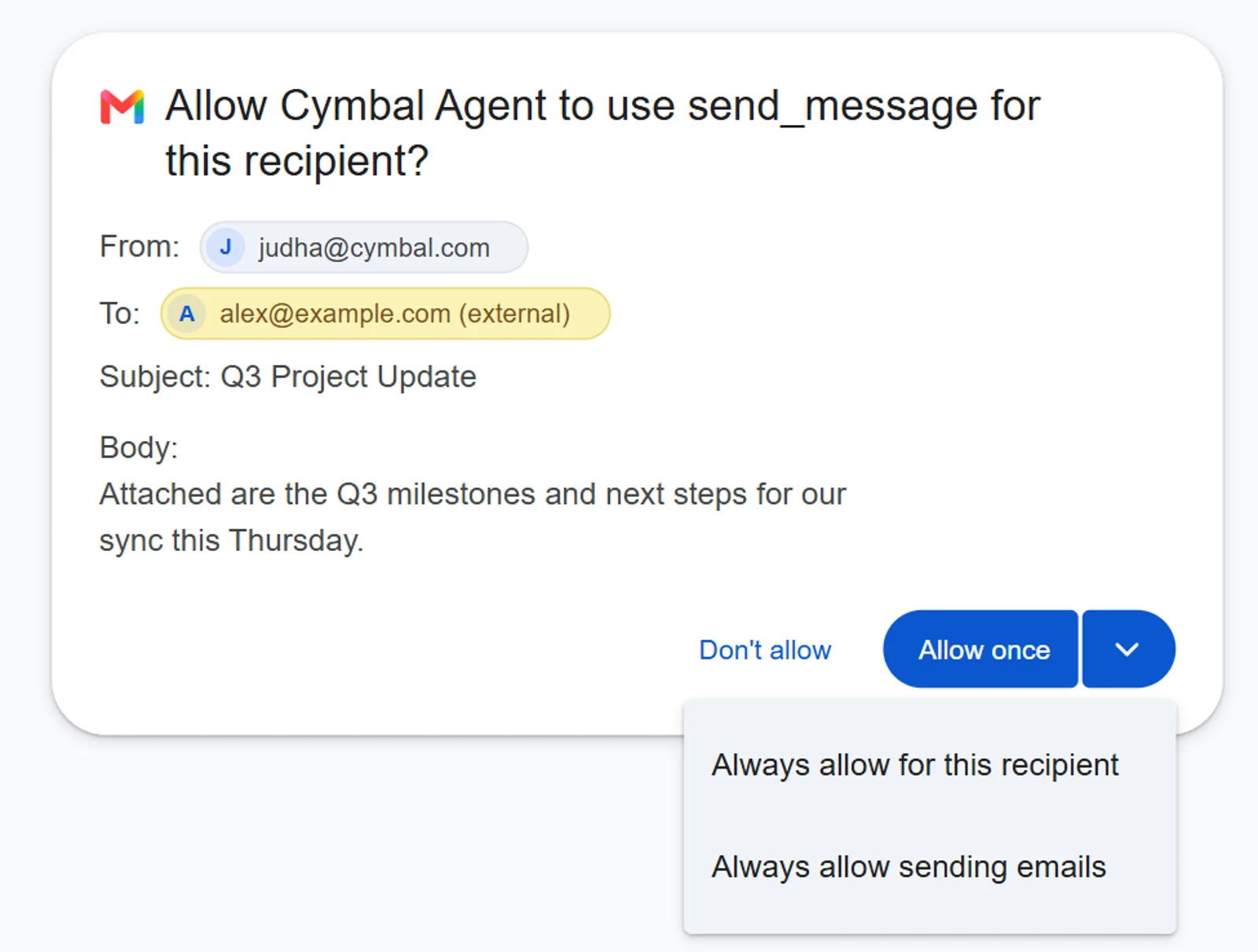
Figure 3: Email approval with granular allow options
Harness and Memory Governance: 30-Day Retention Limit
The Addendum defines AI Harness as the software layer that deploys Agents, calls tools or APIs, or orchestrates multi-Agent tasks. Governance now extends to the Harness itself. Data obtained through Workspace tools — both user data and Google Technical Information — may only be used for the current user-authorized task. Google Technical Information includes vector embeddings, memory indexes, user profiles, organizational graphs, and analytical results derived from Workspace interactions. Its retention must not exceed 30 days . Upon revocation of tool access, both user data and derived technical information must be deleted. Use for model training, fine-tuning, evaluation datasets, or distillation is prohibited.
This directly impacts Agent Memory, Context Graph, and enterprise knowledge-base architectures. Agents that continuously extract information from emails, documents, meetings, and historical interactions to build persistent user profiles and organizational knowledge must now track data provenance, enforce permission inheritance, manage information lifecycles, and delete derived data when source authorization lapses. The article illustrates a scenario where an enterprise Agent fuses CRM, email, and data-warehouse data into a unified Context Graph; revoking Workspace access requires identifying and purging all dependent vector indexes, entity attributes, relationships, and caches — a task complicated if data lineage was not preserved.
Quotas, Billing, and Cost Implications
Starting November 24, 2024, Workspace MCP services have two tiers: Standard Tier offers 5,000 free requests per day per project per product; Scaled Tier requires a linked billing account and quota request. From April 1, 2027, Scaled Tier usage for Gmail, Calendar, and Drive MCP services will be billed from the first successful request. A single tool operation may consume multiple underlying API requests, increasing cost. Enterprises must now factor external tool calls into Agent operating costs alongside model tokens and compute. Reducing wasteful calls, planning efficient execution, and reusing data within retention limits become Harness scheduling concerns.
Control Plane: Application Platforms Govern Agent Execution
The rule changes highlight the control distribution in the enterprise AI stack: model vendors provide reasoning, Harness orchestrates execution, but application platforms (Google Workspace) own the business data, operation interfaces, and server-side policies. Agents can swap models or orchestration frameworks, but any action that sends email, modifies records, or accesses files must comply with the platform's access rules. For multi-system Agent platforms, building consistent, auditable execution across differing permission models, approval flows, data ownership, and lifecycle requirements is now a core architectural challenge.
References: Google Cloud official announcement: Built for trust and control: Powering the next wave of AI agents across Google Workspace and Google Cloud Google Workspace formal terms: Workspace AI Tools Addendum Google Workspace API and MCP quota management docs: Usage tiers and quotas for Google Workspace APIs and MCP servers Google Workspace MCP official technical docs: Configure the Google Workspace MCP servers Google Workspace CLI official technical docs: Use the Google Workspace command-line tool Google Cloud Agent Gateway official technical docs: Agent Gateway overview Google MCP human approval mechanism technical docs: Handle user approvals with form elicitation
For questions about attribution, corrections or content rights, please contactand we will review it promptly.