

GPT's 8-Year Evolution: Four Paradigm Shifts & 8 Predictions for Next-Gen Models
This article traces GPT's evolution across four paradigm shifts—from pre-training to instruction following, multimodal tool use, and autonomous agents—detailing key models from GPT-1 to GPT-6, and offers eight predictions for future models focusing on result delivery, multi-agent architectures, dynamic reasoning, unified multimodality, controllable memory, action-loop safety, vertical specialization, and efficiency gains.
Reading font
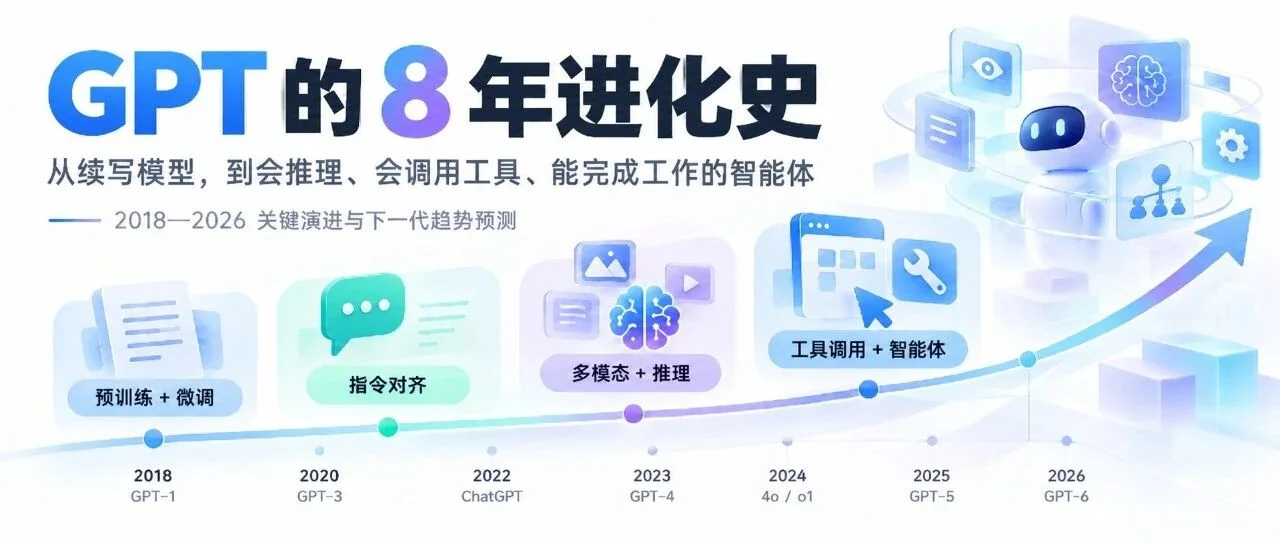
Phase 1: Models Learn to "Read the World, Then Solve Problems"
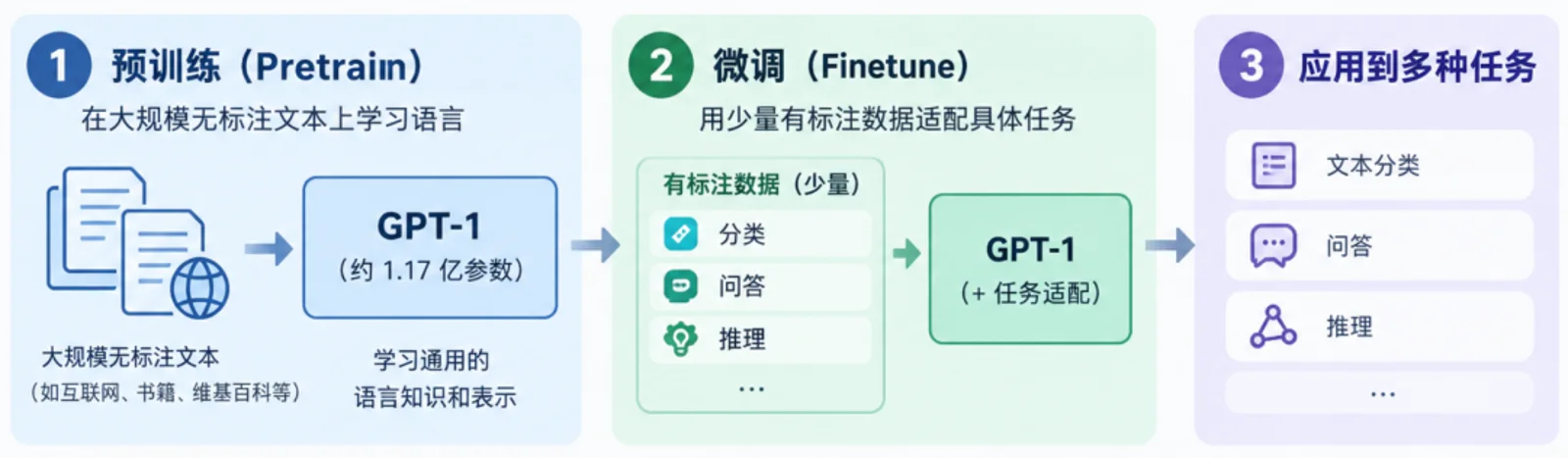
2018: GPT-1 Establishes "Pre-training + Fine-tuning" Paradigm
Source: Improving Language Understanding by Generative Pre-Training https://cdn.openai.com/research-covers/language-unsupervised/language_understanding_paper.pdf
GPT-1's core contribution was not scale but method : it first learned language on massive unlabeled text, then adapted to classification, QA, and reasoning tasks with small labeled datasets . The model had ~117M parameters, establishing the GPT lineage's basic recipe: knowledge and language ability acquired from general corpora, task ability activated via subsequent training . It solved the key problem: every natural language task no longer required training a separate model from scratch .
2019: GPT-2 Shows Zero-Shot Capabilities
Source: Better language models and their implications https://openai.com/index/better-language-models
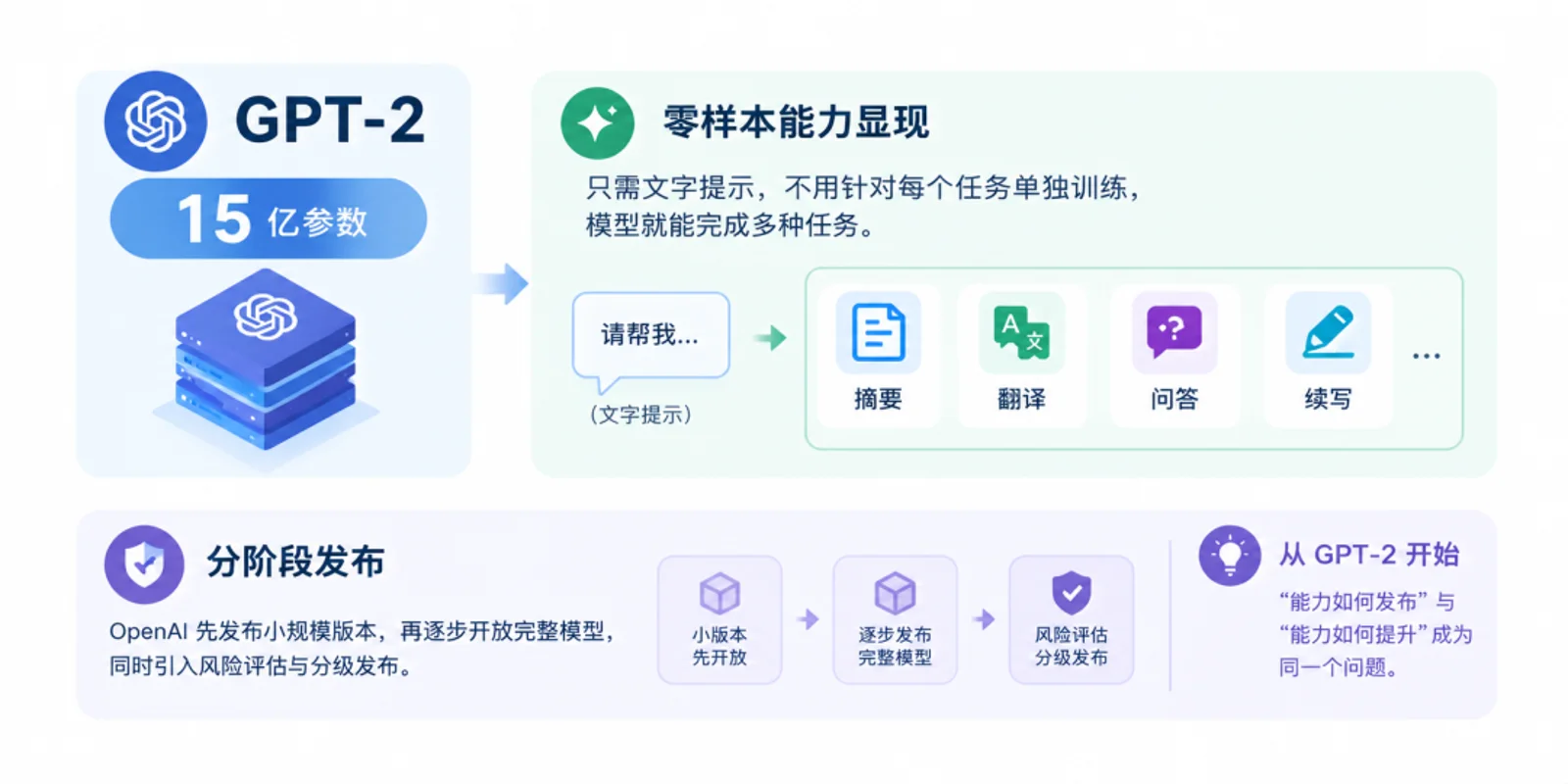
GPT-2 scaled to 1.5B parameters and demonstrated a crucial capability: without per-task training, the model could perform summarization, translation, QA, and continuation via text prompts alone . Its staged release—smaller versions first, then full model—introduced abuse risk assessment, phased deployment, and societal impact evaluation to the large-model era. From GPT-2 onward, " how capabilities are released " became as important as " how capabilities are improved ".
2020: GPT-3 Makes "Prompt Programming" a Reality
Source: Language Models are Few-Shot Learners https://arxiv.org/abs/2005.14165
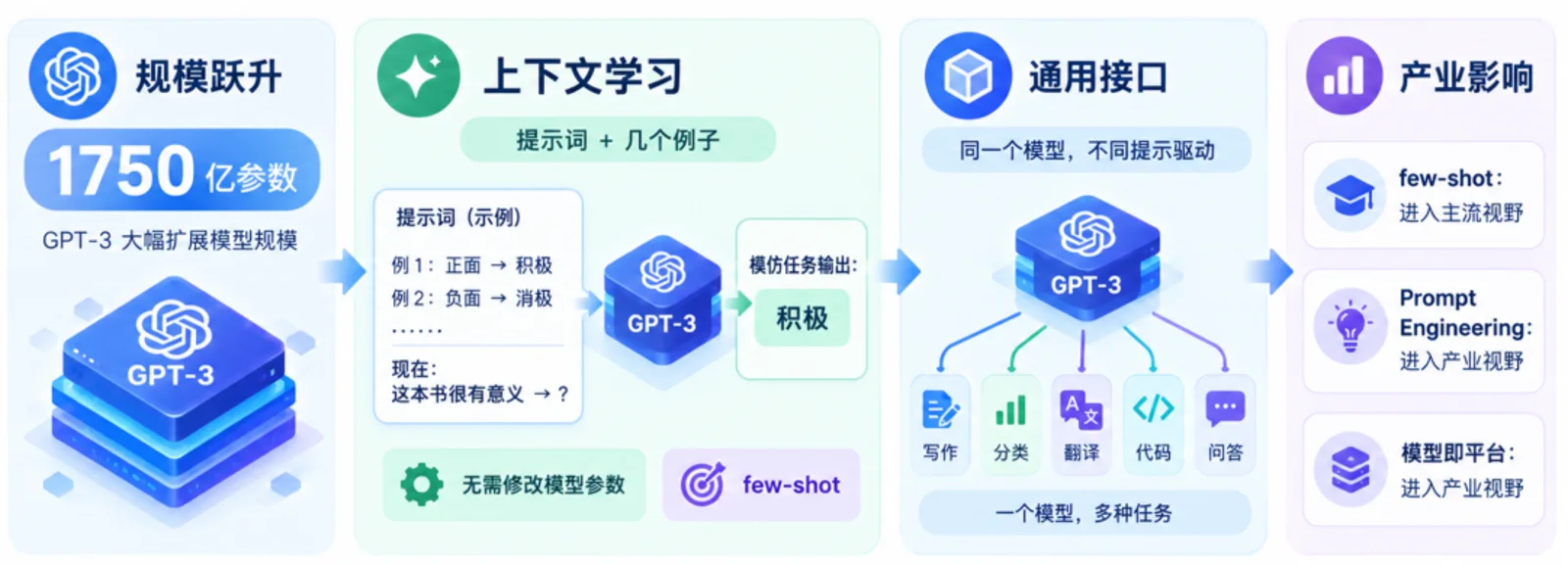
GPT-3 expanded to 175B parameters; the biggest change was in-context learning : users only needed to provide a few examples in the prompt for the model to mimic the task, without modifying model parameters . This gave language models a clear " general-purpose interface " form—writing, classification, translation, code, QA all driven by different prompts on the same model. Few-shot learning, prompt engineering, and " model as platform " entered industry view.
Phase 2: From "Completion" to "Acting on Human Intent"
2022: InstructGPT Puts "Alignment" Center Stage
Source: Training language models to follow instructions with human feedback https://arxiv.org/abs/2203.02155
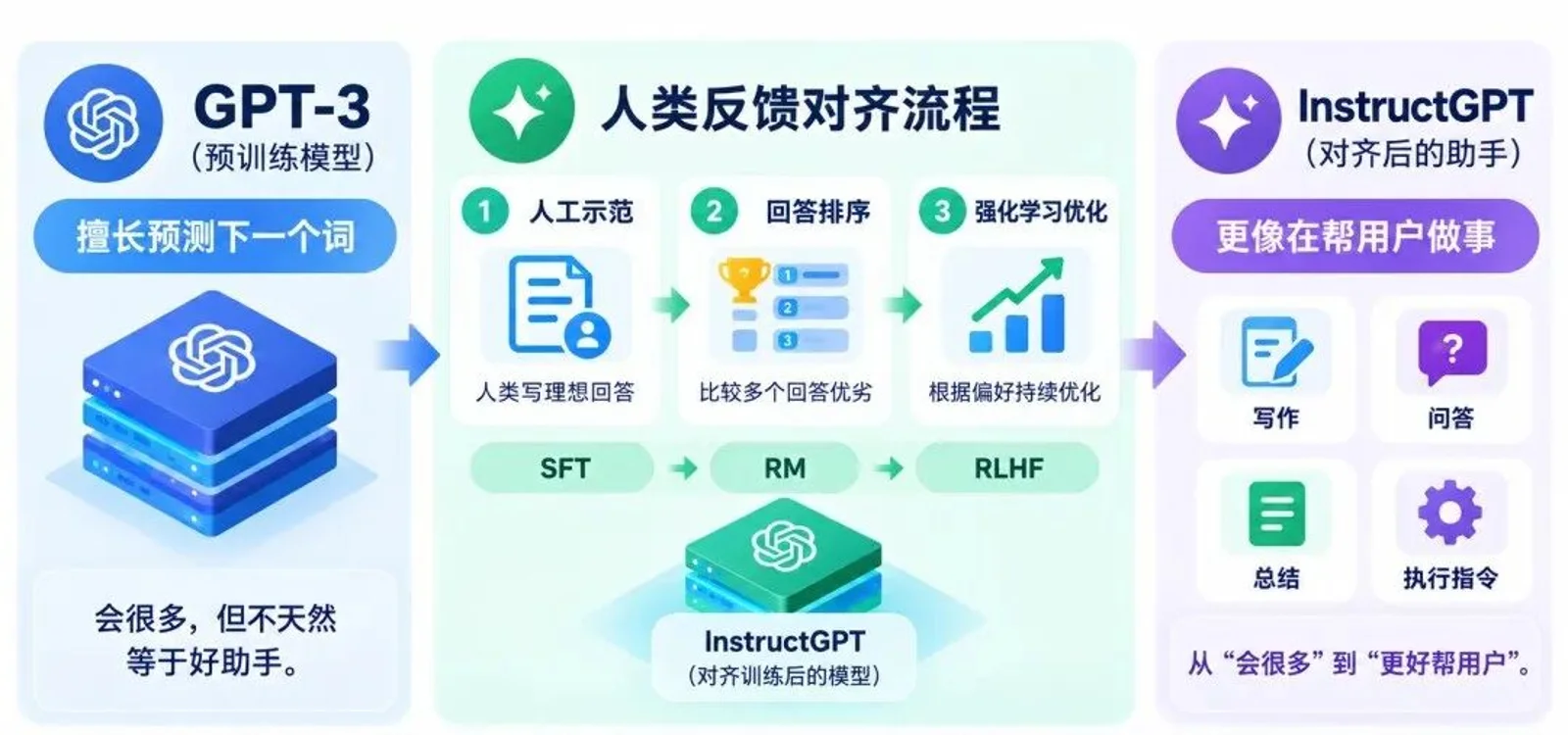
Pure pre-trained models excel at next-word prediction but don't naturally equal good assistants. InstructGPT introduced a human-feedback-centric training pipeline: human demonstrations of ideal responses, ranking multiple outputs, then optimizing the model with reinforcement learning . This shift is often underestimated: GPT-3 proved models "know a lot"; InstructGPT made them act like they " help users get things done ". The paper showed smaller InstructGPT models could beat larger raw GPT-3 on human preference, moving competition from pure pre-training scale to pre-training, post-training, and human feedback jointly determining experience .
Nov 2022: ChatGPT/GPT-3.5 Turns "Large Model" into Mass Product
Source: Introducing ChatGPT https://openai.com/index/chatgpt
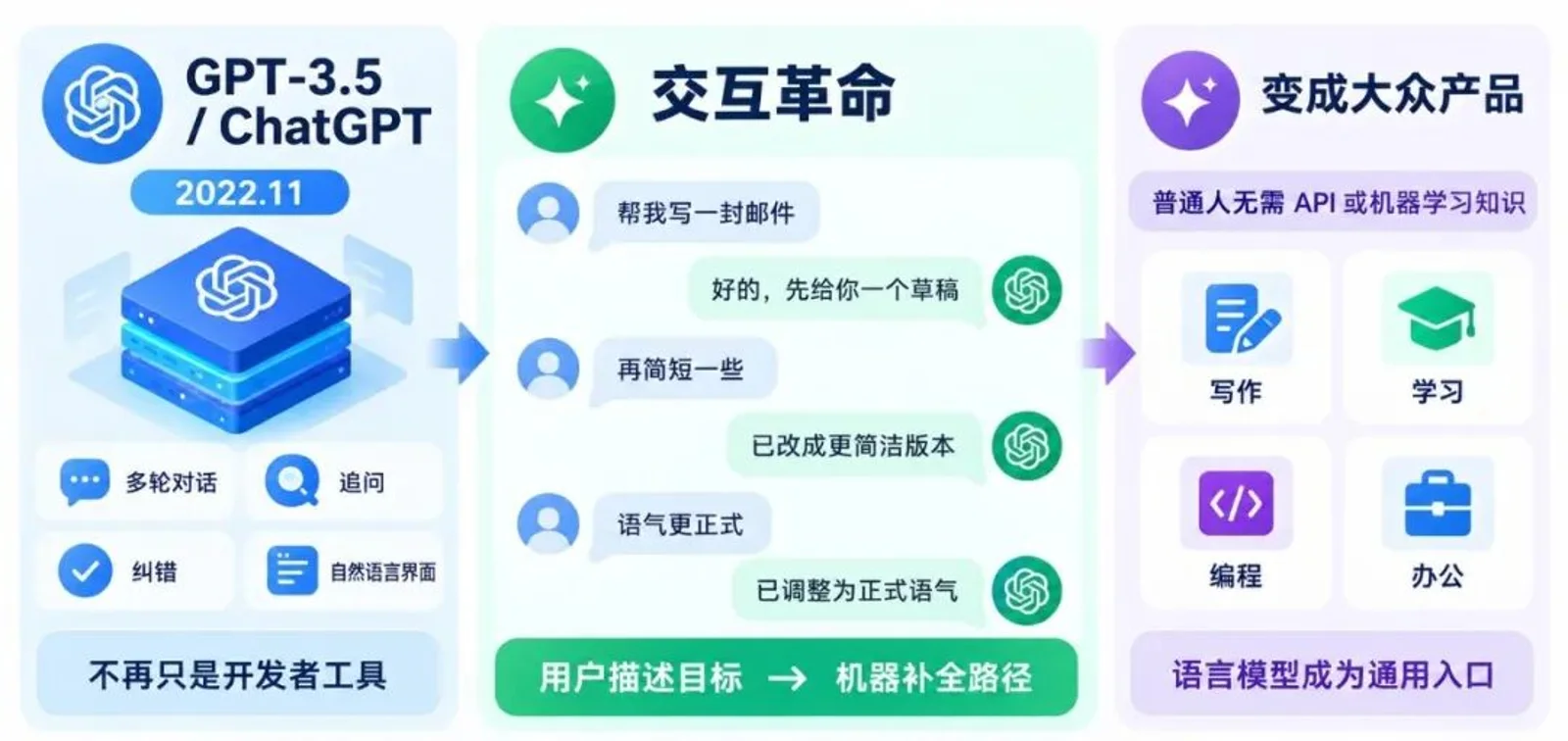
ChatGPT/GPT-3.5 was not just a model upgrade but an interaction revolution . Multi-turn dialogue, follow-up, correction, and natural language interface let ordinary people use large models without learning APIs or ML. It popularized a new human-computer interaction mode: user describes goal, machine completes the path . Language models became general-purpose entry points for writing, learning, coding, and office work.
Phase 3: Multimodal & Tool Use—Models Touch the Real World
2023: GPT-4 Moves from Expression to Complex Tasks
Source: GPT‑4 Technical Report https://arxiv.org/abs/2303.08774
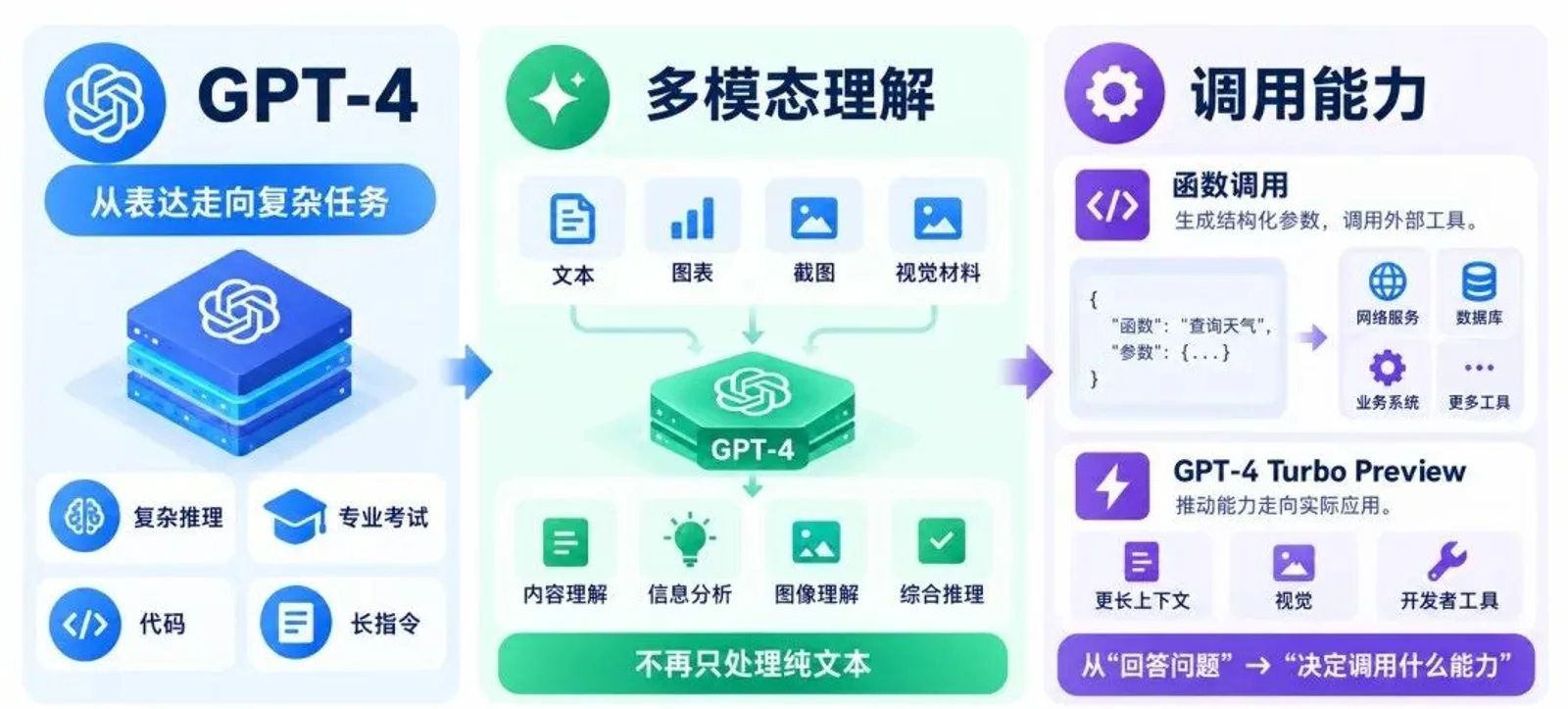
GPT-4 significantly improved complex reasoning, professional exams, code, and long-instruction handling, and added image input . It could understand charts, screenshots, and visual materials. OpenAI did not disclose GPT-4's parameter count, training compute, or full architecture, so attributing progress to "parameter doubling" lacks public evidence. The confirmed change: training, data, alignment, safety evaluation, and systems engineering jointly became part of model capability . June's function calling let models generate structured parameters and connect external tools; November's GPT-4 Turbo Preview pushed longer context, vision, and developer tools toward practicality. GPT began shifting from "answering questions" to "deciding which capability to invoke" .
May 2024: GPT-4o Makes Multimodal Assembly Native
Source: OpenAI API Changelog https://developers.openai.com/api/docs/changelog
The "o" in GPT-4o stands for omni : it unifies text, image, and audio interaction into a single more natural, low-latency pathway , becoming the faster, cheaper flagship at the time. GPT-4o mini later brought strong capabilities to lower-cost, high-concurrency scenarios. This upgrade changed more than input format: traditional voice assistants used "speech-to-text → text model → text-to-speech" pipelines with high latency and lost prosody; native multimodality enables real-time perception and response.
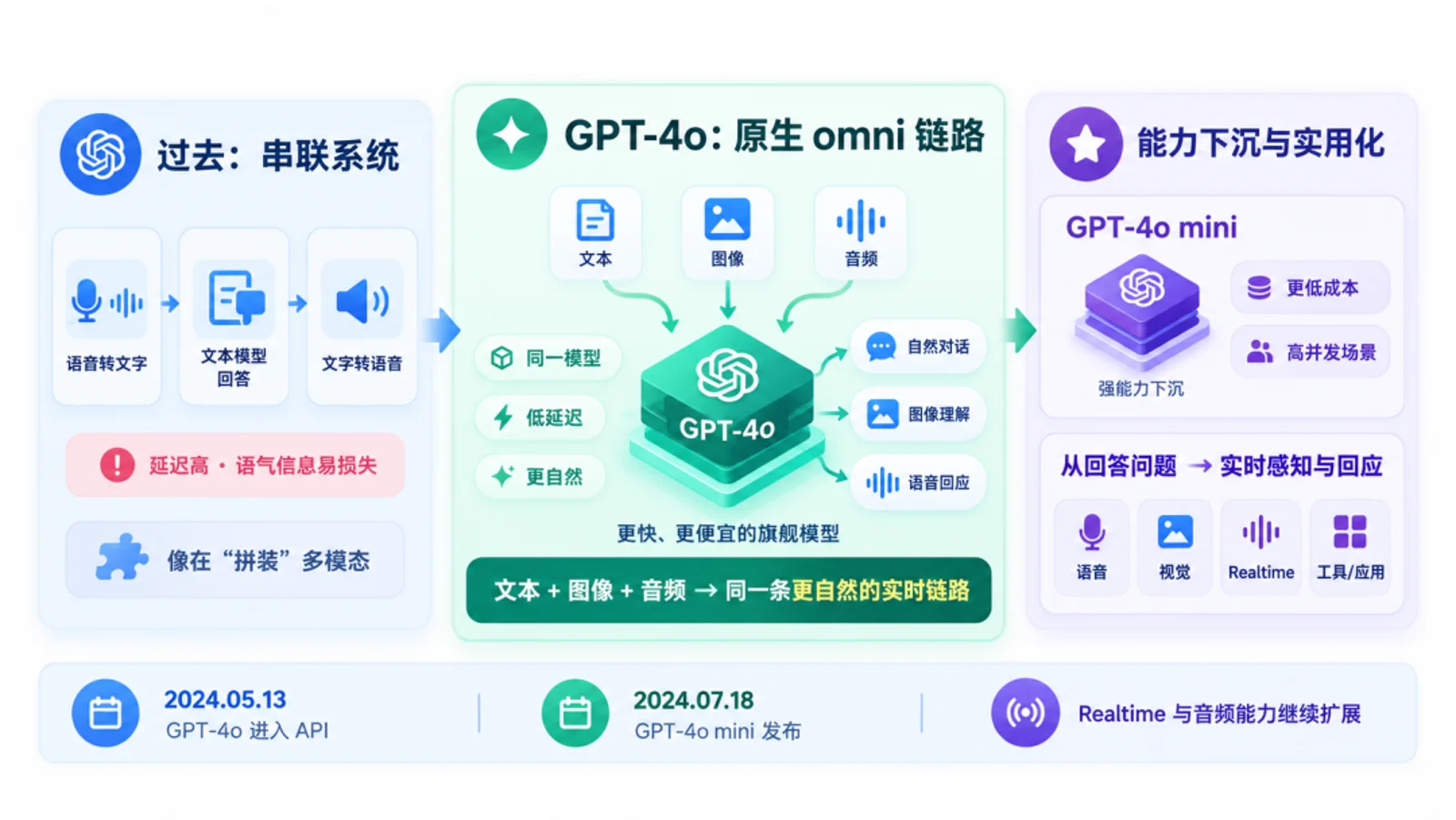
Official records: GPT-4o entered API on May 13, 2024; 4o mini released July 18; Realtime and audio capabilities expanded thereafter.
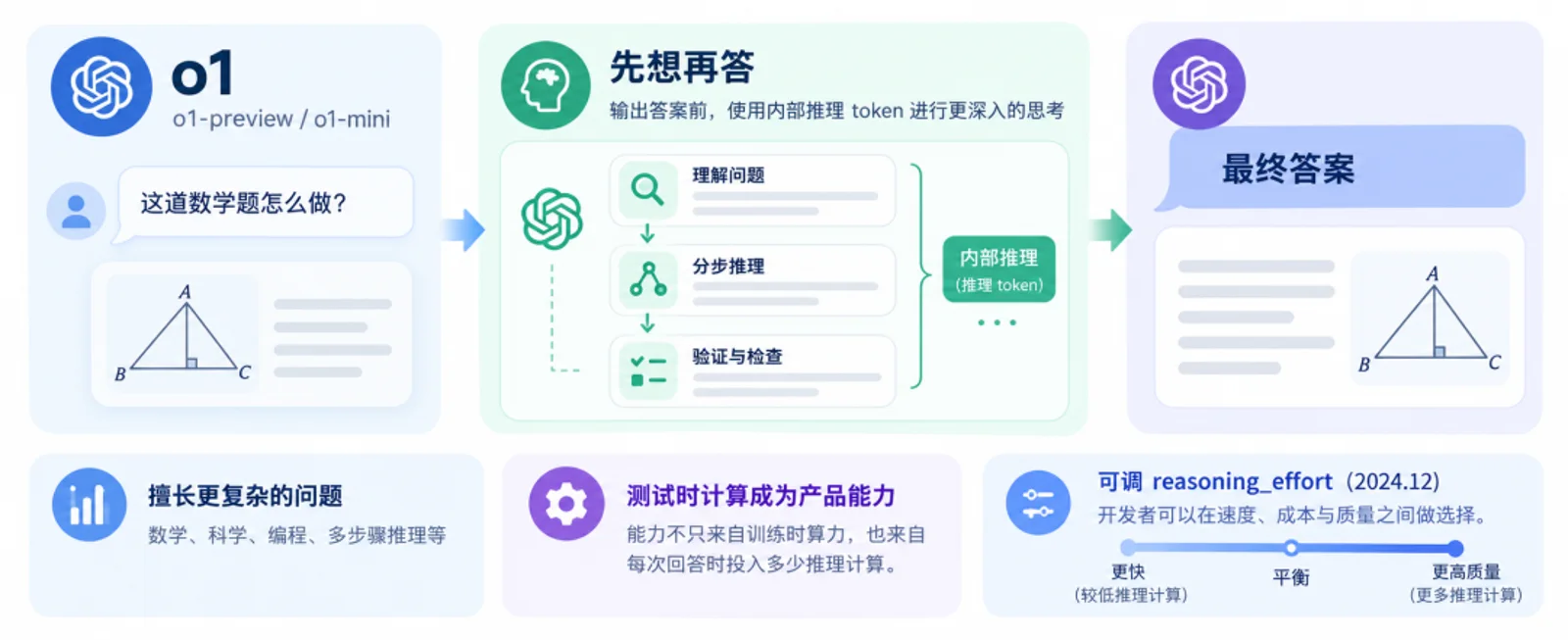
Sep 2024: o1—Models Compute "Think Before Answer"
Source: Reasoning models https://developers.openai.com/api/docs/guides/reasoning?api-mode=responses
The significance of o1-preview and o1-mini: test-time compute became a formal product capability . Models use internal reasoning tokens before final output, thinking more deeply on math, science, coding, and multi-step problems. This opened a second scaling axis: capability comes not only from training compute but also from inference compute allocated per question . December's official o1 added adjustable reasoning_effort, letting developers trade off speed, cost, and quality.
Phase 4: Models Become Agents
H1 2025: GPT-4.5, GPT-4.1, o3/o4-mini Each Fill Gaps
Source: OpenAI API Changelog https://developers.openai.com/api/docs/changelog
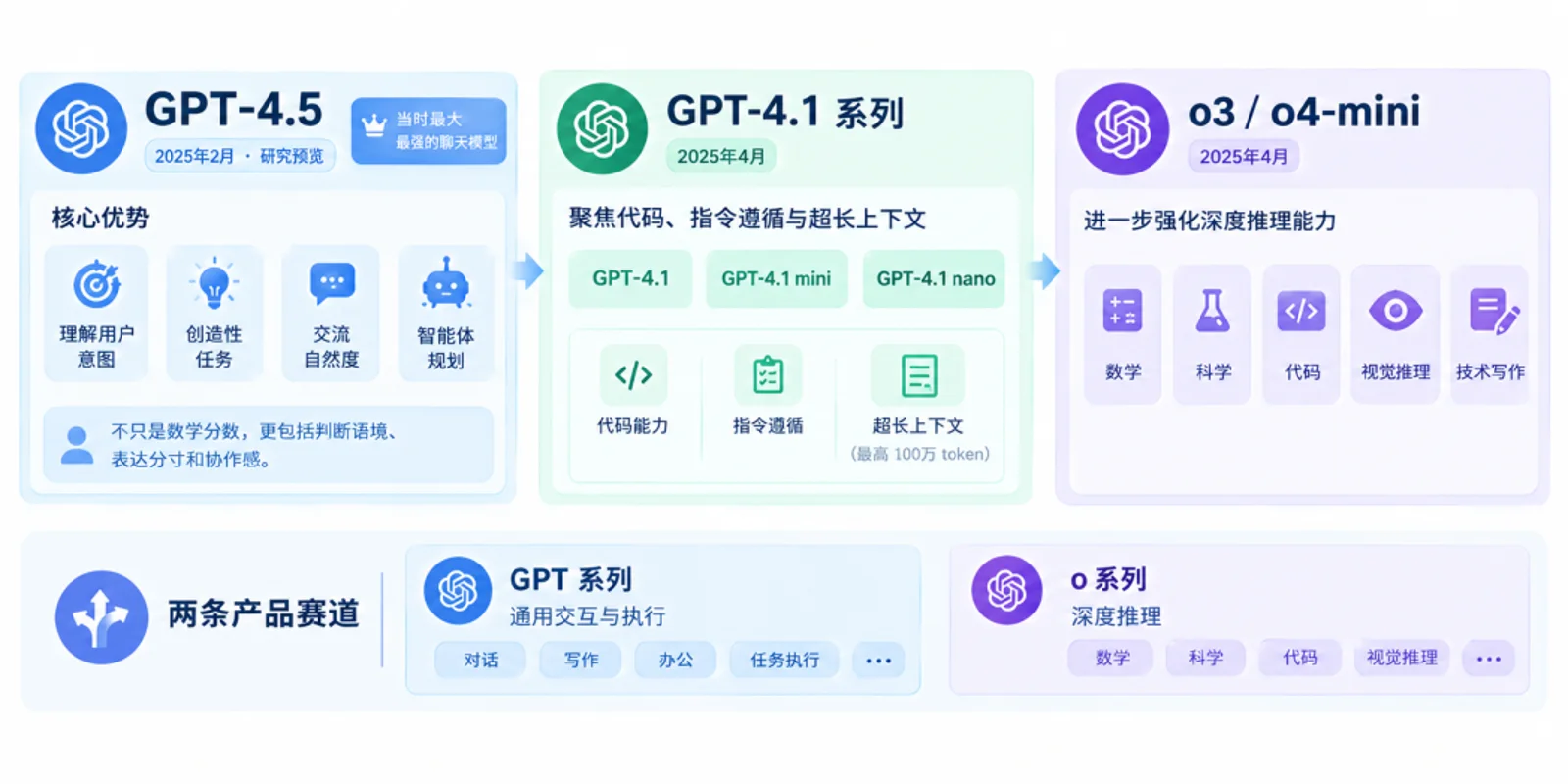
Feb 2025: GPT-4.5 released as research preview, described as the largest, strongest chat model at the time, excelling in intent understanding, creative tasks, conversational naturalness, and agent planning . This shows " good model " isn't just math scores but also judging context, expressing nuance, and collaboration feel . April: GPT-4.1, 4.1 mini, 4.1 nano focused on code, instruction following, and ultra-long context (up to 1M tokens). Two days later, o3 and o4-mini further strengthened math, science, code, visual reasoning, and technical writing. OpenAI's product lines resembled two tracks: GPT series for general interaction & execution, o series for deep reasoning .
Aug 2025: GPT-5 Merges "Chat Model" and "Reasoning Model"
Source: Why we built the Responses API https://developers.openai.com/blog/responses-api
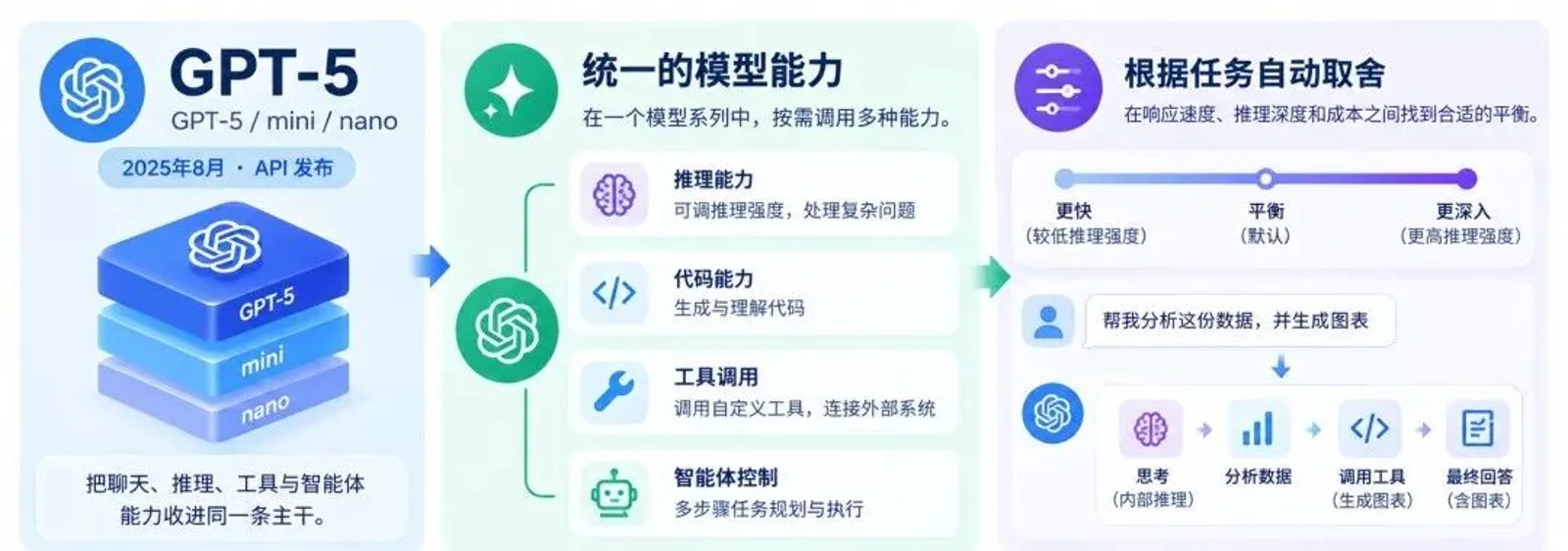
GPT-5 series launched GPT-5, mini, and nano simultaneously. It unified reasoning, code, tool calling, and agent control into one mainline, offering adjustable reasoning strength, verbosity, and custom tools . The core shift was product paradigm unification: users no longer choose between chat vs. reasoning models; the same series adapts response speed, reasoning depth, and cost per task . With Responses API, models retain reasoning state across multiple tool calls, avoiding re-planning at each step.
Nov : GPT-5.1 enhanced controllability, code, and agent workflows, defaulting to no extra reasoning on simple tasks for faster response. Dec : GPT-5.2 improved general intelligence, instruction following, accuracy, token efficiency, vision, frontend code, tool calling, context management, and spreadsheets, adding xhigh reasoning effort and context compression. Minor versions are no longer just " patches " but continuous reconstruction of how models think, remember, and call tools .
2026: From "Can Call Tools" to "Can Sustain Work"
Source: Using GPT-5.6 https://developers.openai.com/api/docs/guides/latest-model?model=gpt-5.6
2026 updates accelerated but the mainline is clear: models are becoming long-running execution systems that operate software and coordinate resources .
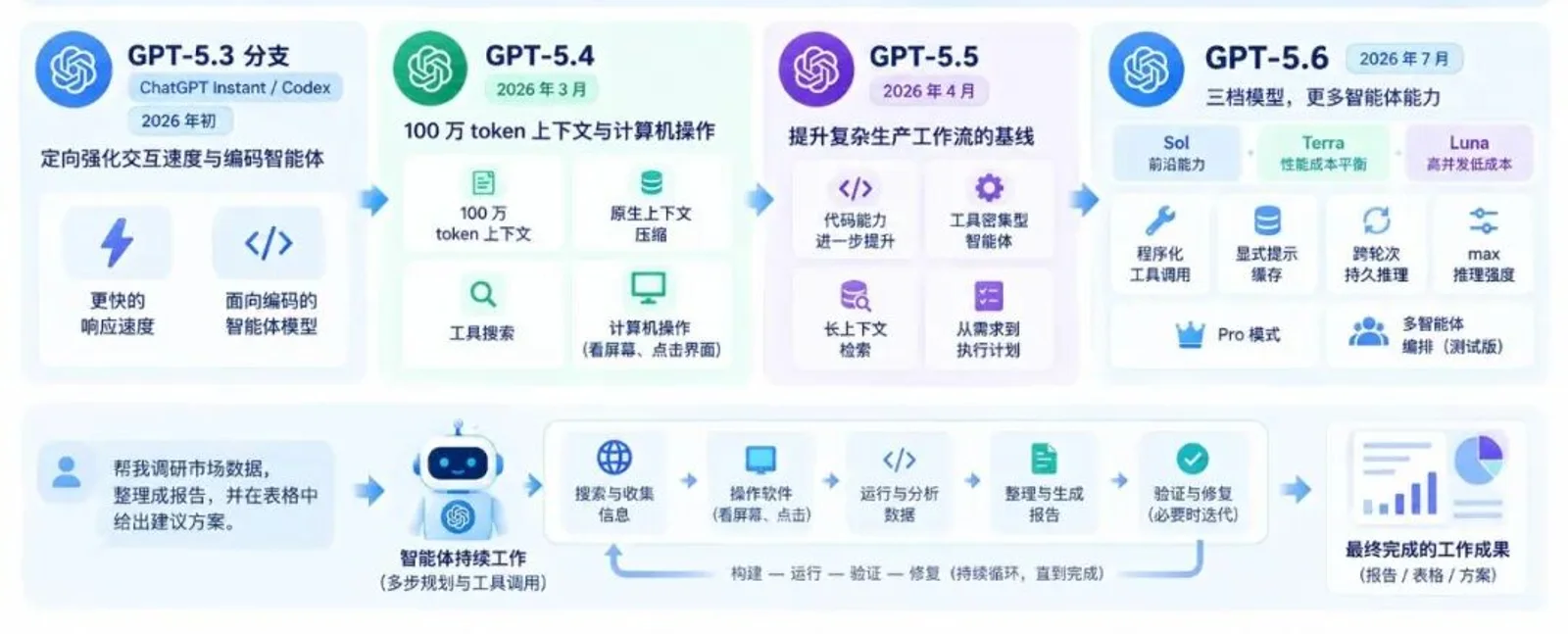
GPT-5.3 branch : Primarily ChatGPT Instant snapshots and Codex-specific models, targeted at interaction speed and coding agents, not a general flagship refresh.
GPT-5.4 (Mar) : Introduced 1M-token context, native context compression, tool search, and mainline-built-in computer operation—models can view screens, click interfaces, and persist in " build–run–verify–fix " loops.
GPT-5.5 (Apr) : Raised baseline for complex production workflows, covering code, tool-intensive agents, long-context retrieval, and "product requirements to execution plans".
GPT-5.6 (Jul) : Formed Sol, Terra, Luna tiers for frontier capability, price-performance balance, and high-throughput low-cost tasks; added programmatic tool calling, explicit prompt caching, cross-turn persistent reasoning, max reasoning effort, Pro mode, and multi-agent orchestration beta.
These updates mean the competition unit shifted from " single response " to " complete workflow ": who completes the final task with fewer tokens, lower failure rate, and less time wins .
Sep 2026: GPT-6 Writes "End-to-End Task Completion" into Flagship Positioning
Source: Using GPT-6 https://developers.openai.com/api/docs/guides/latest-model
Sep 3: GPT-6 Astra positioned as the highest-capability model for the toughest end-to-end work, covering reasoning, coding, computer operation, research, and document creation . Compared to GPT-5.6, new features resemble true " workplace collaboration ":
Tool async runtime—model continues other parts while tools run;
Users can add requirements or change direction mid-task;
Dynamic reasoning strength adjustment within a conversation;
Async mismatch monitoring for long agent tasks, with alerts or stops.
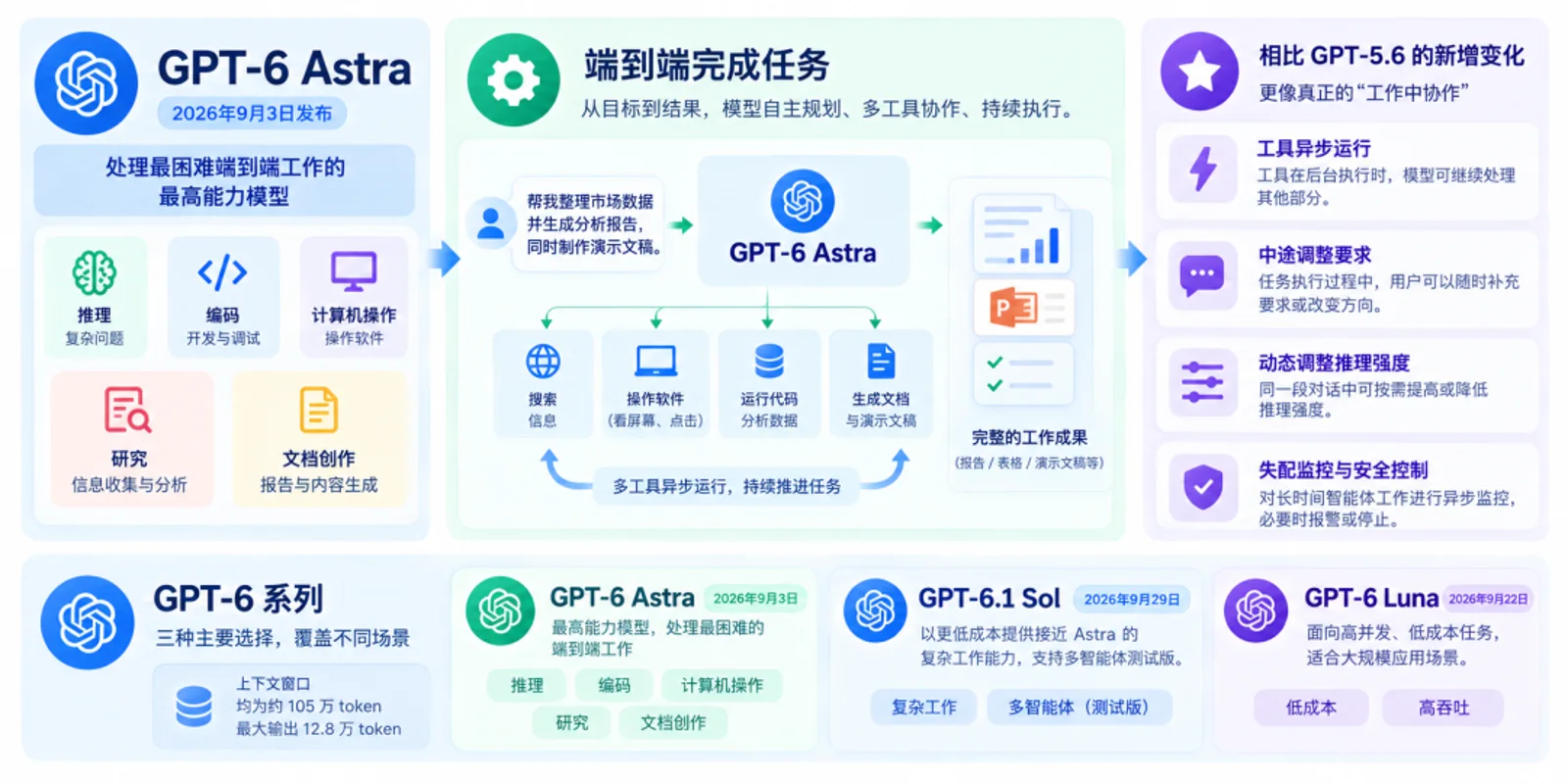
Sep 22: GPT-6 Sol and GPT-6 Luna launched for mainstream complex work and low-cost high-throughput tasks. Sep 29: GPT-6.1 Sol released, offering near-Astra complex-work capability at lower cost, with multi-agent beta. Current official catalog lists Astra, GPT-6.1 Sol, and GPT-6 Luna as three primary choices.
Summary & Predictions
Reviewing eight years of key versions reveals five stable threads more reliable than "parameter count":
First, capability sources expanded from pre-training to post-training and test-time reasoning . GPT-1 to GPT-3 proved scaled pre-training works; InstructGPT proved human feedback decides usability; o1 onward made reasoning budget a real-time adjustable knob.
Second, models turned from content generators into tool dispatchers . Function calling, search, code execution, computer operation, MCP, and programmatic tool calling let models affect external systems, not just output text.
Third, context window is just the start; true goal is long-term state management . 8K → 128K → 1M tokens matters, but hour-/day-long tasks can't rely on stuffing all history back in; compression, caching, persistent reasoning, and resumable sessions are replacing "infinite context stacking".
Fourth, model families shifted from one-size-fits-all to capability tiers . mini/nano → Sol/Terra/Luna show each generation covers different cost/speed/quality bands; flagships handle hardest tasks, small models handle high-frequency execution.
Fifth, safety moved from output-end filters to in-execution control systems . When models only chat, risk is bad content; when they browse, call tools, and operate computers, permissions, approvals, isolation, monitoring, rollback, and audit become part of model capability.
What major innovations will the next GPT generation bring? Here are trend predictions based on publicly demonstrated capabilities .
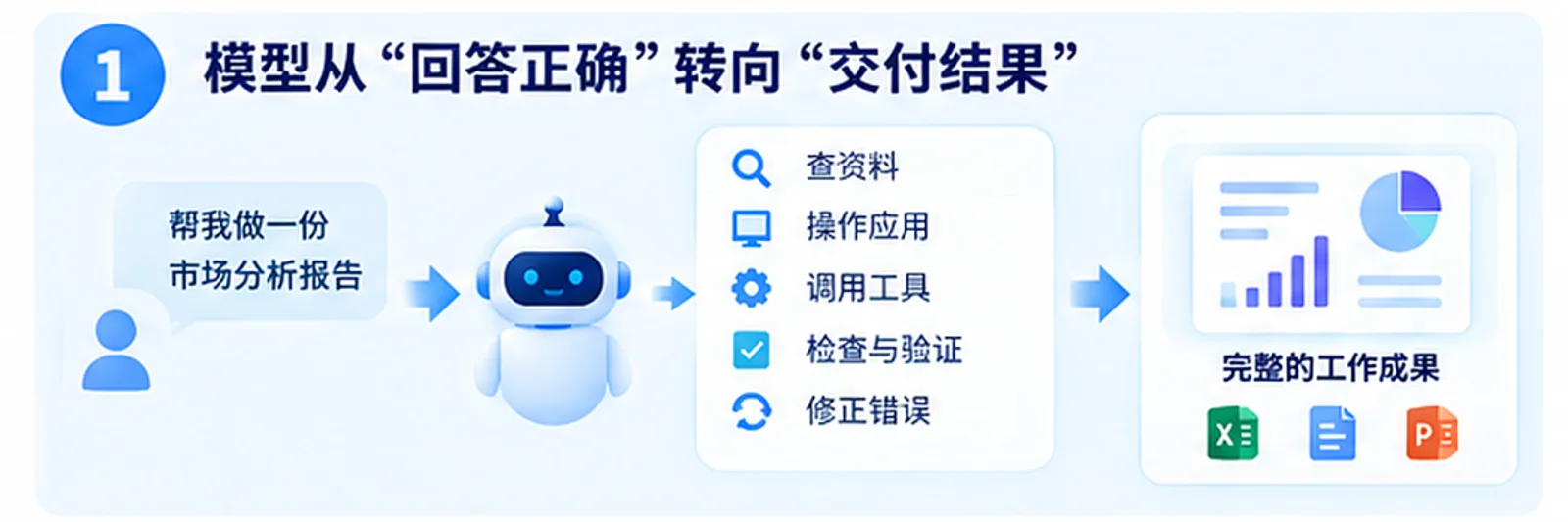
Prediction 1: Models Shift from "Answer Correctly" to "Deliver Results"
Future flagship metrics will likely not be exam scores but whether they can continuously complete dozens to hundreds of steps in real software and business environments and self-verify outcomes . They'll resemble digital employees who decompose goals, research, operate apps, call colleagues, check results, and fix errors. GPT-6 already shows async tool calls, mid-course correction, and long-task monitoring—highest certainty direction.
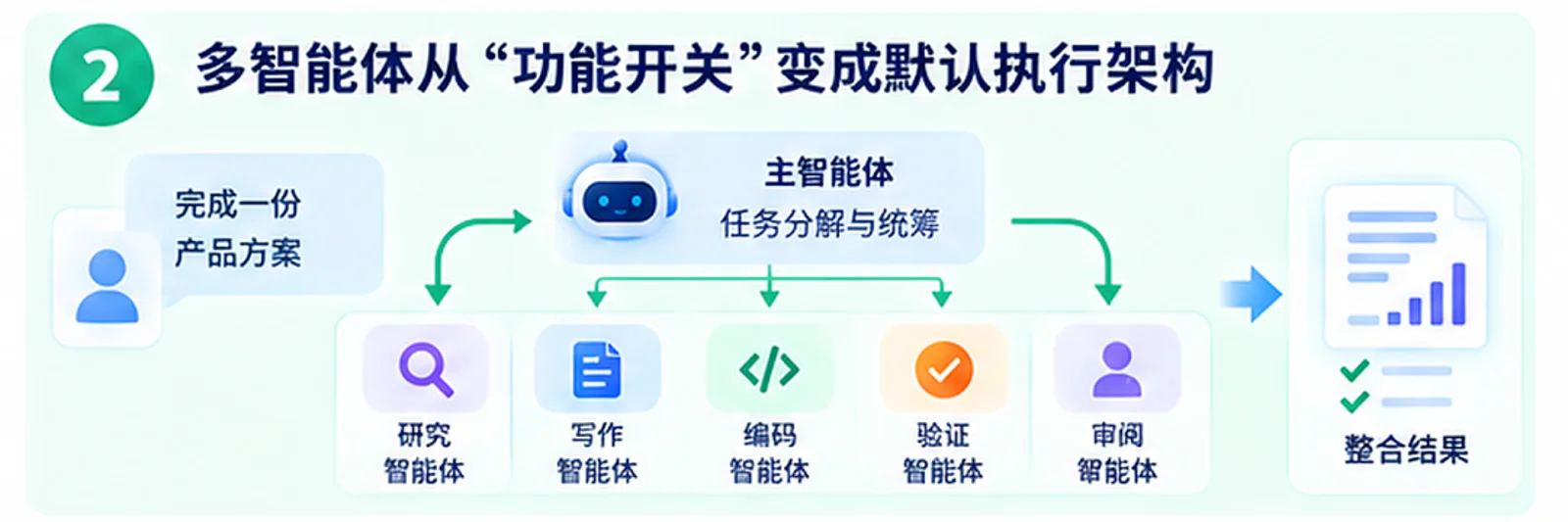
Prediction 2: Multi-Agent Becomes Default Execution Architecture
Complex tasks naturally split into research, writing, coding, verification, review. Future models may automatically decide when to handle independently vs. spawn parallel sub-agents for integration by a lead agent . Real innovation isn't "spawning more models" but task decomposition, budget allocation, evidence merging, conflict arbitration, and failure recovery. GPT-5.6 and GPT-6.1 Sol already offer multi-agent beta, moving this from experiment to platform.
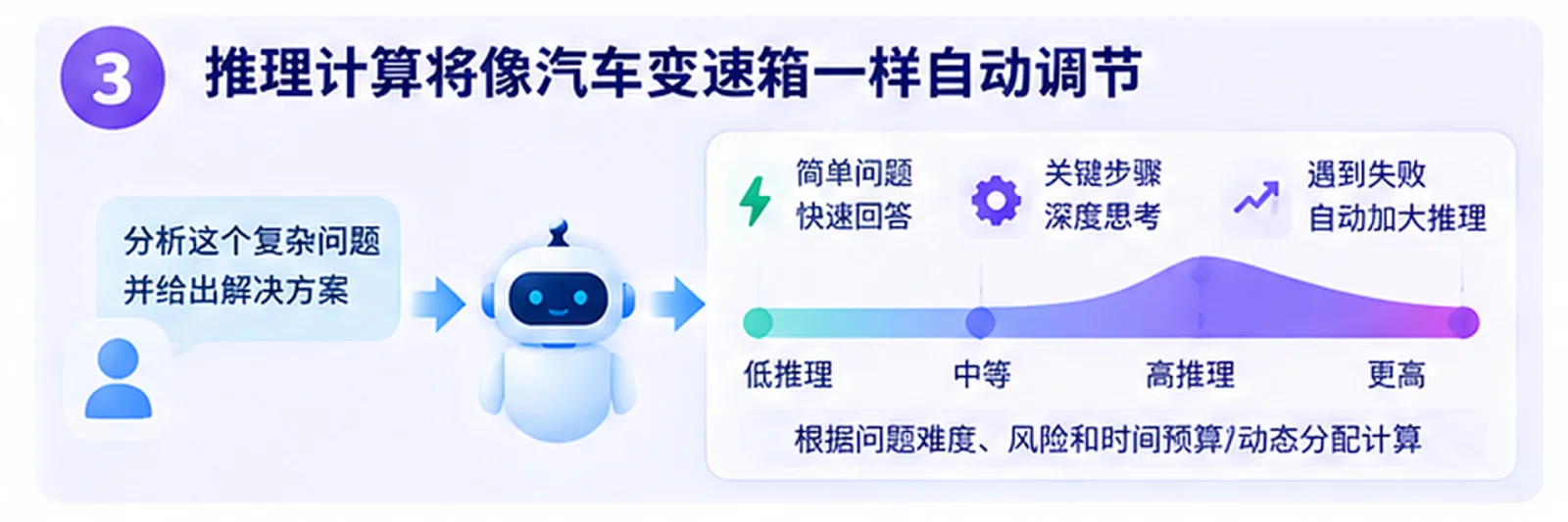
Prediction 3: Reasoning Compute Auto-Tunes Like a Car Transmission
Developers currently manually pick low/medium/high/xhigh/max. Next step: models dynamically allocate compute based on problem difficulty, risk, and time budget: quick answers for simple questions, deep thinking for critical steps, auto-increase reasoning or swap stronger model on failure . Thus "a model" becomes a system of routing, reasoning budget, tools, and multiple execution units—not a fixed-size neural net running identically every time.
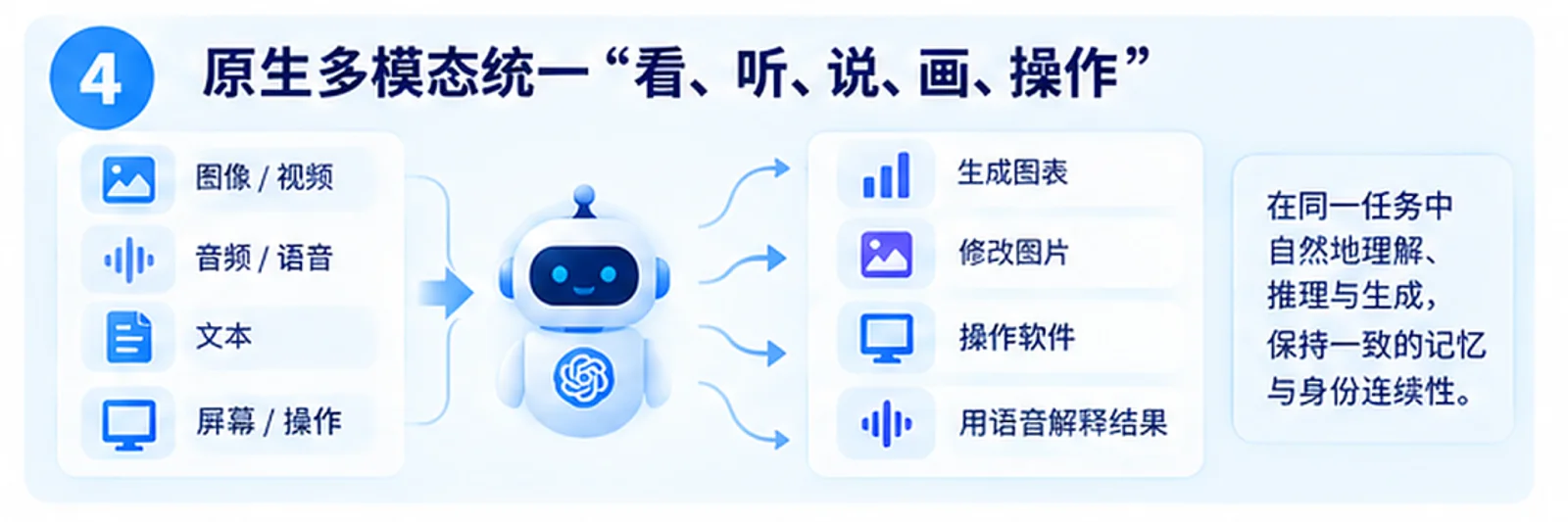
Prediction 4: Native Multimodal Unifies "See, Hear, Speak, Draw, Operate"
Current text/vision reasoning, real-time voice, image, video are scattered across models/interfaces. Future versions will likely further unify these so a model naturally reads screens, listens to meetings, generates charts, edits images, operates software, and explains results by voice in a single task . Key breakthrough isn't just more formats but consistent cross-modal memory, spatial understanding, causal reasoning, and identity continuity. High certainty, but whether merged into single model and timing unannounced.
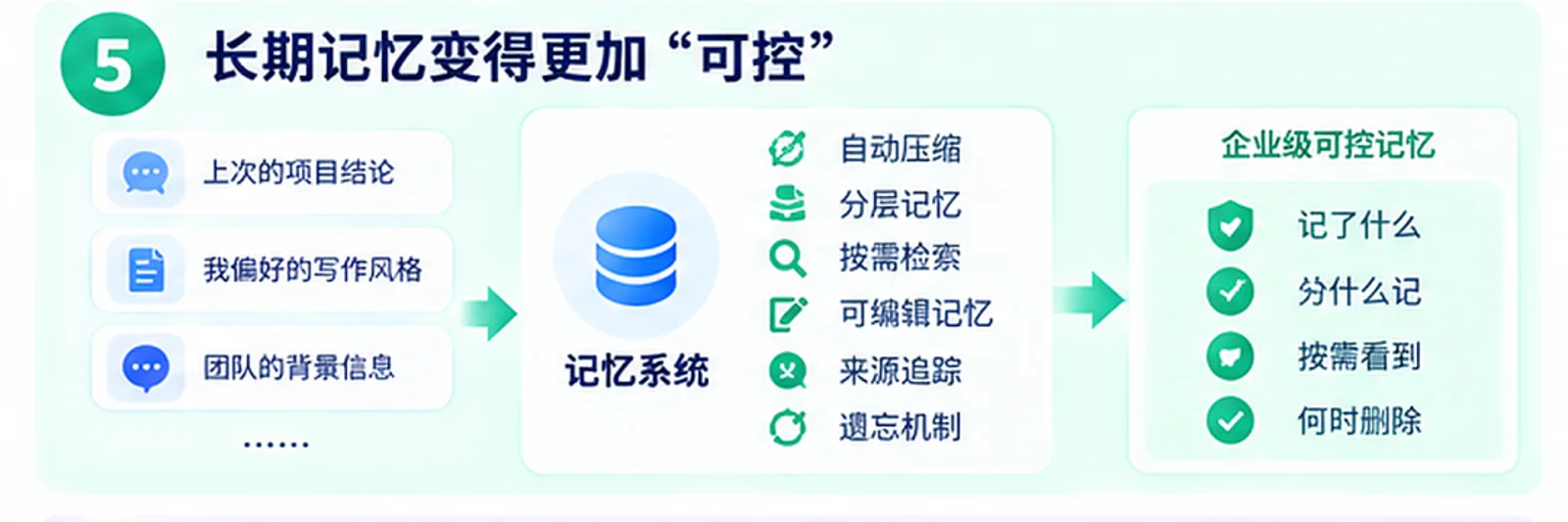
Prediction 5: Long-Term Memory Becomes More "Controllable"
After context expands to 1M tokens, bottleneck shifted from "can't fit" to "can't find, can't retain, cost too high". Improvements will focus on auto-compression, hierarchical memory, on-demand retrieval, editable memory, provenance tracking, and forgetting mechanisms . For enterprises, usable memory must answer four questions: what's stored, why stored, who sees it, when deleted —privacy and permission controls will ship with memory capability, not as afterthought settings.
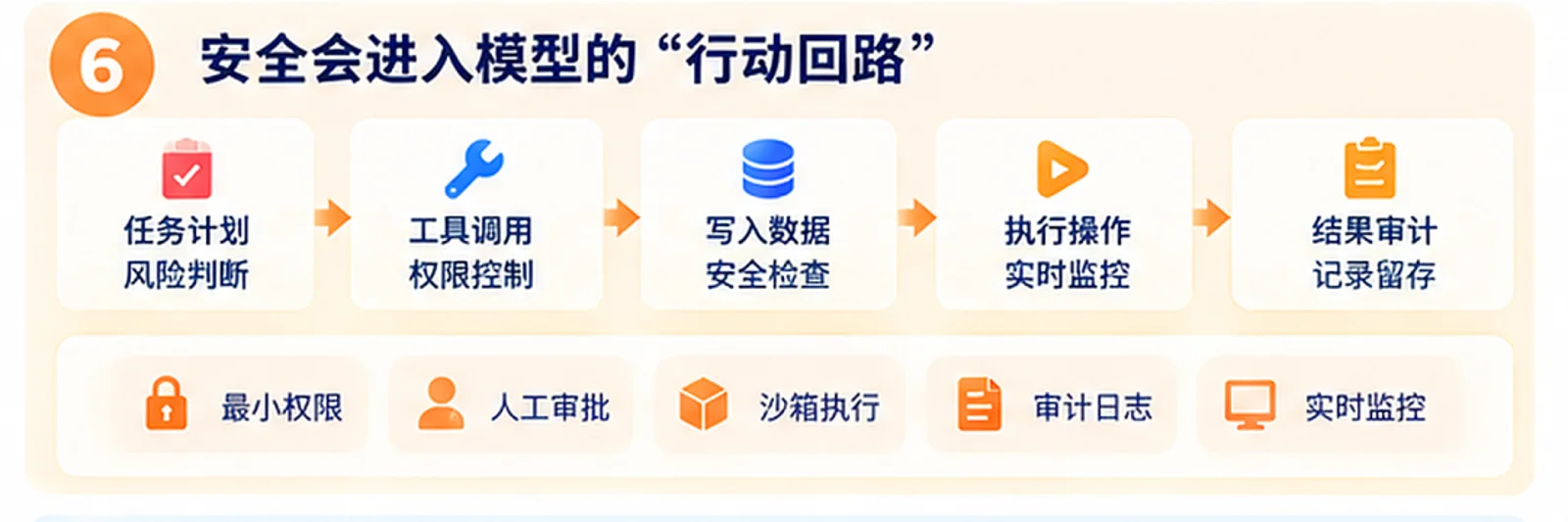
Prediction 6: Safety Enters the Model's "Action Loop"
More capable models can't rely on post-output content moderation. Future systems will perform risk judgment before planning, tool calls, data writes, and high-impact actions, limiting consequences via least privilege, human approval, sandboxes, audit logs, and real-time monitoring . GPT-6 Astra's async mismatch monitoring during agent execution likely signals next safety focus: not just preventing models from "saying wrong" but preventing them from "doing wrong undetectably" in long tasks .
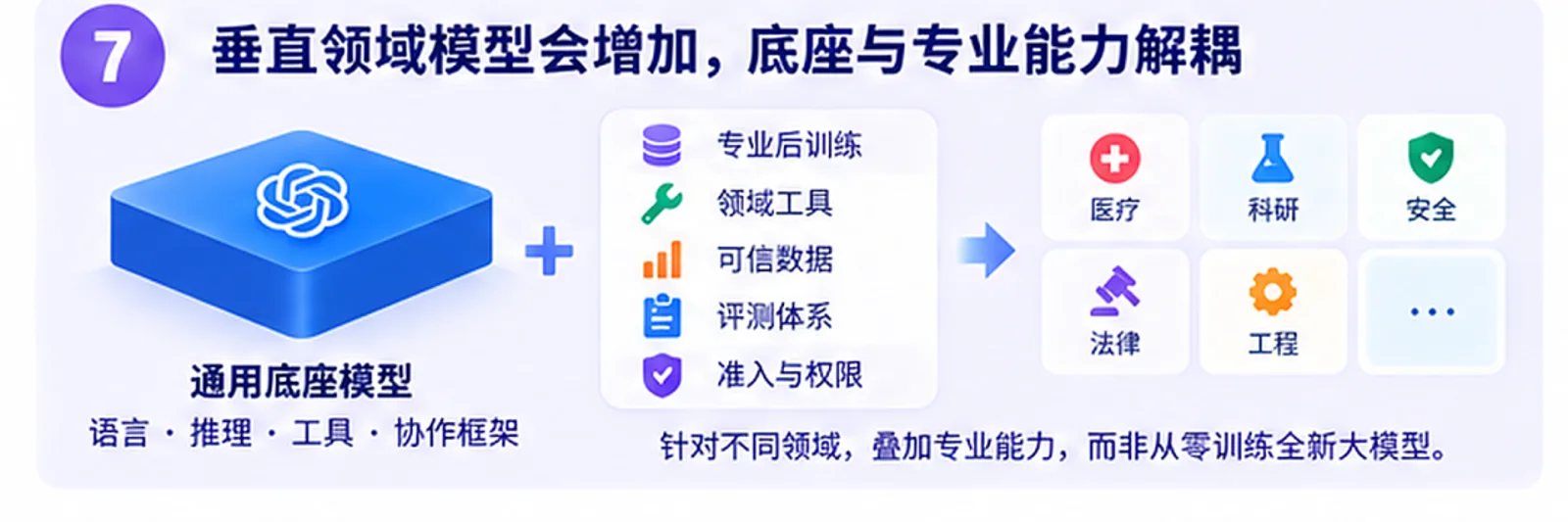
Prediction 7: Vertical Models Increase, Base Decouples from Professional Capability
General models handle language, reasoning, tools, collaboration frameworks; high-risk domains (medical, scientific, security, legal, engineering) add specialized training, trusted data, domain tools, and stricter access controls . Future isn't "train a new giant model per industry" but strong base + professional post-training, toolchains, evals, and permission systems—specialization deepens, architecture becomes more modular.
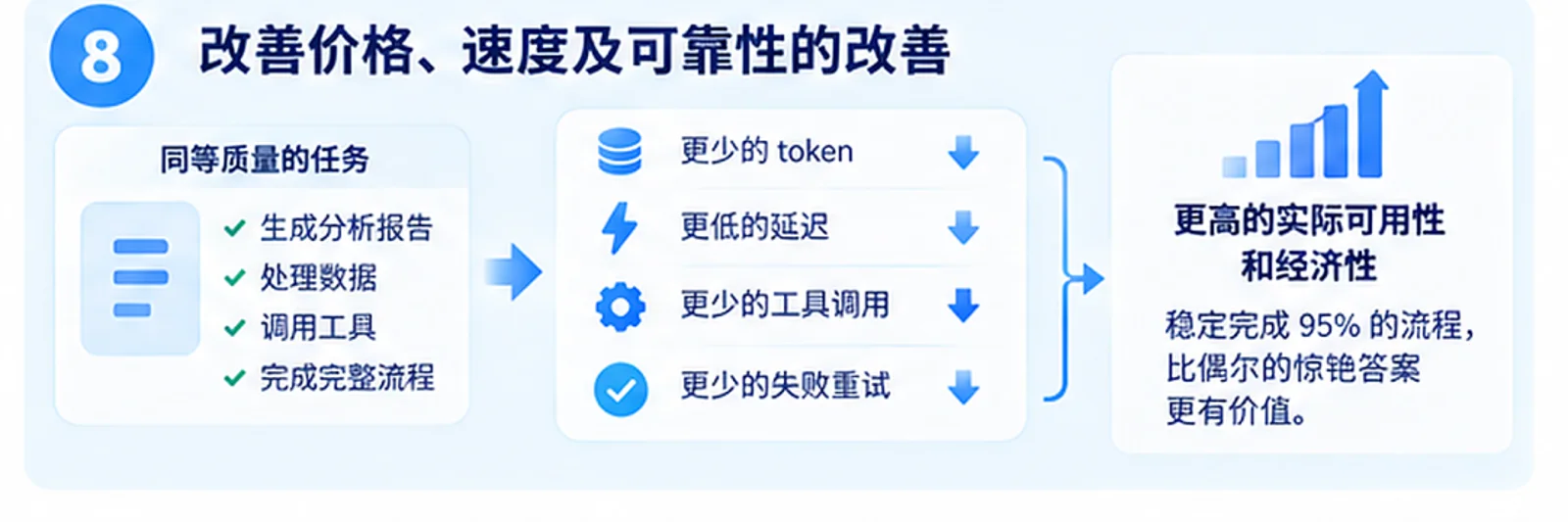
Prediction 8: Improvements in Price, Speed, and Reliability
History repeatedly proves stronger alone isn't enough. 4o mini, nano, Luna, caching, faster serving layers all convert capability into deployable economics. Next-gen major upgrades may manifest as fewer tokens for same quality, fewer tool calls, lower latency, fewer retries—not just a few more benchmark points . For enterprises, reliably completing 95% of workflows often beats occasional brilliant answers.
Closing Remarks
Recap:
GPT-1 solved "can machines learn general language from unlabeled text?"
GPT-3 solved "can one model adapt to many tasks?"
ChatGPT solved "can ordinary people use it naturally?"
GPT-4o & o1 advanced perception and reasoning respectively;
GPT-5 merged reasoning with tool use;
GPT-6 pushed toward end-to-end complex work completion.
So the next GPT's most critical questions aren't about writing prettier paragraphs, but three practical ones: How long can it work continuously? How many real software processes can it enter? When errors occur, can it self-detect, stop, and correct?
The next station for large models may not be an all-knowing chat box, but a commandable, interruptible, tool-using, collaborative intelligent execution system constrained by permissions and audits.
AI evolves fast; the real adaptation we need is shifting from " learning how to ask AI " to " learning how to delegate goals, permissions, standards, and responsibilities to AI ".
For questions about attribution, corrections or content rights, please contactand we will review it promptly.