

Magpie Drops Antigravity Support as Google Bans Reverse Proxy Accounts
Magpie removed its built-in Antigravity integration and official plugin after Google began banning accounts that access Antigravity via reverse proxies, including family-plan accounts; the article explains the crackdown history and recommends using official API keys instead.
Reading font
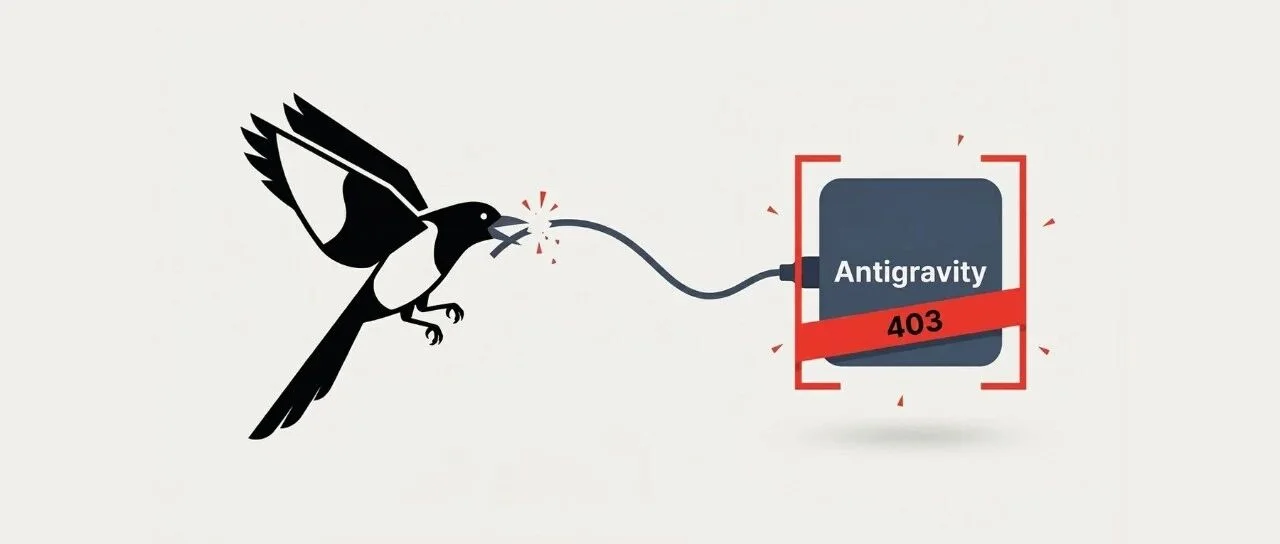
Magpie Removes Antigravity Integration
Magpie, an open-source local AI routing gateway written in Go by author yetone (GitHub stars nearing 40,000), has officially dropped built-in Antigravity support and its official plugin opencode-antigravity-auth starting from version v0.1.4232. The project maintainers stated that plugins which simulate a client to connect directly to Google's APIs carry a high risk of account bans, and Magpie will no longer use that approach for any requests to Google.
Immediate Impact on Users
On November 16, Magpie clarified that existing users who upgrade to v0.1.4273 (plugin version 0.2.1) can continue using the old plugin, but the provider page now displays a ban-risk warning. New users can no longer install the plugin. For those who still want Antigravity access, the only supported path is the community plugin opencode-agy-cli-auth, which drives the locally logged-in official agy CLI via ACP to send requests. Even with the official client, Magpie warns that risk is only reduced, not eliminated, and advises against running multiple accounts at high frequency simultaneously.
Google's Crackdown on Reverse Proxies
The decisive move follows a wave of Google enforcement. On November 15, X user "真白大小姐" posted a warning that Antigravity bans were now propagating through Google One family groups. Previously, users would create secondary accounts, add them to a family plan to share the subscription, and run reverse proxies on the secondary accounts, assuming only the secondary would be banned. This time, both primary and secondary accounts were banned together.
Historical Context: The Opus 4.6 Incident
User Kxians traced the root cause to February 2025, when Claude Opus 4.6 launched and Antigravity allowed free-tier accounts to call it directly. The free access was quickly abused: large numbers of users employed third-party frameworks like OpenClaw and OpenCode to turn Antigravity into a general-purpose API, and some used registration scripts to spin up bulk accounts for commercial relay services, overwhelming backend traffic. Google DeepMind engineering lead Varun Mohan posted on X confirming massive malicious calls that severely degraded service for legitimate users. An immediate, unannounced mass ban followed, affecting even paid Ultra subscribers paying $250/month. The current anti-reverse-proxy controls are a direct result of that earlier battle.
Magpie Background and Recommended Alternative
Magpie runs a unified service on 127.0.0.1:3425 that aggregates AI coding tools — Claude Code, Codex, Gemini CLI, OpenCode, Cursor — into a single menu-bar panel, automatically translating between OpenAI, Anthropic, and Gemini protocols locally. Users can switch models (e.g., DeepSeek V4 Pro, Kimi K3, GLM-5.3) via a dropdown without editing individual tool configs.
To stably integrate models into Codex or Claude Code, the article recommends avoiding Antigravity reverse-proxy plugins entirely. Instead, users should add their official Gemini API Key (obtained from Google AI Studio) in Magpie's Providers page (or the local client's Providers UI). Official API keys for DeepSeek, Kimi, Anthropic, and Google Gemini can all be managed side-by-side, with automatic failover on quota exhaustion and optional local privacy filtering to prevent key leakage. While official API usage incurs per-token costs, it eliminates the daily anxiety of monitoring for ban notices. Antigravity subscriptions should remain in the official client; for cross-tool Gemini 4 access, the official API is the most reliable path.
Reference
Magpie official website: https://usemagpie.ai
For questions about attribution, corrections or content rights, please contactand we will review it promptly.