

OpenAI Countersues Apple: Trade Secrets, 400 Defectors, 'Hotel California' Trap
OpenAI files an 81-page countersuit against Apple alleging trade secret theft via a mole employee, iCloud/iMessage surveillance, supplier pressure, and a 'Hotel California' talent trap, after 400+ Apple employees joined OpenAI and the partners turned hardware rivals.
Reading font
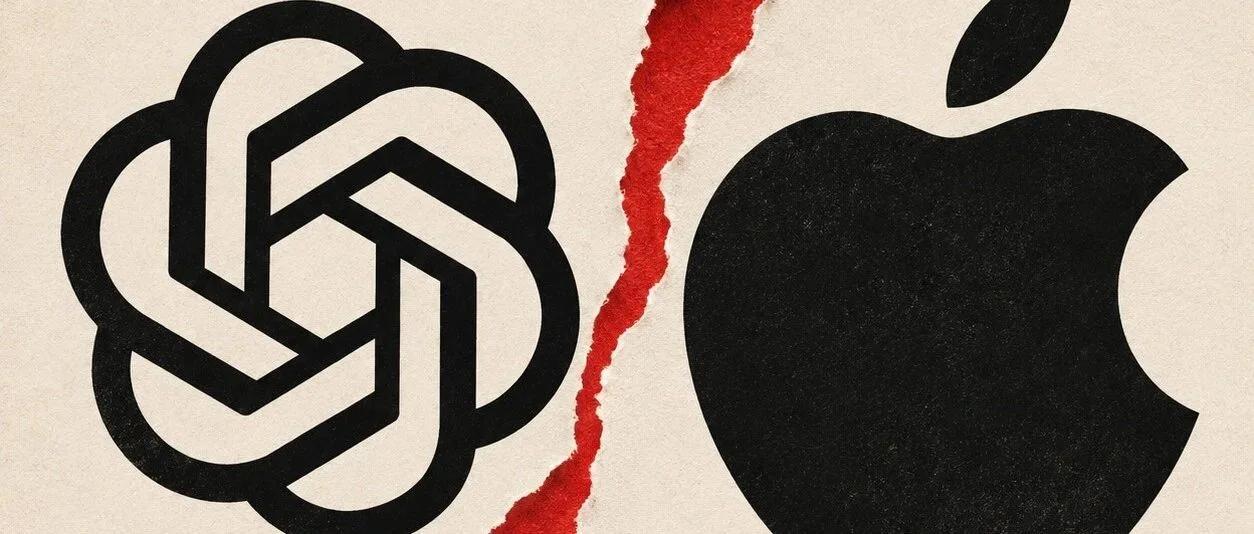
Background: From Partners to Rivals
In December 2024, OpenAI and Apple were partners: ChatGPT was integrated into Siri and Apple's writing tools. By May 2025, OpenAI acquired io Products, a hardware startup founded by former Apple design chief Jony Ive and hardware veteran Tang Tan, and began competing directly for the same engineers and manufacturing capacity.
OpenAI's 81-Page Countersuit
On November 27, 2025, OpenAI and io Products filed a countersuit and answer in the U.S. District Court for the Northern District of California, asserting 12 claims including trade secret misappropriation, unfair competition, and privacy violations. The filing came four months after Apple sued OpenAI for allegedly recruiting Apple employees to steal secrets for consumer hardware development.
The 'Employee X' Mole Allegation
Recruitment and Access
An Apple hardware engineer with years of experience in quality testing (referred to as "Employee X" in the countersuit) contacted former colleagues at OpenAI in late 2024. He expressed dissatisfaction with Apple, accepted a role without negotiation, and joined OpenAI on December 2, 2024. He initially managed camera and optical component quality, then expanded to device enclosures, surface treatment, and manufacturing quality, gaining access to multiple unreleased OpenAI hardware products.
Data Exfiltration Timeline
February 5, 2025: Sent a 76-page supplier measurement and inspection specification containing internal drawings, dimensions, and test methods for unreleased parts to his personal phone.
May 19, 2025: Resigned after five months, citing family care and independent research.
May 28, 2025: Sent three zip files to his phone.
June 1, 2025: Sent six zip files to a Singapore phone number.
The files covered 3D geometry, enclosure dimensions, engineering test data, and supplier manufacturing performance for unreleased OpenAI devices. OpenAI alleges the timing suggests the employee joined with the intent to steal.
Post-Employment Disclosure
In July 2025, Employee X reportedly briefed Apple's Asia-Pacific operations leadership on OpenAI's hardware R&D status and unpublished product roadmap at Apple's request. Reuters reported on October 14, 2025 that OpenAI's court filings accused him of sending over 100 confidential documents to personal accounts.
Apple's 'Hotel California' Talent Trap
OpenAI's countersuit opens with a reference to the Eagles' "Hotel California," likening Apple to a place "you can check out any time you like, but you can never leave." The alleged trap centers on Apple's encouragement of personal iCloud and iMessage for work.
Mechanism
Apple encourages employees to store work files in personal iCloud accounts and use personal iMessage for work communication; some receive free iCloud storage upgrades.
Work data mingles with personal photos and messages and syncs across all devices logged into the same Apple ID.
When an employee resigns to join a competitor like OpenAI, Apple often demands immediate departure on the same day, leaving no time for orderly separation of work and personal data.
The employee faces a dilemma: retain files (risk trade secret theft accusation) or delete files (risk spoliation accusation). Automatic backup and sync may resurrect deleted files.
Case Study: Chang Liu
Chang Liu, a senior system electrical engineer on the iPhone product line, resigned January 22, 2025 and joined OpenAI's consumer hardware group five days later. Apple's former manager asked Liu not to wipe his company laptop or sign out of personal iCloud to retrieve work files; Liu complied. In the following months, Liu received technical requests from former Apple colleagues, including a schematic for an iPhone display power circuit on February 13, and ran simulation programs he built at Apple to assist them. Liu states he provided this support unpaid.
Apple hired Charles River Associates to forensically examine Liu's returned laptop. Because the laptop retained synced personal data, investigators accessed Liu's private communications sent after his departure. Liu contends he authorized access only to retrieve work files, not for Apple to read private messages. Apple alleges Liu accessed internal Box storage after leaving and obtained hardware R&D secrets. Liu admits post-employment Box access and viewing some work files but says it was to respond to colleagues' requests and denies using any secrets for OpenAI.
Case Study: Tang Tan
Tang Tan, a 24-year Apple veteran and former VP of Product Design who led iPhone and Apple Watch development, is now OpenAI's Chief Hardware Officer for Consumer Products. The countersuit notes Tan spent months transitioning work, returning devices and prototypes, and cleaning personal accounts of Apple files. Apple still accuses him of seeking Apple secrets during recruiting; Tan says he allowed candidates to demonstrate skills using publicly released components and explicitly prohibited bringing unreleased products or confidential information.
Scale of Talent Flow and Apple's Alleged Retaliation
OpenAI discloses that over 400 Apple employees have joined OpenAI . OpenAI alleges Apple has threatened dozens of current and former employees and uses overbroad non-disclosure agreements and one-year non-solicitation clauses to restrict talent mobility. OpenAI characterizes Apple's lawsuits as an attempt to deter the next 400 departures.
Supply Chain Warfare
Competition has extended to manufacturing scheduling. OpenAI's countersuit states a shared supplier, under pressure from Apple, refused to run anodizing for both companies in the same time slot, forcing OpenAI to use night shifts. Another core supplier allegedly withdrew from a planned collaboration after Apple threats. OpenAI acknowledges it has only one or two qualified suppliers for many specialized processes, and its current procurement volume cannot compensate suppliers for lost Apple revenue.
OpenAI's Demands and Closing Argument
OpenAI and co-plaintiffs seek damages, injunctive relief, and a jury trial. The countersuit concludes with a pointed statement: "If Apple could compete with OpenAI on the merits, it would. But it can't."
For questions about attribution, corrections or content rights, please contactand we will review it promptly.