

Thread Internals: How Lightweight Concurrency Solves Server I/O Bottlenecks
This article explains thread fundamentals by starting with a server I/O bottleneck, comparing multi-process and multi-threaded approaches, detailing thread memory model (private stack, shared heap), Linux's unified task structure, and why threads are lighter than processes for concurrent request handling.
Reading font
Introduction: The Server Bottleneck
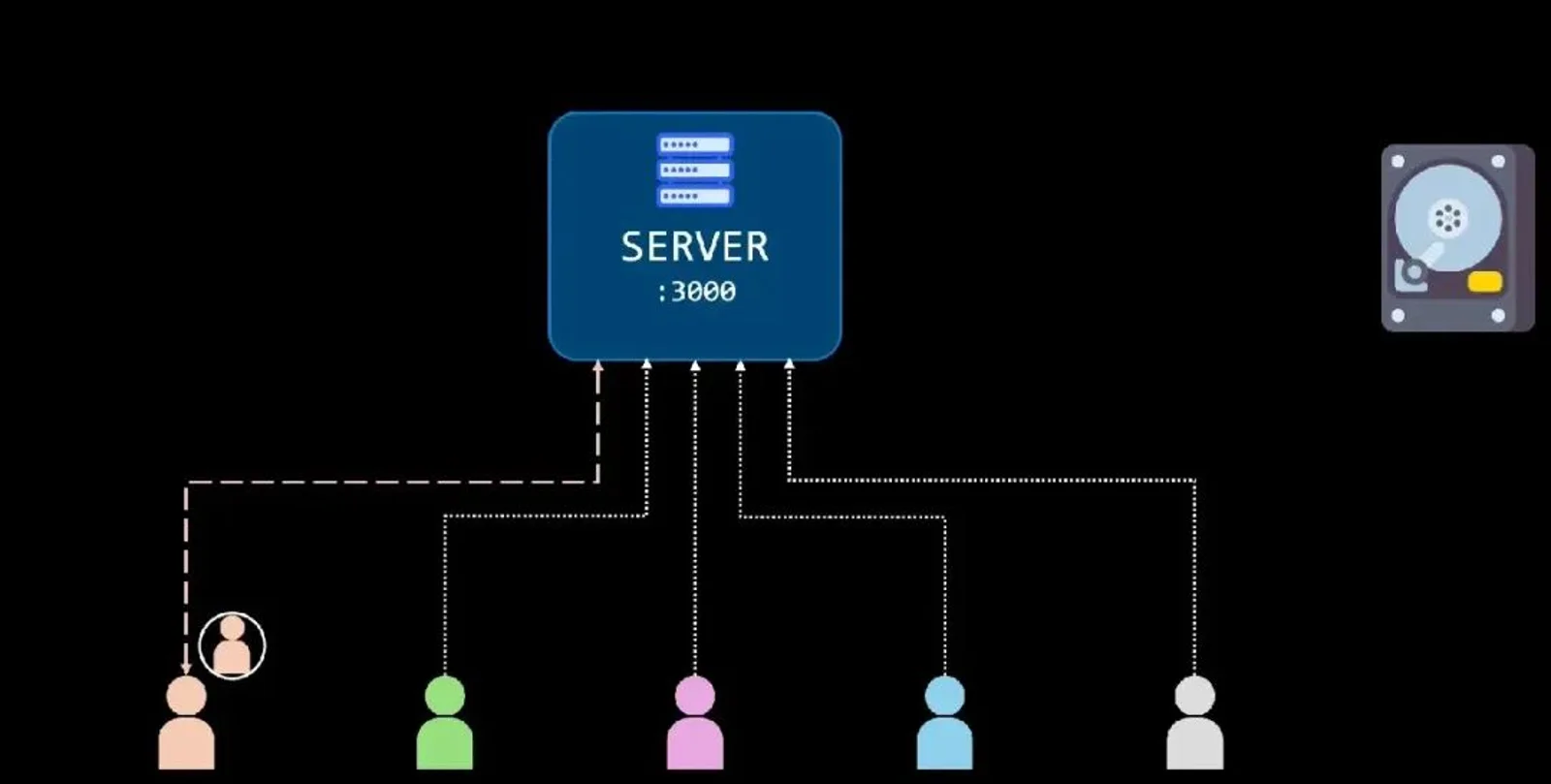
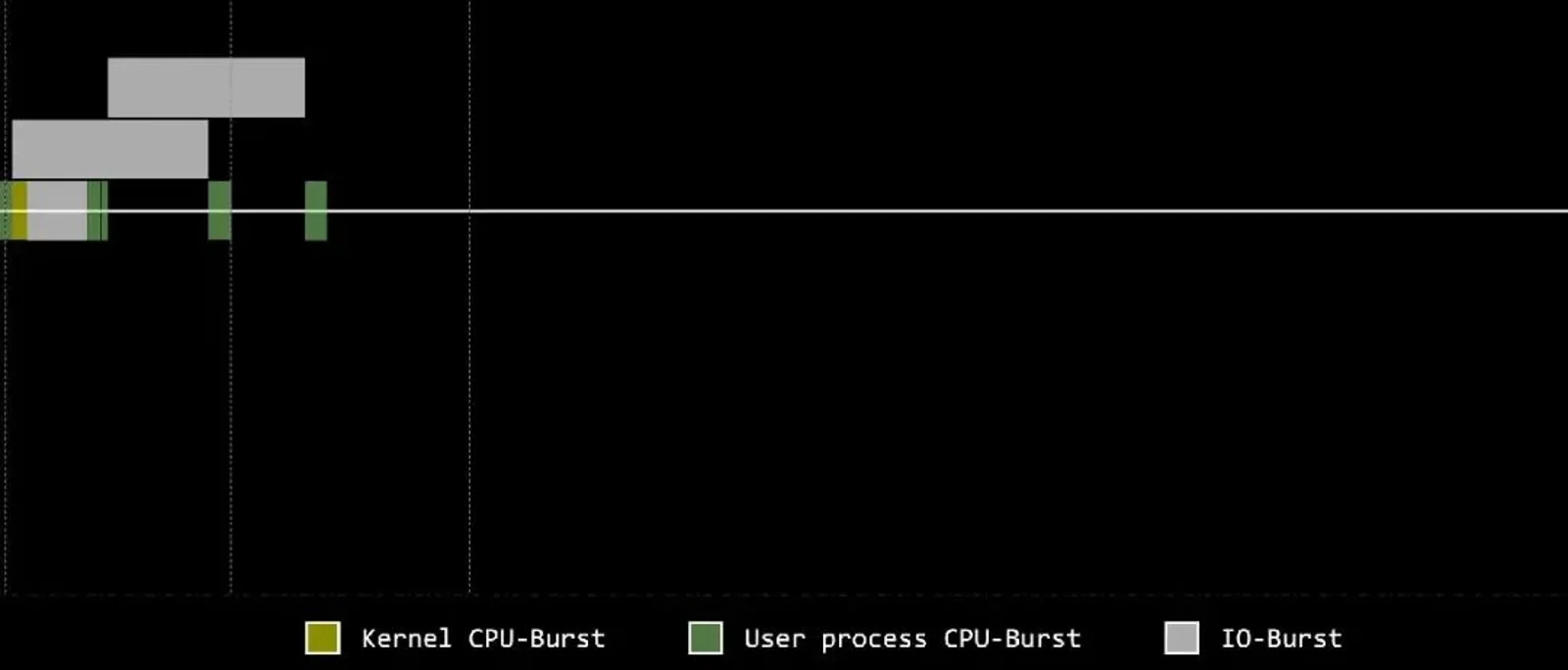
The article opens with a concrete scenario: a server listening on port 3000 that serves avatar images. Each request requires reading a file from disk — an I/O operation that can take significant time. With a single-threaded design, requests queue up; while one request waits for disk I/O, the CPU sits idle. The author illustrates this with a timeline showing gray gaps where the CPU does nothing, and notes that with thousands of requests the wait becomes unacceptable.
Multi-Process Solution and Its Overhead
A traditional fix is a listener process that forks a new child process per request. This allows overlapping I/O waits: while one child blocks on disk, another can use the CPU. However, each process carries a full independent address space, file descriptors, and kernel resources. The author points out that hundreds of clients may be manageable, but thousands would exhaust memory. Process creation itself consumes CPU time, and any shared global state requires explicit inter-process communication (IPC), adding complexity.
Introducing Threads: Lightweight Concurrency Units
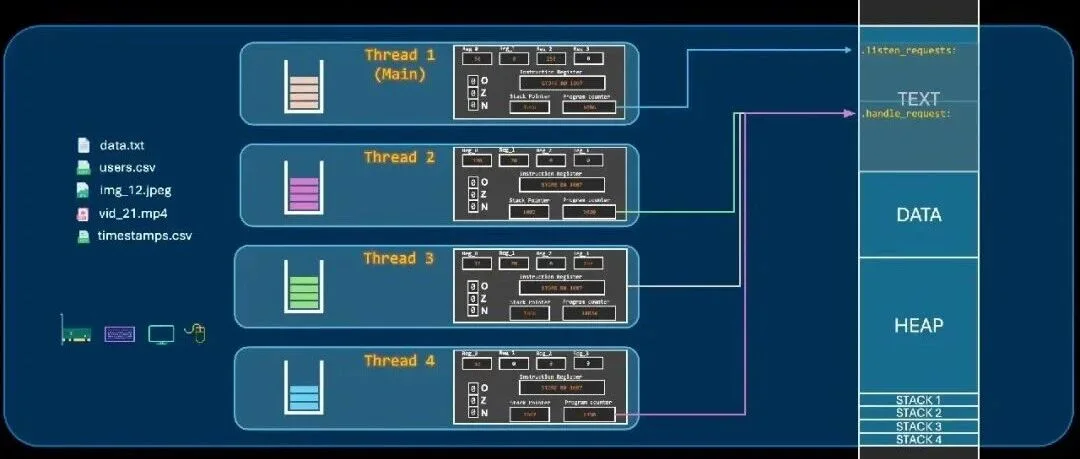
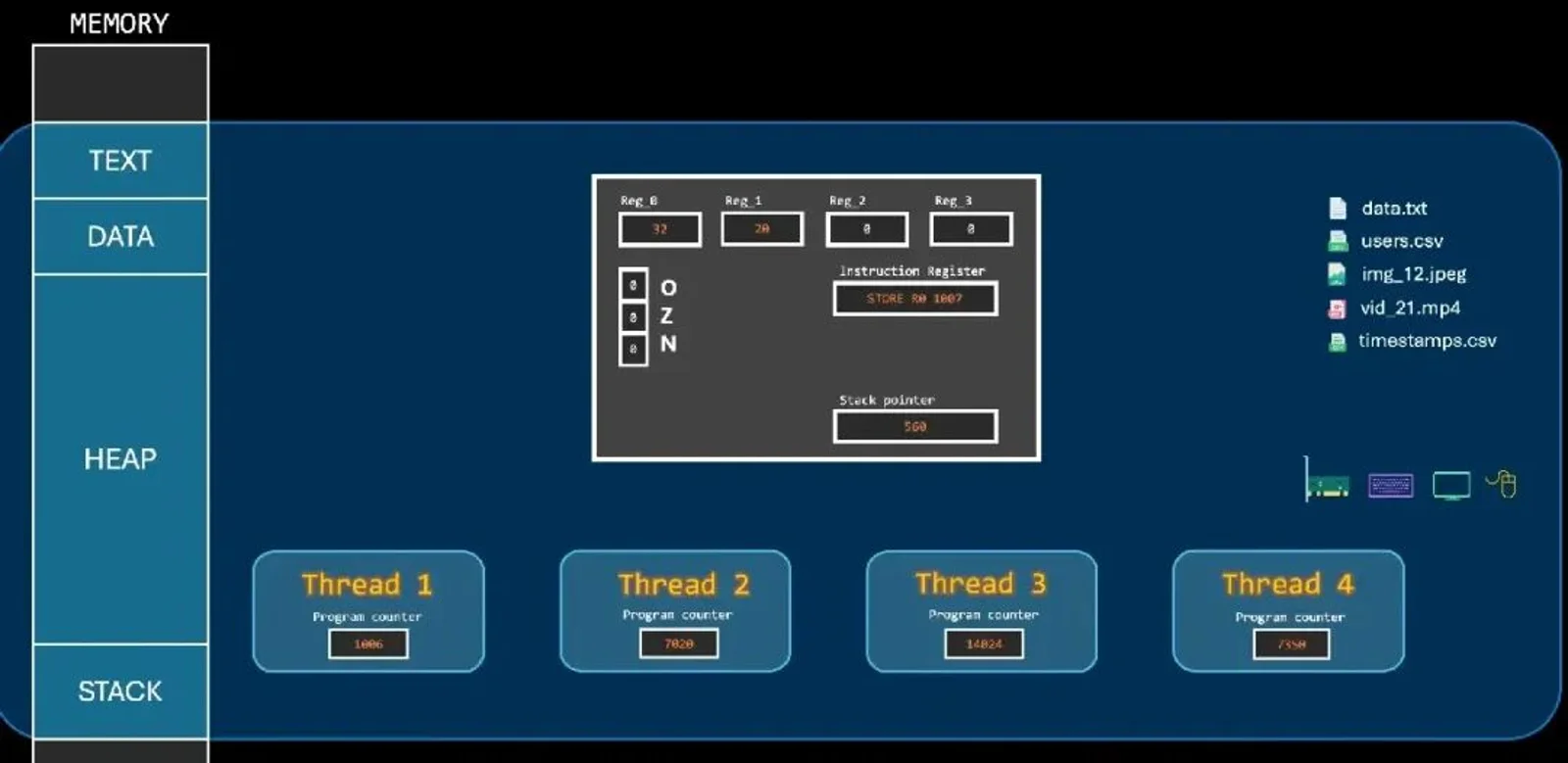
The core idea: keep the process but allow multiple independent execution flows inside it. Each thread gets its own program counter, register set (including stack pointer), and stack — collectively called the execution context. The OS scheduler now switches between threads instead of whole processes. Because threads share the process's address space (code, heap, globals), they can communicate via shared memory without IPC. Creating a thread is cheaper than a process because no new address space or resource table is needed.
Thread Memory Model: Private Stack, Shared Heap
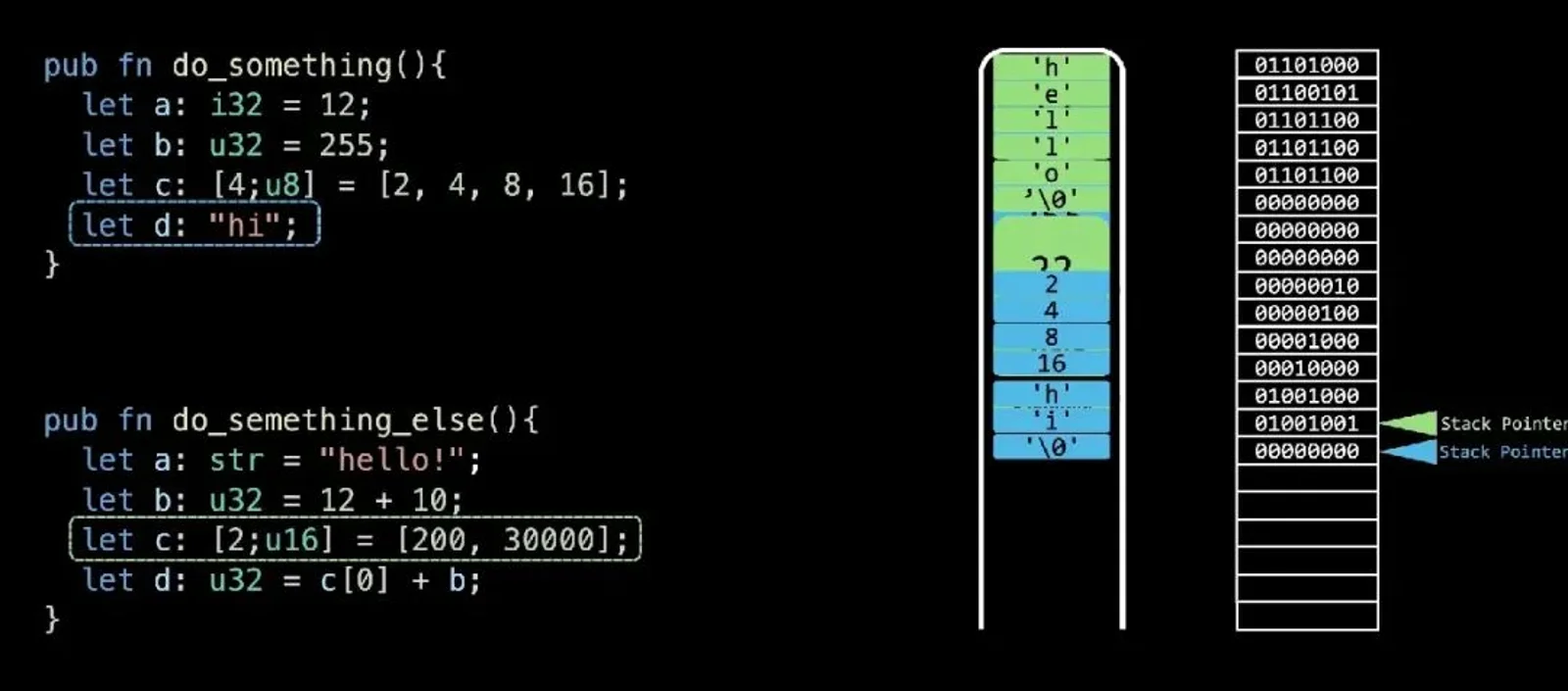
Each thread must have a private stack; otherwise concurrent function calls would overwrite each other's local variables. The author emphasizes that a private stack does not prevent one thread from accessing another's stack memory — since all stacks live in the shared address space, a thread can read/write another's stack if it has the address, but this is discouraged. For intentional data sharing, the heap is the proper place because heap objects are not tied to call/return discipline. However, concurrent heap access requires synchronization (mutexes, etc.), which the author notes will be covered later.
Linux's Unified Task Structure
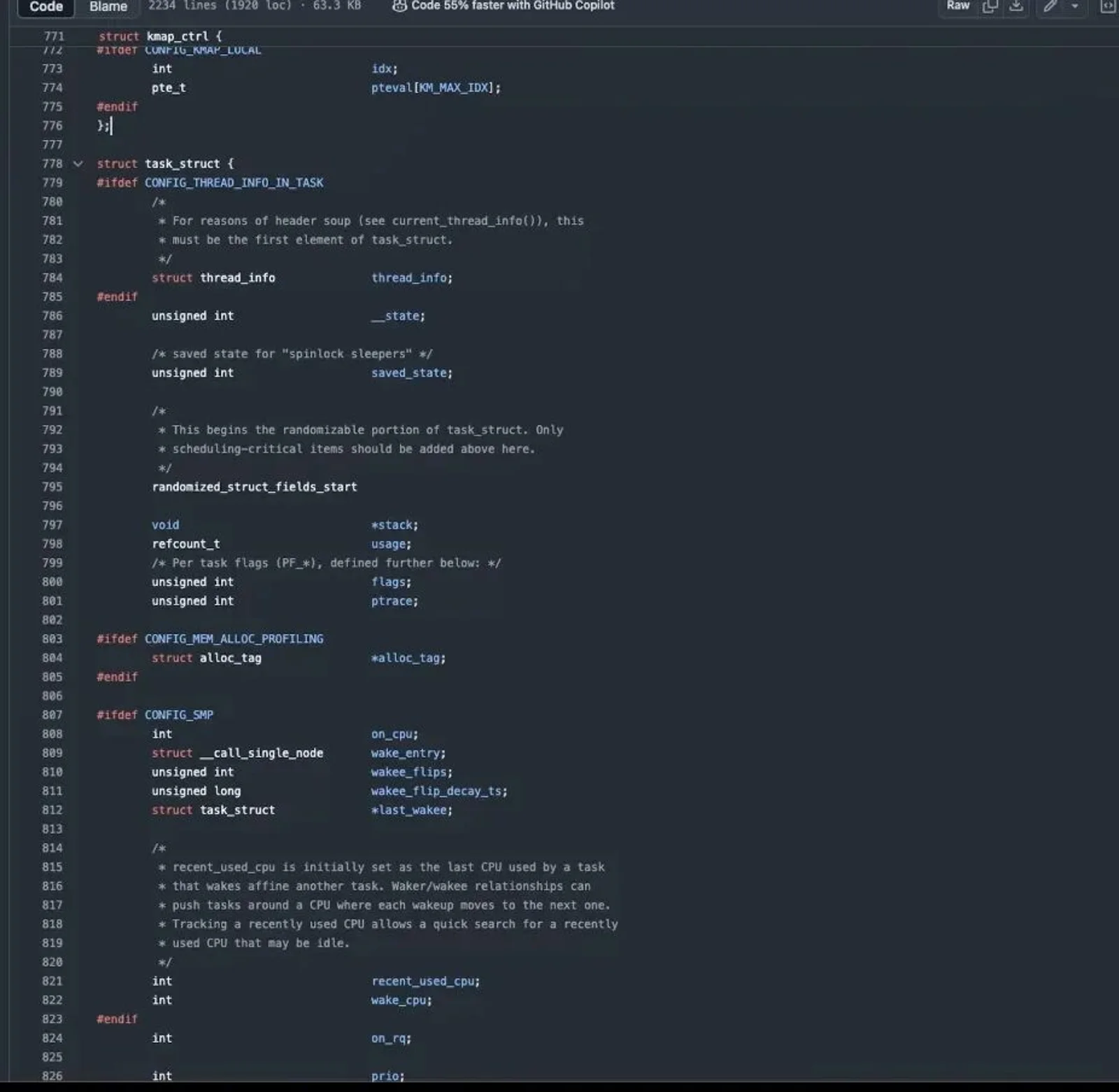
Linux represents both processes and threads with the same task_struct (called "task"). This design abstracts away the process/thread distinction for the scheduler: the scheduler simply switches tasks. The author praises this as a clean abstraction that lets a single scheduler handle both without special cases. Every process has at least one thread (the main thread); additional threads are created dynamically via system calls (e.g., pthread_create on POSIX). Most modern OSes support dynamic thread creation because the required concurrency level is often unknown at compile time.
Thread Lifecycle and Main Thread
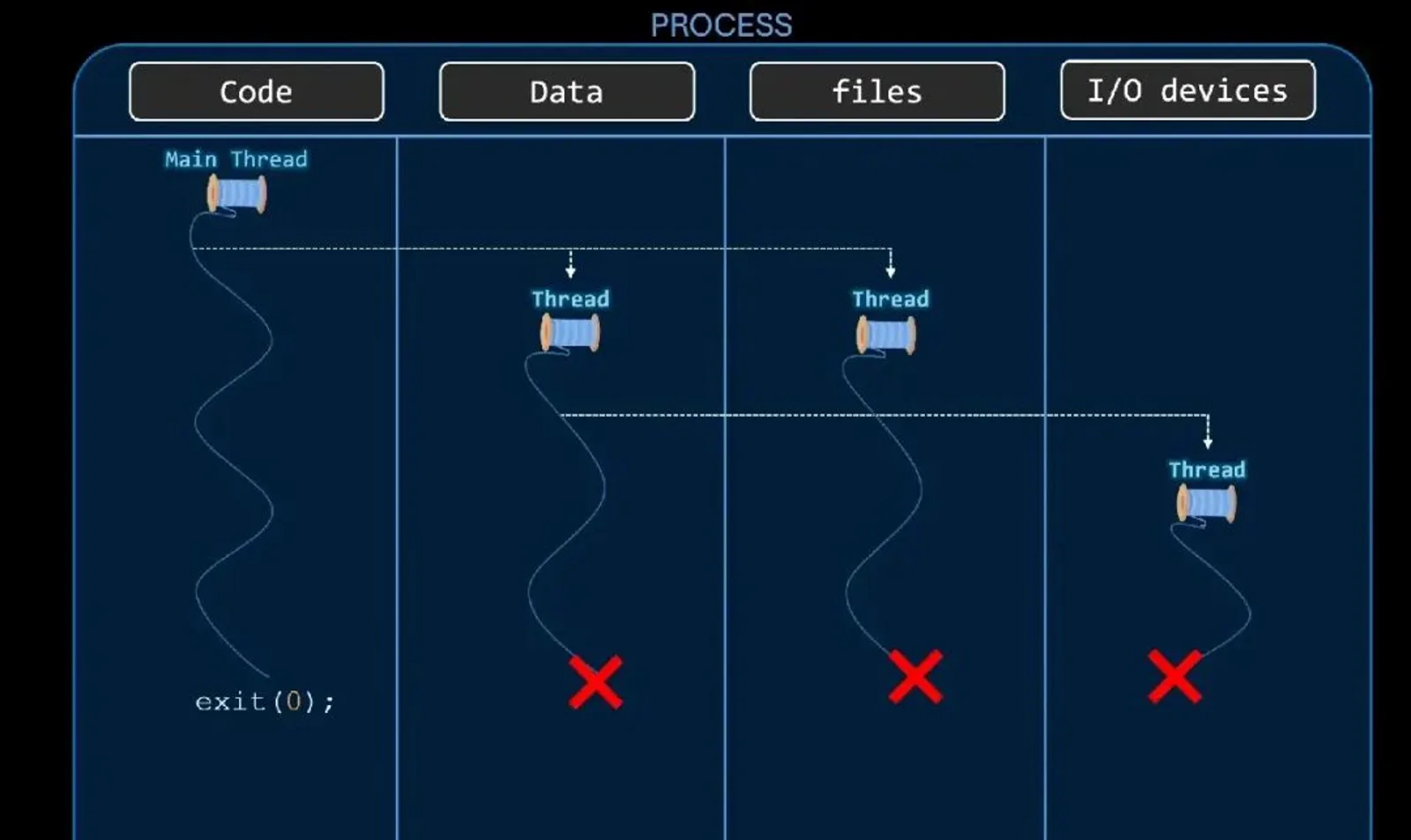
The main thread has a special relationship with the process: if the main thread exits, other threads may be terminated immediately (behavior varies by OS). The article illustrates this with a diagram showing the main thread ending while worker threads are still running.
Applying Threads to the Server Example
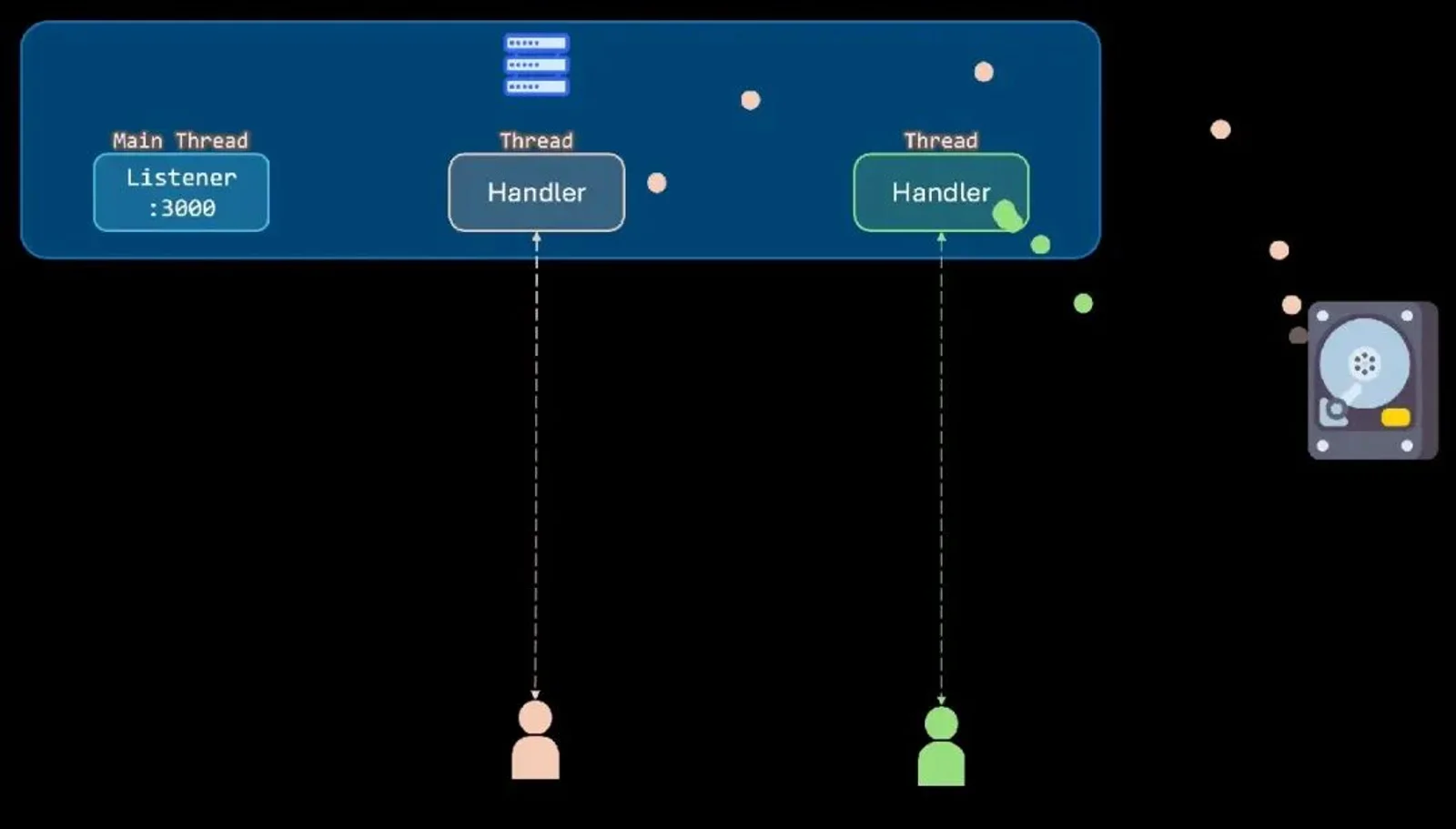
Revisiting the image server: the listener thread accepts connections and spawns a worker thread per request. Workers share the same code (the request-handling function) and the same heap (e.g., a cache), but each has its own stack for request-local data. This yields the same concurrency as the multi-process design with far lower memory footprint and faster creation. The author notes that thread creation system calls are typically lighter than fork / exec because no new address space is set up.
What Threads Are Not: Clarifying Misconceptions
Threads are not functions. A thread does not own code; it only has a program counter pointing into the shared code segment. Multiple threads can execute the exact same function concurrently because the code segment is read-only. Thread-local data lives on each thread's stack or in thread-local storage. This explains why C's pthread_create takes a function pointer — it tells the OS where the new thread should start executing.
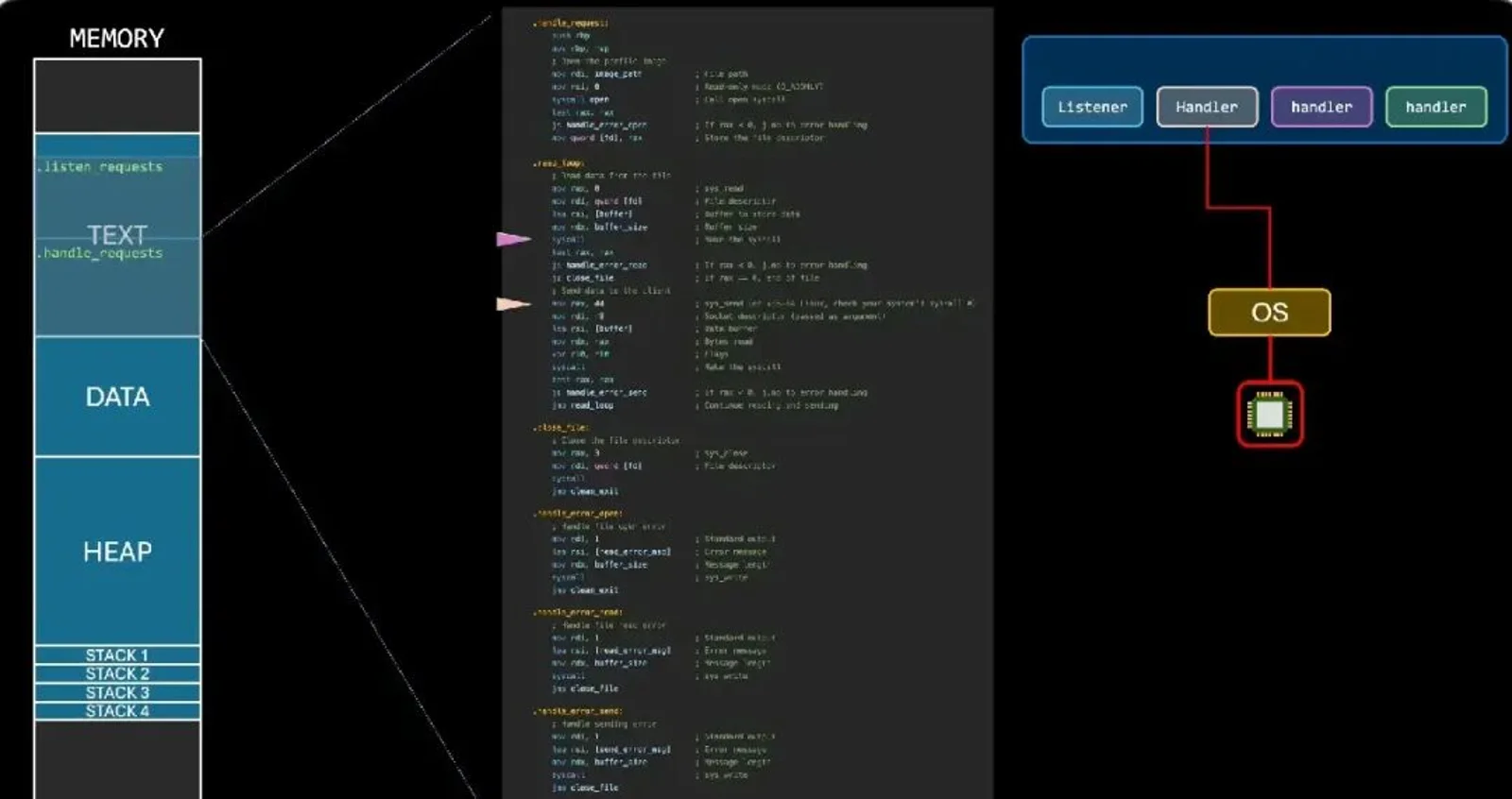
Two Perspectives on Threads
OS perspective: Threads are the basic unit of CPU scheduling and execution (replacing the process in that role).
Developer perspective: Threads are a mechanism to tell the OS that certain tasks can run concurrently.
The author also mentions the "lightweight process" analogy: threads give concurrency with less overhead than full processes. All concepts apply even on single-core CPUs, where concurrency is achieved by time-slicing.
For questions about attribution, corrections or content rights, please contactand we will review it promptly.