

Why LLMs Hallucinate: The Inherent Flaw of Probabilistic Generation
This article explains why large language models hallucinate by detailing their probabilistic token-generation mechanism, categorizes hallucinations into factual and faithfulness types, proves they cannot be fully eliminated due to architectural and training constraints, and outlines a three-layer engineering approach (RAG, prompting, verification) to mitigate risks in production.
Reading font
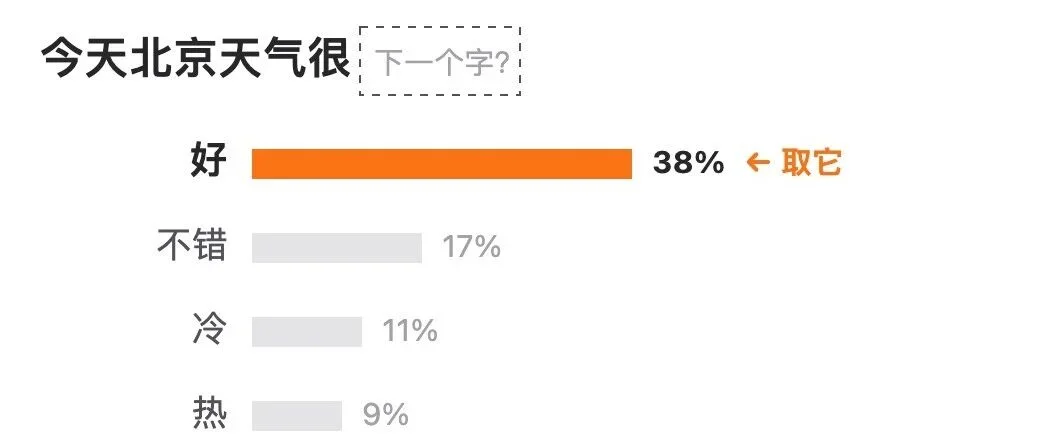
01 Mechanism: It's Not Retrieval, It's Probabilistic Continuation
The author opens with two personal anecdotes: an LLM fabricated an 800-word summary of a yet-unpublished "Double 11 Price Protection Rules" document with convincing clause numbers, and gave three different answers to the same shipping-fee calculation. These illustrate the core insight: the model generates plausible-sounding text, not verified facts.
LLMs do not query a database; they perform token-by-token probability continuation — predicting the next token based on all preceding context. The training objective optimizes only for fluency and human-likeness, with no mechanism to guarantee truthfulness . Consequently, the model never says "I don't know"; it always produces the most probable continuation, even for non-existent knowledge.
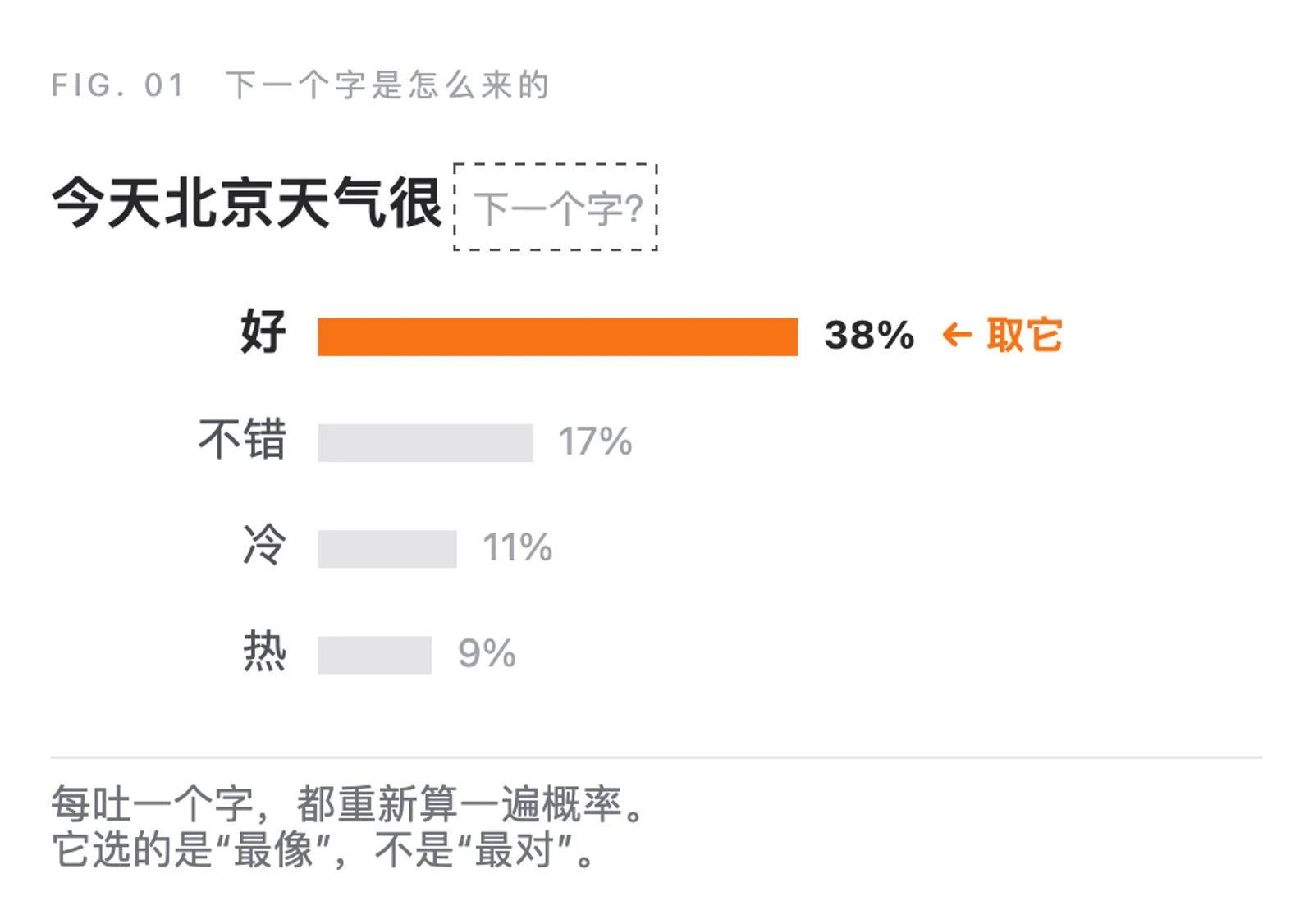
"LLM hallucination is like JPEG compression artifacts. It's not a bug; it's a side effect of compression itself."
Knowledge is lossily compressed into parameters. High-frequency facts (e.g., "Beijing is China's capital") survive well; low-frequency facts blur together, and the model averages similar memories into a plausible but false reconstruction. The more obscure the query, the more it probes the "compression-distorted region."
02 Taxonomy: Two Types of Hallucination
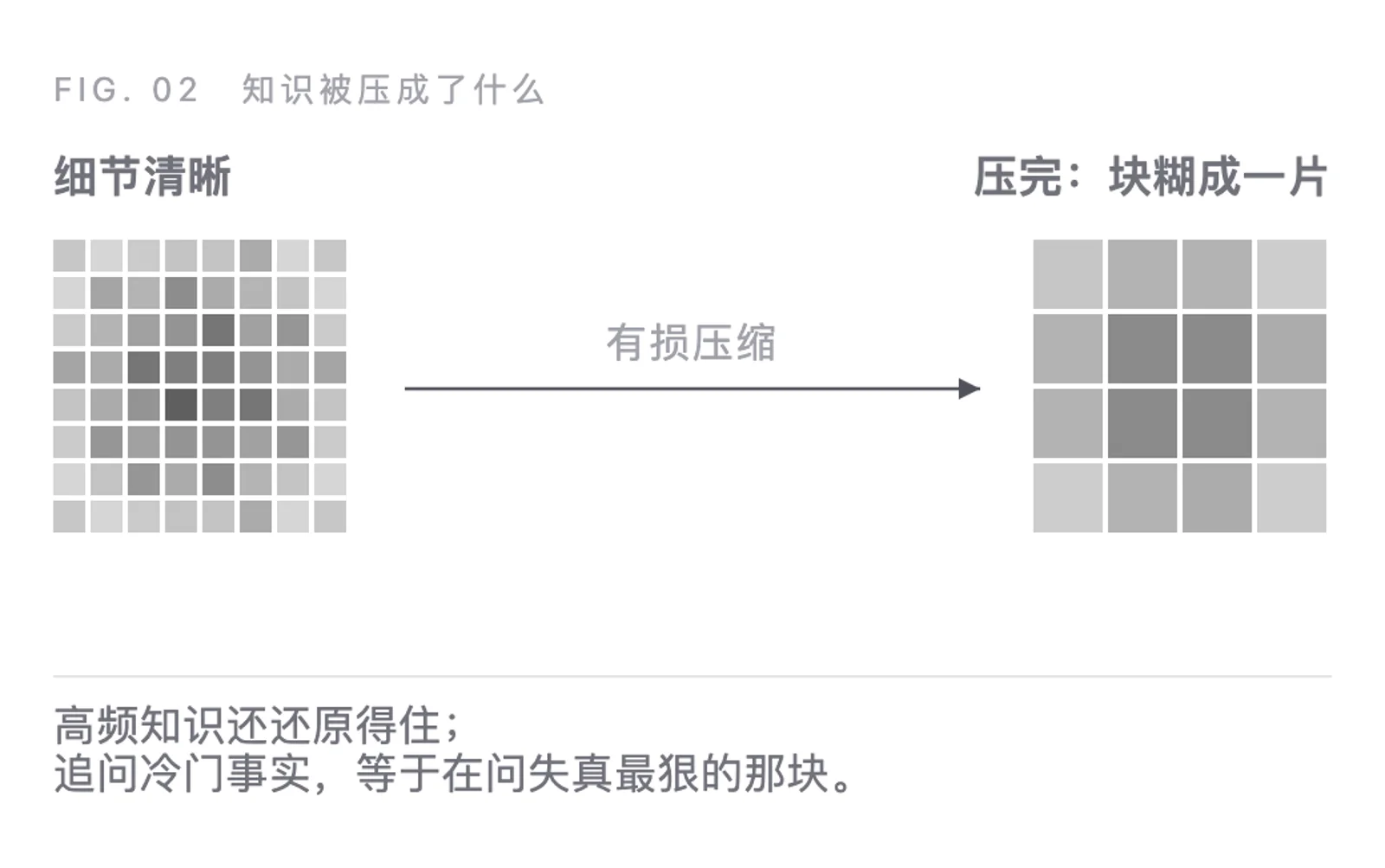
Hallucinations split by whether reference material is provided:
Factuality Hallucination (External) — No references given; the model invents non-existent facts (e.g., the fake price-protection clauses). In essence, "misremembering."
Faithfulness Hallucination (Internal) — References provided, but the model distorts, contradicts, or adds details not in the source (e.g., stating 30% reimbursement in one paragraph and 20% in another from the same document). In essence, "mis-copying despite having the cheat sheet."
A notorious sub-type is Citation Hallucination : the model produces perfectly formatted but non-existent references because it learned the format of citations, not their existence . Human evaluators often reward such formatted answers, inadvertently reinforcing the behavior.
"The more perfect the format, the more real it looks. And format is precisely the easiest surface to forge credibility."
03 Boundary: The Model Doesn't Know What It Doesn't Know
Knowledge cutoff is not the real problem; the problem is the model never voluntarily admits ignorance . Architecturally, attention-based retrieval always returns the "most similar" representation — there is no "key not found" state. During alignment training, models are rewarded for complete answers, almost never for refusing to answer. Thus, when facing a knowledge gap, the model defaults to probabilistic completion.
Research (e.g., R-Tuning) shows that explicitly training on "refusal" samples (labeling fabrication as negative, admission of ignorance as positive) visibly reduces hallucination rates.
Two knowledge types are distinguished:
Parametric Knowledge — baked into weights during training.
Contextual Knowledge — supplied in the prompt (documents, retrieval results, conversation history).
Using parametric knowledge for time-sensitive queries is a hallucination hotspot; the most effective countermeasure is feeding ground-truth knowledge into the context at inference time .
"The model not knowing, and the model saying it doesn't know, are two different things."
04 Arithmetic: It Doesn't Calculate, It Predicts Tokens
The shipping-fee example (three different results for the same multi-rule calculation) demonstrates that LLMs are fundamentally bad at arithmetic . Each token is sampled probabilistically; "199 minus 30 equals 169" has high probability because of frequent co-occurrence, not because the model performed subtraction. When multiple rules stack, the model probabilistically picks a wrong intermediate number, then rationally confabulates a coherent explanation around that error — the explanation is a post-hoc narration, not the reasoning process.
"That coherent explanation is just the narration the model wraps around its wrong answer."
05 Attention: "Lost in the Middle"
Even with full context, models exhibit a U-shaped utilization curve: information at the beginning and end of a long context is used heavily; middle content is largely ignored . This is not because the middle tokens are unseen — they are all in the context window — but because softmax normalization dilutes attention weights, compounded by positional biases learned during training.
Analogy: an intern reads the first and last pages of a 50-page contract carefully, skims the middle 30, then confidently answers based on that skewed reading.
Practical engineering tip: place the most critical reference material at the very start or very end of the prompt ; never bury key facts in the middle.
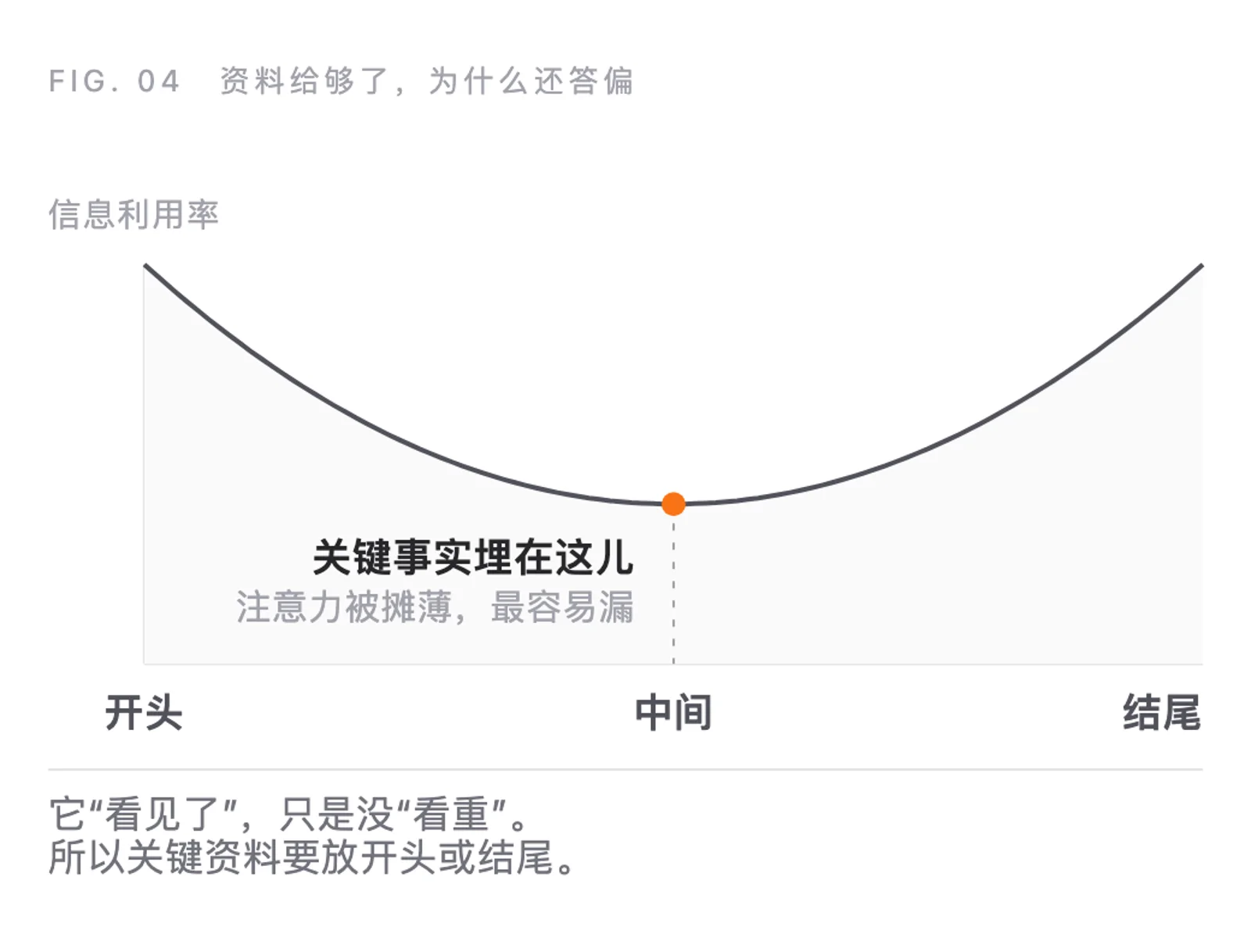
"Put the most critical references at the beginning or end of the prompt. Don't bury the core fact in the middle."
06 Limits: Why Hallucination Can Never Be Fully Cured
The author states unequivocally: hallucination cannot be eradicated . It is the inevitable byproduct of four stacked factors:
Storage — Facts are not stored as structured records but as lossy-compressed co-occurrence probabilities.
Retrieval — Similarity search always returns "most similar"; no "not found" signal exists.
Generation — Autoregressive token emission cannot backtrack; an early error becomes the premise for all subsequent tokens, amplifying itself.
Training Objective — The loss function optimizes only for "plausibility," never for "truth."
The first three are architectural necessities; the fourth is a training-choice consequence. A 2024 information-theoretic proof shows that as long as training data contains singleton facts (ubiquitous in real corpora), any probabilistic generative model has a non-zero lower bound on hallucination rate — it can be reduced but never reach zero.
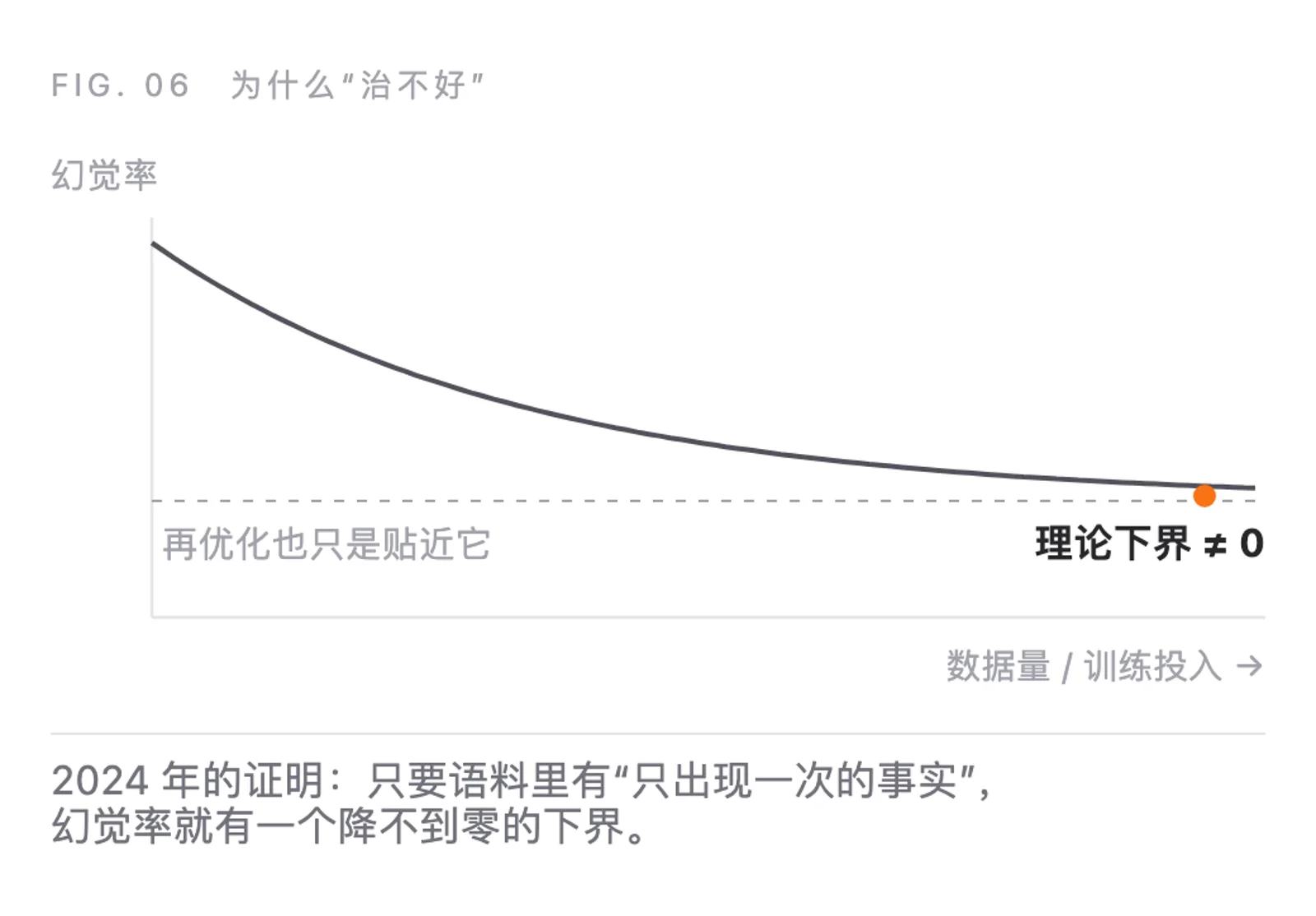
Therefore, the realistic goal is not "cure" but governance : suppressing hallucinations to a level safe for production use.
07 Engineering: Three-Layer Defense (Pre / During / Post)
A systematic engineering stack to constrain probabilistic generation with truth:
Layer 1 — Pre: Feed Truth Upfront
Retrieval-Augmented Generation (RAG) : Swap parametric knowledge for contextual knowledge; external facts act as anchors.
Tool Use : Offload all numeric computation to code; the model only extracts parameters (order, coupons, thresholds) from user text.
Fine-tuning : If training resources exist, inject two specialized sample types — high-quality factual QA, and "insufficient information → refuse" examples. Teach the model its boundaries, not just answers.
Layer 2 — During: Prompt Constraints
Explicit instruction:
"Answer solely based on the provided context. If the context lacks the information, reply 'I don't know.' Do not fabricate."This single sentence cuts hallucination significantly.
Layer 3 — Post: Verification & Guardrails
Require citations that map back to source clauses.
Run deterministic rule-based checks on numbers, dates, URLs.
Deploy a dedicated hallucination detection model as a quality inspector to compare output against source material.
Self-consistency check : Ask the same question three times; if answers diverge, the model is guessing, not computing.
"All three layers do the same thing: bolt a 'truth' constraint onto probabilistic generation. RAG feeds truth in advance; refusal training teaches boundaries; verification adds a final quality gate."

Epilogue
LLMs are like brilliant interns: articulate, high comprehension, but their fatal flaw is not intelligence — it's that you must verify their work . The correct usage pattern is not blind trust, but "let it do the work, guard the output with rules and code."
For questions about attribution, corrections or content rights, please contactand we will review it promptly.