

Why Stronger AI Makes Software Delivery Heavier: The FDE Paradox
This article explores why advanced AI models increase software delivery complexity, analyzing the Forward Deployed Engineer (FDE) role, four translation layers, dependency traps, work classification, dual delivery requirements, MOOS framework, and dependency curves to argue that mature AI delivery requires organizational capability transfer, not just technical deployment.
Reading font
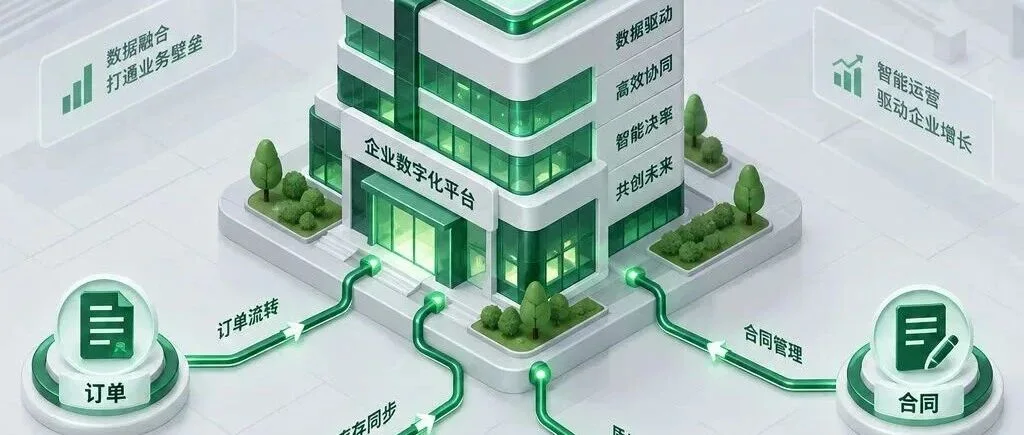
The Paradox: Stronger AI, Heavier Delivery
A software company delivers a working AI demo in two weeks — models understand business language, query data, call systems. But in production, orders, inventory, quality, and contracts scatter across systems; the same term means different things across departments. AI suggests material substitutions, rush orders, price cuts — yet no one knows who approves, who can veto, who bears responsibility. Engineers, product managers, and consultants move on-site: days clarifying issues, nights coding fixes. Six months later, the system runs, but the client still depends on the original team. Is this a delivered product or a temporary external team?
This counterintuitive phenomenon — model capability leaps, yet delivery gets heavier — is the starting point. The article traces the rise of the Forward Deployed Engineer (FDE), dependency traps, work classification, dual delivery, MOOS immersion, and the dependency curve, concluding that heavier delivery is not AI's failure; it exposes organizational problems previously hidden in roles, processes, and managerial experience.
Four Layers of Translation That Models Cannot Automate
AI expands the range of problems software can handle, but customers still bring operational problems: "secure a key order," "reduce supply-chain risk," "shorten claims time." Technical participation increases, yet four translations remain mandatory:
Value translation: "Secure the order" — prioritize revenue, margin, delivery date, or long-term relationship? The operator decides; software only provides analysis and options.
Fact translation: Which system owns the authoritative record for orders, inventory, credit, quality, contracts? When human experience conflicts with system records, the enterprise must designate the source.
Action translation: AI can propose actions, but that does not grant authority to change orders, swap materials, adjust capacity, or accept risk. The enterprise must define professional veto rights, managerial authorization limits, and system execution conditions.
Responsibility translation: When a cross-department task misses its target, the enterprise cannot stop at "model suggested wrong" or "business didn't cooperate." It must trace who owns the overall result, who bears professional liability, who maintains system capability, who approved major risk.
Stronger models handle more complex problems; the more complex the problem, the less these four translations can be captured in a single requirements document. OpenAI's public FDE role spans problem discovery, technical scoping, system design, production launch, and product feedback. Palantir defines FDE as a product development method that stays close to customer problems while collaborating with core engineering. In 2026 AWS announced a $1 billion FDE organization with the explicit goal that "customers can stand on their own at project end." Different approaches, same signal: enterprise AI delivery scope has extended from models, code, and interfaces into business facts, authorization relationships, and responsibility arrangements.
FDE as a Temporary Bridge, Not a Permanent Fixture
FDE is not a glorified new title nor a rebranded implementation consultant. It is a temporary bridge between rapidly evolving general AI capability and an enterprise's long-standing, hard-to-document operating order. The bridge has value, but the bridge cannot become the purpose. The real question: where does the capability built by FDEs on-site ultimately reside?
Four Organizational Problems FDEs Actually Solve
Business Scenario Redesign (BSR): FDEs don't just build a "sales agent"; they ask which customer situations need change, what outcome counts as improvement, what commitments the enterprise will make to its own customers, which risks are unacceptable. They redefine an operational commitment and its boundaries.
Confirming Distributed Business Facts: Data lives in multiple systems; the same field may have different definitions. FDEs locate sources, interpret field meanings, handle legacy interfaces and exception records, and push departments to agree on authoritative fact sources.
Cross-Department Coordination: Production systems show capacity but cannot decide to delay another customer's order; quality systems reject unverified material but cannot renegotiate delivery dates for the GM. FDEs, often without formal authority, convene sales, production, quality leads to clarify options, authorization boundaries, professional vetoes, and result ownership.
Feeding Field Problems Back to Product: Palantir calls this "product feedback from the problem site." PagerDuty's own FDE retrospective admits early teams repeatedly built similar isolated solutions for different clients, then moved FDEs into the product R&D system so the core product absorbs field experience. True FDE product value is helping the product team distinguish: what is a client-specific choice, what is an industry-common problem, what can become a generic feature, what must remain a professional judgment.
Together, FDEs temporarily perform four organizational jobs: clarify operational intent, confirm authoritative facts, coordinate cross-department action, feed recurring problems to product. This explains why FDEs are expensive — scarcity lies not in coders but in people who simultaneously grasp ambiguous operational problems, complex business systems, and real authority/responsibility structures.
The Success Paradox: Better Firefighting, Deeper Dependency
Short-term, high FDE dependence looks like high service value: critical issues get rapid response, clients feel safe, delivery succeeds. But long-term dependence risks mistaking "current project success" for "client has independent operating capability." Four dependencies emerge:
Business semantics depend on individuals: What the client really cares about, special industry term meanings, conditions not to be taken literally — all stay in a few engineers' heads. Team rotation forces re-learning.
Organizational relationships depend on individuals: Who can convene finance, production, quality? Who arbitrates disputes? Who holds exception authority? These interpersonal maps are the hidden collaboration charts the on-site team holds. The system goes live, but cross-department rules never solidify into system or policy.
Exception handling depends on individuals: Standard paths become software features; true exceptions still rely on engineer judgment. The project appears to run, but the client has merely shifted dependence from internal key staff to external engineers.
Product growth depends on headcount growth: Every new client, industry, or scenario demands a new batch of translators/coordinators. Revenue grows, but delivery cost, personnel risk, and maintenance complexity grow in lockstep.
This is the FDE success paradox: the better FDEs firefight, the easier the current project succeeds; the more the project relies on FDE firefighting, the harder it is to prove the software company delivers replicable product capability.
Classify On-Site Work into Three Categories Before Discussing FDE Stay/Go
Work allocation cannot be a simple "human vs. machine" split; it must follow work nature:
Expert work (retain for on-site experts): Identify true operational problems, understand unstandardized industry context, handle first-time major exceptions, make professional judgments in high-risk scenarios, feed new requirements and risk signals to product. These depend on context, trust, responsibility — cannot be mechanically canceled to cut headcount. FDEs, client internal experts, implementation partners, or other professional roles can own this.
Standardizable work (absorb into software product): Recurring data connections, semantic mappings, authoritative fact registration, common permission configurations, task templates, assessment methods, exception paths, version upgrades — gradually solidify into standard interfaces, configuration templates, product features. If these still require manual engineering across projects, the company mainly sells project services.
Client organization work (hand back to client): What commitments the enterprise makes to its customers, which risks it accepts, who holds operational decision rights, who holds professional stop rights, who owns the end result, whether an experience can become an enterprise rule — external engineers cannot long-term proxy these. FDEs can offer choices, not allocate power or bear final responsibility for the client.
A mature FDE measures success not by how much work they absorb, but by completing three diversions: new problems and high-risk judgments stay with experts; repetitive labor solidifies into product features and config templates; value trade-offs, power allocation, and result responsibility return to the client. This prevents the opposite extreme: productization is not making everything a button; self-reliance is not never buying services again. Product, client, and expert need a relationship that re-divides labor as problem maturity evolves.
Dual Delivery: Business Outcome + Client Capability
Traditional acceptance asks: Is the system live? Is the current problem solved? For AI projects that directly affect orders, production, service, or risk decisions, that is insufficient.
Business delivery: The promised order, service, production, or management problem is genuinely resolved, with facts and evidence — not just demo completion, model integration, and user training.
Capability delivery: The client's internal team, without daily intervention from the original FDE team, can still identify similar scenarios, locate authoritative facts, invoke validated models/tools/interfaces/business rules, act within authorization, handle common exceptions, and complete acceptance and responsibility tracing.
The first answers "Did we pull it off this time?"; the second answers "Do we start from scratch next time?" The former decides project value; the latter decides whether the delivery model replicates and whether the client gains independent operating ability.
ERP implementation research shows consultant-to-client knowledge transfer is not a side effect. A study of 96 ERP consultant-client pairs found clients want to learn maintenance and gradually reduce consultant dependence; knowledge, motivation, and communication conditions affect transfer. A comparative study of 10 ERP projects found key-user participation in configuration, testing, documentation, and training builds internal capability better than post-project training alone. These studies don't guarantee smooth FDE exit in the AI era, but they confirm capability transfer must happen during joint implementation, not in a handover meeting at the end.
Therefore, dual delivery must be written into management from day one: project goals include both launch date and dependency-reduction targets; FDE evaluation covers not just firefighting speed and client satisfaction but how much repetitive experience becomes standard features, config templates, and business rules. Clients must not just "cooperate"; future daily operators must genuinely participate in configuration, testing, exception handling, and rule maintenance. Contracts must specify which daily responsibilities the client team takes over, who maintains continuously, and conditions for expert re-engagement on new problems or high-risk exceptions. Client internal capability emerges during the process of joint judgment, joint operation, and gradual responsibility transfer — not the day the FDE team leaves.
MOOS: Immersion of Field Experience into Organizational Capability
Enterprises need not replace existing business systems to escape on-site dependence. ERP keeps orders, inventory, financial transactions; CRM keeps customer relationships; MES and quality systems keep production and release. These systems remain the authoritative fact stores and formal transaction executors.
The Mycelium Organization Operating System (MOOS) adds a cross-system organizational operating layer on top. MOOS does not create another fact store nor decide for operators; it carries the six relationship types FDEs repeatedly establish on-site: what is the scenario, what result to deliver, where facts come from, which people/agents/professional capabilities can be invoked, who holds what permissions and responsibilities, how to stop/escalate/takeover/recover when exceptions occur.
First entry into an unfamiliar site still requires FDEs and client to jointly understand problems, connect systems, build trust. Traditional heavy delivery leaves experience in engineers' heads. MOOS-guided projects additionally immerse the jointly formed scenario definitions, fact sources, authorization boundaries, and exception handling methods into scenario templates, task contracts, capability interfaces, permission rules, exception paths, and acceptance evidence.
A task contract is not a client contract; it is the minimum authorization carrier for a task, specifying result, boundary, judgment, evidence, escalation. Stable experience must pass independent reuse by other teams, independent acceptance, and formal adoption by authorized bodies before becoming organizational rules.
If these immersion mechanisms hold, the FDE role shifts: from long-term bridging systems and departments → helping clients build self-maintainable connection rules; from personally handling all exceptions → clarifying which exceptions the client team handles, which require experts; from project firefighter → catalyst for product improvement and client capability formation; from adding headcount per client → intervening only for new problems and high-risk exceptions.
MOOS itself must keep strict evidence boundaries. It is an organizational and product design proposition, not a proven widely deployed system with measured business outcomes. MOOS must face real-project tests: if every new scenario still needs a few experts to re-explain fact sources, authorization relationships, exception paths, the enterprise mainly gets project services, not reusable organizational capability.
Judging FDE Exit: The Dependency Curve
"System live" is a point in time; capability transfer is a curve. Early high client dependence on FDE is normal; as fact sources, operating rules, standard product features, and client internal owners settle, daily FDE dependence should decline. Experts may re-engage for new business, major architecture changes, or high-risk exceptions — but not for the same class of problem repeatedly.
Assessing whether the client has gained independent operating capability requires at least five questions:
Can the client judge whether a new problem fits an existing scenario, an adjacent scenario, or requires a brand-new scenario design?
Can the client internal team locate authoritative facts, know which actions can execute, which must stop or escalate?
After swapping in a client internal team that did not join the first implementation, can they handle common exceptions and complete acceptance without calling the original FDE team?
When scenario templates, permission rules, capability interfaces, or agents change, is there a clear client internal owner for ongoing maintenance?
After the client project lead or key FDE leaves, does the deployed AI system keep running? Can new hires understand the design rationale? Can responsibilities still be enforced?
Simultaneously track three operational metrics: Does FDE investment decline as scenarios mature? Does the share of work covered directly by standard product features or reused via config templates rise? Are hidden supports (remote tasking, ad-hoc firefighting) fully accounted in project cost? Otherwise "no on-site" may just move dependence online.
Leading vendors have written client self-reliance and field-experience productization into FDE models; ERP knowledge-transfer research supports the joint-implementation-to-internal-handover mechanism. But public data still lacks long-term comparable metrics after FDE teams exit daily operations, so we cannot yet answer whether clients sustain business effects and independently handle changes and exceptions. The dependency curve is not yet a universally validated industry law; it is a management proposition that should be tested by project data.
The Mature Path: Co-Design, Co-Run, Handover
The mature path is neither "FDEs stay forever" nor "one-cut withdrawal." Unfamiliar scenarios are co-designed by the software company's FDE team and the client internal team; both teams run together for a period; then a client internal team that did not join the first implementation takes over independently. Thereafter, FDEs exit daily operations, re-engaging only for new problems and high-risk exceptions.
Conclusion: What Gets Lighter Is the Next Delivery
AI demos can get lighter and lighter, but the first deployment of an AI system into a complex enterprise remains heavy. Delivery teams face not a set of well-defined, directly callable interfaces, but an enterprise's long-formed web of facts, power, responsibility, trust, and interests. The rise of FDEs shows model capability does not automatically become enterprise production capability; operational value must form through real business operation.
But capability cannot ultimately reside only in the on-site team. If after one project the client still cannot do without the original engineers, if the same class of problem still requires reconnecting systems, re-verifying business definitions, re-coordinating departments, then the software has only solved one problem — it has not formed replicable delivery capability.
Judging AI software maturity cannot rely solely on how fast the first project goes; we must watch the second client, the second scenario, and a team that did not join the first round complete similar delivery with less external support. A mature FDE model does not make clients never need experts again; it makes scarce experts avoid solving the same problem over and over.
When common experience solidifies into standard product features and config templates, operational responsibility returns to the client, cross-system collaboration rules become client-maintainable, FDEs no longer play the indispensable "on-site hero" in every project — they become true capability catalysts. At that point, what gets lighter is not today's complex project, but the enterprise's cost of facing the next change.
For questions about attribution, corrections or content rights, please contactand we will review it promptly.