

Why the Same AI Scenario Fails Across Enterprises: A Three-Layer Architecture for Reusable Agents
The article argues that identical AI scenario names mask divergent enterprise commitments, proposing a three-layer product architecture—reference scenarios, enterprise configurations, and runtime task contracts—to separate reusable structures from company-specific judgments, validated by a four-handover test ensuring independence from original implementation teams.
Reading font

The article opens with a common sales situation: a customer asks whether a "customer service agent" that worked at another company can be copied directly. The author explains that the question sounds technical but is really about whether an operational commitment can be replicated.
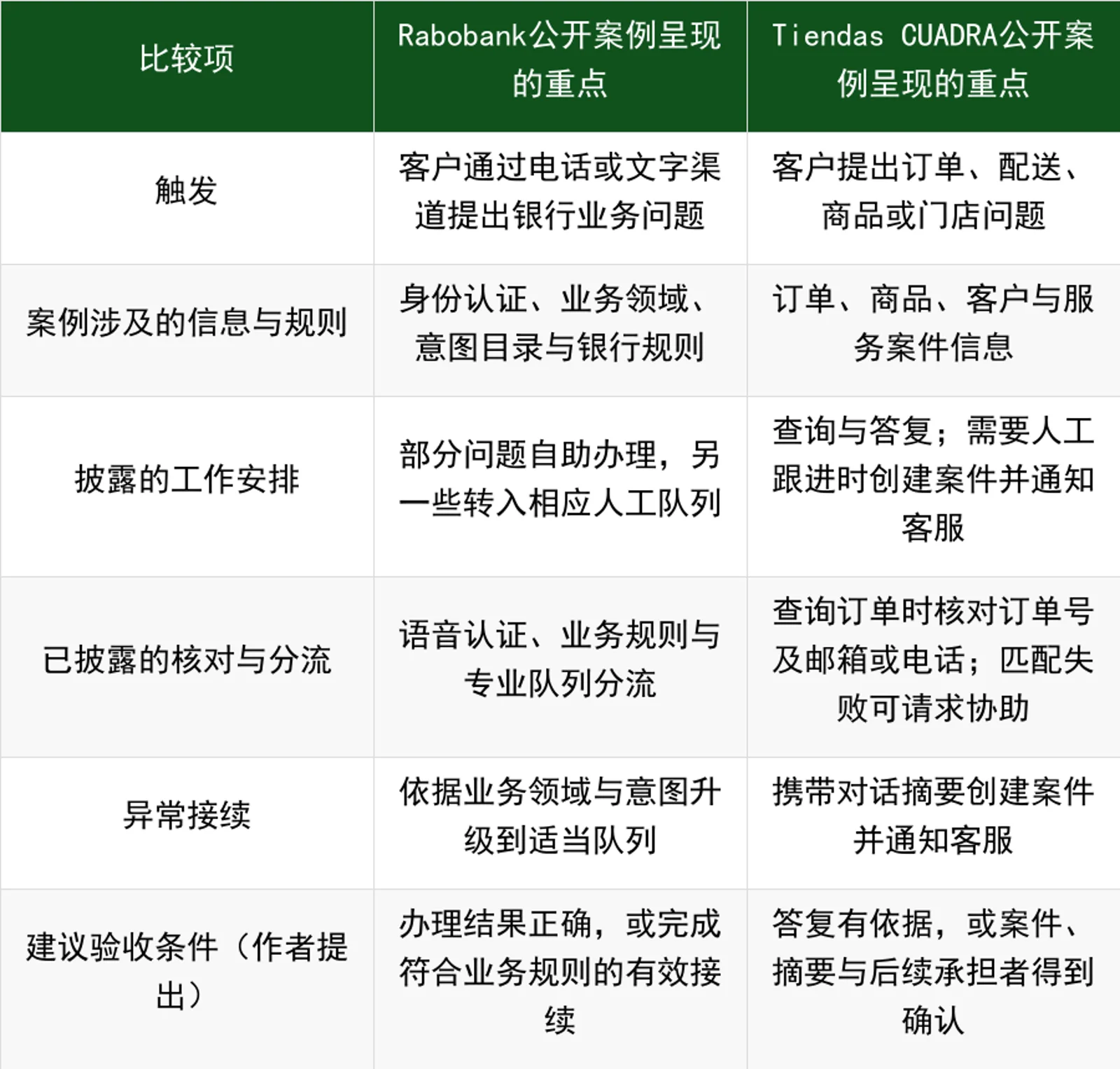
Two public cases illustrate the gap. Rabobank's agent handles identity verification, business rules, and queue routing. Tiendas CUADRA's agent checks orders, creates service cases with conversation summaries, and notifies human agents. Both are called "customer service agents" and may use similar models, yet the facts they verify, the responsibilities they hand off, and the exceptions they handle are entirely different. The scene name is only a value entry point; the real promise is shaped by facts, permissions, responsibilities, exceptions, and acceptance criteria.
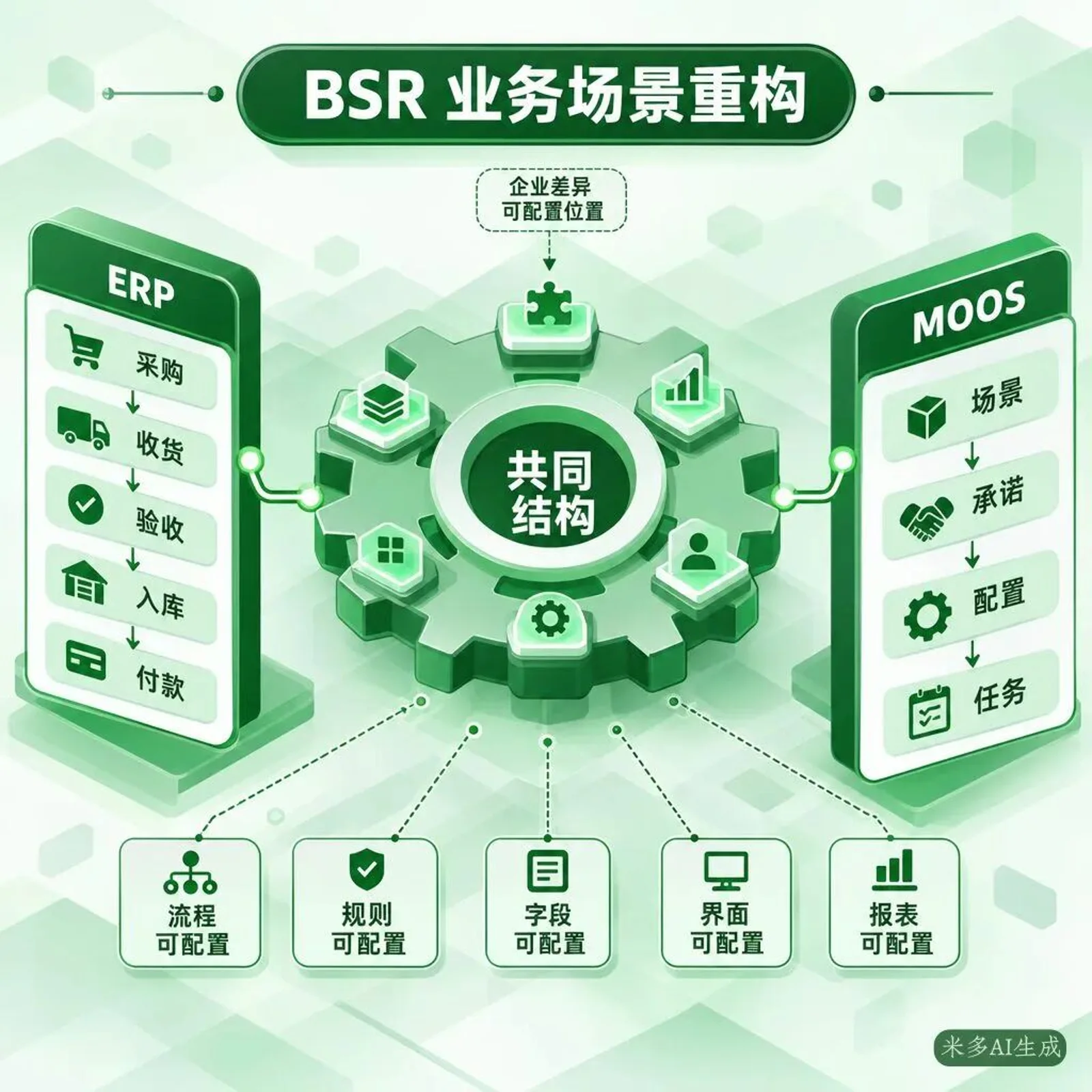
Drawing on ERP productization history, the author notes that ERP did not copy one client's habits to another. Instead, it extracted stable business rules (procurement, receipt, inspection, put-away, payment) and provided a configuration mechanism for legitimate differences. AI-era products must inherit this thinking: separate the common structure that can be reused from the judgments each enterprise must make.
The proposed three-layer architecture:
Layer 1 – Reference Scenario: Defines what every instance of this problem class must answer: trigger, result, facts, roles, permission boundaries, exception handling, acceptance. This forms a reusable public shell.
Layer 2 – Enterprise Configuration: Turns data standards, role qualifications, amount thresholds, mandatory human confirmations, cost boundaries, evidence requirements into auditable, versioned configuration items approved by authorized business people. The vendor helps implement and verify but does not decide for the enterprise.
Layer 3 – Runtime Task: For each concrete request, the system generates a task contract specifying the exact result, owner, permissions, evidence, and stop conditions. The first two layers describe "how a class of problems is handled"; the runtime task answers "who is responsible for what result this time."
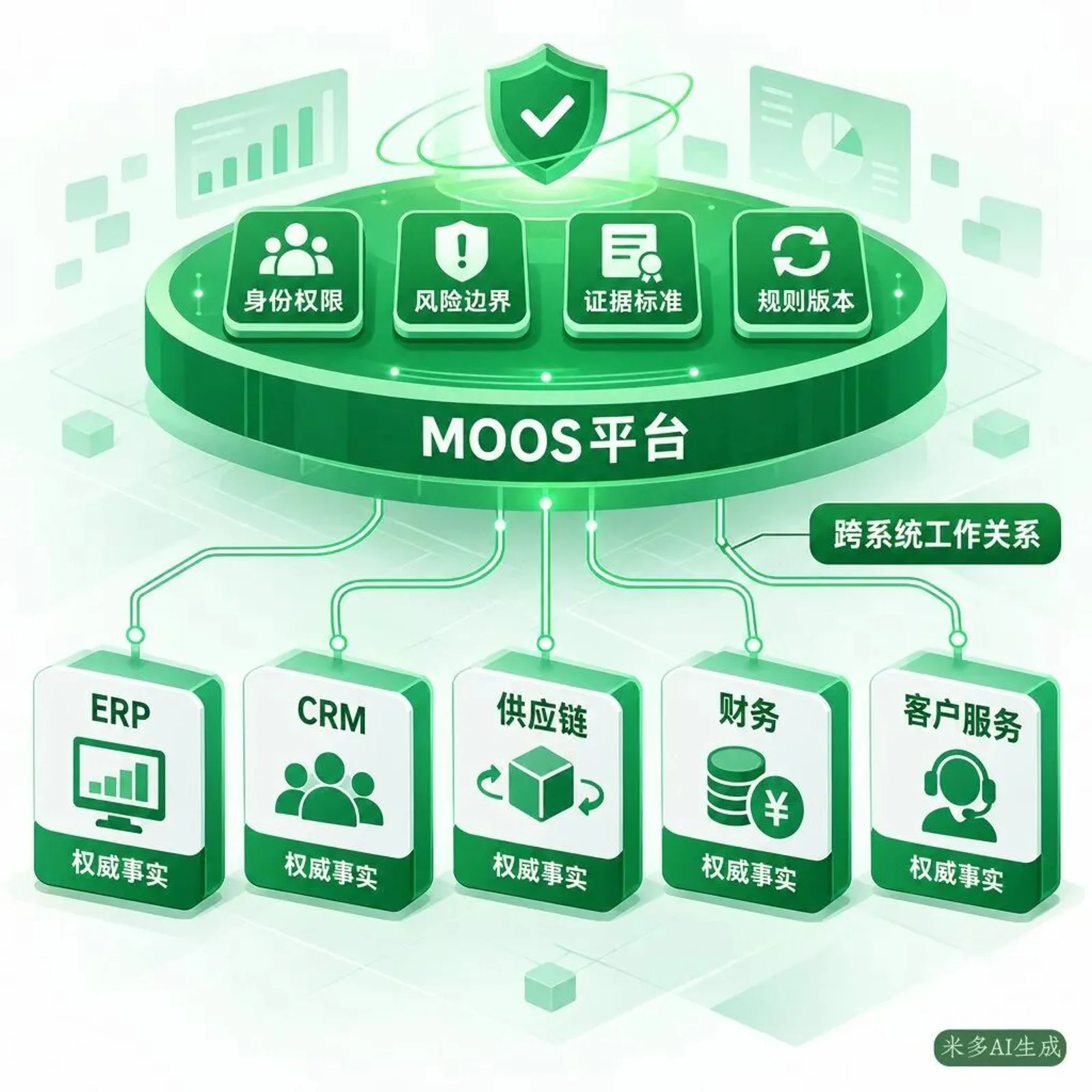
An illustrative example (not from the two cases): for a potential order delay, the reference scenario lists required checks (original due date, available resources, commitment authority, stop conditions); enterprise configuration pins down which inventory and scheduling records are authoritative, who can reallocate resources, who can change the due date; the runtime task then writes, for this specific order, who arranges the alternative, who confirms with the customer, and which actions stop first when a resource becomes unavailable.
Without the public structure, every project reinvents the wheel; without enterprise configuration, a generic template flattens real differences; without runtime tasks, completed actions cannot be linked to fulfilled commitments and handed-off responsibilities.
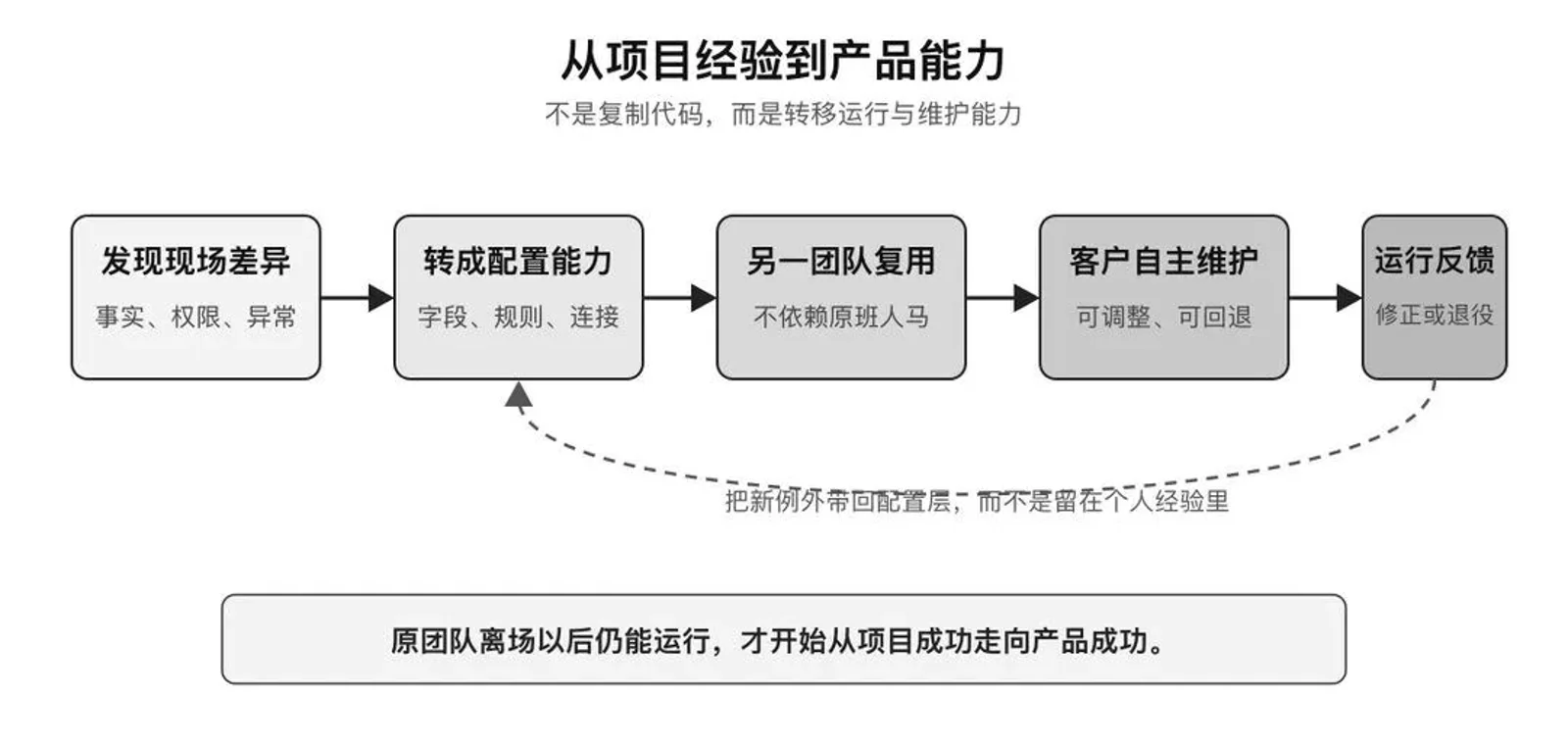
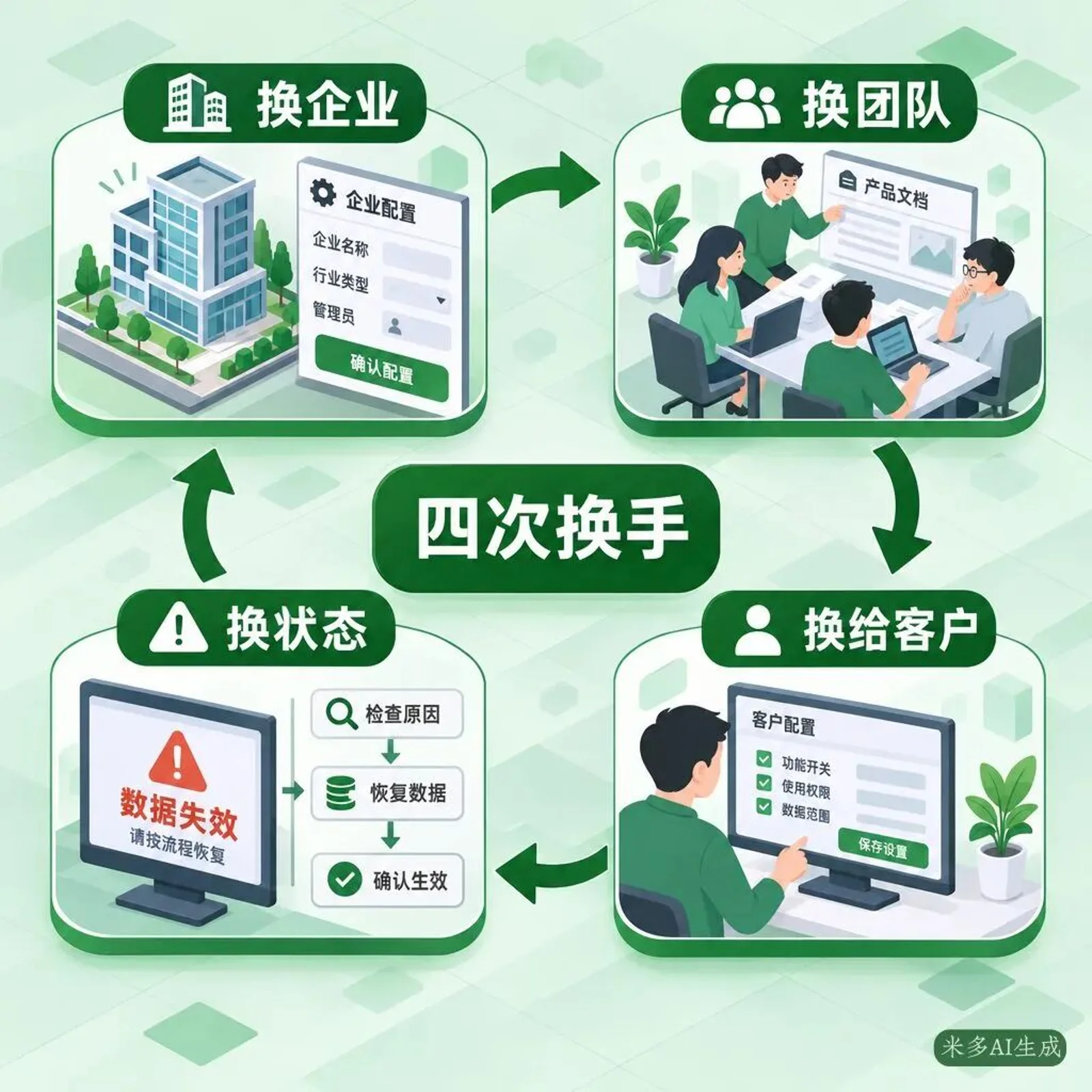
The article introduces a "four handovers" test to verify that a product no longer depends on the original team:
Change enterprise: Can a new company adapt mainly by configuring fact sources, role qualifications, thresholds, exceptions, and acceptance rules without rewriting core logic?
Change team: Can a qualified team that never saw the original project independently configure, test, and go live using only product documentation and normal support?
Change state: When data expires, permissions change, or resources conflict, does the system halt affected actions, find the authorized person to re-confirm the commitment, and resume only after the new agreement is in place?
Hand over to customer: Can the customer's own business and IT staff understand, adjust, roll back, and maintain configurations without turning every change into a vendor project? Rabobank's public case notes its team now manages and updates virtual agents without external help—a signal of feasibility, though not an independent cross-company benchmark.
Validation should simulate inventory record failure or permission revocation, observe whether the system stops the right actions, who takes over, and on what basis it recovers. Then let the customer modify a configuration under their own approval rules and revert it, recording time, vendor help needed, and items the vendor had to take back. "Normal support" means reading docs and getting agreed-scope help—not having the original team re-make key judgments.
After four handovers, new exceptions feed back into the configuration layer as candidate rules, then get independently used, accepted, and possibly promoted to shared capabilities by a different team. Solving one problem is project delivery; enabling others to standardize a class of problems is product reuse.
The concluding argument: models will improve, connectors will proliferate, but the defensible moat is not parameter count. It is whether the software can see how each enterprise forms commitments and can lift those differences out of on-site memory and custom code. Over-standardization flattens authority, risk, and responsibility; over-customization turns every engagement into craftwork. The sustainable path uses public structure to cut repetition cost, enterprise configuration to preserve operating judgment, task contracts to carry each real promise, and runtime feedback to continuously refine rules.
For vendors, the next step is not adding more scenario labels but auditing which differences have entered the product and which still live in delivery engineers' heads. For buyers, the question is not "has anyone done this scenario?" but "what commitments must we confirm, who has authority to confirm, who takes over when it fails, and can we maintain it after the vendor leaves?"





For questions about attribution, corrections or content rights, please contactand we will review it promptly.