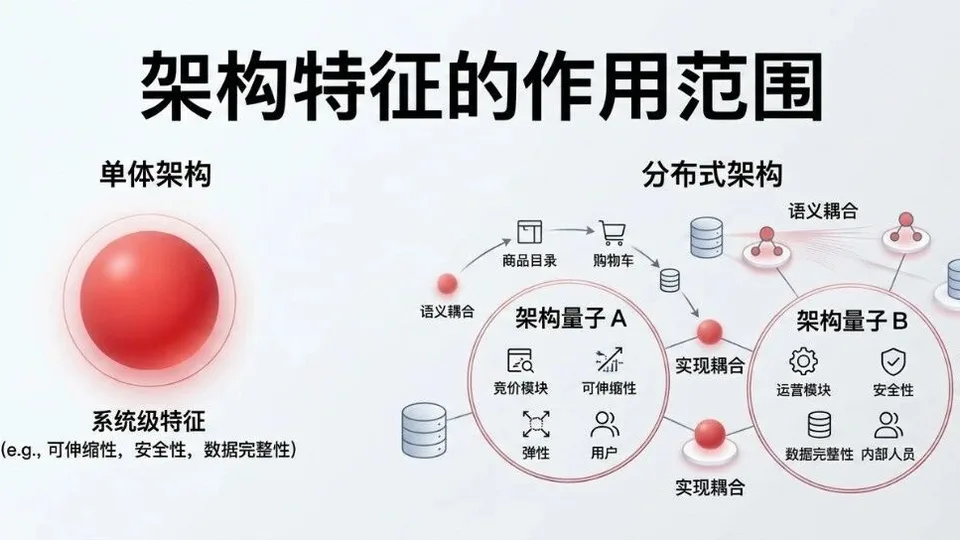
This article introduces architecture quantum as the boundary for architectural characteristics, explaining why system-level assumptions fail in microservices. It details four coupling types — semantic, implementation, static, and dynamic — and defines architecture quantum by four properties: independent deployability, high functional cohesion, low external static coupling, and synchronous communication, guiding architectural style selection.
This article explains three sources of architectural characteristics—domain concerns, project requirements, and implicit domain knowledge—and outlines a three-step process to extract explicit characteristics from requirements, supplement implicit ones from domain knowledge, and collaboratively select the top three driving characteristics that guide architectural decisions.
This article categorizes architectural characteristics (non-functional requirements) into four groups—operational, structural, cloud-native, and cross-cutting—detailing key attributes like availability, scalability, extensibility, security, and legal compliance to help architects build a systematic understanding of quality attributes that drive architectural decisions.