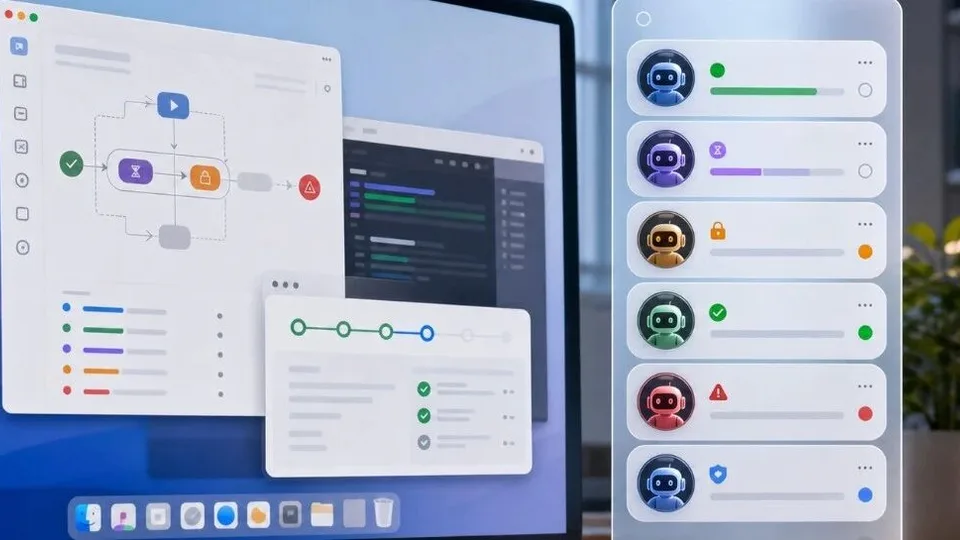
The article uses the ADHD metaphor to show how externalizing goals, breaking work into short stages, limiting concurrent agents, and defining clear acceptance criteria can turn the bottleneck of multi‑agent AI systems from generation to effective attention management.
This article introduces four open‑source AI Agent projects—Bernstein, Agent Chief, firstmate, and pi_agent_rust—detailing how each addresses a specific real‑world challenge such as audit‑grade traceability, interrupt‑free attention handling, coordinated team workflows, and low‑latency high‑performance code assistance, with installation commands, security features, and GitHub statistics.
The article analyzes how the rise of multiple autonomous coding agents transforms user interaction from simple notifications to a nuanced attention‑harness system that decides when and how agents may interrupt humans, proposing a structured front‑end scheduling layer to protect focus while ensuring necessary oversight.
The article argues that sustained, high‑quality attention, breaking large research tasks into small actionable steps, diligent record‑keeping, and steady incremental progress are far more critical to advancing graduate‑level research than raw talent or occasional inspiration.
In an age of information overload, understanding and applying the concept of entropy to filter and reject unnecessary data helps lower uncertainty, reduce mental load, and enable more focused, efficient decision‑making for a simpler, higher‑quality life.
This article shares practical strategies for developers to boost sustainable productivity by mastering attention, optimizing workflow cycles, improving physical health, decluttering workspaces, minimizing meetings, and prioritizing tasks using a simple four‑quadrant framework.