ChangjieTong transformed its SaaS‑based, multi‑tenant finance cloud platform by building a five‑layer observability stack on Alibaba Cloud CloudMonitor 2.0, integrating a UModel digital‑twin, and deploying AI‑driven inspection, self‑healing and capacity‑prediction loops, which lifted SLA from 99.9% to 99.995% and cut average fault‑resolution time from over 10 minutes to under 30 seconds.
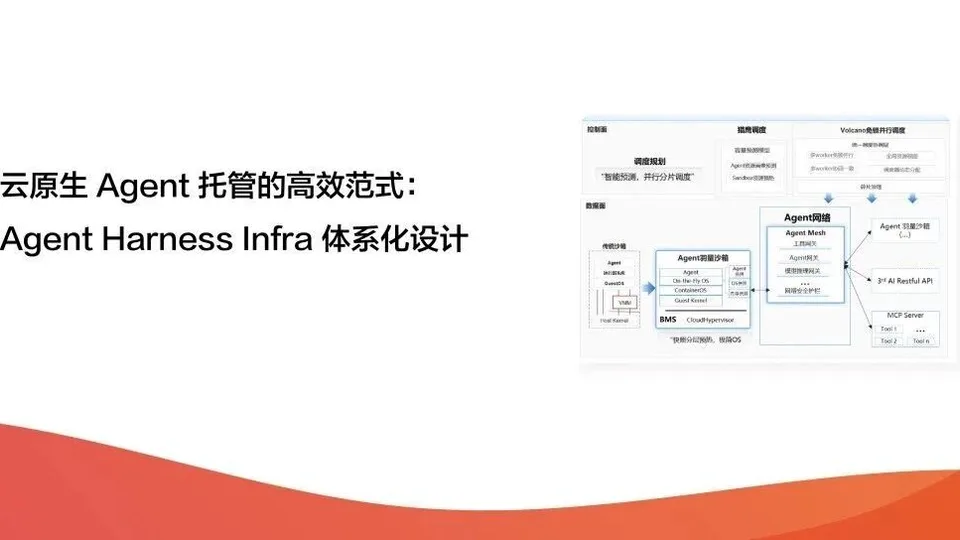
The article analyzes the challenges of deploying AI agents in cloud‑native environments—cold‑start latency, state persistence, and security isolation—and presents Huawei Cloud’s Agent Harness Infra, which uses capacity‑prediction, parallel scheduling, microVM‑based decoupling, and lightweight OS techniques to achieve up to 5× throughput, 100 ms startup and 80% warm‑start hit rates.
This guide walks through the evolution from noisy alert storms to intelligent AIOps, covering AIOps fundamentals, why it matters now, core capabilities like anomaly detection, root‑cause analysis, capacity forecasting and self‑healing, a practical implementation roadmap, toolchain suggestions, common pitfalls, and future trends.
This article provides a comprehensive overview of AIOps, covering its definition, evolution from manual to AI-driven operations, core capabilities, and real-world applications in capacity prediction, anomaly detection, and alarm merging, illustrated with case studies from a food‑retail giant and internal logistics.
This article presents a comprehensive study of applying AI, big‑data analytics, and automated pipelines to improve operational efficiency in the securities industry, detailing a custom intelligent ops platform, its layered architecture, and three real‑world scenarios—root‑cause analysis, knowledge‑base assistance, and capacity forecasting—along with experimental results and practical insights.