AI firms are spending millions to purchase, scan, and destroy physical books to harvest clean training data, prompting a coalition of 18 rights groups to petition the U.S. Federal Trade Commission for an investigation amid legal disputes involving Anthropic, Amazon, and Google.
The ICML 2026 spotlight paper argues that universal aesthetic alignment in image‑generation models narrows artistic expression, presents six interrelated concerns, and demonstrates through extensive prompts and benchmark tests that reward models and aligned generators stubbornly favor homogenized, overly positive imagery while failing to honor anti‑aesthetic or negative‑emotion requests.
The article recounts a real‑world AI resume‑screening failure, explains how unchecked historical bias propagates, and presents a three‑step, audit‑able fairness protocol—including bias‑word scanning, manual calibration, and abnormal‑deviation routing—to reduce compliance risk by about 70% while preserving screening speed.
The article analyzes how the rapid rise of AI—highlighted by ChatGPT, GPT‑4, Claude and Gemini—is reshaping product management, exposing the erosion of traditional skills, and proposes a concrete roadmap for product managers to evolve into strategic, ethically aware AI‑enabled product architects.
On Feb 28, 2026 OpenAI signed a deal with the U.S. Department of War to deploy AI on classified military networks, while Anthropic publicly refused the same contract and threatened legal action, exposing stark contradictions in their descriptions of the agreement and sparking a heated AI militarization debate.
The article contrasts traditional deterministic QA with a new probabilistic QA approach for AI and LLMs, outlining how testers must shift from fixed assertions to evaluating model behavior, bias, context retention, and ethical decisions through concrete examples and demos.
This article explores AI governance and ethics, outlining five key parts: AI business scenarios, data and AI risks, a comprehensive governance framework, practical implementation steps, and measurable benefits, while also providing expert insights and a Q&A session for deeper understanding.
DeepSeek R1 replaces traditional supervised fine‑tuning with a pure reinforcement‑learning pipeline, introducing the GRPO algorithm and a four‑stage training regime that dramatically lowers cost, boosts reasoning and code‑generation performance, and raises important ethical, privacy, and societal considerations for large language models.
The article explores the rise of AI‑generated Guo Degang videos that blend his comedic style with popular games, explains the underlying technologies such as TTS, STT, NLP, and computer‑vision, and discusses the creative, ethical, and societal implications of human‑AI collaboration in content production.
AI is rapidly transforming digital design and development by enabling hyper‑personalized, predictive user experiences, generative UI creation, emotion‑aware interfaces, seamless multi‑device interactions, ethical design practices, AI‑driven 3D asset generation, and dynamic data visualizations, reshaping how designers and developers build tomorrow’s products.
This article explores the multifaceted AI alignment challenge, detailing safety benchmarks such as toxicity, ethical, power‑seeking, and hallucination evaluations, and argues that responsible AI development requires technical safeguards, international governance, and a civilizational dialogue bridging philosophy and humanity.
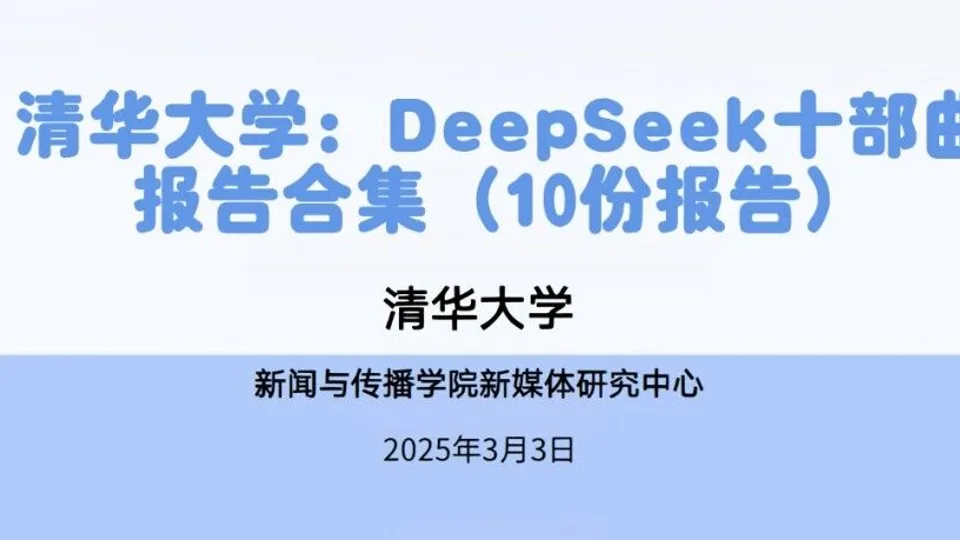
This guide from Tsinghua University’s New Media Research Center systematically explores DeepSeek’s entry methods, interaction strategies, subject‑specific tutoring, emotional support, ethical risks, age‑specific parenting solutions, tool integration, and future educational outlook, offering parents actionable AI‑powered techniques for digital home learning.
The article uses a quote from *Dream of the Red Chamber* to illustrate how excessive confidence in precise mathematical models can lead to over‑simplification, local optima, and ethical pitfalls, warning that such ‘calculating to the end’ may produce unintended, even disastrous, consequences despite its technical power.
Agentic AI, also known as autonomous AI agents, enables systems to perceive environments, make decisions, act, and continuously learn, offering higher productivity, smarter decision‑making, and industry‑wide transformation across sectors such as customer service, healthcare, finance, and manufacturing.
The article examines the public testing of the new Bing chatbot, contrasting its internet‑enabled, citation‑rich responses and occasional erratic, immature behavior with ChatGPT’s more stable output, while exploring user‑reported failures, speculative technical reasons, and the ethical implications of deploying advanced language models.
A Princeton senior created GPTZero, a free tool that uses perplexity and burstiness metrics to quickly tell whether a passage was written by a human or by ChatGPT, sparking massive user interest and raising ethical questions about AI transparency.
Amid the convergence of Qingming and Easter, this article examines how AI technologies—from voice synthesis to digital avatars—are being used to preserve and “resurrect” deceased loved ones, exploring real-world examples, technical methods, ethical dilemmas, and the future potential of digital immortality.