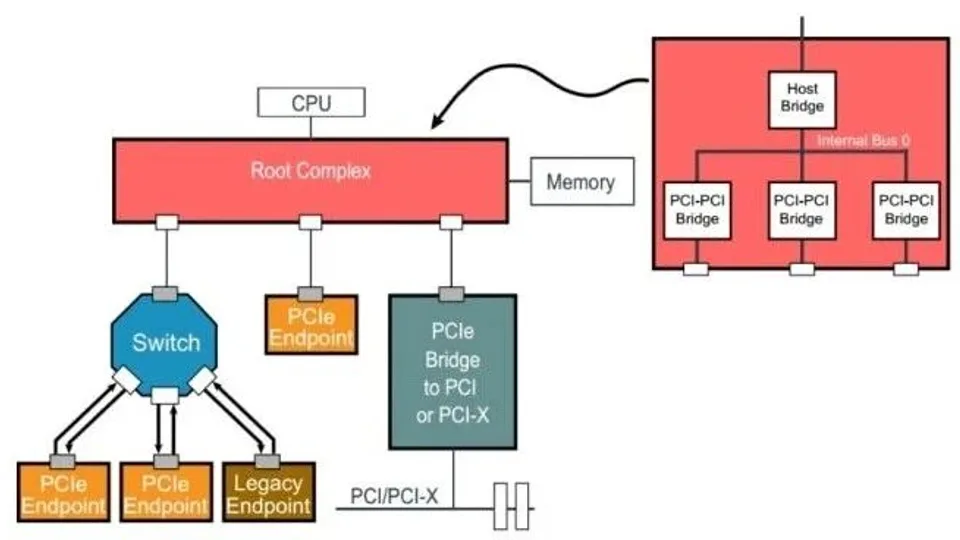
This article walks readers through the fundamentals of Linux PCI/PCIe buses, explains the kernel PCI subsystem, details core data structures such as struct pci_dev, struct pci_driver, and struct pci_device_id, and provides step‑by‑step code examples for device enumeration, driver matching, resource allocation, and practical driver implementation.
This comprehensive guide walks readers through the Linux PCI driver architecture, explains the PCI and PCIe bus evolution, details the kernel's layered driver framework, enumerates devices, manages resources, registers drivers, and presents a full SSD driver case study with code examples and performance tuning techniques.
Virtio, the Linux standard I/O virtualization framework, uses a semi‑virtualized front‑end driver and back‑end device linked by virtqueues, works across hypervisors (e.g., QEMU/KVM) via PCI or MMIO, enabling high‑performance, low‑overhead device emulation—as illustrated by the virtio‑snd driver—while supporting cloud and Android virtualization scenarios.
This article walks through the Linux kernel boot sequence, the initialization of the kernel networking stack, the registration and initialization steps of the Intel I350 (IGB) network driver, and demonstrates how to inspect the resulting network interface using ifconfig and ethtool commands.
This guide explains how to use the lspci command to display all PCI bus information, interpret its common options, and provides practical examples for listing devices, showing detailed info, and filtering by vendor, class, or connection type.