This article explains two practical screen‑adaptation methods—one based on the rem unit and another using CSS scale transforms—detailing their concepts, suitable scenarios, step‑by‑step setup, and full code examples for Vue3 applications built with Vite.
The article examines the shortcomings of conventional AI evaluation methods, introduces the concept of an "unknown" risk in production settings, and presents SCALE—a continuously updated, high‑fidelity benchmark that stresses large‑model SQL capabilities with real‑world incident data and mixed objective‑subjective scoring.
October 2025’s SCALE report introduces Ant Bailing’s trillion‑parameter models Ling‑1T and Ring‑1T, evaluates them across three dimensions—SQL optimization, dialect conversion, and SQL understanding—reveals Ling‑1T’s strength in domestic database conversion and Ring‑1T’s balanced performance, and provides expert commentary on their implications for AI‑driven database solutions.
This article explains how massive Transformer‑based large language models compress text data into mathematical representations, why scale, self‑attention, and training paradigms enable emergent general intelligence, and walks through tokenization, embedding, multi‑layer attention, architecture choices, energy costs, and hallucination mitigation.
The article explains how Java's BigDecimal class avoids precision loss by scaling numbers into integer representations, detailing its internal fields, the add method's branching logic, and a concrete test that demonstrates exact decimal addition for financial values.
A collection of Zhihu contributors share practical experiences and opinions on whether a single operations engineer can handle the massive scale of 40,000 servers, covering workload, automation gaps, budgeting, hardware failure rates, and the necessity of team‑based high‑availability practices.
The article outlines Microsoft’s experience and practical guidance for implementing large‑scale Agile and Scrum across a 4,000‑person development organization, emphasizing coordination, autonomy, continuous integration, DevOps, and leadership support to achieve sustainable, customer‑focused delivery.
The article outlines a three‑stage roadmap—Innovation 1.0, 2.0, and 3.0—detailing how large enterprises can systematically build, scale, and sustain innovation through strategic alignment, cultural cultivation, diversified innovation models, closed‑loop mechanisms, and ecosystem partnerships.
The article outlines five essential factors—strategic leadership, cultural alignment, mechanism assurance, platform empowerment, and collaborative ecosystems—that enable large enterprises to achieve scalable, sustainable innovation, illustrated with case studies from Tencent, Alibaba, 3M, and others.
This tutorial walks you through creating a Deployment YAML, customizing it, launching the pod, exposing it via a Service, performing rolling updates, rolling back, scaling replicas, and finally cleaning up, all with concrete kubectl commands and screenshots.
This article explains why Java's BigDecimal.equals method compares both numeric value and scale, demonstrates common pitfalls with == and equals, shows experimental results for different constructors, and recommends using compareTo for value‑only comparisons to avoid unexpected false outcomes.
This article demonstrates how to implement a multi-type RecyclerView adapter on Android that supports cross‑RecyclerView item dragging, scaling, and custom drag controls, providing code examples, interface definitions, and a step‑by‑step explanation of the underlying processes.
This article outlines the major challenges of large‑scale e‑commerce product data extraction—such as ever‑changing site formats, scalable architecture, performance throughput, anti‑bot defenses, and data quality—and shares the hard‑won lessons Scrapinghub gained after crawling over a trillion product pages.
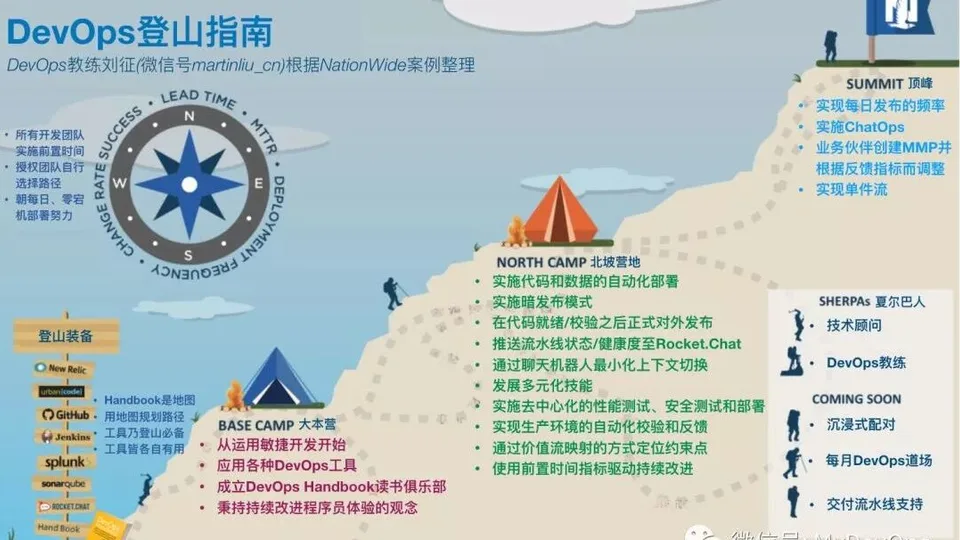
This article examines Nationwide's multi‑year DevOps transformation—detailing its massive IT organization, phased climbing‑metaphor roadmap, leadership and support models, concrete experiments that boosted developer experience and lead‑time, and a real‑world success during Hurricane Harvey.