

AI Agent Human-like Memory: Three-Layer Architecture Deep Dive
This article details a three-layer memory architecture for AI agents—Episodes for raw interactions, Entities for structured knowledge graphs, and Communities for abstract summaries—enabling long-term context retention, personalized reasoning, and efficient retrieval to transform agents from tools into reliable partners.
Reading font
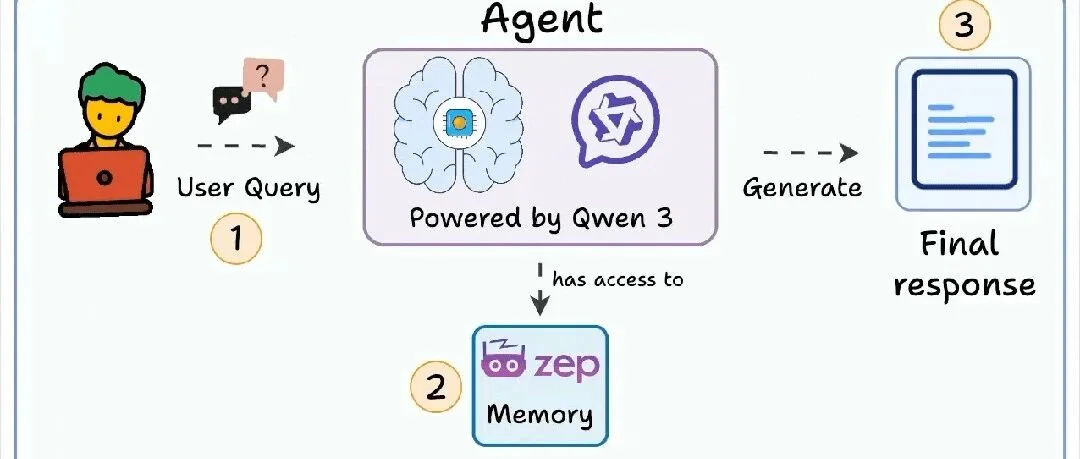
Core Workflow
The memory-driven workflow ensures every agent response is grounded in accumulated knowledge rather than isolated computation:
User Query : The process starts with user input (e.g., "How is the project we discussed last time progressing?").
Access Memory : The LLM-powered agent first connects to the memory system, retrieving relevant historical conversations, documents, entity relationships, and other information.
Generate Final Response : Combining retrieved memories with the current query, the agent performs deep understanding and reasoning to produce a context-aware, intelligent answer.
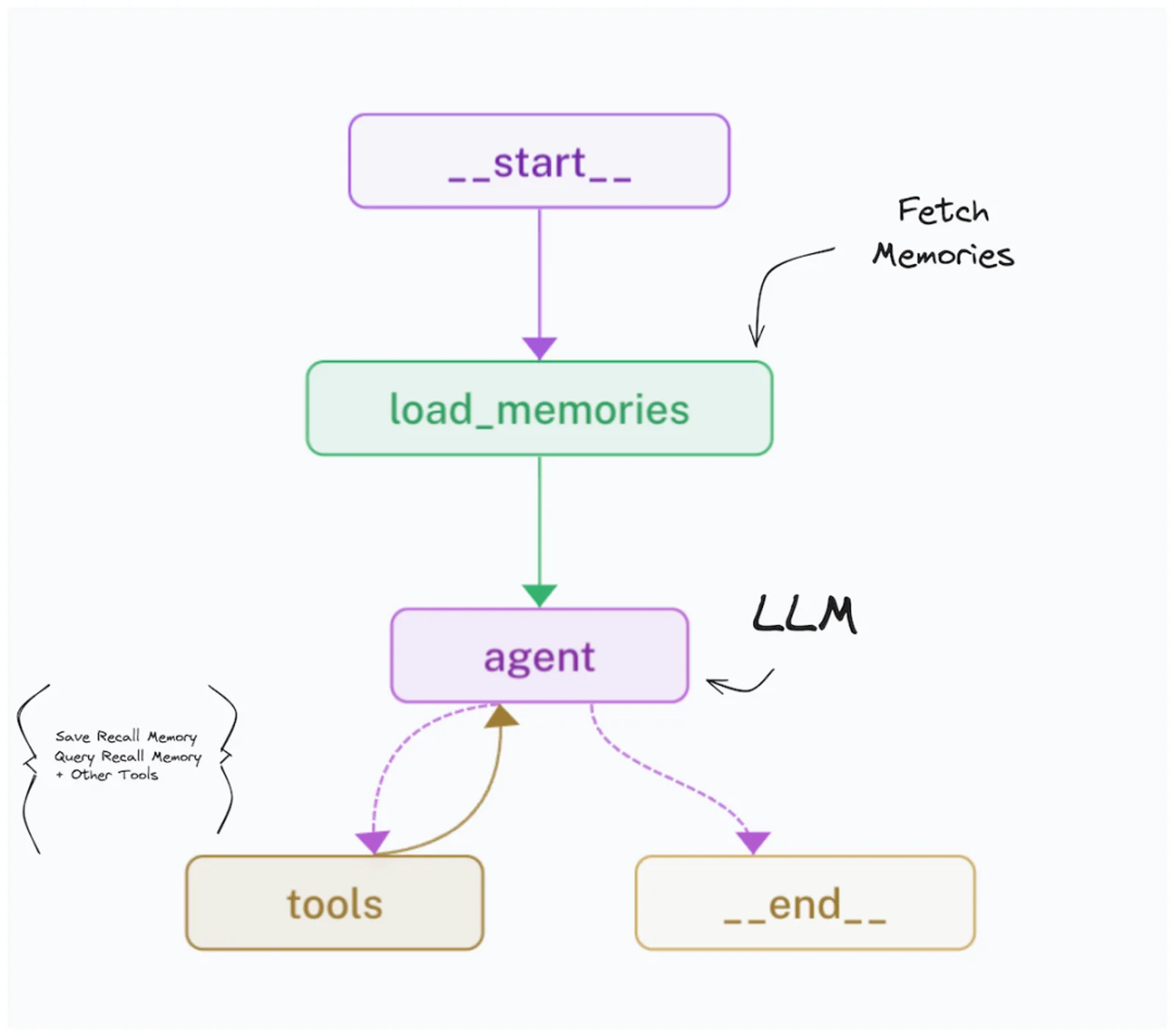
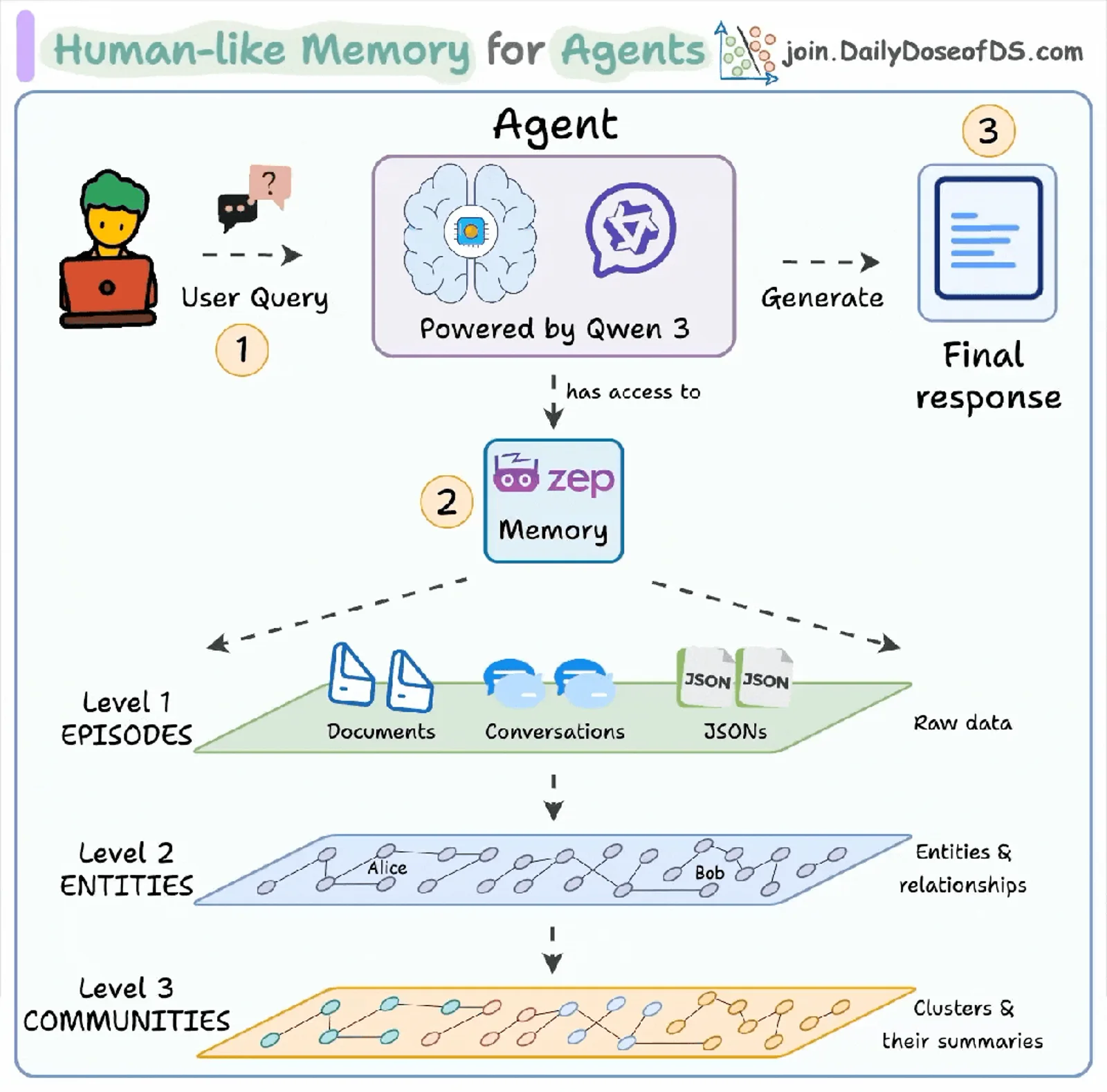
This flow mimics human memory processing, progressively refining raw information into structured knowledge and highly abstract summaries.
Three-Layer Memory Architecture
Level 1: Episodes (Raw Data)
This foundational layer acts like the hippocampus, storing all unprocessed interaction data for completeness and traceability. All higher-level memories originate here, allowing fact verification and source tracing.
Documents : External files the agent has read (PDF reports, web pages, knowledge-base articles).
Conversations : Complete chat logs with users, preserving original interaction context.
JSONs : Structured data from API calls or other external systems.
Level 2: Entities (Structured Knowledge)
Raw data is refined into a structured knowledge graph, transforming a disorganized library into a queryable relationship network. This dramatically improves retrieval efficiency and accuracy.
Entities : Key concepts automatically identified from Level 1 data (e.g., "Alice", "Bob", project names, companies, locations).
Relationships : Connections between entities (e.g., "Alice manages Bob", "Project A belongs to Team B").
Level 3: Communities (Abstract Concepts)
The highest cognitive layer performs deep clustering and pattern recognition on the entity graph, producing condensed summaries and insights for macro-level understanding.
Clusters : Tightly related entities and relationships grouped into thematic communities (e.g., all tasks, people, documents, and discussions around "Q3 Marketing Campaign").
Summaries : High-level abstracts for each cluster, letting the agent grasp complex topics instantly without re-reading underlying details.
Why This Architecture Matters
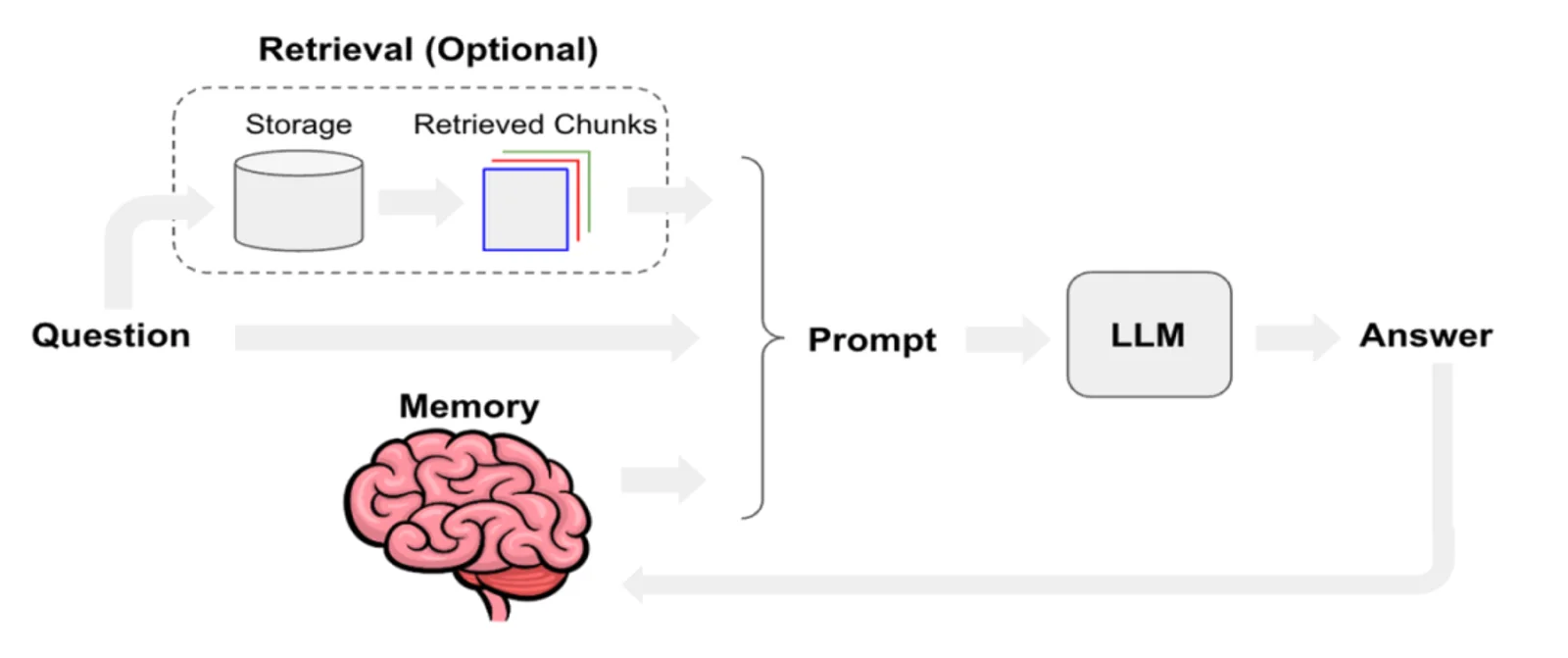
The layered design delivers four core advantages that shift AI agents from useful tools to reliable partners:
Deep Context Awareness : Agents remember long-term conversation history and user preferences, enabling natural, continuous dialogue.
High Personalization : Continuous learning builds an "entity-relationship-community" model of each user for truly tailored services.
Strong Reasoning : Structured memory networks allow integration of multi-source information to answer complex questions.
High Retrieval Efficiency : Progressive refinement turns "needle in a haystack" searches into targeted lookups, optimizing latency and resource consumption.
Conclusion
We are at a pivotal moment where AI agents evolve from tools into dependable partners. A robust, persistent, and continuously evolving memory system is the key enabler. The human-like memory architecture described here—mirroring the cognitive progression from concrete episodes to abstract concepts—provides a compelling blueprint for this transformation.
For questions about attribution, corrections or content rights, please contactand we will review it promptly.