

Alibaba, ByteDance, Tencent Jointly Define XPU Out-of-Band Management Standards
Alibaba, ByteDance, and Tencent have jointly released three specifications for XPU out-of-band management, covering Redfish interfaces for modules, PLDM/PDRs for cards, and capability requirements for devices without independent controllers, aiming to establish a common management baseline that reduces cross-vendor adaptation costs in heterogeneous AI infrastructure.
Reading font
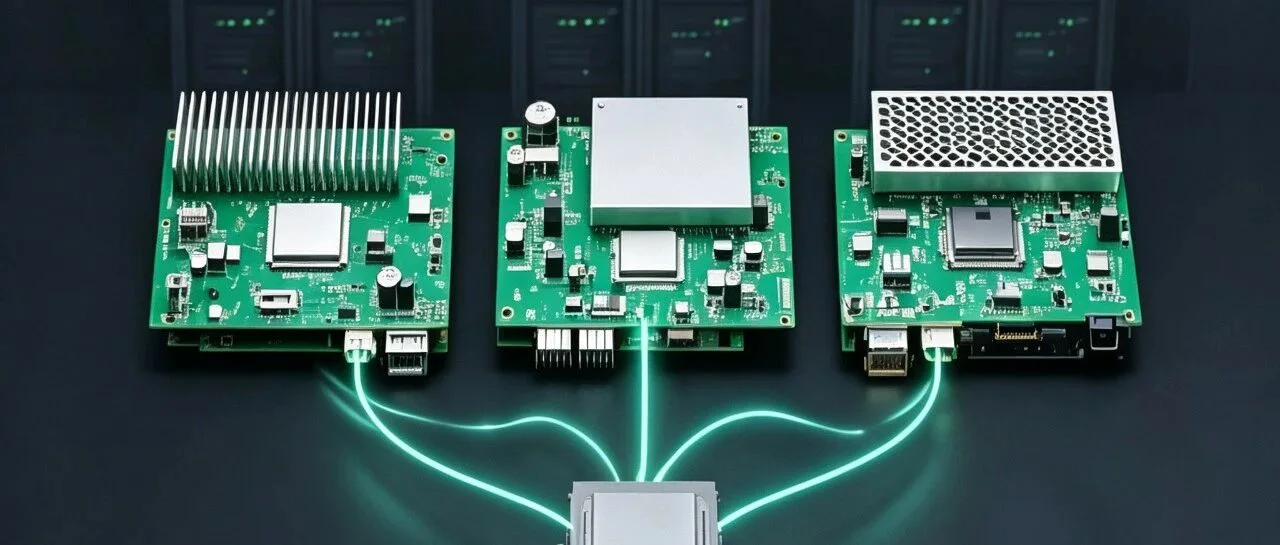
Background: Growing Heterogeneity Increases Management Complexity
Modern AI clusters integrate acceleration modules and cards from multiple vendors. While each device offers temperature, power, and health monitoring via proprietary tools, operations teams still face fragmented documentation, separate toolchains, and vendor-specific automation scripts when handling link degradation, anomalies, or bulk firmware upgrades. The core issue is not hardware diversity itself, but the lack of a consistent convention for common capabilities, data semantics, and operational behaviors.
Three Complementary Specifications Released
Alibaba, ByteDance, and Tencent — three major cloud and AI service providers — have jointly published three draft specifications targeting different hardware form factors and management paths:
1. XPU Module Standardized Redfish Interface Design Specification
Applies to modules with a dedicated module management controller (xMC). Built on the DMTF Redfish technology stack, it defines the resource model and operational behaviors between the host BMC and the module BMC. Coverage includes asset and health inventory, interconnect status, event notification, log collection, and firmware upgrade workflows. By standardizing resource relationships, data semantics, and task results, the host side can reduce per-vendor adaptation and make module state understandable and maintenance traceable.
2. XPU Card PLDM and PDRs Definition Specification
Targets PCIe standard cards, OAM modules, and similar form factors managed directly by the server BMC. It specifies the out-of-band communication channel and PLDM (Platform Level Data Model) protocol requirements, covering component asset information, firmware upgrade, accelerator management, and diagnostic file transfer. PDRs (Platform Descriptor Records) describe management objects, sensors, controls, and their associations. The specification further standardizes entity, sensor, and control identification and description so that the BMC can discover, read, and use device capabilities under common rules, eliminating the need to reinterpret vendor-specific data meanings.
3. XPU (Without xMC) Out-of-Band Capability Standard Specification
Addresses PCIe cards and other XPU devices that lack an independent management controller and are managed directly by the server BMC. It defines five capability categories — data collection, firmware upgrade, log collection, power and thermal control, and stability — with mandatory and recommended items. Beyond basic telemetry (temperature, power, memory errors, link status), it mandates upgrade package verification, upgrade result query, fault code retrieval, and chip diagnostic data access. It also constrains high-frequency access, message timeout recovery, and the impact of out-of-band operations on in-band workloads, ensuring management functions remain usable and resilient under continuous operation.
Design Philosophy: Standardize Common Capabilities, Preserve Innovation Space
Out-of-band management operates outside the business OS. Modules may expose Redfish via an xMC; cards may use PLDM. The three specifications separate capability requirements, protocol and data representation, and management interface conventions. This allows firmware, XPU, and operations teams to work against shared boundaries while hardware access, driver adaptation, and internal implementation remain vendor-specific. Vendors can continue innovating in chip architecture, interconnect technology, diagnostic depth, and reliability design, while presenting common management capabilities consistently. Extensions must follow the specifications' extension and compatibility rules to keep existing data and operation semantics stable.
Expected Benefits Across the Ecosystem
XPU and module vendors: Reduced redundant integration effort, freeing R&D investment for product capability and reliability.
Server and BMC vendors: More stable management baseline reduces per-model branching and enables reusable collection and maintenance workflows.
Cloud/AI service providers and operators: Consistent data semantics and operation results enable unified asset management, alert analysis, diagnostic collection, and upgrade orchestration. Supplier selection can focus on compute performance, reliability, and service quality rather than integration burden.
Automation and AIOps: Shared meaning for state, topology, errors, and operation outcomes provides a trustworthy data foundation for rule-based and intelligent operations tools to correlate evidence, propose remediation, and verify effectiveness.
The standards do not eliminate all hardware differences, nor replace vendor driver and software ecosystems. They make differences explicitly expressible, enable reuse of common capabilities, and facilitate sustained industry collaboration.
Collaboration Model and Next Steps
The three companies face large-scale deployment, continuous maintenance, and multi-vendor onboarding. Their engineering requirements are concrete: devices must be discoverable, states comparable, faults evidenced, upgrades traceable, and remediation verifiable. By pooling these shared needs, they provide a unified implementation direction for XPU, server, and BMC vendors, reducing duplicate integration and validation cycles.
The released drafts are a starting point for long-term co-construction. The specifications will evolve through review, implementation, and interoperability testing. The authors invite:
XPU and module vendors to contribute capability definitions, protocol implementations, and resource mappings, bringing device characteristics, diagnostic capabilities, and boundary conditions into the standards.
Server and firmware vendors to share adaptation experience, reference implementations, and interoperability test cases to ground the common conventions.
Cloud/AI service providers, standards bodies, industry partners, and developers to participate in reviews and suggest improvements, driving broader industry adoption.
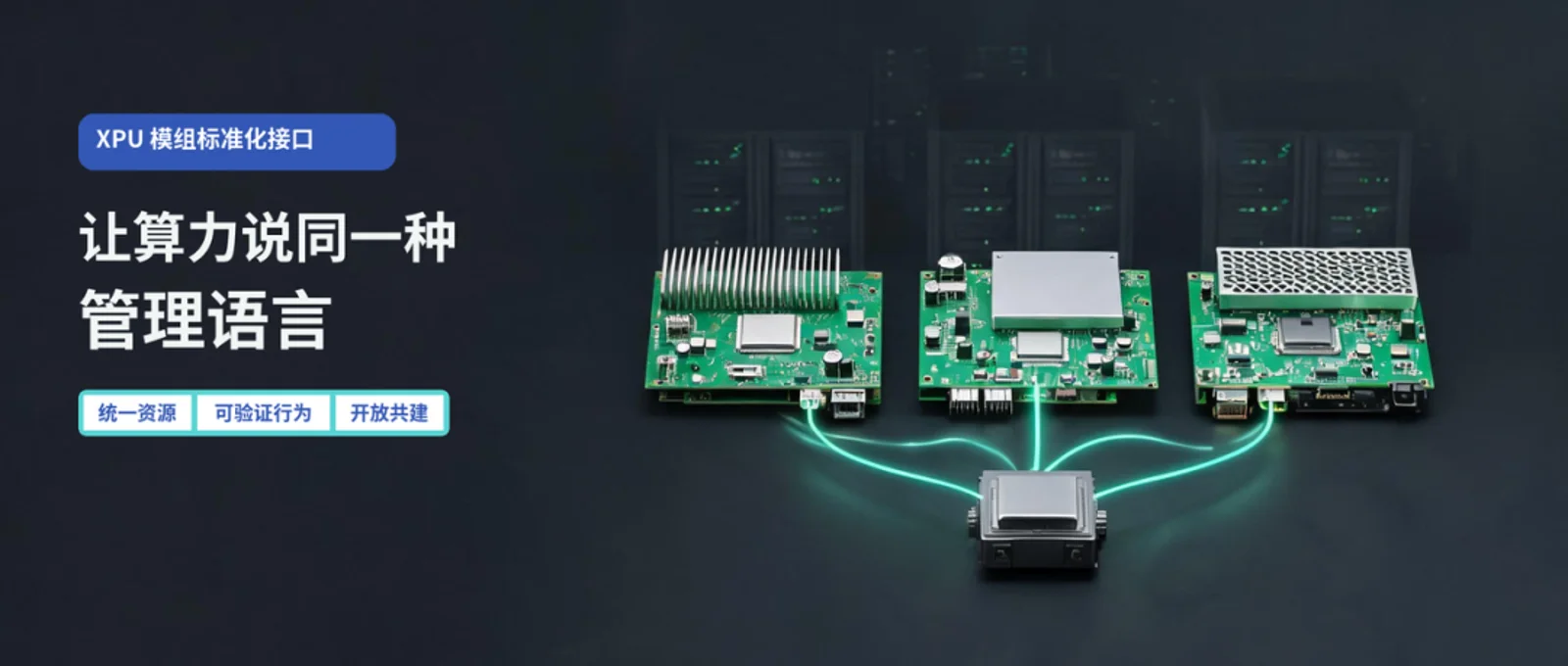
The goal is to let diverse compute products speak a common management language, enabling more innovations to reach production scale with lower integration cost.
For questions about attribution, corrections or content rights, please contactand we will review it promptly.