

Fields Medalist Yau: AI Finds Answers, Humans Ask the Next Questions
Fields Medalist Shing-Tung Yau argues AI will not replace mathematicians because truth is infinite; AI solves known problems while humans pose new questions, a division of labor that accelerates discovery. He views exponential AI growth as a golden age for Chinese mathematics and urges protecting curiosity and early AI education.
Reading font
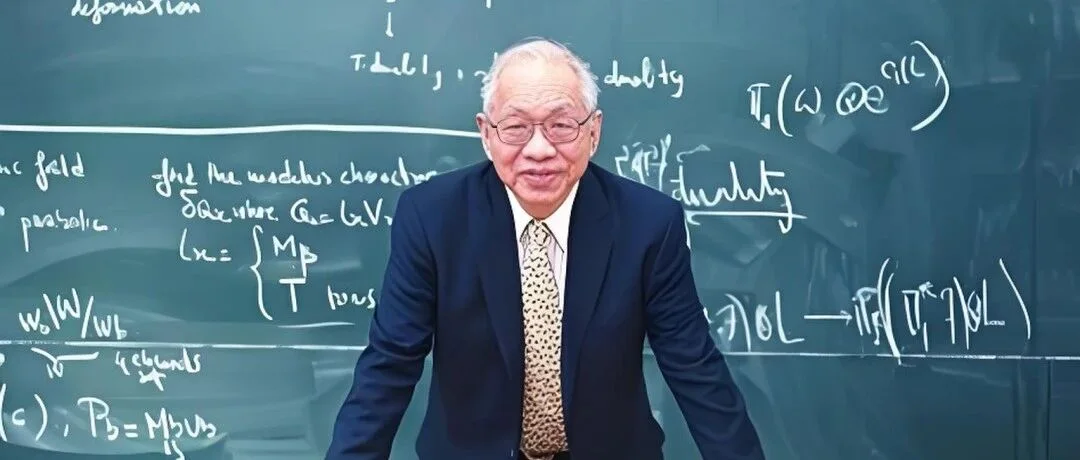
His Confidence Comes from a Simple Truth: "Truth Is Infinite"
Days earlier, an Anthropic mathematician announced using Claude to find a proof of the Generalized Riemann Hypothesis, releasing 4 pages of explanation and roughly 17 million lines of code. The Riemann Hypothesis has stood for 167 years as mathematics' "crown jewel." The ensuing debate centered not on the proof but on whether mathematicians would become obsolete. Asked in Shenzhen, Fields Medalist Shing-Tung Yau replied with a single sentence: "I am not worried at all that AI will replace humans."
Yau's bedrock is a plain methodological principle: "First you must remember truth is infinite." From Newtonian mechanics to Einstein and quantum mechanics, each era believed physics was complete, yet each breakthrough opened a larger frontier. In his view, AI does not reach the "end of mathematics"; it solves a portion of already-known problems. The division of labor is clear: machines find answers, humans ask the next question. He states directly: if AI can help us find mathematical truth, "I will absolutely use it." This is not compromise but collaboration.
Answer First, Then Ask "Why" — A Historical Norm
Many fear that AI delivers answers humans cannot understand. Yau counters that this pattern is historically routine: scientists often discover results first, then retroactively ask why they are correct. "Because after understanding we can ask the second deep question." Understanding is a process — use, then comprehend, then formulate deeper questions. He even encourages young researchers: if AI solves a problem you don't yet grasp, that's fine; solve it first, then study it later. The truly scarce resource has never been answers, but the "second question."
This Time Is Different: Exponential, Not Linear Growth
Past technology waves, however fast, progressed through a few breakthroughs — essentially linear. Yau judges the current wave as exponential: AI's depth in research is itself growing exponentially, at an unprecedented pace. Hence his urgency: "Now China is precisely in a golden age." He stresses AI's importance in commerce, national industrial foundations, and basic research — "this cannot wait." A mathematician saying "cannot wait" refers to basic science: without a solid foundation, any superstructure will eventually collapse.
Education Advice: Protect Curiosity, Start AI Training Earlier
This year Wang Hong and Deng Yu won the Fields Medal, marking a zero-to-one breakthrough for Chinese mathematicians. Yau sees this as a new starting point, with Chinese mathematics shifting from quantitative to qualitative change. Where does talent come from? His answer is simple: protect curiosity, let children truly master what they love — this supports original breakthroughs better than blind drilling. He also advocates moving AI cultivation earlier: not just from university, but from high school.
Conclusion: Solving Becomes Cheap, Asking Becomes Valuable
Returning to the core question: will AI replace mathematicians? Yau's answer is "not worried." Translated for a broader audience: AI makes "solving" increasingly cheap, so "asking" becomes increasingly expensive. Historically, a person's value lay largely in "can you solve it"; in the future, value will shift to "can you ask a question worth solving." The real anxiety should not be "will I be replaced" but "am I posing my own questions." Truth is infinite — true for mathematicians, and for every ordinary person.
Source: Xinhua News Agency "Yau Shing-Tung: The Golden Age of Chinese Mathematics in the AI Era," reporters Xiao Sisi and Bai Yu. Comments are the author's personal views. Author: Metaverse and Artificial Intelligence Thirty-Person Forum.
For questions about attribution, corrections or content rights, please contactand we will review it promptly.