

Robots' Last Exam: AI Models Master Tasks But Fail Full Jobs When Embodied
The Robots' Last Exam benchmark reveals that while frontier models like Claude Fable 5.2 complete 31% of real-world workflows in disembodied mode, all nine tested models score zero when controlling a physical robot, exposing a critical embodiment gap in long-horizon task execution.
Reading font
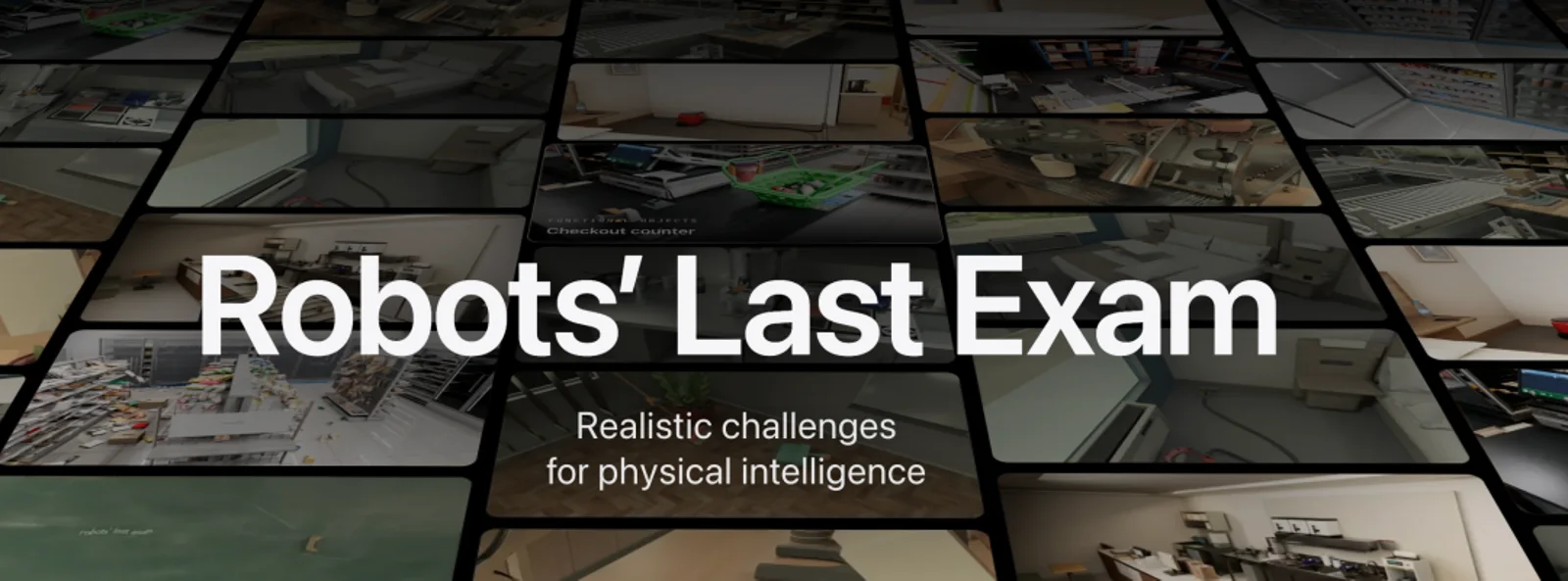
On November 28, Robots' Last Exam (RLE) was publicly released, presenting the first 10 real-world work scenarios and inviting the global agent and robotics community to co-build the benchmark. As frontier general models like GPT-6.2 Astra and Claude Fable 5.2 increasingly serve directly as robot "brains," they achieve high scores on traditional embodied benchmarks. Yet a core question remains: does scoring well on tabletop tasks mean a model can actually hold down a real job?
Benchmark Overview: Two Modes, Divergent Results
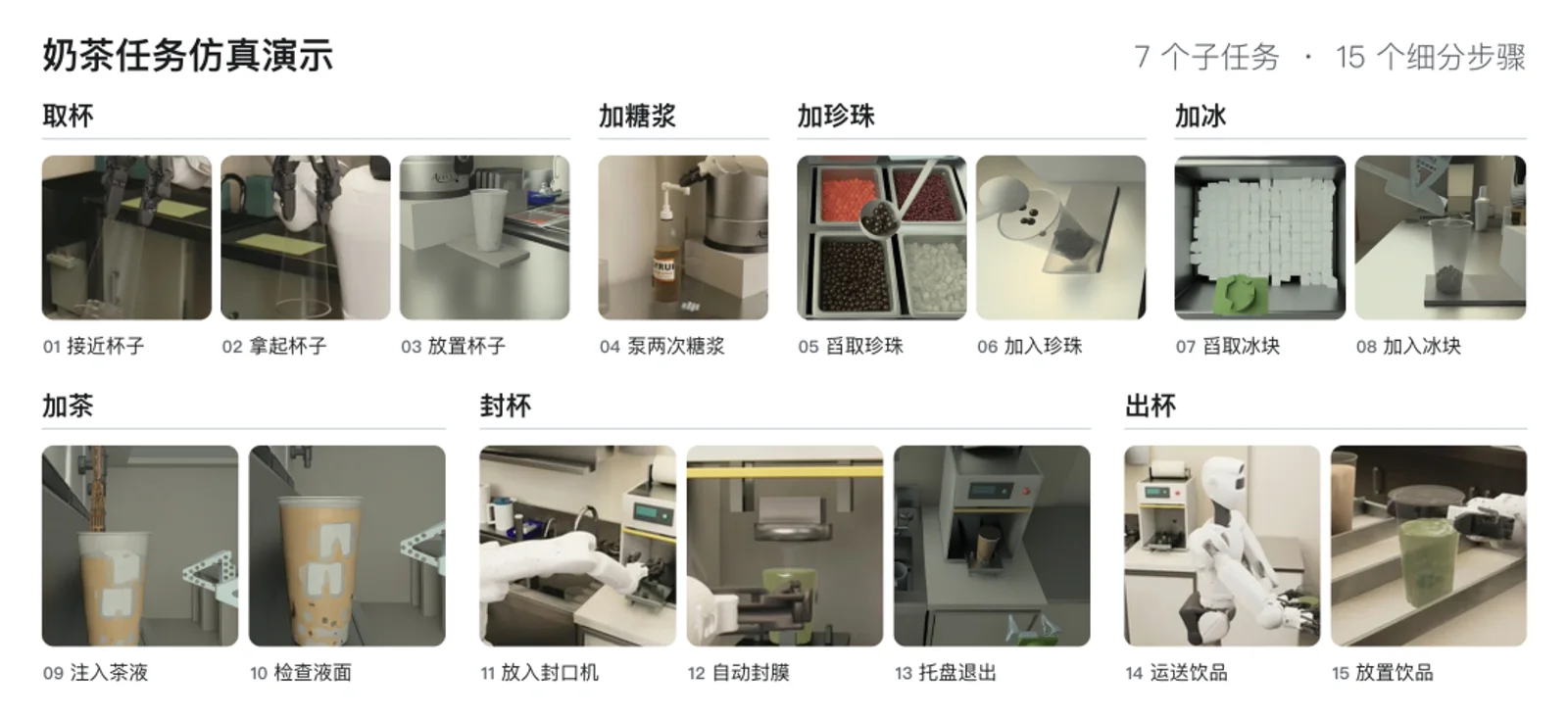
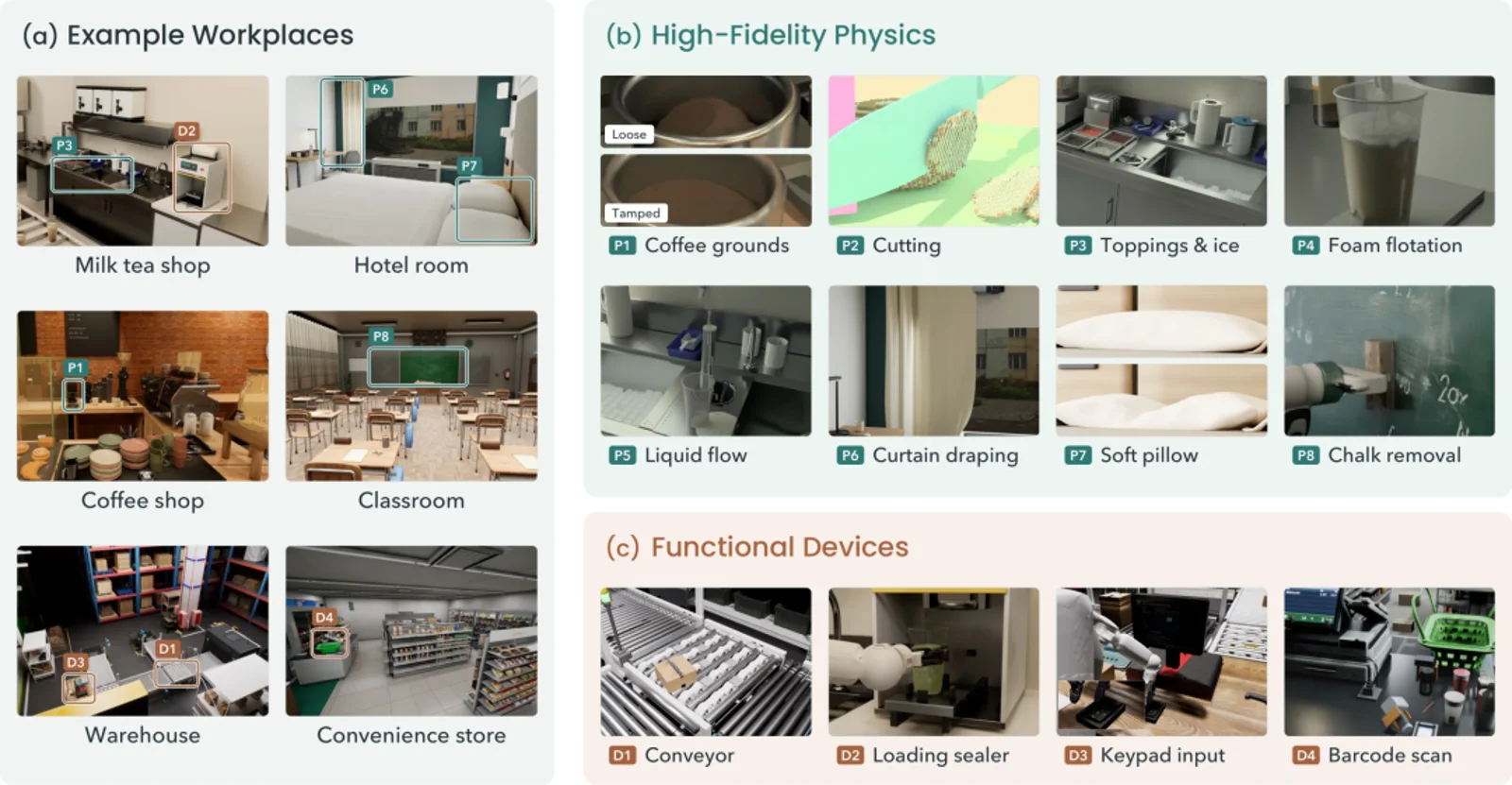
RLE reconstructs complete professional workflows from real occupations in simulation — making bubble tea, brewing coffee, cashier scanning — and evaluates models as "new hires" with no step-by-step instructions, only final deliverable verification. The first round tested 9 models across 8 scenes covering 16 full workflows under two modes:
Agent Mode (disembodied): Models control two independent floating grippers and a movable camera, removing joint and base constraints. Claude Fable 5.2 completed 5 of 16 tasks (31.25%) , Claude Opus 5.5 completed 2, GPT-6.2 Astra completed 1 — proving top models' "brains" can preliminarily execute a real job end-to-end.
Embodied Mode: The same 9 models drive a simulated mobile dual-arm robot (Astribot S1) under real joint constraints. All models, including Fable 5.2 and GPT-6.2 Astra, scored 0% — none completed any task.
Why Fable 5.2 Succeeded in Agent Mode: A "Reprogramming" Strategy
Under the rigorous Agents' Last Exam protocol — each model×task×mode combination initialized fresh, run once, independently verified — Fable 5.2 displayed a distinct behavioral pattern. In long-horizon tasks, it allocated 38% of tool calls to coding and file operations (beyond 60% robot motion), while pure visual perception was minimal. For example, Fable performs image processing to "see more clearly." Even on independent subtasks, its coding/file-operation share reached 36% (only MiniMax M3.1-Flash showed 14%; others 0%).
By contrast, GPT-6.2 Astra, Qwen4-Max, and Kimi K3.1 Pro spent 83–87% of effort on direct motion commands and 13–17% on repeated sensor checks, with 0% coding/file operations .
This success is expensive: Fable 5.2 averaged ~5 hours per full workflow , consuming ~54 million input tokens and ~850 thousand output tokens . It does not generate a fixed plan upfront; instead it performs massive visual observation, state checking, and dynamic correction during execution.
The Subtask vs. Full-Workflow Gap: Error Accumulation
On 80 independent subtasks (starting from correct intermediate states), performance gradients were far shallower: Claude Opus 5.5 achieved 48.75% subtask success but only 2 full workflows; GPT-6 Astra, Gemini 4 Carbon, and Qwen 4 Max each cleared >20% subtasks yet scored 0 on full workflows.
The fundamental difference is the starting point . Subtasks begin from a preset correct intermediate state; full workflows chain each step's physical outcome as the next step's input. A tiny deviation — coffee grounds not tamped, tea volume slightly short, cup misplaced — becomes a "landmine" propagating to final verification. Mastering each step in isolation does not guarantee job delivery. When joint kinematics and constraints are added (Embodied Mode), the dual coupling of perception/planning with low-level control stops all models at the starting line.
Benchmark Design: From Real Jobs to Executable Exam Questions
RLE sources tasks from Anthropic's economic study "What work can robots do?" and the O*NET occupational database, screening 5,070 candidate tasks. The team expands each occupational description into executable requirements using employee manuals, recipes, equipment specs, and worker videos. For "make a latte," this defines materials, equipment, step norms, and inter-step dependencies.
Completion criteria borrow from GDPval: each workflow has concrete deliverables and acceptance conditions — drink matches recipe and volume, scanned items enter correct transaction records. The evaluator checks results, necessary process constraints, and result stability.
Steps are modeled as dependent subtasks with state checks at phase boundaries (grinding → tamping → extraction → steaming → pouring). Subtasks can also be tested independently from set intermediate states, enabling separate validation of full delivery vs. local operation.
The core difficulty: the agent must understand why each step is done, to what standard, and what conditions it leaves for the next step .
Environment Reconstruction: Scenes, Physics, and Functional Devices
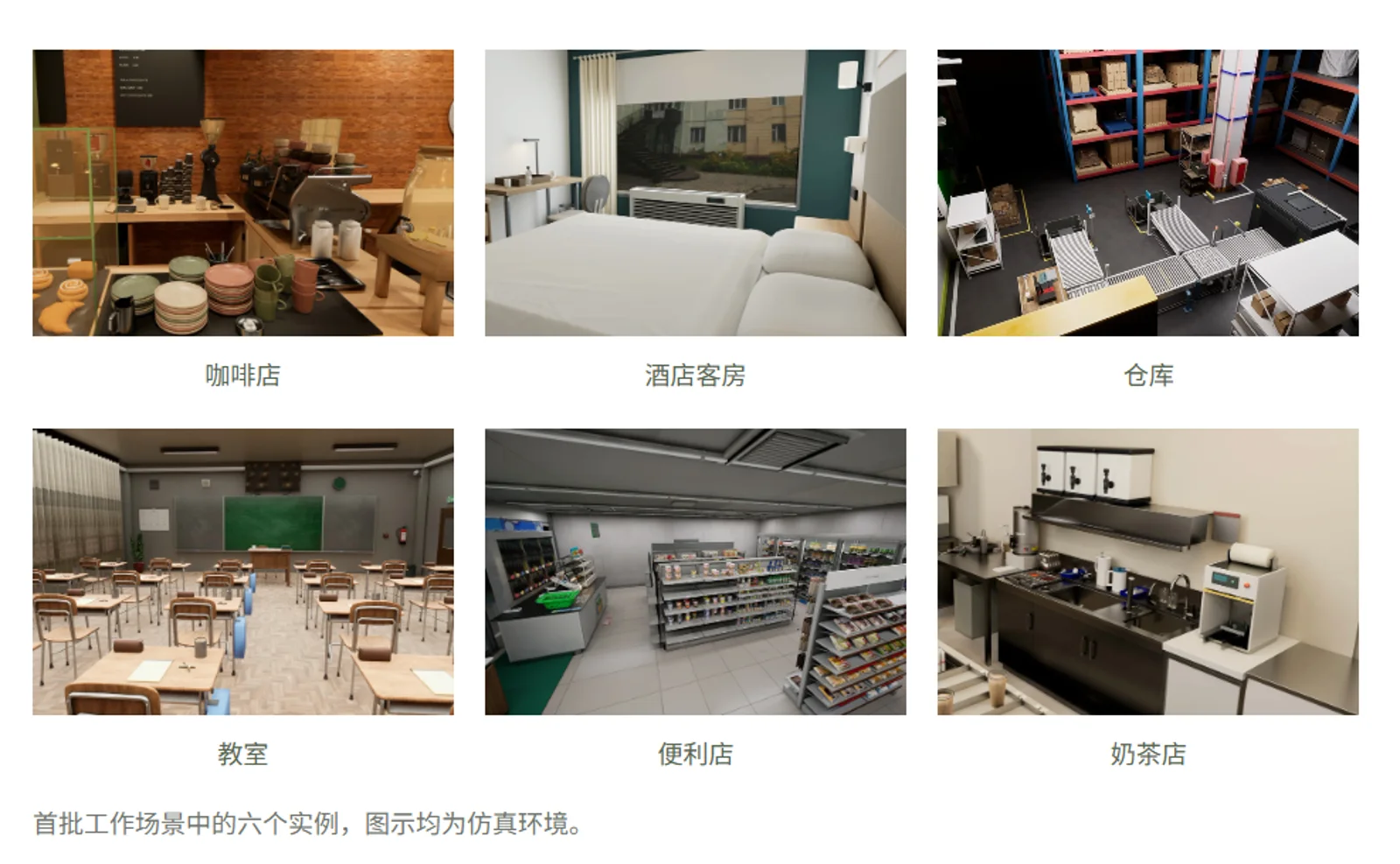
RLE rebuilds workplaces from real operation videos/photos. Building agents construct layout, objects, devices; reviewer agents compare renders against references, correcting labels, controls, and movable parts. Details matter: whether a straw inserts through the lid, which direction a sealer tray moves, how far a cabinet door opens — all affect executability.
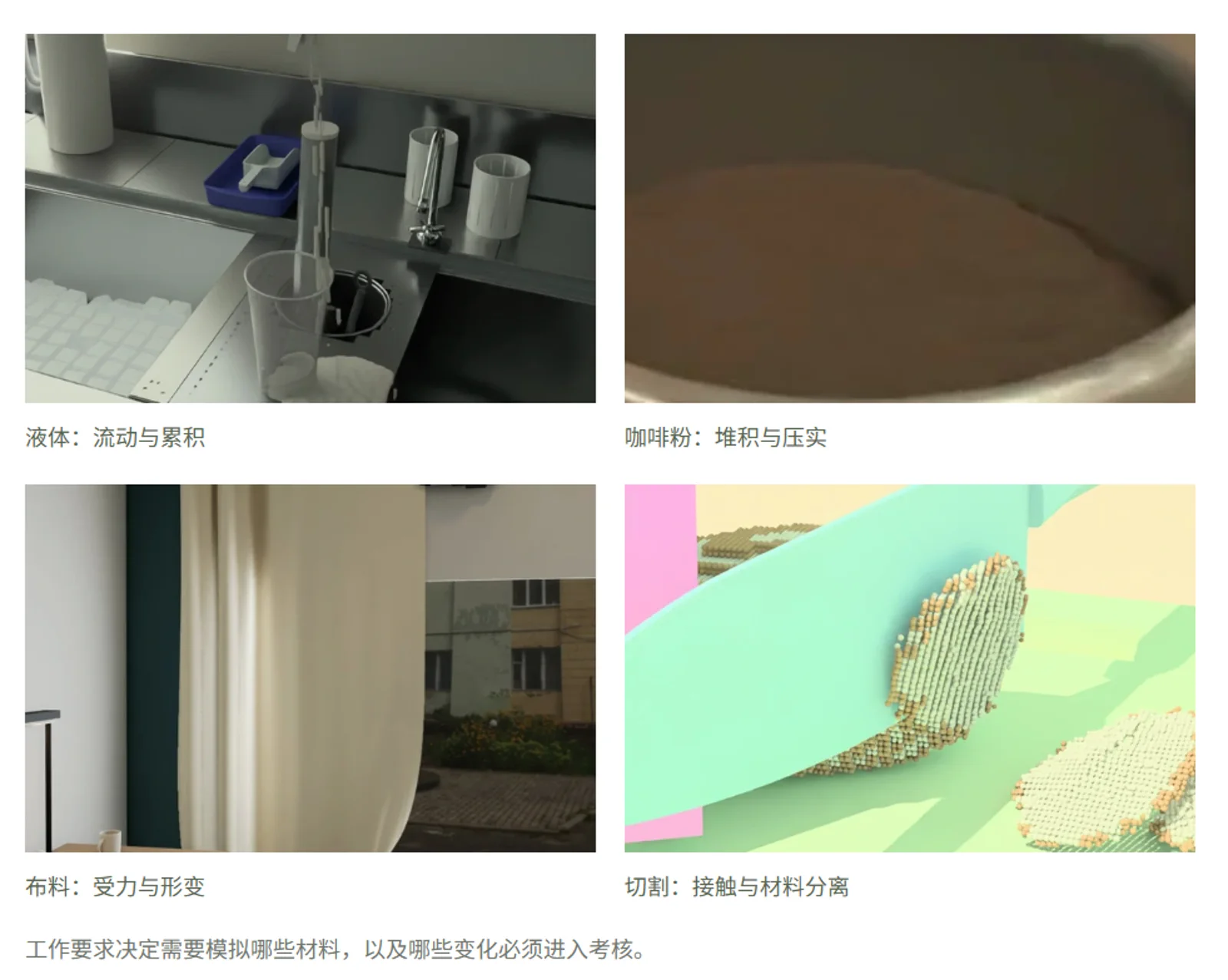
Physics: Liquid rises as poured; coffee grounds compact under pressure; fabric deforms with grasp. These changes affect subsequent actions and final acceptance. RLE uses a multi-physics framework built on Newton and Warp, assigning appropriate solvers for fluids, granules, flexible materials, and rigid bodies, coupled so materials, tools, and containers exert forces on each other. Physics thus enters the workflow: poured volume, compaction degree, grasp stability become verifiable outcomes.
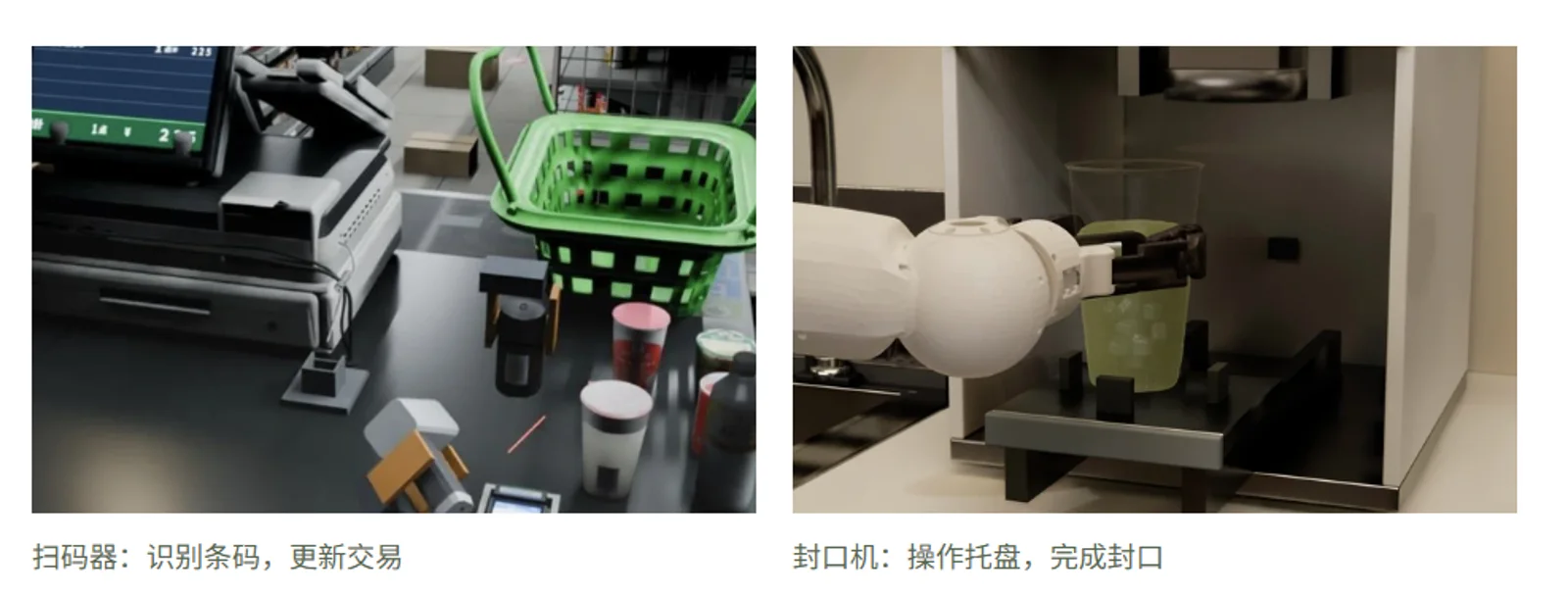
Devices: Unlike typical simulation assets that only mimic appearance, RLE implements operational conditions, internal states, and feedback per equipment manuals. A barcode scanner reads the current camera view on button press, updates transaction records and POS screen; misaligned codes yield no output. The model must align, trigger, and confirm entry. Sealer trays, coffee machine menus, and dispensing programs each carry their workflow functions.
Every workflow is pre-validated: a reference agent with simulator-state access executes it fully, confirming all phases complete in dependency order.
Sim-to-Real Correlation: Paired Experiments on Physical Robot
To address the sim-to-real gap, the team ran paired trials on three physically distinct tasks using the same ARX dual-arm robot:
Pouring water (fluid): container tilt angle controls flow rate and target fill.
Erasing whiteboard (sustained contact): eraser-board contact determines ink removal per stroke.
Lifting trash bag (flexible deformation): bag deforms as gripper closes, weight transfers from table to gripper.
Scene dimensions, camera calibration, gripper geometry, and motion conventions were matched. Policies used Code-as-Policy : GPT-6 Astra generated Python control programs, debugged in simulation, then frozen with perception prompts. At execution, the program calls the model at specified stages to compute 3D targets from RGB-D; remaining motions use inverse kinematics, velocity-limited interpolation, and joint feedback. Identical programs ran on both sides, judged by the same task standards.
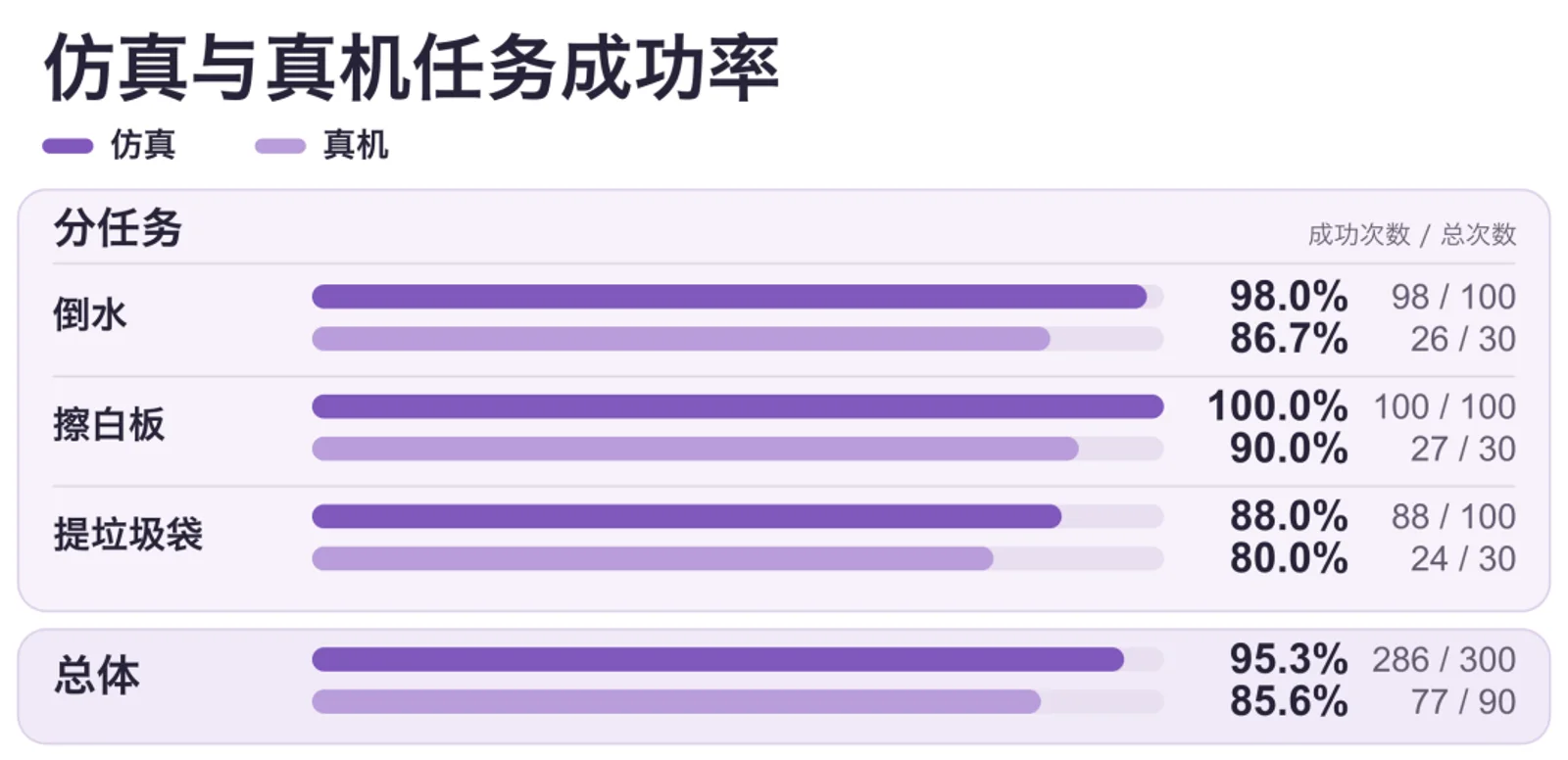
Results: policies tuned in simulation transferred to the real robot with 85.6% overall success rate . All three tasks showed real-robot success rates slightly below simulation, gaps of 8–13 percentage points. Beyond success rates, the team recorded physical quantities used for pass/fail — pour deviation, residual ink area, lift-off height — to compare outcome fidelity. This indicates RLE's simulated physical consequences correspond well with reality. Extending sim-real correlation to more materials, devices, and robot bodies is a key future direction, differentiating RLE from prior simulation-only benchmarks.
Community-Driven Robots' World Expansion
RLE invites three groups to co-build:
Frontline practitioners contribute real workflows and delivery standards.
Developers worldwide build scenes, materials, and functional devices.
Robotics researchers expand sim-to-real validation.
New content undergoes the same pipeline: scene/function checks, reference execution, acceptance verification. Approved additions enter the unified evaluation protocol. New models are tested under identical rules; results continuously update the public leaderboard.
RLE's long-term goal is not a fixed test suite but a continuously expanding, comprehensive, diverse Robots' World that can host real work. Every added work environment, operable device, or real workflow brings the robot exam closer to actual society. The team hopes RLE becomes a representative capability assessment before general-purpose robots enter real-world deployment at scale.
For questions about attribution, corrections or content rights, please contactand we will review it promptly.