

SoftBank's $1T SK Hynix Bid: A Strategic Probe for AI Memory Control
The article analyzes SoftBank's abandoned $1 trillion acquisition attempt for SK Hynix, revealing it as a strategic probe to secure high-bandwidth memory (HBM) for its AI empire spanning chip design (Arm), processors (Graphcore, Ampere), models (OpenAI), and infrastructure (Stargate), while highlighting financing, governance, and geopolitical barriers.
Reading font
SoftBank's $1 Trillion SK Hynix Bid: A Strategic Probe
According to a November 20 report by The Information , SoftBank CEO Masayoshi Son explored a $1 trillion acquisition of SK Hynix, the world's second-largest memory chip maker. SoftBank quickly stated the idea was "no longer under active consideration," and SK Hynix said it was unaware of any approach. The $1 trillion figure represents a 1.7× premium over SK Hynix's $577 billion market capitalization on November 20. For comparison, the largest recorded tech acquisition is SpaceX's planned $250 billion purchase of xAI in 2026. SoftBank's balance sheet is already stretched by massive bets on OpenAI and the Stargate joint venture; the company recently sold all its Nvidia shares and is leveraging its Arm stake to raise cash.
Major obstacles make the deal implausible: financing a trillion-dollar transaction, SK Hynix's chaebol governance structure, and the South Korean government's stance that memory production is a strategic national asset. No price negotiations or term sheets occurred; the episode appears to be an early-stage exploration to gauge market appetite for funding a memory-chipmaker acquisition.
What Masayoshi Son Wants: Completing the AI Stack
Industry observers see the move as a signal of Son's ambition to own every layer of the AI value chain:
Chip design IP: Arm, whose architecture underpins most AI processors and whose neutral licensing serves the entire industry.
AI processors: Acquisitions of Graphcore (2024) and Ampere Computing (2025), plus a sizable Intel stake.
Model layer: A massive commitment to OpenAI.
Infrastructure: Nearly $500 billion invested in the Stargate joint venture, purchase of data-center investor DigitalBridge, and majority ownership of SB Energy (data centers and power).
The missing layer is memory. High-bandwidth memory (HBM) has become a critical bottleneck for AI accelerators and the data centers that house them.
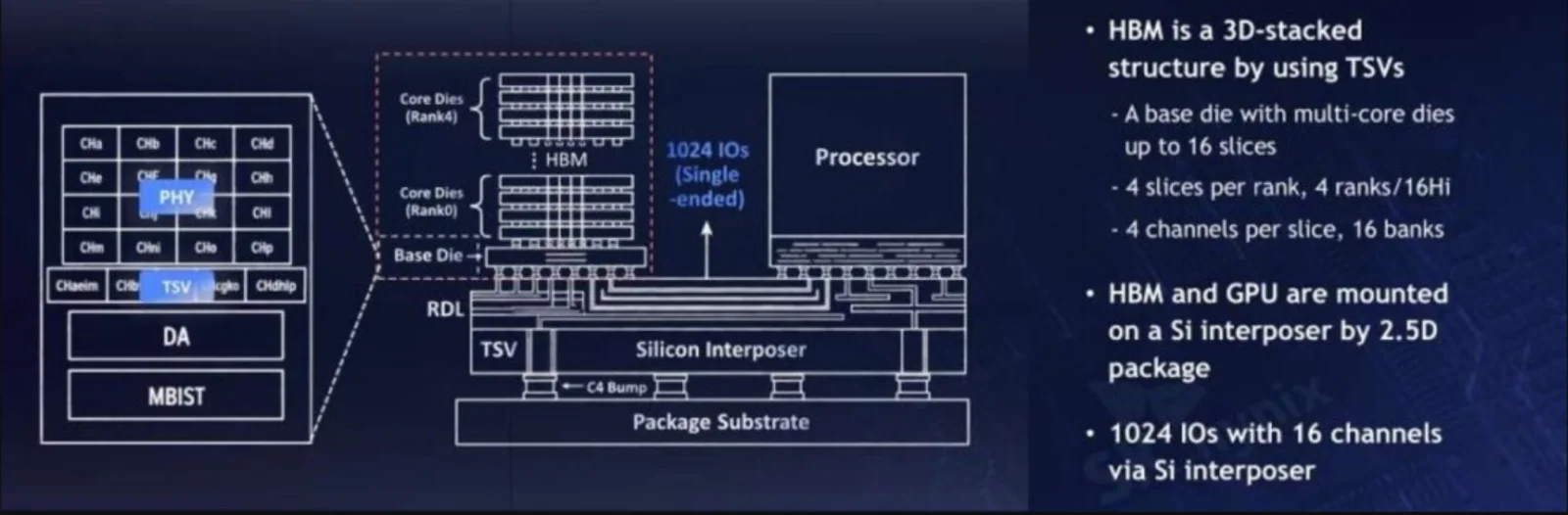
SK Hynix is the HBM pioneer. Its HBM revenue more than doubled year-over-year in 2025. Nvidia is its largest customer, accounting for 14.8% of revenue in Q1 2026, and TrendForce estimates Nvidia will direct roughly two-thirds of its HBM4 orders to SK Hynix. Owning a leading memory supplier would extend SoftBank's reach across the entire AI supply chain.
However, SK Hynix is not for sale, and Son does not need to acquire it outright. The public probe served as free due diligence: by floating an audacious $1 trillion figure, Son tested the market's willingness to finance a memory-chipmaker deal. Retreating afterward means any future minority investment or lower-priced acquisition would look like a concession.
Source:
https://www.eetimes.com/the-enigma-of-softbanks-1-trillion-sk-hynix-buyout-attemptFor questions about attribution, corrections or content rights, please contactand we will review it promptly.