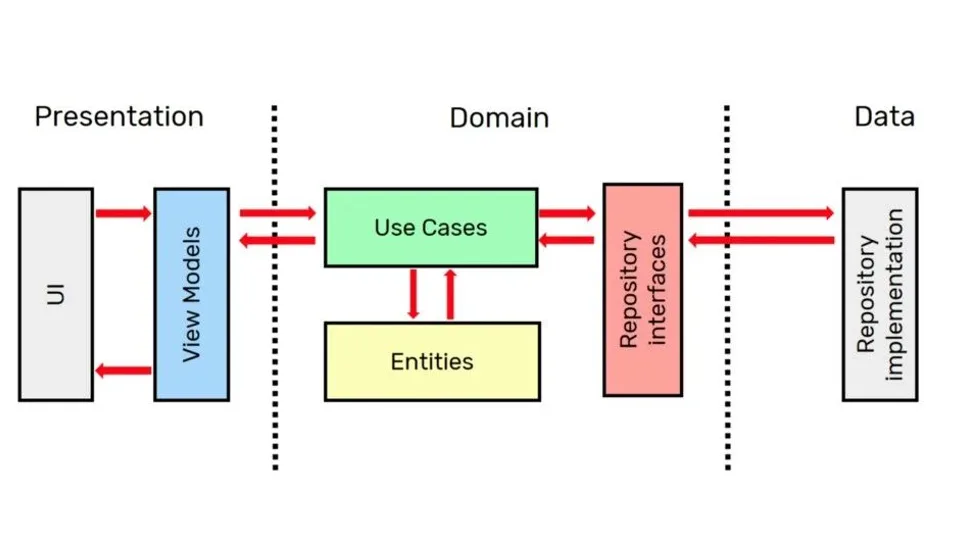
Even a minor UI adjustment, like reshaping a product list or tweaking a cart button, can trigger crashes, state loss, and hard‑to‑track side effects in Android apps; this article explains why solid architecture—separating concerns with Clean Architecture, SOLID principles, and layered design—prevents such disasters and eases future migrations.
Google’s latest Android Canary update enhances the Linux Terminal app with a new “Display” button, enabling the VM to forward graphical output so users can run Linux GUI programs like Doom via the pre‑installed Weston compositor, and optionally activate hardware acceleration through a simple file‑based toggle.
This guide demonstrates how to locate a target .so library’s base address on Android, compute the offset of a native method, and use the ShadowHook framework to hook the function, replacing its implementation with a stub that always returns true, complete with CMake setup and Java loading steps.
This article explains how the Skyline rendering engine improves WeChat Mini Programs by eliminating first‑frame white screens, accelerating page transitions, and delivering native‑like experiences through data pre‑loading, animation techniques, and detailed migration steps.
This guide outlines twelve frequent mobile‑web problems—from 1 px borders and 300 ms click delays to safe‑area padding and image‑loading performance—and provides concise CSS or JavaScript solutions that developers can apply instantly to improve user experience across devices.
This article explains how R8’s ApiModel optimization can generate a redundant new‑instance bytecode that triggers class initialization failures, why synchronized or try‑catch blocks also cause the issue, and presents four practical solutions including disabling ApiModel, official patches, custom fixes, and business‑level refactoring.
This article demystifies Jetpack Compose’s LayoutNode, explaining its role as the runtime representation of composable UI elements, the three‑layer node architecture, how it interacts with Modifier.Node, the rendering pipeline, and provides practical code examples for creating efficient custom layouts.
Users of China Mobile have reported that their phone status bars suddenly display promotional messages instead of the usual carrier name, a phenomenon tied to PLMN codes and NITZ broadcasts, with carrier‑mandated custom logos and messages raising compliance and user‑experience concerns across iOS and Android devices.
This article explains why caching is critical for modern Android apps and walks developers through eight robust caching strategies—ranging from in‑memory and SharedPreferences to file, Room, multi‑level, TTL, and HTTP caches—complete with Kotlin implementations, real‑world usage examples, pros and cons, and best‑practice guidelines for production.
Jetpack Compose dramatically improves Android UI development by offering declarative syntax, faster development cycles, reduced code size, superior performance benchmarks over RecyclerView, advanced state management with Snapshot System, powerful animation APIs, modular architecture techniques, and practical migration strategies, while also highlighting its limitations compared to traditional View and HarmonyOS ArkUI.
An in‑depth comparison of the Koin and Hilt dependency‑injection frameworks evaluates adoption trends, design philosophies, learning curves, performance, developer experience, testing, multi‑platform support, and ecosystem integration, helping Android teams decide which solution best fits their project size and requirements.
This article details the two‑month end‑to‑end development of Alipay's AI Travel Assistant, describing the product concept, technical background, adoption of the xUI interaction framework, gRPC streaming, Kotlin Multiplatform integration, migration challenges, performance metrics, and future roadmap.
This article details the end‑to‑end development of Alipay’s AI Travel Assistant, covering product conception, the migration to a unified xUI 1.0 framework, the adoption of KMP for cross‑platform UI, the shift from RPC + SYNC to gRPC streaming, and the challenges of card‑ecosystem migration, all achieved within a two‑month sprint by a four‑person client team.
Google’s Android 16 QPR2 Beta 1, released in August, brings intelligent dark‑mode inversion, forced themed icon colors, parental‑control settings, improved data migration, PDF annotation, and Bluetooth LE audio sharing, with Pixel beta users receiving the update now and a full rollout slated for later this year.
This article explains Jetpack Compose's rendering pipeline, the recomposition mechanism, and the concept of stability, then provides practical strategies—such as using immutable data, applying @Stable/@Immutable annotations, and optimizing large lists—to reduce unnecessary recompositions and improve Android UI performance.
This article presents eight essential caching strategies for Android developers—ranging from in‑memory LRU caches and SharedPreferences to file‑based storage, Room databases, multi‑level systems, TTL caches, and HTTP caching—complete with Kotlin implementations, real‑world examples, performance impacts, best‑practice guidelines, and common pitfalls to avoid.
This article explores the challenges of displaying GIFs in Android AppWidgets, evaluates two native approaches—ViewFlipper and AnimatedImageDrawable—highlights their limitations, and presents a network‑based solution that parses GIF frames and uses RemoteViews to animate them while staying within memory constraints.
This article explains the engineering of mobile video post‑processing techniques—brightness and color enhancement using GPU shaders, linear gain, YUV scaling, gamma correction, adaptive saturation, HSV adjustments, and skin‑tone protection—to improve clarity, contrast, and naturalness while maintaining real‑time performance.
This article explains the engineering implementation of mobile video post‑processing, covering brightness and color enhancement algorithms, GPU/OpenGL shader pipelines, technical choices such as linear gain, histogram equalization, gamma correction, HSV‑based saturation, and skin‑tone protection, with performance considerations and future directions.
Starting November 1, 2025, Google Play will require Android apps to support 16KB memory pages, so developers must align native libraries, adjust hard‑coded page size assumptions, verify .so alignment with provided scripts, and choose the appropriate Bugly SDK version to ensure compliance and avoid crashes.