Apple’s newly announced Swift Android Workgroup aims to bring Swift natively to Android, sparking industry debate over a potential shift in mobile development, the strategic motivations behind Apple’s move, Kotlin’s response, and the broader impact on developers’ skill sets and career prospects.
This article explains how to create a web‑based Android terminal by combining ADB, a persistent socket connection, node‑pty, and xterm.js, enabling remote device management, command execution, and file operations for IoT and development scenarios.
This article compares popular static‑code analysis tools for iOS—including SonarQube, Infer, and Clang Static Analyzer—detailing their language support, features, pros and cons, integration methods, and practical usage tips, helping developers select the most suitable solution for their projects.
This article explores the concept of modular smartphones, recounting personal fantasies of mixing hardware, detailing Google's Project Ara prototype, and highlighting FairPhone's sustainable, repair‑friendly designs that let users swap components, extend device life, and challenge conventional mobile manufacturing.
This article examines the most frequent side‑effect errors developers make in Jetpack Compose, explains why each mistake leads to performance or correctness issues, and provides clear, code‑driven solutions to help both beginners and seasoned Android developers write efficient, reliable UI code.
This article compares Kotlin Channel and Flow, explains their design differences, outlines when to prefer each tool, provides step‑by‑step usage instructions, showcases four channel types, presents real‑world Android examples, and covers advanced patterns and exception handling for robust coroutine communication.
This article compares Kotlin Channel and Flow, explains their distinct characteristics, shows when to prefer each in Android coroutine programming, provides step‑by‑step usage, multiple channel implementations, real‑world examples, advanced fan‑in/fan‑out patterns, and robust exception handling.
This article details JD's collaboration with Huawei at the 2025 Developer Conference, showcasing how the Cangjie language was used to analyze and optimize high‑frequency JS API calls in HarmonyOS mini‑programs, resulting in significant reductions in main‑thread load, faster cold‑start times, and a roadmap for broader cross‑platform performance improvements.
This article shares the author's experience at the 2025 Huawei Developer Conference, detailing how the JD.com mini-program team leveraged the Cangjie language to analyze and optimize API calls, reduce main-thread load, and achieve up to 50% faster getSystemInfo execution on HarmonyOS.
At the 2025 Huawei Developer Conference, JD’s team demonstrated how integrating the Cangjie language into HarmonyOS mini‑programs can halve API execution time, reduce main‑thread load, and improve cold‑start performance by over 20%, offering a high‑performance, cross‑platform development solution.
This article explains how the fragmented iOS and Android implementations of WeChat Pay were unified by introducing a C++ cross‑platform framework, abstracting business flows into UseCases, adding a routing mechanism, redesigning network request handling, and standardizing data passing to improve stability, reduce code size, and boost development productivity.
This article details the design and implementation of a native Android image‑editing component built for warehouse quality‑inspection, covering business motivations, core features such as multi‑image batch editing, matrix‑based transformations, a command‑pattern undo/redo system, technical architecture, key challenges, and future extension plans.
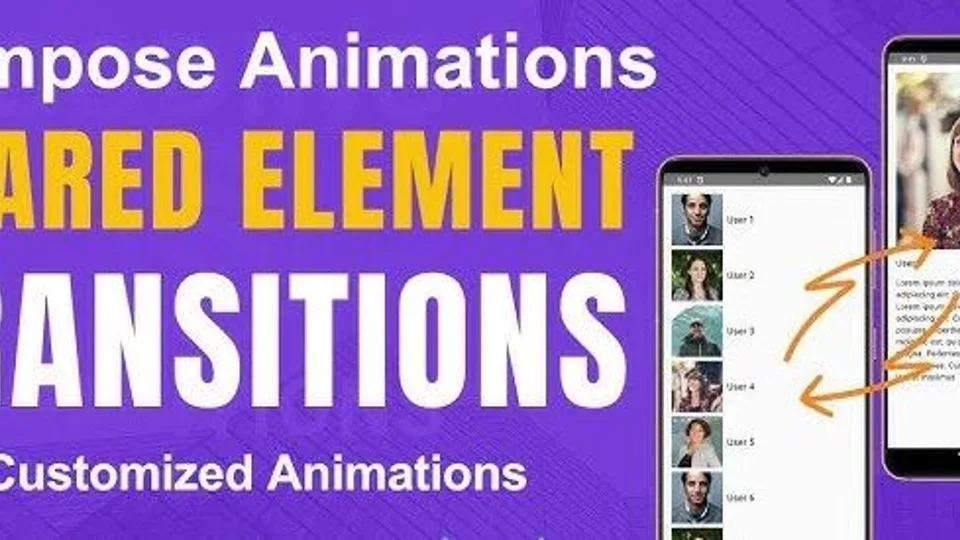
Explore the complete guide to implementing shared element transitions in Jetpack Compose, covering essential APIs like SharedTransitionLayout, Modifier.sharedElement, and Modifier.sharedBounds, with detailed code examples, common pitfalls, container transforms, resize modes, and practical solutions for smooth, hero‑style animations across Android screens.
This article explains how to reduce Unreal Engine Android package size and native library memory usage by applying a series of build‑time and resource‑trimming strategies—including native lib compression, code size reduction, relocation table compression, and selective asset packaging—while preserving runtime performance.
This article examines the origins, core principles, and practical implementation of the Model‑View‑Intent (MVI) pattern in Android, clarifies common misconceptions with Redux and MVVM, and provides Kotlin code examples and guidelines for building robust, unidirectional, immutable state architectures.
A former developer recounts joining a tiny startup, choosing uni‑app, egg.js, and antd‑vue to quickly build Android and iOS apps, navigating constant product changes, team hiring challenges, and later technical adjustments, and shares practical advice to avoid common pitfalls in early‑stage ventures.
This article traces the evolution of Android's Model‑View‑Intent (MVI) architecture from its MVC and Flux roots, clarifies common misconceptions versus Redux and MVVM, and provides concrete Kotlin code examples and guidelines for implementing a truly unidirectional, immutable‑state MVI pattern in mobile apps.
From a clueless interview at Google in 2005 to the creation of Dodgeball, the story follows Dennis’s messy PHP code, its acquisition by Google, the rise of location‑based social apps, and how this journey ultimately birthed Foursquare, illustrating the power of ideas over imperfect code.
This article details ZhiZhuan Group's end‑to‑end code‑coverage system for Android and iOS apps, covering its background, design, incremental instrumentation, CI/CD integration, optimization steps, visual reporting, and real‑world impact, offering practical insights for mobile development teams seeking reliable test coverage.