This article explains the role of maps in games and provides a step‑by‑step guide to creating a top‑down, real‑time minimap that follows the player, covering preparation, objectives, technical solutions, canvas rendering, ray‑casting calculations, and implementation details for both orthographic and oblique perspectives.
This article explains common 2D collision‑detection techniques—including axis‑aligned bounding boxes, circle checks, grid partitioning, pixel‑level tests, ray casting, and the Separating Axis Theorem—detailing their concepts, algorithms, code examples, advantages, drawbacks, and typical use cases for game development.
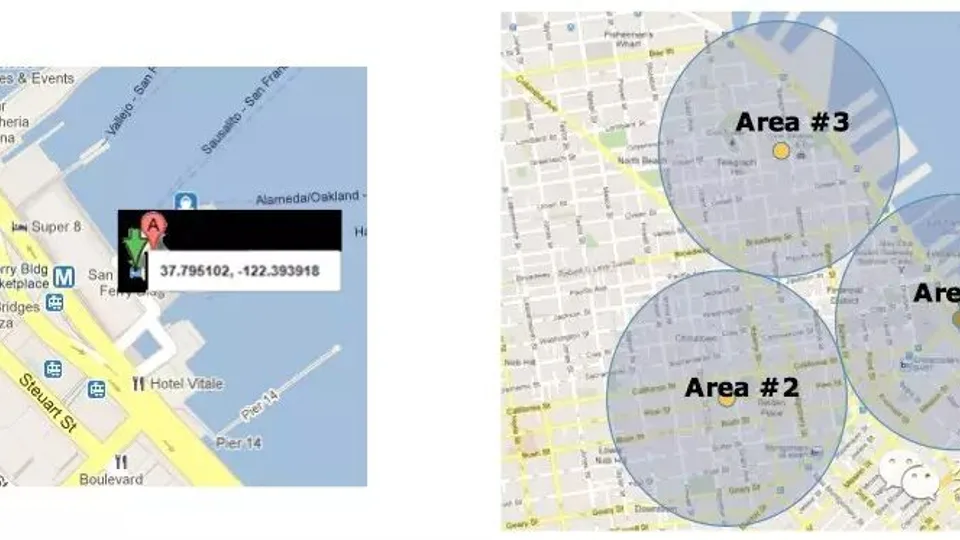
The article explains how geo‑fencing relies on fast point‑in‑polygon checks, compares the basic ray‑casting method with brute‑force performance, and shows how spatial R‑tree indexing—both on polygon bounding boxes and on individual edges—dramatically speeds up queries even for millions of complex polygons.