This article explains how to implement multi-tenant architecture using Spring Boot and Spring Cloud, covering database isolation strategies, dynamic data source routing with AbstractRoutingDataSource, tenant management, security configuration, and deployment considerations for SaaS applications.
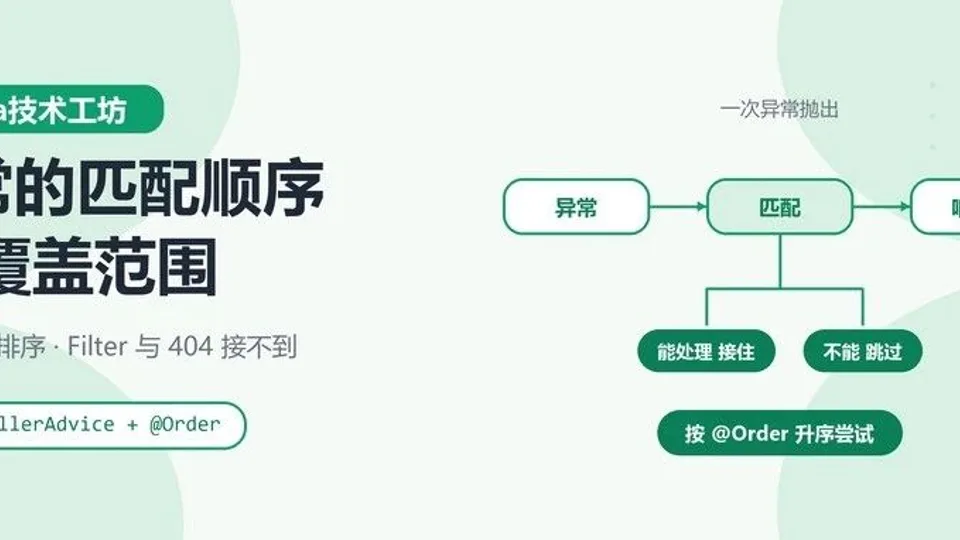
This article explains how Spring MVC's @ControllerAdvice selects exception handlers by inheritance depth, how @Order prioritizes multiple advice classes, which scope attributes limit coverage, and why Filter exceptions, 404 errors, and afterCompletion interceptor exceptions escape global handling.
This article details a production-grade Spring Boot 3 online exam system covering domain modeling, constraint-based paper assembly algorithms, anti-cheating measures with behavior logging and risk scoring, auto-grading strategies for objective and subjective questions, high-concurrency handling for exam start/submit, and score analysis with streaming exports.
A duplicate phone number in a 5000-row Excel import caused Stream.toMap() to throw IllegalStateException; the typical merge-function fix silently discards data, so the article presents a robust validation pipeline using groupingBy, key normalization, batch database checks, and explicit error reporting to handle duplicates correctly.
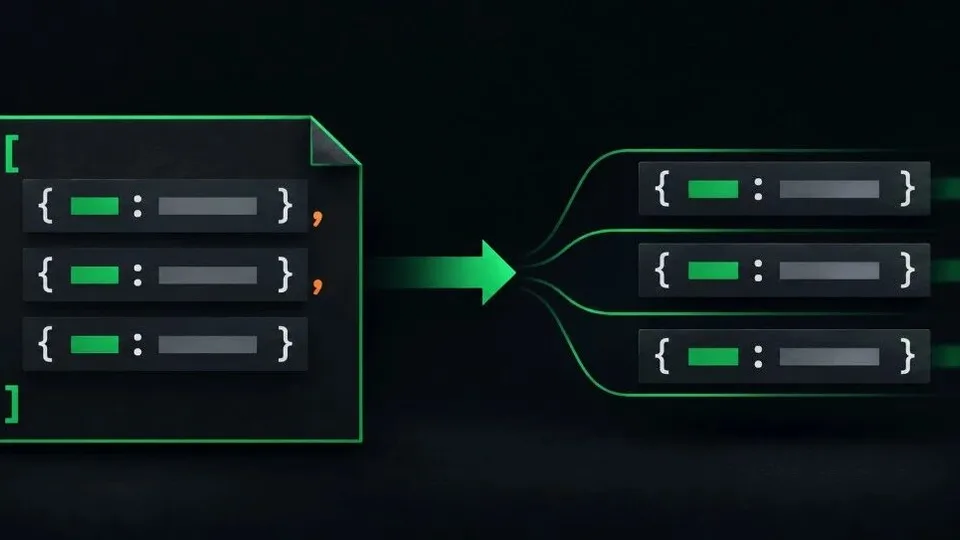
This article compares JSONL (JSON Lines) with regular JSON, explaining how line-delimited records enable memory-efficient streaming for logs, machine learning datasets, and ETL pipelines, while detailing tool support in pandas, Spark, and Hugging Face, and clarifying when to stick with standard JSON.
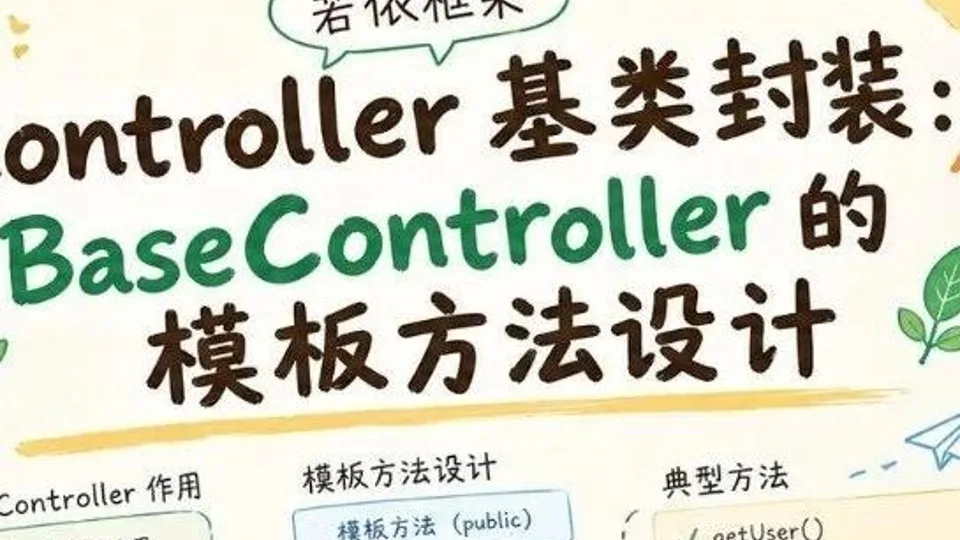
This article analyzes RuoYi 3.9.2's BaseController class, which encapsulates common controller operations like date binding, pagination, response handling, and user context retrieval using the template method pattern, enabling consistent CRUD controller implementations across the framework.
This article analyzes Netty's ByteBuf memory management through three real-world incidents, covering pooling algorithms, reference counting semantics, off-heap vs heap trade-offs, zero-copy techniques, leak detection internals, and a 7-step message lifecycle with source-code walkthroughs.
The article explains that dependency injection is just one inversion-of-control pattern; Java adopts DI due to its object-oriented purity and reflection-enabled runtime frameworks, while Go and C++ prefer lighter callbacks, closures, and compile-time abstraction via headers, making DI frameworks less necessary despite the pattern's universal value for decoupling and testing.
This article traces the evolution from select to epoll, explains LT/ET semantics, compares three Reactor thread models, and dissects Netty's optimizations including selectedKeys array replacement, busy-wait workaround, and watermark-based backpressure.
This article analyzes why Netty and ZooKeeper form the foundation of RPC frameworks, covering IO model evolution, communication and coordination layers, core components, common pitfalls, and a 10-part series roadmap to build a mini RPC system.
This article analyzes three real-world gray release failures in Spring Cloud, revealing that successful gray release requires full-chain context propagation, traffic-proportion accuracy, and bidirectional data compatibility—not just gateway routing. It covers implementation details, LoadBalancer filter chains, fallback strategies, database migration patterns, and troubleshooting techniques.
A detailed troubleshooting case study where random microservice disconnections in a Spring Cloud Alibaba cluster were traced to a Linux kernel bug causing JVM hangs, resolved by upgrading the kernel on affected servers.
This article explains LLM autoregressive generation principles including next-token prediction, KV Cache optimization, sampling strategies (temperature, top-k, top-p), and provides complete Java implementations for streaming token generation with Spring AI, WebFlux, and virtual threads.
This article demonstrates how to implement API rate limiting in Spring Boot using Redis for request counting and a custom @RequestLimit annotation with an interceptor to enforce limits per user session, including complete code examples for the annotation, interceptor, configuration, and controller usage.
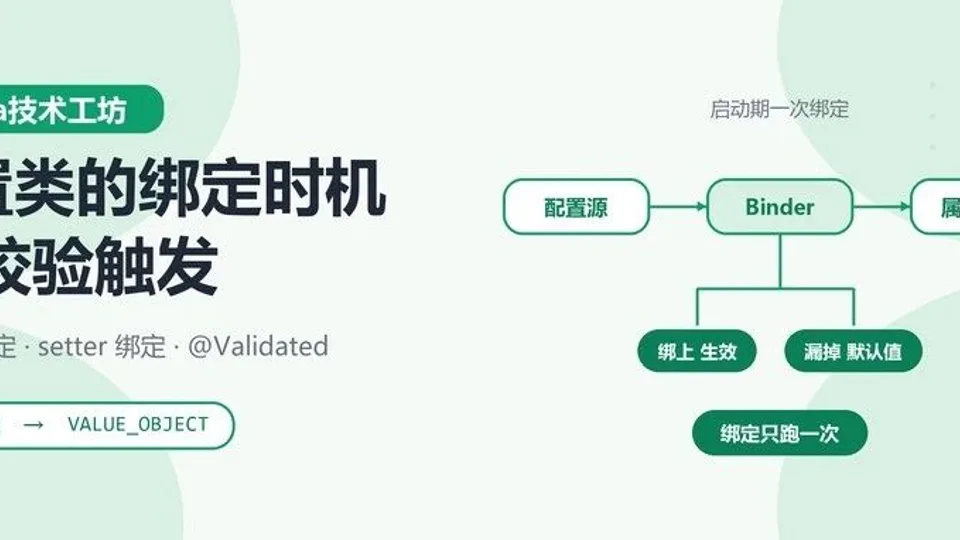
This article explains Spring Boot's @ConfigurationProperties binding mechanism, covering when binding occurs via BeanPostProcessor, how Binder handles relaxed binding and type conversion, differences between setter and constructor binding, validation triggering with @Validated, and common troubleshooting pitfalls.
This article explains three Spring mechanisms for asynchronous streaming responses—ResponseBodyEmitter for progressive data sending, SseEmitter for server-sent events with auto-reconnect, and StreamingResponseBody for large file streaming—with code examples and use cases for each.
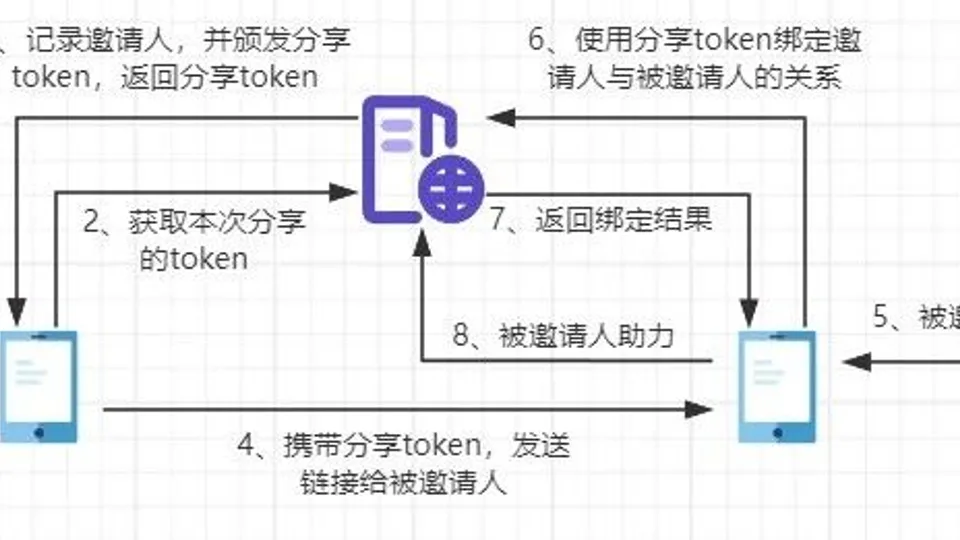
This article details the backend implementation of a viral 'invite friends to help' marketing campaign, covering the share-token flow, three MySQL table designs for tracking shares, visits, and successful assists, and the security rationale for using tokens over direct user IDs.
This article details a production-grade member points and growth system built on Spring Boot, covering account modeling with ledger tables, batch-based expiration, FIFO deduction, idempotency keys, freeze/unfreeze flows, high-concurrency Redis pre-deduction with async DB persistence, anti-fraud layers, and a three-equation reconciliation framework with automated repair.
This article details a complete Java architecture for AI-powered contract review, covering PDF parsing, text normalization, structured LLM output with enums and records, chunking long documents, async task processing with retries, business rule validation, human-in-the-loop workflows, and feedback capture for continuous improvement.
This article analyzes whether try-catch blocks should be placed inside or outside for loops in Java, demonstrating how placement affects loop continuation after exceptions, examining JVM exception table mechanics, and comparing memory performance implications.