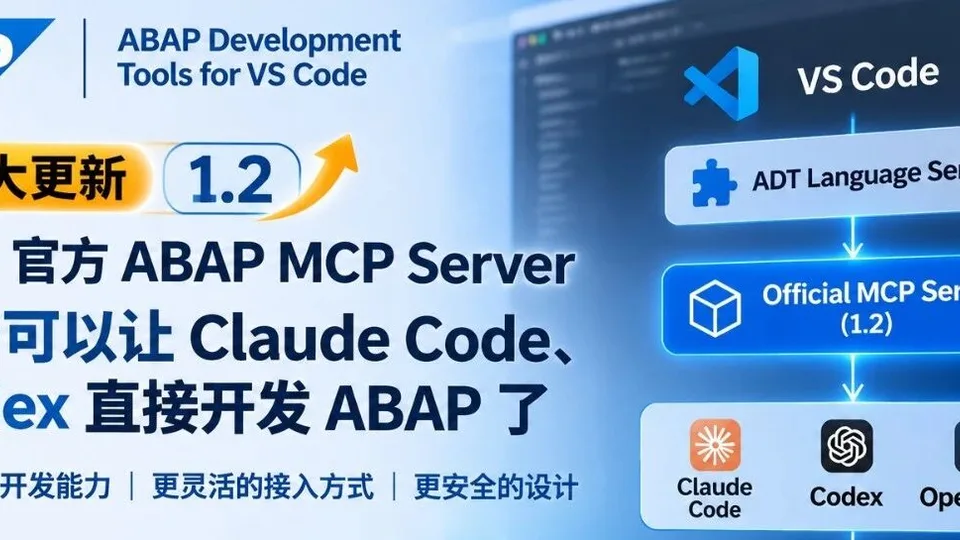
SAP's ABAP MCP Server 1.2 update allows independent CLI agents such as Claude Code, Codex, and GitHub Copilot CLI to directly search, read, edit, and activate ABAP objects without relying on VS Code Chat's file tools, reusing proven ADT capabilities for a new agentic development workflow.
This article dissects Kafka's core architecture through five roles, three-layer mappings, and a message's complete lifecycle, illustrating with six diagrams, two production configs, and three real incidents covering consumer stalls, disk-full broker crashes, and silent ISR shrinkage causing data loss.
This article explains how to build a dynamic API gateway with OpenResty by moving service discovery, canary routing, and TLS certificates from static config files into runtime memory, covering Nginx phases, non-blocking cosocket, atomic shared dict operations, and production hardening lessons from real incidents.
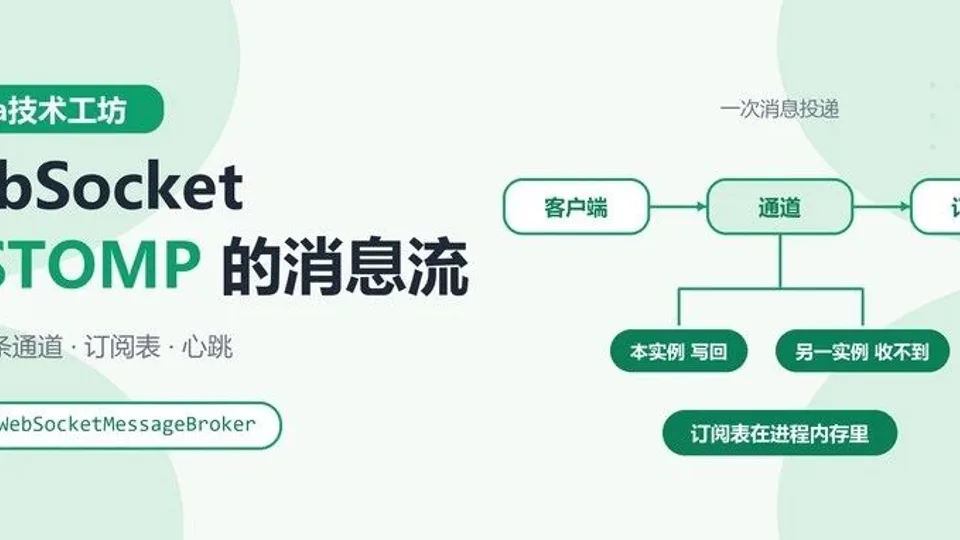
This article explains Spring Boot's WebSocket and STOMP integration, covering connection establishment, message routing architecture, broker types, destination prefixes, and practical code examples for real-time features like chat and notifications.
The article demonstrates migrating a homepage aggregation API from CompletableFuture to Java 27's StructuredTaskScope, showing how structured concurrency simplifies parallel downstream calls by automatically managing task lifecycle, cancellation on failure, scope-level timeouts, virtual threads, and observability—reducing exception handling code by half while making concurrency semantics match business intent.
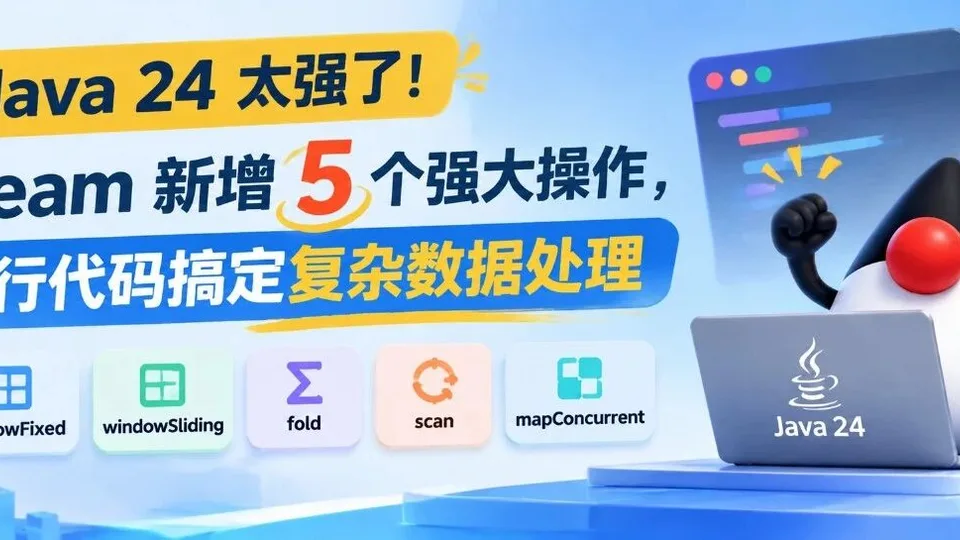
This article explores Java 24's new Stream Gatherers feature (JEP 485), demonstrating five built-in gatherers—windowFixed, windowSliding, scan, fold, and mapConcurrent—with code examples for batching, sliding windows, cumulative calculations, intermediate aggregation, and bounded concurrent mapping, plus a guide to building custom gatherers for stateful stream transformations.
This tutorial demonstrates how Apache Commons Collections 4's MultiValuedMap interface eliminates boilerplate code when mapping keys to multiple values, covering core operations, three implementations (ArrayListValuedHashMap, HashSetValuedHashMap, UnmodifiableMultiValuedMap), and practical code examples with output.
Java 27 introduces nine JEPs including making G1 the universal default garbage collector, adding post-quantum hybrid key exchange for TLS 1.3, enabling compact object headers by default, and redacting sensitive data in JFR recordings, plus performance gains in HashMap.putAll and AVX2 binary search.
A comprehensive guide covering message queue reliability patterns using SpringBoot with RabbitMQ and RocketMQ, including a real production incident analysis, core concepts, complete code implementation for reliable delivery, idempotent consumption with Redis SET NX, ordered processing, dead letter queues, and production-ready configurations.
This analysis of the open-source Utopia project reveals how it separates raw statements, ontologies, and typed facts to track knowledge changes using dual temporality (business time vs. system time), provenance, and audit trails, enabling queries for both current applicability and historical knowledge states, while highlighting practical deployment considerations.
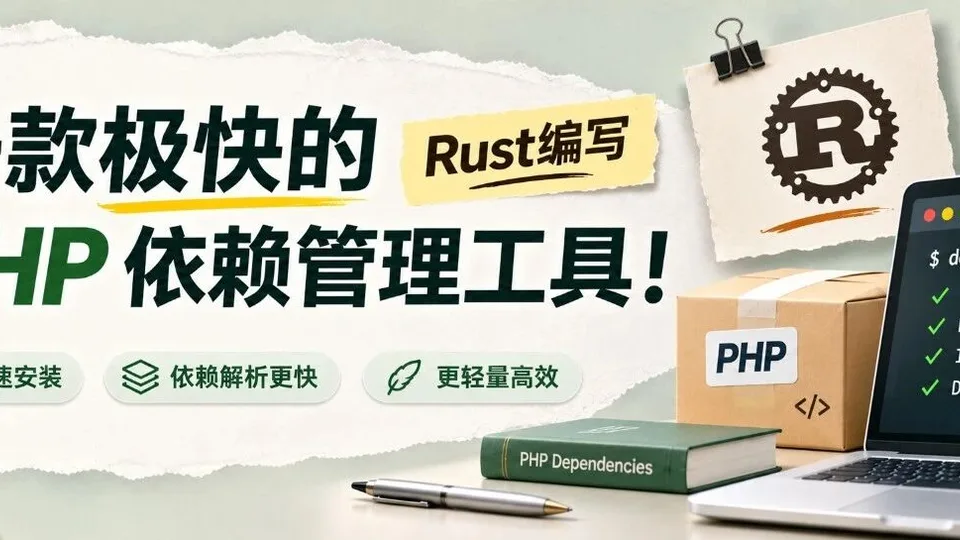
Phast is a Rust-written PHP dependency manager that drops in as a Composer replacement, delivering 3-10x speed gains via PubGrub solving, async metadata prefetching, and parallel downloads while supporting composer.json, monorepos, vulnerability auditing, and deterministic lock files.
This article analyzes Nginx rate limiting using limit_req and limit_conn, explaining the leaky bucket algorithm, burst and nodelay parameters, three production incidents, multi-layer defense configuration, cluster rate limiting strategies, key trust chains, monitoring, and interview questions.
Palantir's Ontology SQL and SQL Functions in Foundry let developers define business logic once as parameterized, versioned functions that multiple applications call, eliminating inconsistent rule implementations across supply chain dashboards, customer service tools, and automation systems.
This article provides a comprehensive guide to Nginx caching, covering browser vs proxy cache distinctions, Cache-Control directives, fingerprint-based static asset strategies, proxy_cache key design, stale-while-revalidate patterns, production configurations for static sites and API caching, source-code-level cache internals, cache hit rate measurement, purge strategies, and security hardening.
This article shows how to eliminate repetitive database validation code by creating generic reusable methods using Java 8 functional interfaces and MyBatis Plus SFunction, demonstrating ensureColumnValueValid, validateColumnValueMatchesExpected, and validateColumnValueInExpectedList with before-and-after comparisons.
This tutorial demonstrates how spring-smart-di's @AutowiredProxySPI annotation enables dynamic switching between service provider implementations by injecting a proxy that resolves the active implementation from configuration at runtime, eliminating manual bean lookups and allowing zero-restart changes via @EnvironmentProxySPI or custom config sources like databases.
This comprehensive guide explains Nginx location matching priorities, rewrite flag semantics (last/break/redirect/permanent), and common production pitfalls through real incidents, source-code-level logic, debugging techniques, and 20 interview Q&As to help engineers avoid routing misconfigurations.
This article explains why reading Spring Framework 7.0.8 source code enables developers to extend the framework rather than just memorize interview answers, covering core extension points like BeanPostProcessor, BeanFactoryPostProcessor, and BeanRegistrar, the three-level cache for circular dependencies, AOP proxy weaving, and practical debugging techniques.
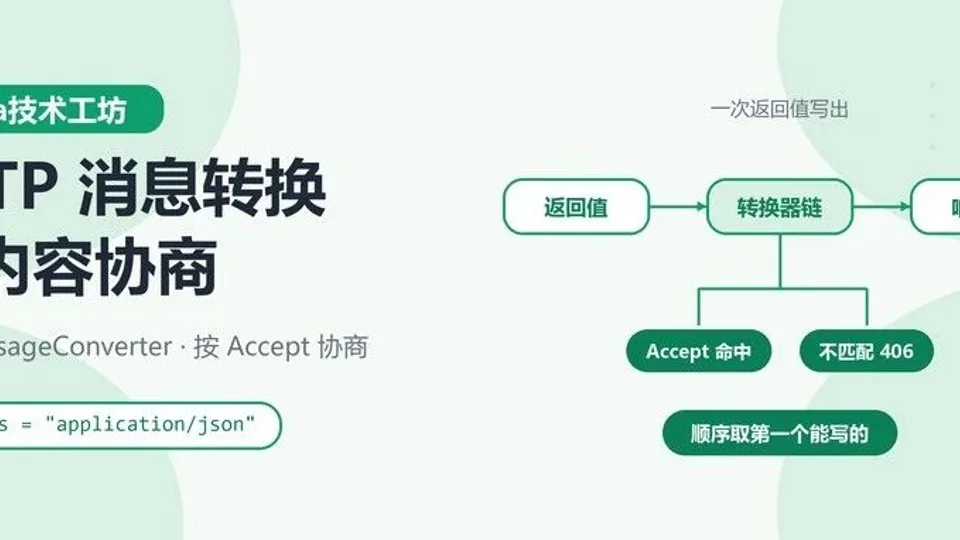
This article explains Spring Boot's HttpMessageConverter and Content Negotiation mechanisms, covering default converters, source code flow, customization via WebMvcConfigurer, and troubleshooting 415/406 errors.
Seata 2.6.0 embeds an MCP server in its Console, letting AI clients query and manage distributed transactions via natural language with mandatory confirmation for destructive operations, covering tool categories, security design, setup steps, and real interaction examples.