This article reviews the evolution of Bitcoin’s price and presents ten notable Bitcoin‑based applications—including Code Valley, Brave, Steemit, OpenBazaar, Arcade City, Contract Coins, gaming integrations, Purse.io, Coinbase, and HiveMind—highlighting how they leverage blockchain technology to create decentralized services and new business models.
This article provides an extensive overview of blockchain technology, covering its origins, core concepts such as decentralization, mining, and cryptographic security, as well as its rapid development, major industry adopters, practical applications across finance, accounting, and beyond, and the transformative potential it holds for modern enterprises.
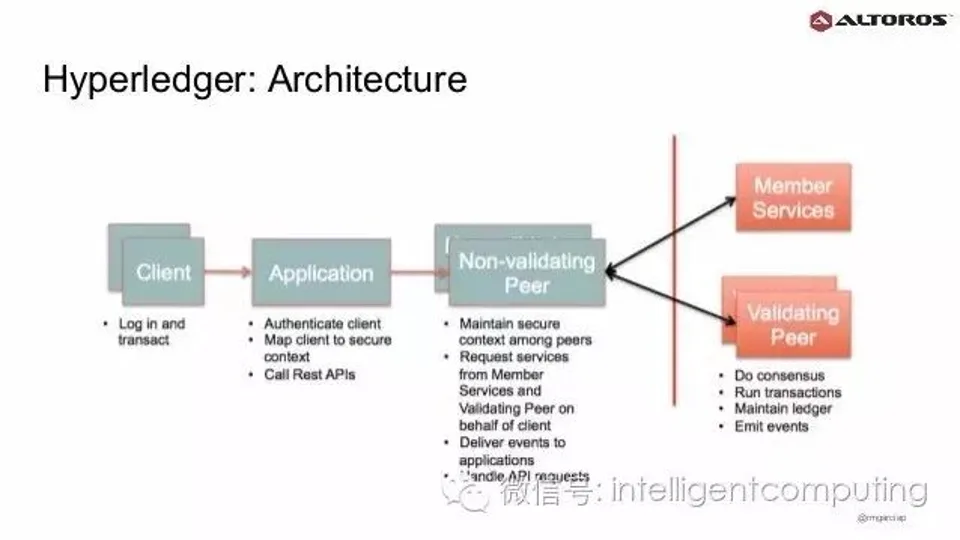
This article provides a comprehensive overview of Hyperledger Fabric’s architecture, detailing its three core components, key terminology, protobuf definitions for transactions, blocks and messages, chaincode development in Go, and proposed role‑based redesign for improved scalability.
This article presents a series of Hyperledger Fabric chaincode examples written in Go, covering information notarization, asset trading, digital currency issuance, diploma verification, community energy sharing, and logistics supply chain, each with functional descriptions, key functions, data models, and REST‑API interaction details.
The article argues that blockchain, rather than IoT, underpins the IoT era and explores application scenarios such as device address assignment, IBM's ADEPT system, supply‑chain cost reduction, QR‑code delivery verification, and a blockchain‑based DNS service for secure, low‑cost public networking.
This article explains blockchain as a distributed, fault‑tolerant ledger that combines P2P networking, cryptography, and economic game theory, describing its layered architecture, consensus mechanisms, public versus consortium chains, major platforms, and the distinction between UTXO and account‑balance models.
This article provides a comprehensive overview of blockchain technology, covering its definition, the three core technical elements—p2p networking, consensus algorithms, and cryptography—its potential applications in finance, value internet, and sharing economy, as well as notable open‑source projects and the current Chinese landscape.
This article provides an overview of blockchain technology beyond Bitcoin, explaining colored coins, other blockchain projects such as Litecoin and Dogecoin, the Open Transactions framework, and emerging platforms like Ripple, Ethereum, and Maidsafe, highlighting their concepts, benefits, and challenges.
The article explains blockchain's core technical traits such as distributed fault tolerance, immutability and cryptographic privacy, outlines the resulting business advantages like trust, cost reduction and enhanced security, and lists major financial and tech firms that are already exploring or deploying the technology.
This article explains blockchain as a distributed, tamper‑resistant ledger, outlines its historical origins in Bitcoin, describes its core components and consensus mechanisms, and classifies public, consortium, and private chains along with typical use‑case categories.
Bitcoin was introduced in 2008 by the pseudonymous Satoshi Nakamoto, launching a decentralized digital currency that operates continuously, and its underlying blockchain technology, highlighted since 2014, has spurred a broader distributed ledger revolution across finance, trade, IoT, and other sectors.