Archify is a developer tool that integrates with coding agents to generate interactive architecture diagrams from natural language or code repositories, using a typed JSON intermediate representation that enables iterative editing, validation, diffing, and export as standalone HTML files with multiple visual styles.
This article explains binary search trees (BST), detailing their left‑small right‑large ordering rule, core properties, and why they outperform ordinary binary trees with O(log n) search, while covering insertion, search, deletion, in‑order traversal code in Python, common pitfalls, and real‑world use cases.
The article explains the three fundamental process states—Running, Ready, Blocked—their characteristics, how they convert between each other, the role of the Process Control Block, Linux‑specific state extensions, and provides illustrative code and diagrams to clarify OS scheduling concepts.
This article analyzes four test data generation paradigms—rule-driven, model-driven, AI-enhanced, and contract-collaborative—with real-world case studies from banking, e-commerce, insurance, and ride-hailing, revealing key decision factors for technology selection and future trends like AI copilots and standardized quality metrics.
A single uint8_t write in an int8 quantization kernel caused a three‑fold slowdown because the C++ character‑type aliasing exemption forced the compiler to reload a scale factor on every iteration, illustrating how strict aliasing rules and TBAA affect performance.
This article introduces binary trees, explains key terminology and four common tree shapes, details four traversal methods, provides a complete Python implementation with sample output, and highlights real‑world uses and beginner pitfalls.
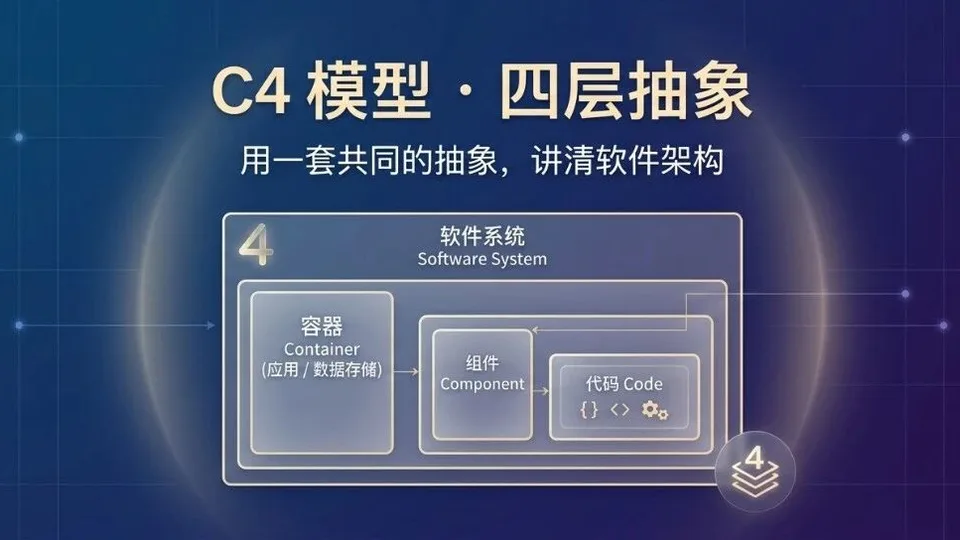
This article explains the C4 model's four abstraction layers—Software System, Container, Component, and Code—and their corresponding diagrams, plus three supplementary diagrams, emphasizing that shared abstractions are more critical than unified notation for effective software architecture communication.
The article explains why embedding a national anti‑fraud service into the Linux kernel is unnecessary and dangerous, violating the kernel’s principles of generality, stability, minimal privilege, and the open‑source community’s consensus.
The article explains the LRU (Least Recently Used) page‑replacement algorithm, its basis in the locality principle, hit‑rate example, various exact and approximate implementations—including counter, stack, linked‑list, Clock, Aging and Working‑Set methods—its hardware requirements, pros and cons, and practical uses such as a Python cache and Redis eviction policies.
The article explains that Java static blocks are not always the first code to run during class loading because static field initializers and static blocks are executed in the order they appear in the source, and a static field can trigger instance initialization.
This article explains how hash tables achieve near‑constant‑time lookups by hashing keys to direct storage slots, compares their speed to arrays, linked lists, stacks, and queues, shows real‑world uses, demonstrates a full Python implementation, and warns about common pitfalls.
This article presents a seven-layer acceptance framework for ontology models that moves beyond consistency reasoning and expert review, covering capability questions, semantic constraints, real data mapping, rule execution with unknown states, exception handling and action contracts, version traceability, and controlled business outcomes with multi-role sign-off.
This article covers Java exception hierarchy, checked vs unchecked exceptions, try-with-resources best practices, custom exception design, and generics type erasure with bridge methods, wildcard bounds, and the PECS principle for interview preparation.
When a device runs out of RAM, page replacement algorithms decide which pages to evict; the article defines page replacement, outlines goals, compares OPT, FIFO, LRU and their approximations, explains the Belady anomaly, and shows real‑world uses in Linux, JVM GC, and Redis.
The article explains that 2.5G Ethernet ports on modern routers, defined by IEEE 802.3bz, bridge the gap between gigabit and 10‑Gbps networks, offering bandwidth for multi‑gigabit broadband, high‑speed LAN for NAS and PCs, and relieving bottlenecks in Wi‑Fi 6/7 backhaul while remaining compatible with existing Cat5e/6 cabling.
The article explains that Java arrays, unlike regular objects, lack constructors because the JVM creates them directly via special bytecode instructions, automatically zero‑initialising elements and exposing length as a field, which trades flexibility for simplicity and performance.
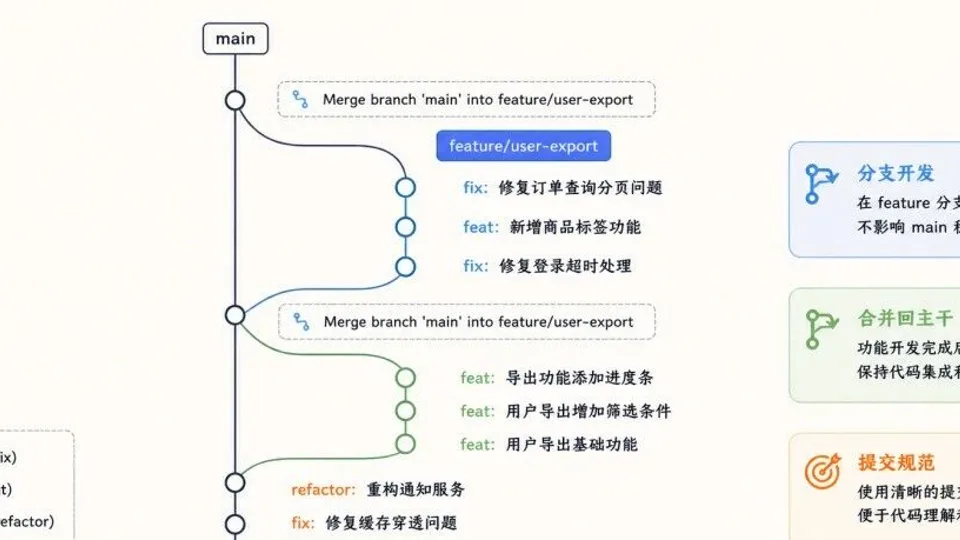
The article explains why merge can clutter commit history in large teams, how a linear history created by rebase improves log readability, bisect, blame, and code review, and outlines the trade‑offs, pitfalls, and practical commands for safely using rebase.
This article teaches software architects how to create effective architecture diagrams by following representational consistency, avoiding premature tool attachment, selecting tools with layers/templates/magnets, understanding UML/C4/ArchiMate standards, and applying six diagramming conventions for titles, lines, shapes, labels, color, and legends.
A Reddit post titled ‘I hate where Go is moving’ triggered a heated debate about Go’s recent adoption of generics, iterators, and built‑in collection proposals, exposing a split between those who see these features as natural evolution and those who fear the language is losing its original simplicity.
The article explains segment‑paging memory management by comparing pure paging, pure segmentation, and their combination, detailing address translation, two‑level page tables, Linux implementation, and practical scenarios such as process layout inspection, fragmentation handling, and protection mechanisms.