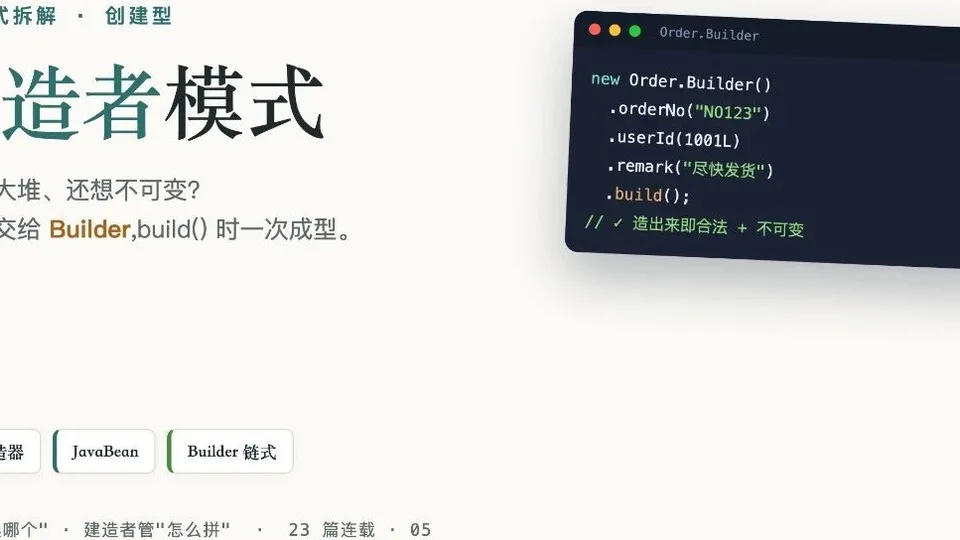
The article explains why traditional telescoping constructors and JavaBean setters fail for objects with many optional fields, and demonstrates how the Builder pattern—both the simplified static inner class version and the full GoF version with a Director—provides readable, step‑by‑step assembly, mandatory validation, and immutable results, with guidance on when to apply it.
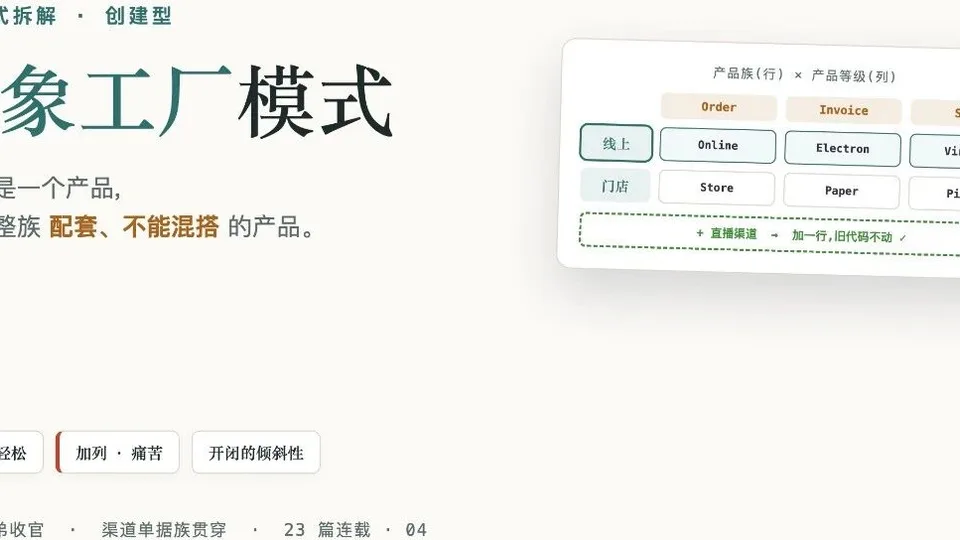
The article explains the Abstract Factory pattern by contrasting product families with product hierarchies, showing why the Factory Method fails for bundled products, presenting the pattern's structure and code, and detailing its open‑closed principle tilt and appropriate usage scenarios.
This article compares the major computer interfaces—USB (including its various versions), HDMI, DisplayPort, Thunderbolt, and Bluetooth—detailing their speeds, supported protocols, typical use cases, and selection tips, while emphasizing that protocol version, not connector shape, determines performance.
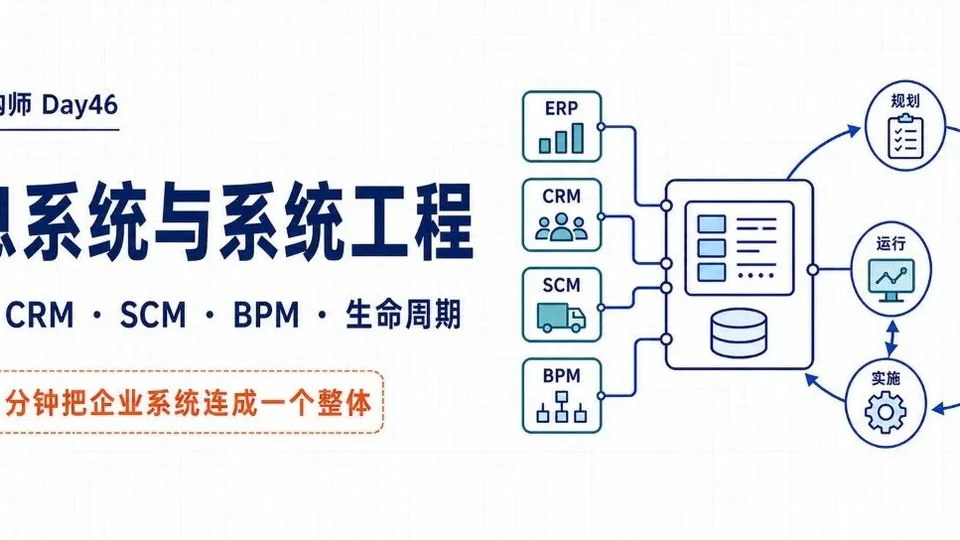
The article explains that an information system comprises people, processes, data, software, hardware and management rules, differentiates TPS, MIS, DSS, ES and OAS, clarifies the distinct responsibilities of ERP, CRM and SCM, contrasts BPM with BPR, and shows how system‑engineering thinking and the verification‑validation distinction guide the five‑stage lifecycle of complex enterprise solutions, using a retail‑chain case study.
This article explains how to implement breadth‑first (BFS) and depth‑first (DFS) traversals—including level‑order, preorder, inorder, and postorder—on a binary tree in Java 17, covering both recursive and iterative approaches, performance considerations, and a lazy Iterable wrapper.
This article walks through the evolution from direct object instantiation to Simple Factory and finally to the Factory Method pattern, explaining why scattering new statements is problematic, how Simple Factory centralizes creation but still violates the Open/Closed principle, and how the Factory Method delegates the decision to specialized factories, complete with code examples, role definitions, and guidance on when to apply each approach.
Typst is a markup‑based, easy‑to‑learn typesetting language that offers a modern alternative to TeX/LaTeX with concise syntax, programmable styling, CLI/Web/VS Code tools, flexible export formats, powerful code mode, query system, and robust math support, making high‑quality document creation far simpler.
This article benchmarks seven common pandas tasks—arithmetic, conditional mapping, dictionary lookup, string cleaning, group aggregation, binning, and query/eval—showing how vectorized alternatives can speed up loops by up to 7,000× and offering practical guidance on when each technique delivers meaningful gains.
This article explains the five SOLID object‑oriented design principles with everyday Java scenarios, showing bad implementations, proper refactorings, practical criteria for each rule, and common pitfalls to help developers write more maintainable and extensible code.
The article explains why even modest RAM can run out, defines memory leaks as forgotten allocations, illustrates common leak scenarios in code, compares leaks with overflow, and offers practical detection tools and preventive habits for developers.
The article explains that locks are not the root cause of performance bottlenecks, examines how locked and lock‑free queues work, compares their trade‑offs with concrete benchmarks, and provides a decision guide to choose the right queue implementation for different concurrency and latency requirements.
The article examines the century‑old 3D Kakeya conjecture, explains why the problem is dramatically harder than its 2D counterpart, reviews historic attempts, details Wang Hong’s multi‑scale proof that finally settled the conjecture, and argues that current AI lacks the strategic creativity to achieve such breakthroughs on its own.
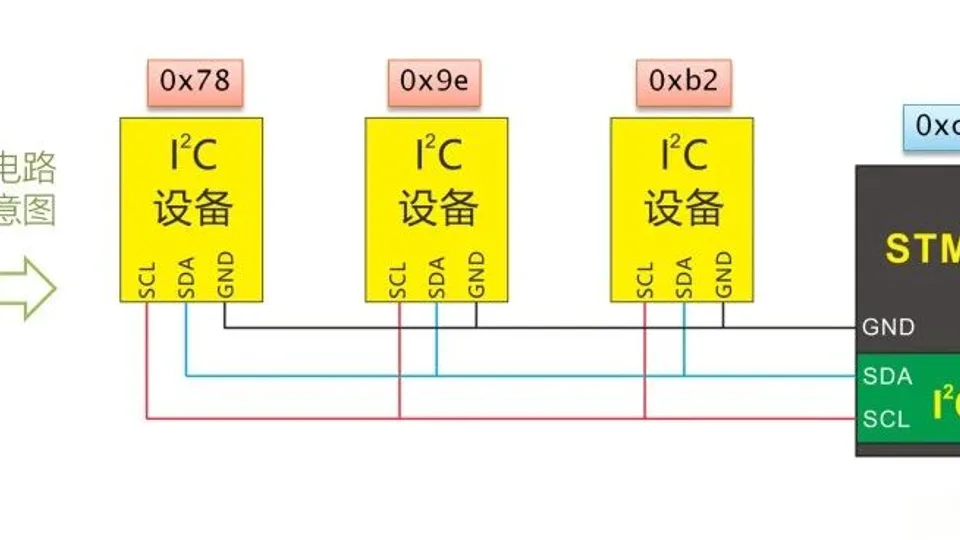
This article provides a comprehensive analysis of the Linux I2C framework, detailing its physical bus characteristics, protocol specifics, comparison with SMBus, and the multi‑layer kernel architecture—including hardware, adapter, core, and driver layers—culminating in a step‑by‑step MPU6050 driver implementation and testing guide.
As large language models can generate runnable code in any language, the article argues that understanding the deeper concepts behind programming languages—such as ownership, type systems, and computational thinking—remains essential for evaluating AI‑generated code, making sound architectural choices, and avoiding hidden pitfalls.
The article explains the layered memory hierarchy of a computer—from ultra‑fast registers and multi‑level CPU caches to RAM, SSD/HDD storage, and dedicated VRAM—using everyday analogies and concrete examples, and shows why “out of memory” warnings appear.
Linux 7.2‑rc6 was released on August 3 for developers and advanced users, bringing extensive x86 fixes, a corrected AMD Zen 5/Zen 6 CPU identification patch, numerous hardware and networking enhancements, and a warning that the pre‑release is experimental and not suited for production environments.
This guide walks through a real browser request from a medical imaging workstation, explaining how DNS resolves the domain, how IPv4 addresses and CIDR define subnets, how ARP and default gateways determine MAC addresses, how routers apply longest‑prefix matching, and how TCP, TLS, HTTP, and load‑balancing layers work together to deliver the response.
The article outlines practical standards for data analysis reports, covering clear structure, concise conclusions, business‑focused recommendations, reliable data sourcing, effective chart design, and common statistical pitfalls to help analysts communicate insights that drive decision‑making.
A Reddit discussion about Go’s recent generics and iterator additions reveals a split between supporters who see them as necessary pay‑back for early over‑simplicity and opponents who fear they raise complexity, increase entry barriers, and risk turning Go into a more Python‑like language, especially as AI‑generated code struggles to keep up.
The article explains that design patterns rely on solid design principles—SRP, OCP, LSP, DIP, ISP, LoD, and CARP—using a flawed order‑processing example to show each principle, how to refactor the code, and why over‑engineering must be avoided.