The article shows how interleaving multiple data-flow chains in a method forces readers to context-switch, and demonstrates that simply reordering lines to follow each chain sequentially — without changing logic or extracting methods — dramatically improves readability, while explaining why method extraction can backfire when variables are shared across chains.
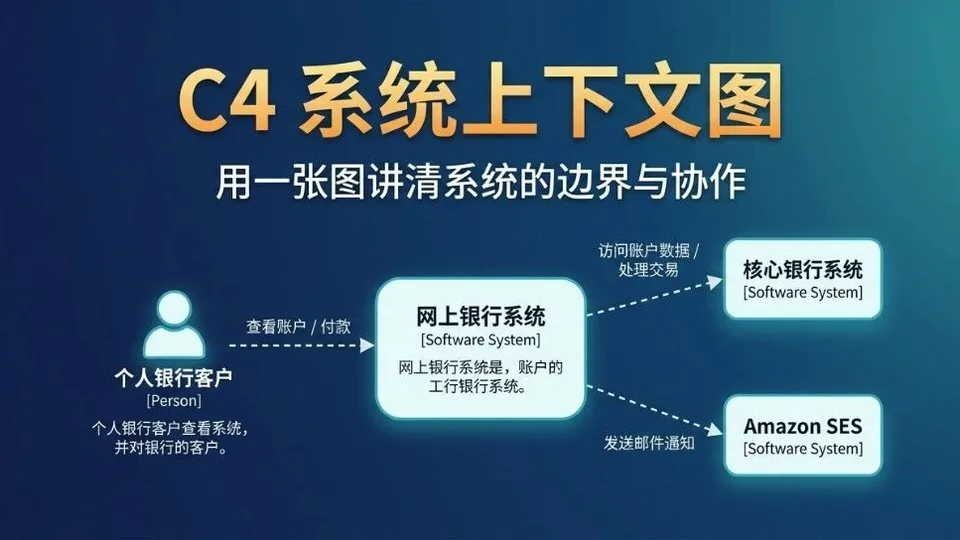
This article explains why the C4 model begins with system context diagrams, detailing their purpose, key elements (people, software systems, relationships), notation conventions, and a step-by-step example of creating a context diagram for an online banking system integrating with core banking and email services.
This tutorial demonstrates how to build a practical AI-powered knowledge base in WorkBuddy using a four-step loop—save, reference, edit, return—along with three container types (Markdown, CSV, HTML), common pitfalls like read-only uploads and local artifacts, and a ready-to-use directory structure for immediate productivity.
This article explains the classic Dining Philosophers deadlock problem, illustrates why naive locking causes deadlock with code, and presents five solutions—waiter semaphore, odd-even ordering, atomic acquisition, resource hierarchy, and monitor—each with pseudocode, trade-offs, and real-world analogies like database connection pools.
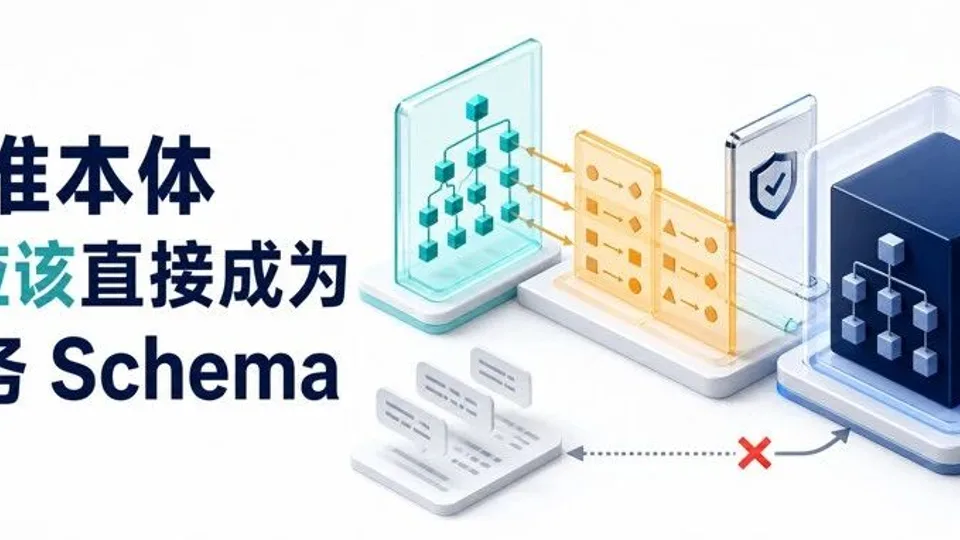
The article argues that standard ontologies and business schemas serve distinct roles—ontologies provide standard concepts while schemas offer stable application contracts—and a normalization layer must connect raw terms to both using evidence, context, versioning, and review status, because similarity scores only produce candidates, not confirmed facts.
This article explores abstraction as the fundamental technique for managing complexity in computer science, covering its philosophical roots, computational abstraction via functions and higher-order functions, data abstraction with abstraction barriers, and metalinguistic abstraction through language design.
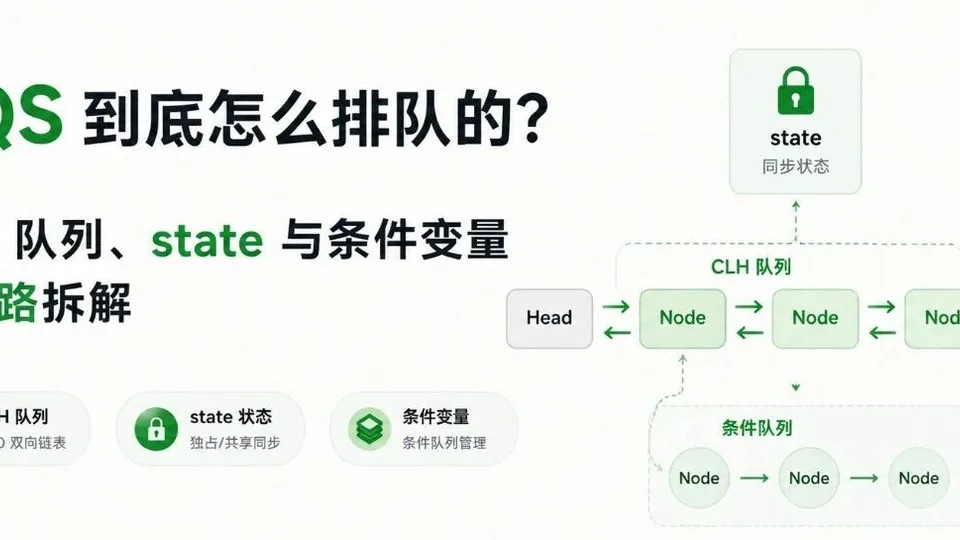
This article provides a comprehensive source-code-level analysis of Java's AbstractQueuedSynchronizer (AQS), detailing its three core components—state, CLH wait queue, and ConditionObject—and walking through exclusive lock acquisition/release, fair vs non-fair locking, shared lock propagation, and condition variable await/signal mechanics with code examples.
This article explains why ping cannot test specific ports due to its use of ICMP instead of TCP/UDP, and demonstrates four tools—telnet, curl, netcat, and nmap—with command examples for verifying port availability.
The article explains why two hosts with different CIDR prefixes can ping each other while two hosts sharing the same network ID cannot, by demonstrating how each computer uses only its own subnet mask to calculate network IDs and decide whether to ARP directly or send via a gateway.
This tutorial explains Red-Black Trees, comparing them with AVL trees, detailing their five properties, three fix operations (recolor, left/right rotations), providing a Python implementation, and covering real-world uses in Java HashMap, Linux kernel, and databases, plus selection guidelines and common pitfalls.
This article explains PV operations (semaphores) using traffic light analogies, covering P/V definitions, mutual exclusion, synchronization, resource counting, the producer-consumer problem with complete code walkthrough, and critical pitfalls like deadlock from incorrect P-ordering.
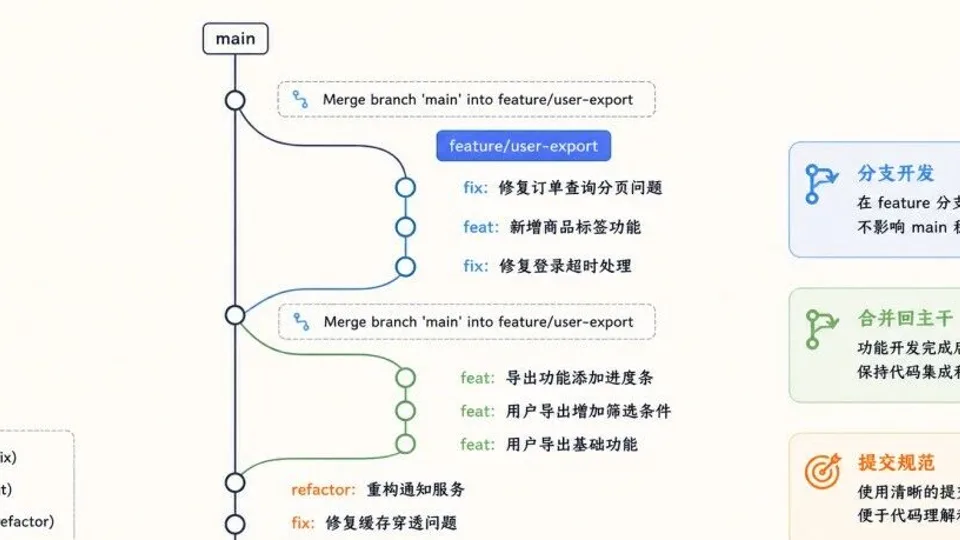
This article explains why companies enforce git rebase for feature branches instead of merge, showing how merge creates noisy history that breaks git bisect and blame, while rebase produces a linear, readable log that speeds up code review and bug hunting — with safe workflow commands and conflict-handling tips.
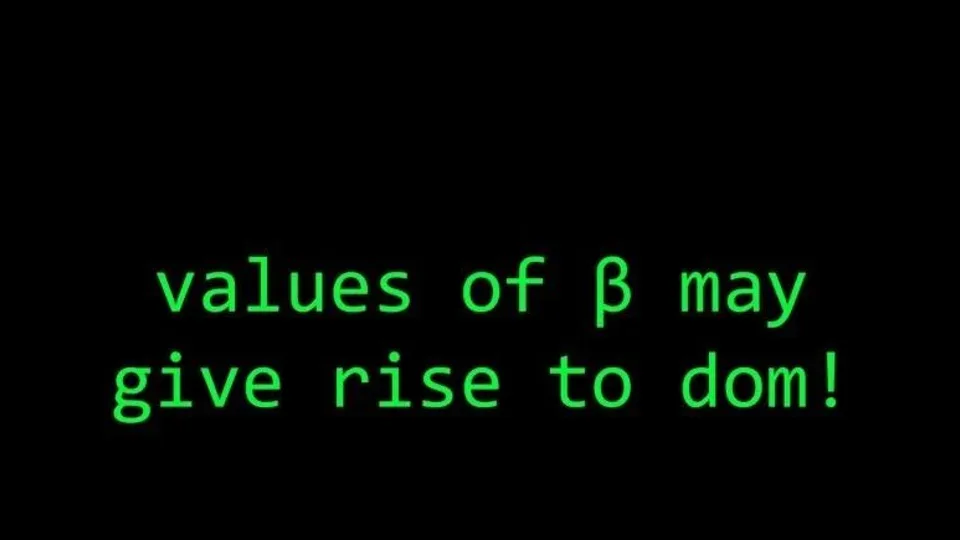
The article explains the origin of a cryptic error message 'values of β will give rise to dom!' in Unix V5's mv command, tracing it to a truncated physics patent sentence about domain wall movement, displayed via ASCII control characters on a Model 37 teletype, and later misheard as 'doom' by a text-to-speech system, becoming a beloved Bell Labs anecdote.
The article explores naming as a fundamental abstraction mechanism in programming, drawing on SICP to show how naming enables modularity, controls complexity, creates vocabularies, and underpins environments, scope, and first-class functions, arguing naming is not mere labeling but a cognitive tool for building higher-level concepts.
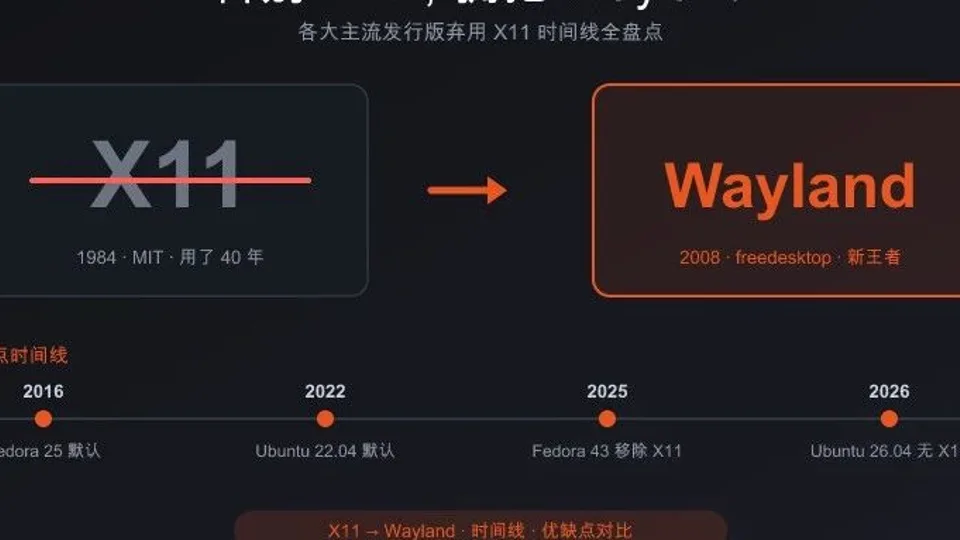
This article analyzes the architectural differences between X11 and Wayland, detailing X11's structural security flaws and performance limitations versus Wayland's zero-copy rendering, native HiDPI support, and protocol-level isolation, while tracing the decade-long adoption timeline across major distributions culminating in Ubuntu 26.04 LTS dropping X11 entirely in 2026.
This article explains why many companies mandate git rebase instead of merge for feature branches, showing how merge creates tangled histories that break git bisect, git blame, and code review efficiency, while rebase produces a linear, readable history — with practical workflow commands and conflict-handling strategies.
This guide presents a practical file naming convention (Project_Topic_Date_vVersion_Status) and a five-folder directory structure (00_Description, 01_Materials, 02_Working, 03_Delivery, 99_Archive) to eliminate version chaos, with rules for version increments, Git-based code collaboration, and a 3-2-1 backup strategy for researchers and developers.
This article explains AVL balanced binary trees, covering the balance factor, four rotation types (LL, RR, LR, RL), a complete Python implementation with height updates, real-world use cases, and a comparison showing AVL's guaranteed O(log n) query performance versus BST's degradation to O(n).
This article explains major process scheduling algorithms including FCFS, Round Robin, Priority, SJF, HRRN, multilevel feedback queues, and real-time schedulers, with concrete examples, Gantt charts, turnaround/wait time calculations, and a survey of Linux schedulers from O(n) to CFS and EEVDF.