This article walks through using the WeChat Mini Program media‑check API to identify risky audio, video, and image content, outlines three typical scenarios, explains platform rate limits, and provides a complete Java example with step‑by‑step code analysis.
Alipay’s terminal team refactored the high‑traffic ‘My Tab’ feature into a single Kotlin Multiplatform codebase, tackling challenges like MVC‑to‑MVVM migration, frame‑rate drops, and cross‑platform stability, and sharing detailed design patterns, performance optimizations, and solutions for Android, iOS, and HarmonyOS.
This article details Alipay’s technical journey of refactoring the MyTab feature across Android, iOS, and HarmonyOS using Kotlin Multiplatform, covering architectural shifts, performance bottlenecks, stability fixes, and the resulting gains in code reuse and development efficiency.
The article explains how to leverage WeChat Mini Program's text security API to automatically filter sensitive, political, pornographic, gambling, and drug-related content in user-generated text, outlines typical use cases, rate limits, and provides a Java implementation with step-by-step code walkthrough.
From the Kotlin 2.0 language upgrade and the K2 compiler to a mature Jetpack multi‑platform library ecosystem, stable Compose for iOS and Web, and robust engineering tooling, Kotlin Multiplatform and Compose Multiplatform have evolved into a production‑grade, cross‑platform solution for mobile, desktop, and web by 2026.
The article explains a long‑standing Flutter bug where Text wrapped by Opacity or ShaderMask loses its descender glyphs on Android due to overly precise layer bounds calculated by Skia/FreeType, detailing how saveLayer, hinting, and glyph outline bounds interact, and offers practical workarounds to avoid the clipping.
This article demystifies Kotlin Multiplatform’s compiler architecture, explaining how shared Kotlin code is transformed into platform‑specific binaries via a common intermediate representation, the roles of Kotlin/JVM and Kotlin/Native backends, expect/actual contracts, memory model evolution, and practical build and integration steps for Android and iOS.
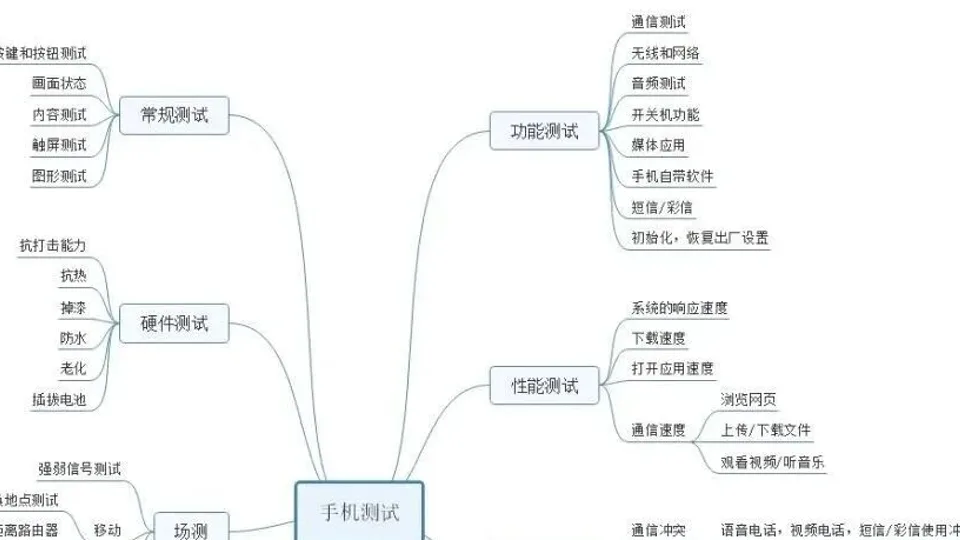
This article outlines a comprehensive checklist of mobile testing items—including functional, conflict, performance, signal, low‑battery, compatibility, stress, field, stability, regular, user‑experience, and hardware tests—to help engineers ensure thorough coverage of a phone's quality and reliability.
This tutorial walks through creating a WeChat-like interface on HarmonyOS 6, covering four main pages — Chat, Contacts, Discovery, and Me — using Tabs for bottom navigation, Swiper for swipe gestures, and reusable ArkTS components for lists, dividers, and tab bar styling.
This guide walks you through the complete HarmonyOS mobile development workflow—from understanding the platform’s layered architecture and core ArkTS/ArkUI concepts, to setting up DevEco Studio, creating a Hello World app, managing UI, state, routing, data, and finally packaging and publishing the app.
This article details implementing a high-performance line art extraction feature in HarmonyOS using ArkTS, covering grayscale conversion, differential edge detection, efficient pixel buffer access, sketch and comic style rendering, and time-sliced chunk processing to prevent UI freezes on large images.
This article explains why AI coding assistants often ignore team conventions in large Android projects, introduces the concept of Agent Skills as versioned, shared‑memory skill packs that enforce architecture, state‑management, and offline‑first practices, and provides a step‑by‑step guide to integrate the open‑source Awesome Android Agent Skills library.
The author documents building a health check-in Android app using Vibe Coding with Trae and Cursor, comparing tool effectiveness, overcoming compilation issues, and reflecting on AI-assisted development's future impact on app creation.
This article delves into the hidden iOS OOM crashes, explains the Jetsam watchdog mechanism, the role of phys_footprint, compares industry solutions, and provides step‑by‑step implementations for monitoring, allocation tracking, and proactive memory‑management strategies to prevent silent terminations.
This case study details how HarmonyOS 6 distributed features — soft bus, atomic services, distributed data management, and task scheduling — were used to create a unified elderly care platform connecting seniors, families, caregivers, and doctors across devices and locations, with code examples and lessons on elderly-friendly design.
This article details a systematic set of optimizations—dual‑layer pre‑fetch, multi‑level caching, multi‑instance tab management, and white‑screen mitigation—that transformed an e‑commerce order list from sluggish and unstable to fast, smooth, and reliable for billions of users.
This article walks through a 30‑minute, step‑by‑step recreation of the popular "Dead Yet?" iOS app, showing how AI‑assisted coding, SwiftUI for the frontend, and Supabase’s serverless backend can turn a simple daily‑check‑in tool into a fully functional product with minimal infrastructure.
Hisense Aijia's smart home app migrated to HarmonyOS using ArkTS, integrating Scan Kit for robust QR scanning, Cast Engine for low-latency screen casting, responsive layouts for foldable devices, and Account Kit for simplified OAuth login, cutting launch time to 2 seconds with HarmonyOS team support.
This article shares the complete development journey of PromptTuner, a HarmonyOS 6 native app for prompt discovery, optimization, and management, covering architecture, ArkUI declarative UI patterns, state management, API abstraction, local analytics, privacy compliance, and performance optimization techniques with concrete code examples and metrics.