This article explains how to evaluate and improve Apache Weex applications by using built‑in performance monitors, defining essential metrics such as first‑screen render time and interaction latency, and applying ten practical testing and optimization techniques for both iOS and Android platforms.
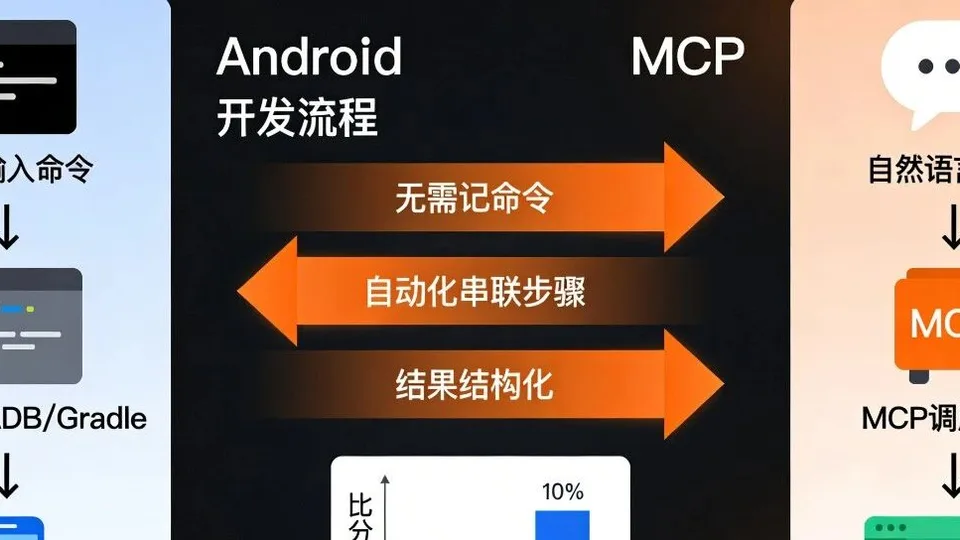
This article explains how the Model Context Protocol (MCP) enables controllable, auditable automation of Android development tasks—bridging large language models with local tools like Gradle, ADB, and emulators—to improve efficiency, safety, and workflow integration.
A developer shares technical insights from building 'Light Meal Moment' on HarmonyOS 6, covering declarative UI with ArkUI, @ComponentV2 state management, service cards, background tasks, and security — with code examples and measured performance gains of 30-44% across startup, navigation, and memory.
This article explores Jetpack Compose's FlowLayout components, comparing them with lazy layouts, demonstrating basic and advanced usage—including item alignment, weight handling, and grid-like arrangements—to build responsive Android interfaces that adapt gracefully to varying screen sizes.
An in‑depth analysis reveals that the Bean Bag AI phone avoids Android’s Accessibility Service by directly reading GPU buffers and injecting input events via hidden system APIs, runs a headless virtual screen, streams low‑resolution frames to the cloud for inference, and raises significant privacy and security concerns.
A HarmonyOS developer shares the technical journey of building 'Shengqu Guoqitong', a children's flag learning app, detailing why HarmonyOS was chosen over Android, Flutter, and React Native, and how Core Speech Kit's offline TTS/ASR and ArkTS declarative UI enabled efficient development of voice-driven, interactive educational features.
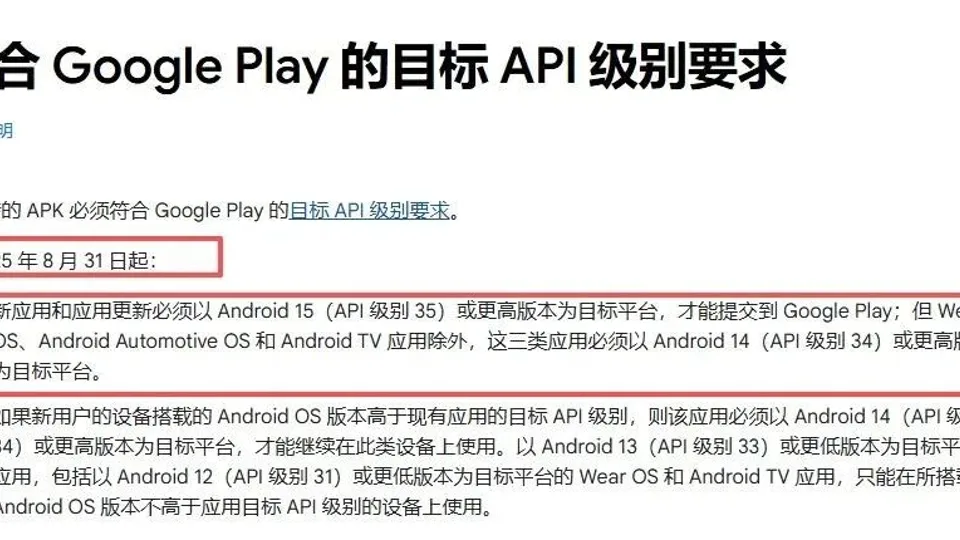
Upgrading an old Android project to meet Google Play's new targetSdk 35 requirement involves moving to AGP 8, Gradle 8, and JDK 17, updating namespace, enabling BuildConfig, fixing non‑final resource IDs, and applying JVM arguments to keep ButterKnife functional despite its deprecation.
The "AI‑Led Cross‑Platform Technology New Paradigm" salon gathered experts from Kuaishou, Alipay, Tencent, and JetBrains to share deep technical insights on Kotlin Multiplatform, large‑scale multi‑device architecture, AI integration, and real‑world migration experiences across iOS, Android and HarmonyOS.
The article explains Xiaomi's "Hotspot Compilation Acceleration" in Surge OS 3, detailing how the compiler identifies high‑frequency code paths, partitions hot and cold sections, and iteratively optimizes binaries, resulting in a 4% CPU load reduction and a 10% efficiency gain for smoother mobile experiences.
This article walks through a real‑world Android crash case, showing how to collect crash data with RUM, trace the user journey, analyze stack traces, identify the root cause in ProductListAdapter, and apply symbolication to turn obfuscated stacks into readable code.
LibrePods is an open‑source project that reverse‑engineers Apple’s proprietary AirPods protocol, enabling Android and Linux users to access native features such as active noise cancellation, ear detection, battery status, and custom transparency modes, with detailed compatibility notes, installation steps, and a public GitHub repository.
This article walks through a real‑world Android crash investigation, showing how to collect, visualize, and analyze crash data with Alibaba Cloud RUM, trace user behavior, identify the root cause in ProductListAdapter, and apply symbolication and version comparison to resolve the issue efficiently.
A HarmonyOS developer shares complete technical implementation details and competition strategies from building 'Koko Picture Editor' for the 2025 HarmonyOS Developer Incentive Program, covering ArkUI architecture, ImageKit compression, Canvas cropping, color matrix filters, componentSnapshot watermarks, and performance optimization patterns.
The author recounts a step‑by‑step experiment using AI to generate a sophisticated, neon‑glowing Flutter animation, detailing the challenges of prompting, iterative refinements, polar‑coordinate math, multi‑stage animation controllers, 3D transforms, and compositing techniques, all backed by a public GitHub repository.
A junior developer shares the full lifecycle of creating "Gege Check-in," a HarmonyOS habit-tracking app that won Huawei's 2025 developer incentive, detailing architecture, AI-assisted coding, DevEco Studio workflows, calendar component integration, privacy-first local storage, and the monthly active user targets required to claim the reward.
This article dissects the practical challenges of using Midscene.js for Android UI automation, demonstrates why auto‑planning can fail, and provides concrete step‑by‑step solutions—including instant operation APIs, assertion checks, refined prompts, coordinate clicks, conditional scrolling, and smart waiting—to make AI‑driven mobile testing reliable and efficient.
A Flutter developer details the complete HarmonyOS adaptation of the Baby Lagou children's app, covering library migration, multi-screen UI adaptation, strict permission handling, performance optimization, and future plans for desktop widgets and atomic components.
This article explains the debounce operator in Kotlin Flow, covering its core concept, practical scenarios like search input, multiple implementation styles—including fixed timeout, duration‑based, and dynamic debounce—along with internal mechanics, performance trade‑offs, best practices, common pitfalls, and real‑world code examples.
This article details integrating Flutter with HarmonyOS native image APIs (ImageSource, PixelMap, ImagePacker) using a bridge-adapter architecture, covering cross-platform design principles, caching strategies, photo_view-based viewer and gallery implementations, performance optimizations leveraging HarmonyOS distributed capabilities and ArkCompiler, and best practices for modular design, error handling, and compression achieving 40% faster loading and 30% memory reduction.