DSH Go is an unofficial Android client for DeepSeek Harness that lets you run AI agents locally on your phone or remotely control a desktop instance via SSH or encrypted DSH Remote, with support for plugins, offline voice, screen control, and conversation sharing.
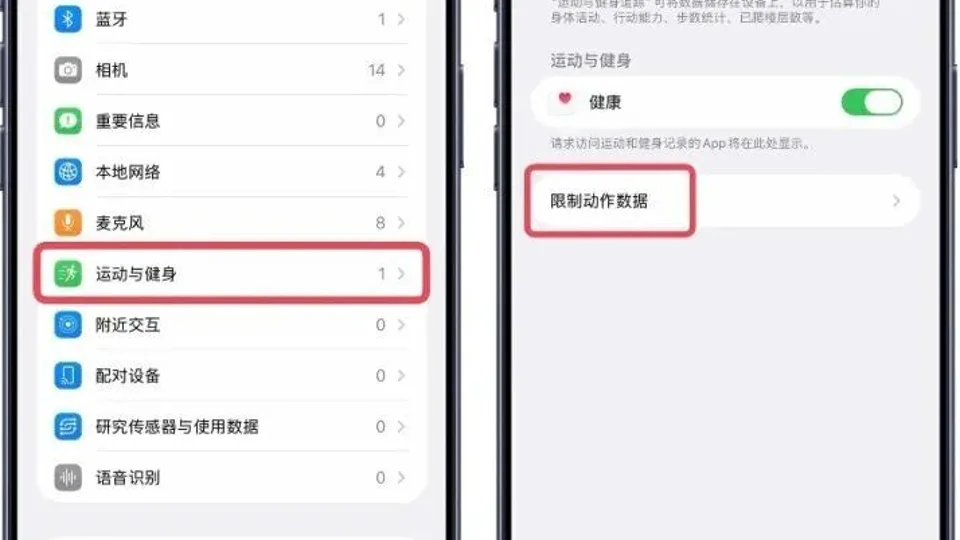
iOS 27.2 adds two China-specific features: a motion-data restriction that prevents apps like Taobao and Douyin from triggering accidental shake-to-jump redirects, and an extended erase option that overwrites storage for secure device disposal; other updates include iPhone Duo Apple Pencil support and delayed Apple Intelligence rollout.
Ctrip Flight team replaced polling with Server-Sent Events (SSE) across Web and mobile (Native + React Native), detailing implementation layers, optimizations like pre-connection, pre-request, caching, and Brotli compression, achieving 11.8% faster multi-batch loading and enabling heterogeneous batching for API granularity conflicts.
This article details a systematic debugging methodology for HarmonyOS 7 XiaoYi skills, showing how to trace discrepancies from platform evaluation reports through tool integration to on-device testing by comparing fixed inputs, expected outputs, and actual results at each execution stage to locate the earliest point of failure.
Ant Financial's 'one person, three platforms' approach uses LLMs to let a single engineer natively develop for iOS, Android, and HarmonyOS simultaneously, replacing cross-platform frameworks with AI-assisted workflows, shared asset repositories, and automated testing, cutting development hours by 40% and achieving 80%+ AI code adoption.
The author builds an offline iOS app called Lynsight using a $27 open-protocol Bluetooth recording card and on-device Gemma 4 model for transcription, speaker diarization, and summarization, integrating with Xiaoyuzhou, Bilibili, Obsidian, and Apple Reminders under a one-time purchase model.
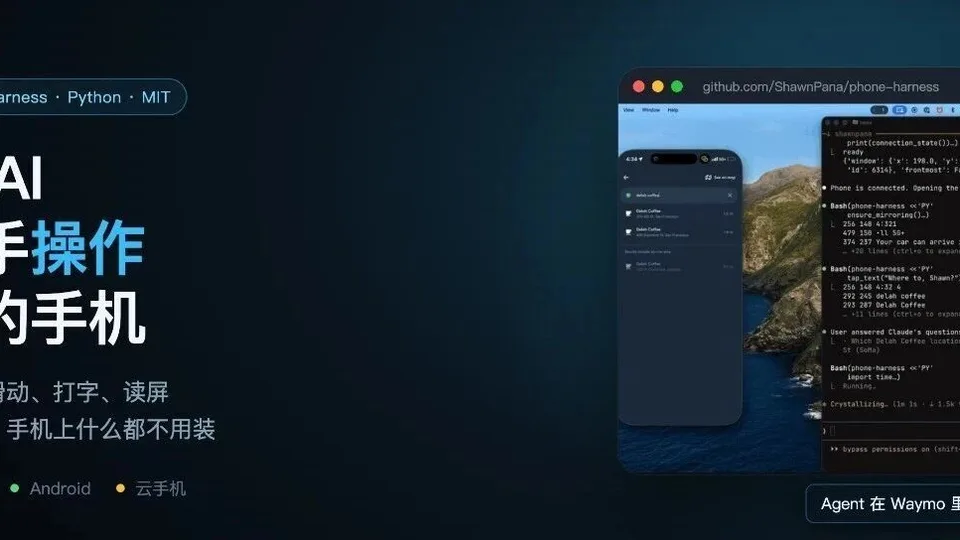
Phone-Harness is a Python CLI tool that lets AI agents like Claude Code control real iPhones and Android devices via four connection paths — iPhone Mirroring, ADB, cloud emulators, and cloud iPhones — providing 20+ functions for tapping, swiping, typing, and reading screen text via OCR, with built-in validation rules and safety guards, enabling mobile automation without jailbreak or root.
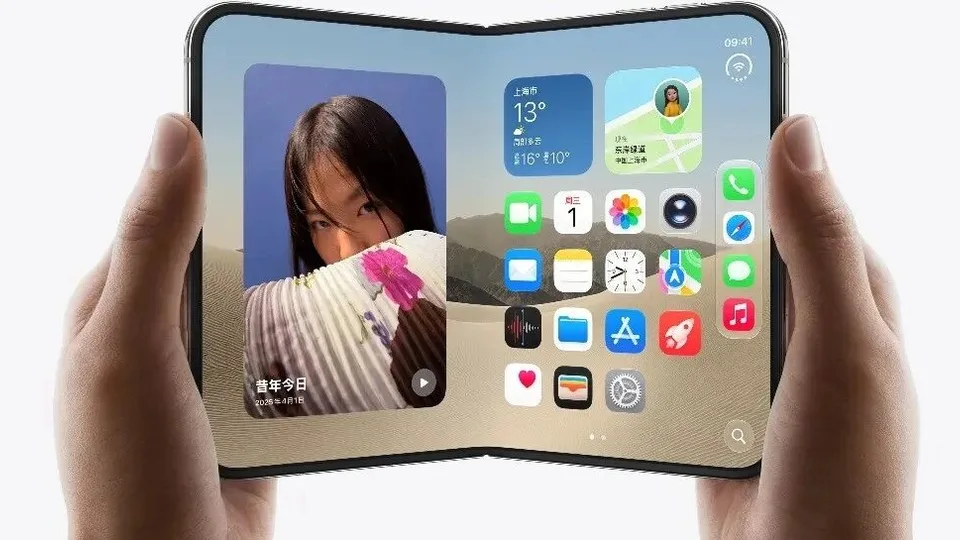
This article introduces Duology, an open-source AI skill pack that helps product managers and developers adapt iOS apps for Apple's foldable iPhone Duo by providing layout patterns, state continuity guidance, design recipes, and automated code checks for folded, unfolded, book, and tabletop postures.
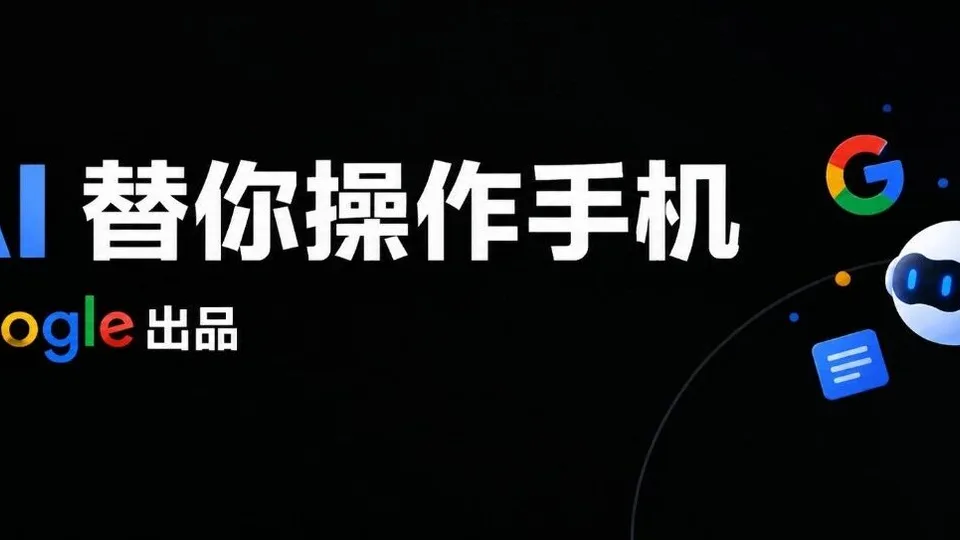
Google's open-source ARTEMIS framework enables natural-language-driven Android automation with dual Flash/Pro execution modes, MCP integration for AI IDEs, and a three-layer fallback location strategy, achieving 99% success on AndroidWorld benchmarks while supporting CI/CD and real-device farms.
The article distinguishes three lifecycle events that reset UI state — recomposition, configuration change, and process death — and maps each to the appropriate Compose state holder (remember, retain, rememberSaveable, ViewModel) with a counter example, showing how to persist user-modified data and enable JVM unit testing.
This case study details how to develop a WeChat event-registration mini-program in two hours using AiOnly's model aggregation platform and WorkBuddy's AI-assisted coding, covering requirements definition, tool configuration, code generation, testing, and deployment for a 5,000 RMB project.
The author shares their KMP engineering practice of sharing all business logic via Kotlin while implementing platform-native UIs with Jetpack Compose on Android and SwiftUI on iOS, detailing the module structure, state observation via SKIE, screen layering, and why native UI beats Compose Multiplatform for iOS fidelity.
The author shares hands-on experience building a stock viewing app with Tencent's Kuikly Kotlin Multiplatform framework, covering multi-module project setup, network layer migration, component encapsulation, and a deep technical analysis of Kuikly's reactive update mechanism with practical solutions for child component observation.
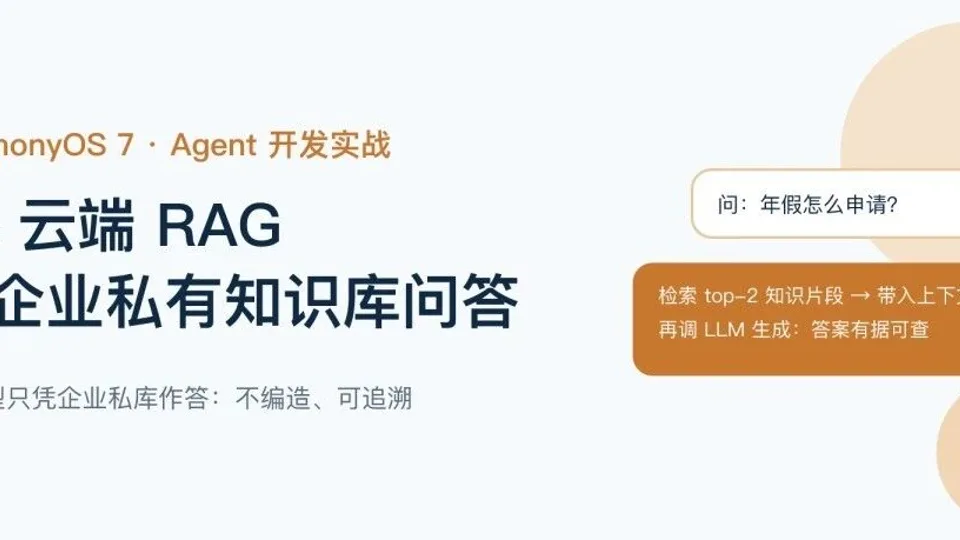
The article demonstrates implementing a Retrieval-Augmented Generation (RAG) pipeline on HarmonyOS 7 for enterprise private knowledge base Q&A, covering document chunking with sliding window overlap, deterministic vectorization for offline testing, cosine similarity search, orchestrated index/retrieve/generate phases, system prompt constraints to prevent hallucination, UI citation display, and 27 offline unit tests.
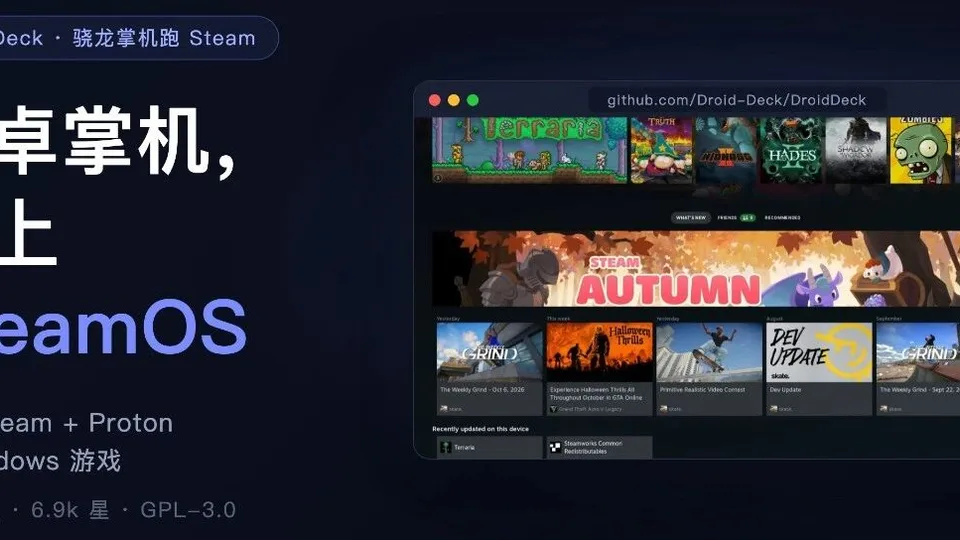
DroidDeck is an Android app that creates a Linux runtime to run Valve's official ARM64 Steam client and Proton, enabling native Windows gaming on Snapdragon 8-series handhelds without streaming, including KDE Plasma desktop, multi-store aggregation, and controller support, but requires Adreno 730+ GPU and disabling a system setting.
JD engineers detail their migration from monolithic KMP delivery to per-component builds for iOS and HarmonyOS, sharing a stdlib/runtime carrier, fixing bridge numbering mismatches and type ID issues in the KN compiler, implementing custom Gradle plugins and CI/CD for independent XCFramework/HAR publishing, enabling on-demand integration and faster builds.
Changjiang Securities adopted Tencent's Kuikly framework (based on KMP) to build their AI-native financial app 'Chang Xiaoniu' across Android, iOS, and HarmonyOS, detailing their four-layer architecture, unified Bridge, AI-assisted migration from H5, packaging strategy, and real-device performance improvements over H5.
The article demonstrates creating a dramatic 3D spotlight effect on HarmonyOS 6 by setting up a near-dark environment, adding a configurable spotlight with adjustable intensity, cone angle, and color temperature, and providing complete ArkTS code for real-time interactive lighting control on a MatePad Edge device.
This article details Tencent Shiply's three-generation Android hotfix evolution—VM Hook, function instrumentation, and full Dex replacement—explaining each approach's principles, trade-offs, and why full Dex became the chosen solution, plus how Shiply adds build verification, release control, gray rollout, and monitoring for a complete hotfix platform.