This article analyzes the HarmonyOS ClickUtil library from @pura/harmony-utils V1.4.0, explaining throttle and debounce implementations with source code, interactive demos, and scenario-based selection guidance for preventing duplicate button clicks in mobile applications.
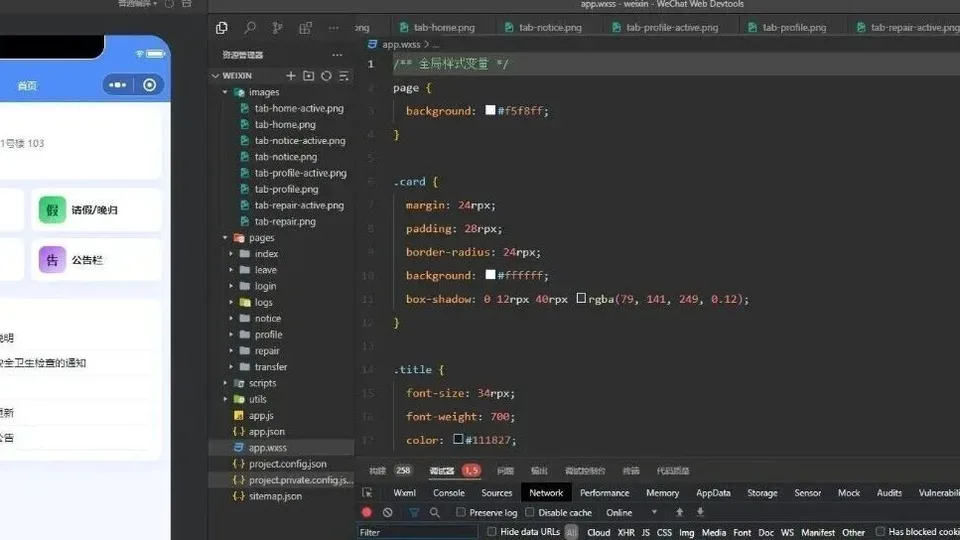
The author shares a step‑by‑step account of using AI to create a simple, version‑aware WeChat mini‑program with uniapp, optimize TiDB Cloud database latency, choose Rust for the backend, and apply practical security measures, emphasizing patience and lightweight design.
Everything Claude Code now provides comprehensive HarmonyOS development support with a dedicated agent, ArkTS syntax rules, automated hooks, and project templates that enforce V2 state management, Navigation routing, and security best practices for AI-assisted coding.
Google's Gemini Intelligence upgrades Android from an operating system to an AI-driven platform, enabling cross‑app automation, Chrome‑based browsing tasks, intelligent autofill, spoken‑to‑text messaging, and natural‑language widget creation, while reshaping hardware strategy and developer interfaces.
This guide explains how to decide whether a piece of state belongs in a Composable or a ViewModel by distinguishing UI state from business state, using clear principles, lifecycle considerations, and concrete code examples such as search bars, expandable cards, and drag‑and‑drop scenarios.
This tutorial demonstrates building a mental health app statistics page in HarmonyOS, covering a custom tab switcher, a Grid-based mood calendar with mock data, and a smooth mood trend curve drawn on Canvas using cubic Bézier interpolation.
This guide explains Uniapp5's five core page‑lifecycle callbacks—onLoad, onShow, onReady, onHide, and onUnload—their trigger moments, typical tasks, and characteristics, and shows how to choose the right callback for data requests while avoiding common pitfalls.
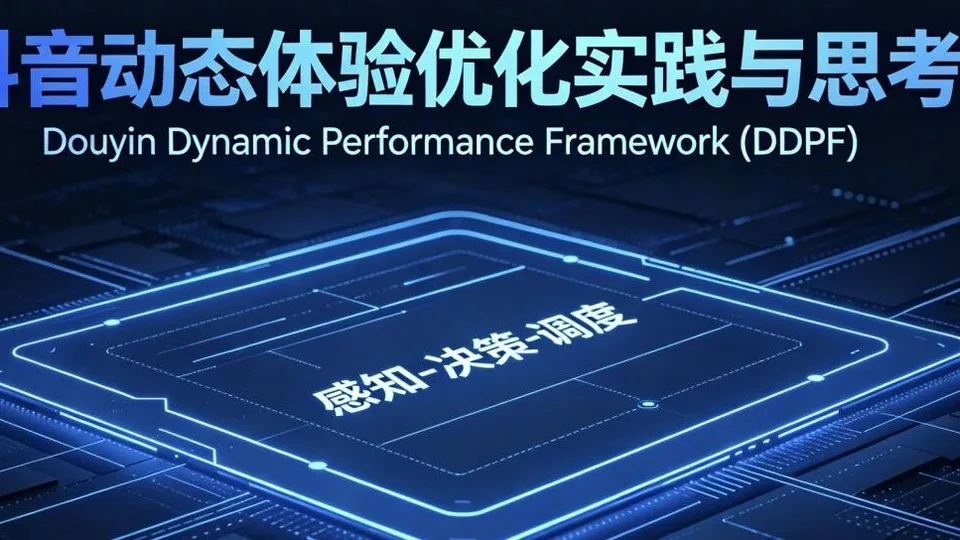
The article details Douyin's Dynamic Performance Framework (DDPF), covering its evolution from static resource scheduling to a multi‑dimensional signal‑driven system, the perception and decision layers including low‑interaction detection and end‑side intelligence, and concrete VM tuning cases that illustrate how dynamic optimization is achieved on Android.
This tutorial demonstrates how to rapidly construct a HarmonyOS accounting application using the HDS suite, covering a custom center-button TabBar via yltabbar, a title bar with HdsNavDestination, a stacked expense card, a multi-segment circular progress bar with ylprogress, and a horizontal category ranking list.
This guide examines three frequent issues when using Gaode or Baidu map plugins in UniApp—Android blank maps, large location offsets, and plugin conflicts causing crashes—and provides concrete configuration steps, permission settings, high-accuracy location code, and version-compatibility recommendations to resolve them.
uni.storage, the data‑persistence solution for UniApp, can cause data loss, memory leaks, security risks, and performance problems if misused; this guide outlines four typical pitfalls—large objects, missing expiration, frequent reads/writes, and unhandled async errors—and provides concrete best‑practice fixes.
When developing UniApp apps, iOS and Android often render styles differently; this article outlines three typical visual mismatches—padding, font size, and notch handling—and provides concrete platform‑specific code fixes and best‑practice recommendations.
This article reviews two recent open‑source GitHub projects—Baguette, a Swift‑based CLI tool that manages iOS simulators without launching Simulator.app and offers screen streaming, gesture injection, and a web UI, and OpenLess, a cross‑platform voice input utility that uses AI to transform spoken commands into structured prompts, featuring multiple output and recording modes, global hotkeys, and a fully open‑source, local‑first design.
iQIYI built a high‑performance image library for HarmonyOS using Huawei's Cangjie language, replacing ArkTS bottlenecks, adding AVIF support and a three‑level cache, and achieved over 60% reduction in memory peak usage and up to 75% faster animated‑image loading, as demonstrated by detailed benchmarks and architectural analysis.
The author demonstrates how Cursor AI and Opus 4.7 can generate a complete campus dormitory management solution—including a Spring Boot backend, Vue 3 admin portal, and a WeChat mini‑program front‑end—within twenty minutes, and provides the source code, video tutorial, and deployment details.
An accidentally bundled Claude.md file from Apple Support version 5.13 reveals how Apple integrates Juno AI with live agents using a protocol‑based, actor‑driven AsyncStream architecture, and details the cross‑platform SAComponents UI library, its SwiftUI previews, and conditional compilation strategy.
This tutorial demonstrates complete integration of HarmonyOS Pen Kit's stylusInteraction module for squeeze and double-tap events, and imageFeaturePicker for color picking, covering callback reference management, lifecycle-aware registration with try-catch protection, event object fields, and UI feedback patterns including status visualization, counters, and toast notifications.
Android’s long‑standing lax memory management is being overhauled: Google’s Android 17 Beta 4 introduces a device‑level memory cap, smart notifications, and scenario‑specific rules, while China’s ITGSA alliance issues a “fair run memory” mandate, promising to curb bloated apps, reduce heating and lag, and give 8 GB phones a chance to run smoothly again.
The article explains why existing cross‑platform solutions cannot meet Taro’s demands for high performance, stability, full Taro ecosystem compatibility and low integration cost, and describes the design of a dual‑thread iOS rendering layer, a mixed native‑view + layer approach, and the C++‑based TaroUI framework that provides consistent, high‑speed UI components, a rich‑text engine, virtual list widgets and an extensible architecture for future platforms.
This article provides a detailed engineering analysis of using Bluetooth Low Energy (BLE) within DingTalk mini programs to drive portable thermal printers, covering why BLE is chosen over classic Bluetooth, the GATT communication model, connection lifecycle management, ESC/POS command construction, packet splitting for the 20‑byte BLE limit, and practical image‑printing techniques, all illustrated with code examples and step‑by‑step guidance.