This article provides a comprehensive overview of the Spring Cloud ecosystem, detailing its six-layer component architecture, strict version compatibility rules, end-to-end request flow, core abstraction interfaces, recommended project structure, common configuration pitfalls, and a structured learning path with interview questions.
This tutorial demonstrates implementing the Strategy Pattern in Spring Boot using a calculator example, showing how to register strategy beans via @Component, inject them into a factory map at startup, and route requests dynamically for extensible callback handling without modifying existing code.
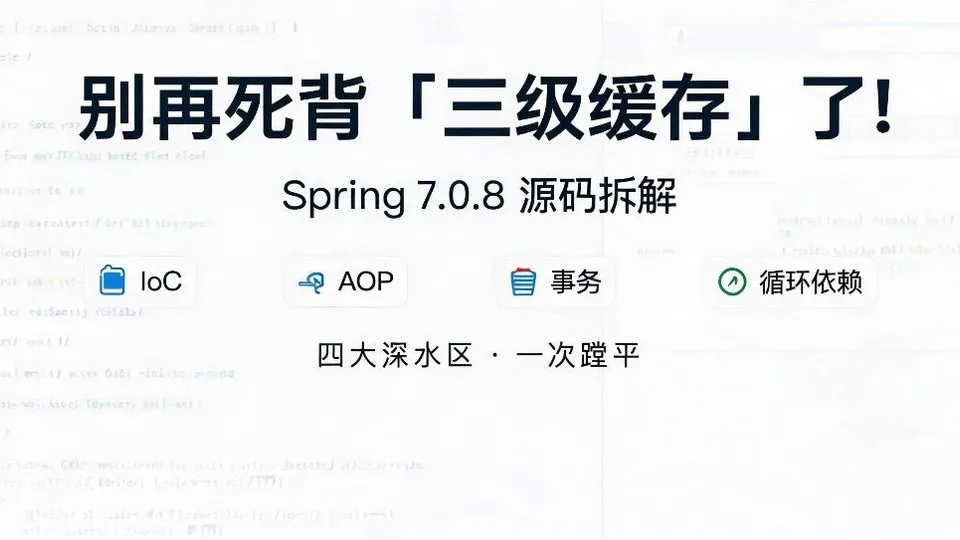
This article analyzes Spring Framework 7.0.8 source code to explain IoC container startup, AOP proxy creation, transaction management, and circular dependency resolution via three-level cache, with code examples and interview-focused insights.
This analysis explores Scrapling, a Python scraping library whose adaptive element matching automatically relocates target elements after website redesigns, combining five fetcher tiers, anti-bot evasion, Scrapy-like crawling, and AI agent integration to turn site redesigns from disasters into minor maintenance.
IntelliJ IDEA 2026.3 introduces an Agent-centric UI with Air, native Git Worktree support, improved debugging with persistent logpoints, and a libghostty-based terminal, yet the author prefers the external Orca environment and shows how to disable Air for a traditional coding experience.
PHP 6 was planned as a Unicode-enabled version using UTF-16 internally, but performance penalties, conversion overhead, and extension incompatibilities stalled development for years; after a 2010 schism, the project was abandoned, its features backported to PHP 5.3/5.4, and a 2014 internals vote (58-24) named the next major release PHP 7, which delivered performance gains via phpng instead of native Unicode support.
This article details Spring Boot implementation of unit-based multi-active architecture, covering traffic routing with gateway filters and consistent hashing, data sharding via dynamic data sources and ShardingSphere, cross-unit synchronous/async calls with circuit breaking, data synchronization with conflict resolution, and failover switching with three-layer controls and graceful shutdown.
This article details a Java implementation for one-click account freezing that uses a security version counter to instantly invalidate all access tokens, refresh tokens, sessions, and trusted devices across multiple clients without maintaining token blacklists, covering distributed caching, audit logging, and recovery flows.
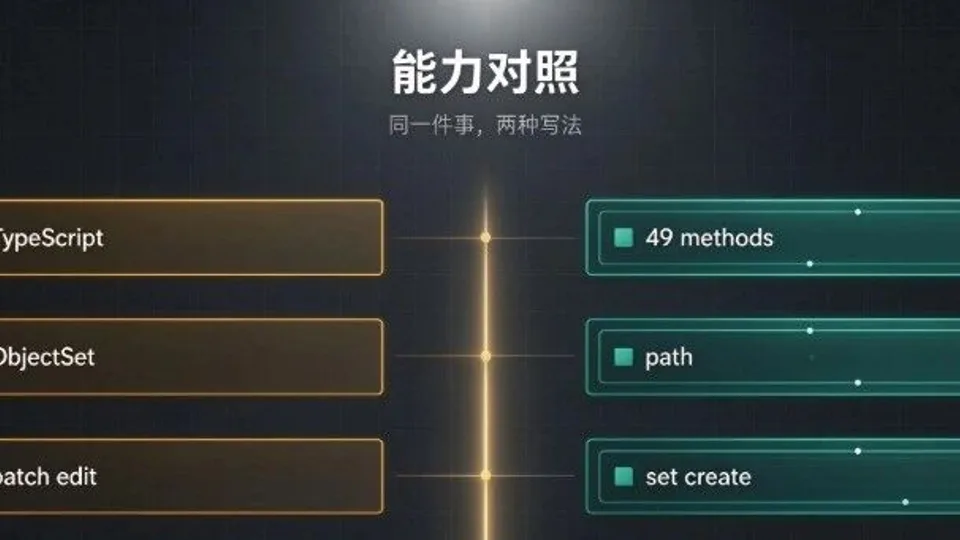
The article compares Palantir Foundry Functions (TypeScript) with OntologyL Cypher 1.0, a domain-specific language using 49 chained ontology methods, showing how OntologyL achieves higher business semantic density, simpler queries, built-in temporal/spatial reasoning, and better AI generation suitability by embedding ontology semantics directly into the language.
XXL-JOB v3.1.0 introduces AI executors (ollamaJobHandler, difyWorkflowJobHandler, openClawJobHandler) that wrap AI calls as standard Bean-mode handlers, letting developers schedule AI tasks alongside regular jobs using the same scheduling, retry, logging, and dynamic parameter configuration — no separate AI orchestration system needed.
China Postal Savings Bank details a composite-key-driven graph system with a six-state machine for end-to-end non-tax revenue fund tracking, enabling real-time monitoring, automated unmatched-fund matching via weighted scoring and LLM assistance, and three-dimensional cross-reconciliation across transaction, fund, and account dimensions.
This article details systematic approaches to diagnose and resolve extreme CPU usage in MySQL and Java processes, covering root causes like missing indexes and busy-wait loops, and demonstrating practical troubleshooting with top, jstack, and thread analysis.
This article explores Arthas 4's major upgrades including JDK 25 support, wall-clock flame graphs for wait-time analysis, and an MCP Server enabling AI-assisted diagnostics via natural language, with practical command examples for thread analysis, method tracing, and heap dumping.
This article analyzes Seata's AT and TCC modes for distributed transactions in Spring Boot, covering source code internals like undo_log, global locks, SQL parsing, and TCC's three-phase implementation with solutions for empty rollback, suspension, and idempotency, plus eight common pitfalls and interview questions.
This article analyzes distributed locking in Spring Boot using Redis and Redisson, covering atomic locking with SET NX EX, watchdog lease renewal, reentrant Hash-based design, pub/sub wait notification, the RedLock algorithm debate including Martin Kleppmann's GC pause and clock jump critiques, and production pitfalls with annotation-based AOP encapsulation.
This tutorial demonstrates how to implement automatic idempotency in Spring Boot using Redis, a custom @AutoIdempotent annotation, token-based validation, and a HandlerInterceptor to prevent duplicate submissions in high-volume APIs.
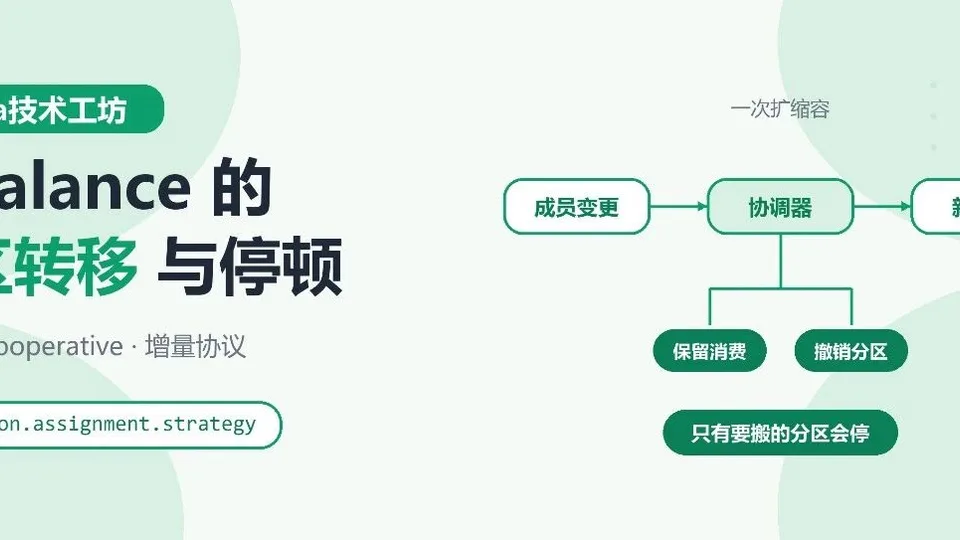
This article analyzes Kafka's consumer group rebalance mechanisms, comparing eager and cooperative protocols, explaining why partition transfers cause consumption pauses, detailing configuration parameters like session.timeout.ms and max.poll.interval.ms, and providing troubleshooting steps for lag spikes during rolling deployments.
This article walks through implementing a financial-grade double-entry bookkeeping system using Spring Boot 3, MyBatis, and MySQL, covering domain modeling with immutable entries and derived balances, a posting engine with idempotency and debit-credit validation, balance calculation via snapshots and incremental deltas, end-of-day trial balance verification, cross-system reconciliation, and production concerns like precision handling, sharding strategies, and hot-account mitigation.
This article details a complete Java implementation of login risk control, covering rule-based risk scoring, device fingerprinting, impossible travel detection, adaptive multi-factor authentication, and a two-phase login API that dynamically adjusts security friction based on real-time risk signals like new devices, geo-anomalies, and recent security events.