This article provides a complete Java implementation of SMS one-click login using Spring Boot 3, Redis, and JWT, covering business flow, configuration, Redis key design, core service code with rate limiting, blacklist, daily limits, one-time verification codes, login verification with JWT issuance, controller endpoints, production security optimizations including Lua atomic scripts, graphical captcha, channel fallback, risk control, and compliance, plus extension directions like carrier authentication and anomaly detection.
This article advocates storing API tests as plain-text YAML files in the same Git repository as the application code, enabling diff-friendly reviews, branch-based changes, secret management via environment variables, and automated CI execution on every pull request to prevent contract drift between APIs and their tests.
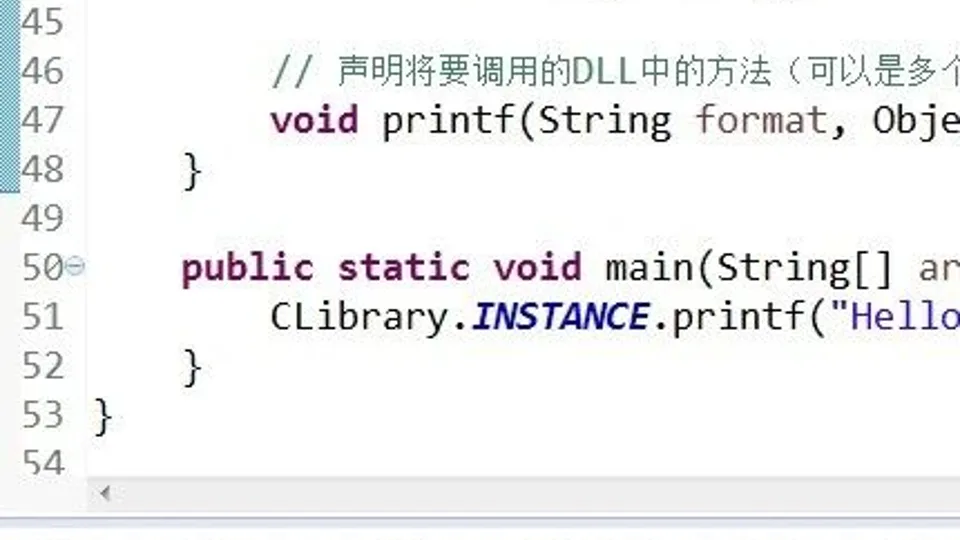
This article compares JNI, JNA, and JNative for calling DLLs from Java, recommends JNA for simplicity, provides Maven dependencies, complete code examples for both CDecl and StdCall calling conventions, and shares a troubleshooting tip about matching DLL and JDK bitness and using absolute paths.
This article explores Caffeine's W-TinyLFU eviction algorithm, five-step hit-rate engineering methodology, and a real-world Spring Boot case study that improved cache hit rate from 62% to 98.7% through capacity weighting, refresh-after-write, and hot-key isolation.
PHP 8.6 introduces the SortDirection enum and Time\Duration class to its standard library, replacing over 150 incompatible userland implementations and inconsistent time representations with a shared vocabulary that enables seamless interoperability across the ecosystem and lays groundwork for a modern date/time API.
This comprehensive guide covers Spring Boot RabbitMQ integration for production reliability, detailing three message-loss scenarios, the three-layer exchange/queue/binding model, publisher confirms and returns, manual acknowledgment modes, local vs requeue retry strategies, dead letter queue triggers, and practical patterns for idempotency, ordering, and backlog handling with code examples.
This article explores Spring Boot's ApplicationEvent mechanism for decoupling business side effects, detailing synchronous default behavior, transaction-boundary listeners, async patterns with dedicated thread pools, exception handling strategies, event chaining, and practical refactoring of an order service, while contrasting in-process events with message queues.
This article provides a comprehensive system design for a vending machine, covering requirement clarification, state machine modeling, concurrency control for overselling prevention, payment idempotency, hardware fault tolerance with MQTT and WAL-based power failure recovery, and engineering best practices for offline sales and reconciliation.
This article details five IntelliJ IDEA plugins — Alibaba Java Coding Guidelines, CheckStyle, PMD, FindBugs, and SonarLint — covering installation, usage, configuration, and rule sets to automate code review, detect bugs, enforce standards, and improve overall code health in Java projects.
This article details a production-grade traffic recording and replay platform built with Spring Boot, covering five-module architecture, deterministic desensitization, shadow database isolation, structured JSON diff with ignore rules, and CI/CD gate integration to validate system rewrites against real traffic.
This guide walks Java developers through the correct sequence for adopting GPT-6.1 Sol via Codex: first confirm model availability in ChatGPT Work or Codex clients, then select a subscription tier matching actual usage, and finally grant scoped, auditable project access with Git-backed guardrails and PR-style review loops.
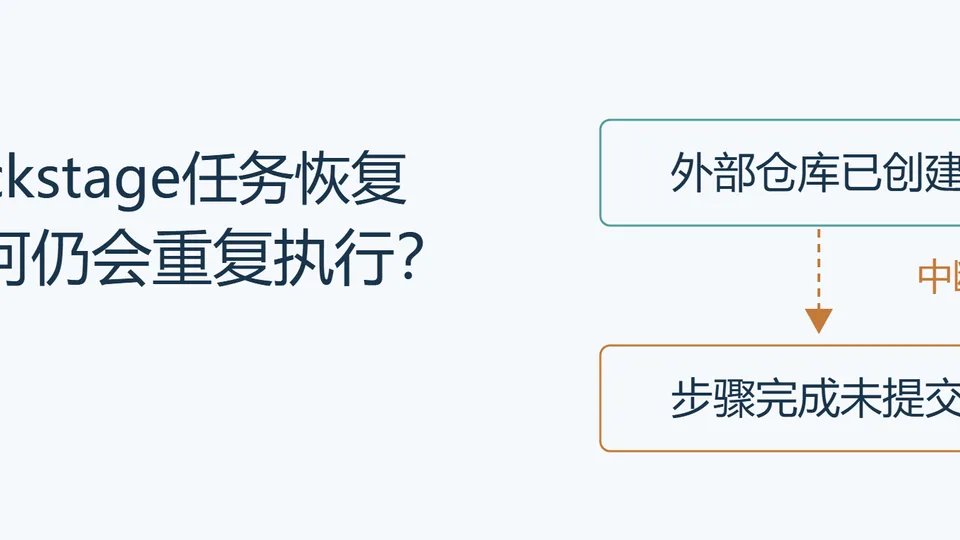
Backstage 1.55 adds task recovery for Scaffolder, but recovery only resumes from saved step state and workspace snapshots; external operations can still repeat if they succeed before checkpoint persistence, requiring action authors to implement idempotency and resource verification.
OpenAI's Pando Git backend separates read and write paths, stores packs immutably in object storage, and broadcasts only the main branch, reducing median push latency to one-fifth while serving 1 PB of Git data daily and 57 TB/hour with 99% cache hits.
This article provides a comprehensive guide to payment channel management systems, covering channel concepts, classification dimensions, lifecycle stages, system architecture, information hierarchy design, permission models, and practical page-level designs for channel info, capabilities, response codes, parameters, blacklists, and merchant-facing views.
This article dissects Spring Boot AOP from proxy creation (JDK vs CGLIB) and interceptor chain mechanics to practical aspects for logging, tracing, and idempotency, while exposing eight common pitfalls like self-invocation bypass, final method limits, and synchronous I/O in advice that degrade P99 latency.
This article analyzes the mismatch between traditional aggregated financial APIs and LLM-assisted programming, proposing a shift to single-scenario interfaces with atomic parameters, explicit constraints, and an AI gateway layer, validated by GLM-5.2 experiments showing 88% complexity reduction and 65% faster development.
This article explores Spring Boot scheduled task evolution from @Scheduled basics through thread pool configuration, source code analysis of scheduling internals, distributed locking with ShedLock, and migration to XXL-JOB for sharding and high availability, including common pitfalls and a reconciliation system case study.
Deep dive into Spring's AbstractRoutingDataSource internals, the critical transaction-routing timing bug that breaks read-write separation, LazyConnectionDataSourceProxy fix, AOP ordering rules, replication lag handling, and multi-tenant schema vs database isolation trade-offs with concrete code and production metrics.
XXL-JOB 3.1.0+ integrates AI capabilities through Spring AI, providing three built-in JobHandlers for Ollama local models, Dify workflows, and OpenClaw OpenAI-compatible endpoints, allowing scheduled tasks to invoke AI without a separate AI scheduler.
This tutorial demonstrates how to implement Redis cache preheating in Spring Boot using an abstract cache class, ApplicationContextAware utility, and CommandLineRunner to automatically load hot data on startup, with a complete NewsCache example using RedisTemplate.